
Did you know that e-commerce sales are projected to reach $6.54 trillion by 2022? As online retail continues to soar, the importance of efficient supply chain management cannot be overstated. From logistics optimization to inventory control, businesses must embrace digital transformation to stay ahead in the competitive market.
Key Takeaways:
- Effective supply chain management is crucial for e-commerce businesses to thrive in the rapidly growing online retail industry.
- Logistics optimization and supply chain integration are essential to meet customer expectations and improve overall operational efficiency.
- Digital transformation enables businesses to streamline inventory management, automate order fulfillment, and enhance transportation management.
- Strategic warehouse automation and organization play a vital role in optimizing the e-commerce supply chain.
- By focusing on inventory control, coordination, and collaboration with partners, businesses can enhance customer satisfaction and fuel growth.
The Importance of All Activities
Effective supply chain management in the e-commerce industry requires careful consideration of all activities involved in the process. By efficiently planning, funding, and executing various tasks, businesses can streamline operations, reduce costs, and optimize customer satisfaction.
When it comes to planning, e-commerce companies must anticipate product demand and strategically determine the materials needed for manufacturing and order fulfillment. Thorough planning ensures that the right products are available at the right time, preventing stockouts and delays in customer delivery.
Funding plays a vital role in supporting the smooth flow of the supply chain. Adequate financial resources are necessary for procuring raw materials, investing in manufacturing capabilities, and maintaining partnerships with shipping providers. By securing funding, e-commerce businesses can stay ahead of market demand and scale their operations effectively.
Manufacturing and shipping partners are essential components of the supply chain. Collaborating with reliable and efficient partners ensures that products are produced and delivered in a timely manner. Choosing the right manufacturing and shipping partners can lead to improved quality control, shorter lead times, and better customer experiences.
Ultimately, cash flow optimization is crucial for sustainable growth in e-commerce supply chain management. By effectively managing revenue and expenses, businesses can allocate resources where they are most needed. This allows for continuous improvement of processes, implementation of new technologies, and the ability to adapt to changing market demands.
Efficient supply chain management relies on careful planning, adequate funding, reliable manufacturing, and shipping partners. By considering and optimizing all activities involved, e-commerce businesses can achieve operational excellence and deliver seamless customer experiences.
The Role of Coordination and Collaboration
Strong collaboration and coordination among all channel partners are crucial for successful supply chain management.
Transparency, accountability, and open communication are the foundations of an effective partnership. When e-commerce businesses and their channel partners work together with shared goals, the entire supply chain benefits. By fostering a culture of transparency, businesses can keep all parties informed about inventory levels, production schedules, and demand fluctuations.
“Transparency breeds trust and accountability, which are the pillars of a strong and collaborative relationship.”
When there is a high level of transparency, all channel partners can make informed decisions and adjust their strategies accordingly. This results in improved customer service, reduced costs, and enhanced financial positioning for everyone involved.
Autonomy is another crucial element in coordination and collaboration. When each partner can independently manage their operations with clearly defined roles and responsibilities, there is less likelihood of delays or miscommunications. This allows for a seamless flow of products and information throughout the supply chain.
Accountability ensures that each entity is responsible for their actions and commitments. It promotes a sense of ownership and encourages problem-solving when issues arise. When all channel partners are accountable, they take proactive measures to resolve any challenges quickly and efficiently.
By building trust and transparency, e-commerce businesses can cultivate strong relationships with their channel partners. This collaborative approach minimizes the occurrence of preventable issues, mitigates risks, and facilitates continuous improvement across the supply chain.
Integrating Supply and Demand
Successful e-commerce supply chain management relies on the integration of supply and demand considerations. By carefully accounting for supply and demand in all business activities, including collaboration with partners, e-commerce businesses can consistently meet or exceed customer expectations. This integration ensures that popular items remain in stock and are delivered to customers in a timely manner, contributing to enhanced customer satisfaction and loyalty.
Integrating supply and demand involves a holistic approach that extends throughout the entire supply chain. From procurement and production to warehousing and order fulfillment, every step must be aligned with customer expectations and market demand. By closely monitoring customer trends and market dynamics, e-commerce businesses can proactively adjust their supply chain strategies to meet changing demands and capitalize on new opportunities.
Enhancing Customer Experiences through Integration
“The integration of supply and demand is not just about keeping popular items in stock—it’s about delivering exceptional customer experiences.”
By integrating supply and demand, e-commerce businesses can optimize their inventory management processes. They can efficiently allocate resources to meet customer demands, minimize stockouts, and avoid excess inventory. This not only optimizes working capital but also enhances order fulfillment speed and accuracy, resulting in improved customer satisfaction and repeat business.
Furthermore, integrating supply and demand enables e-commerce businesses to better anticipate customer preferences and expectations. By analyzing data on past purchases, browsing behavior, and market trends, businesses can tailor their product offerings and marketing strategies to align with customer needs. Personalization and customization are essential in today’s competitive online marketplace, and the integration of supply and demand helps businesses deliver tailored experiences that stand out from the competition.
Collaborative Partnership for Seamless Integration
“Successful integration of supply and demand requires collaborative partnerships with suppliers, distributors, and logistics providers.”
To achieve seamless integration, e-commerce businesses must foster collaborative partnerships with their supply chain stakeholders. This includes suppliers, distributors, and logistics providers who play pivotal roles in meeting customer demands. Open communication channels, shared visibility into inventory levels, and real-time data exchange are fundamental for effective collaboration and coordination.
By collaborating closely with suppliers, e-commerce businesses can streamline the procurement process and ensure reliable and timely supply of raw materials or finished goods. With distributors, businesses can optimize order routing and delivery options, reducing lead times and improving customer experiences. Logistics providers, including transportation companies and fulfillment centers, contribute to the integration of supply and demand by providing efficient and cost-effective distribution solutions.
Ultimately, successful integration of supply and demand in e-commerce supply chain management allows businesses to stay ahead of customer expectations. By strategically aligning supply with demand and forging strong collaborative partnerships, e-commerce businesses can deliver products that customers want, when they want them, ensuring a competitive edge in the digital marketplace.
The Impact of E-commerce on Supply Chain Management
E-commerce has revolutionized the way businesses operate, allowing them to reach customers worldwide through online platforms. However, this shift to digital commerce has also brought about significant changes in supply chain management. Let’s explore the impact of e-commerce on key aspects of the supply chain.
Procurement: Challenges and Opportunities
Procurement plays a critical role in supply chain management as it involves sourcing and acquiring raw materials, components, and finished goods. In the context of e-commerce, procurement becomes more complex due to the need for a diverse range of products to cater to customer demands. E-commerce businesses must establish strong relationships with suppliers to ensure timely and reliable procurement.
Additionally, e-commerce presents unique opportunities for procurement automation and optimization. By implementing technologies such as machine learning and artificial intelligence, businesses can streamline the procurement process, reduce costs, and enhance supply chain efficiency.
Online Interactions: Building Strong Relationships
“In the digital era, establishing meaningful connections with customers and partners is crucial for success in e-commerce supply chain management.”
Online interactions play a vital role in e-commerce supply chain management. Building strong relationships with customers, suppliers, and other stakeholders is essential for seamless collaboration and coordination. E-commerce businesses must leverage digital channels to communicate effectively, share information transparently, and foster trust among all parties involved.
Distribution Challenges for E-commerce Retailers
Unlike traditional retail stores, e-commerce businesses often lack physical storefronts. Instead, they rely on distribution and fulfillment centers to store, pack, and ship products to customers. This reliance on centralized distribution hubs introduces various challenges.
E-commerce retailers must strategically plan the location and capacity of their fulfillment centers to ensure efficient order fulfillment and timely delivery. They need to optimize inventory management and warehouse operations to minimize order processing time and reduce shipping costs. Furthermore, e-commerce businesses should consider incorporating advanced technologies like robotics and automation to support their distribution centers.
Improving Fulfillment Centers for Enhanced Customer Experience
“Streamlining fulfillment centers is crucial to meet the rising customer expectations in the e-commerce landscape.”
A seamless fulfillment process is crucial to meet customer expectations for speedy and accurate delivery. E-commerce businesses must invest in technologies that optimize picking, packing, and shipping operations. By implementing automated systems, businesses can minimize errors, reduce order processing time, and enhance overall customer satisfaction.
Impact of E-commerce on Supply Chain Management
| Aspect | Challenges | Opportunities |
|---|---|---|
| Procurement | Ensuring reliable sourcing in a diverse product landscape | Automation and optimization of procurement processes |
| Online Interactions | Nurturing relationships with customers and partners | Enhancing communication and collaboration through digital channels |
| Distribution | Optimizing fulfillment center location and capacity | Utilizing advanced technologies for efficient warehouse operations |
| Fulfillment Centers | Minimizing errors and ensuring timely order processing | Implementing automation for streamlined operations |
E-commerce supply chain management must adapt to the ever-evolving demands of the digital marketplace. By addressing the challenges and leveraging the opportunities it presents, businesses can optimize their supply chain processes, improve customer experience, and drive overall growth.
Stages of an E-commerce Supply Chain
Managing an effective e-commerce supply chain involves several stages that are critical to the success of any online business. These stages include market supply and demand, warehousing and inventory management, order entry and management, and distribution, delivery, and returns. Let’s explore each stage in more detail.
Market Supply and Demand
At the core of any e-commerce supply chain is ensuring a balance between market supply and demand. This involves carefully analyzing consumer preferences and trends to determine which products to offer and how much stock to maintain. By understanding customer demand, e-commerce businesses can stock the right products at the right time, effectively meeting customer expectations and maximizing sales.
Warehousing and Inventory Management
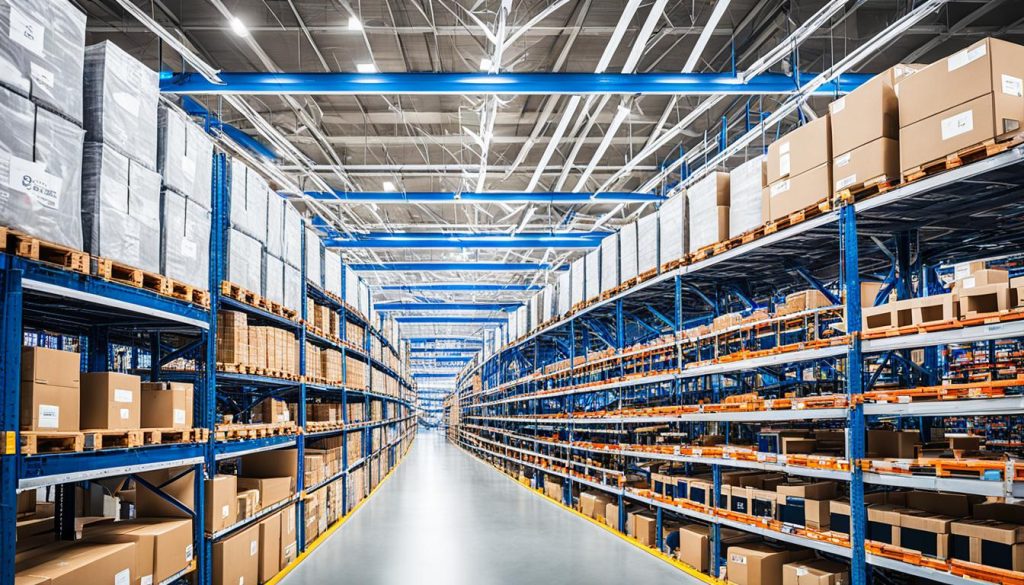
Warehousing and inventory management play a crucial role in the e-commerce supply chain. This stage involves receiving, storing, and packaging goods efficiently. E-commerce businesses need to have well-organized warehouses with proper inventory management systems to ensure items are readily available for order fulfillment. Effective inventory control helps minimize stockouts and reduce carrying costs.
Order Entry and Management
Order entry and management encompass the recording and fulfillment of customer orders. This stage involves capturing customer information accurately and efficiently, processing orders promptly, and managing inventory levels to ensure timely fulfillment. Streamlining order entry and management processes minimizes errors and ensures customer satisfaction.
Distribution, Delivery, and Returns
Once orders are processed, the focus shifts to distribution, delivery, and returns management. E-commerce businesses need to have robust logistics systems in place to ensure products are delivered to customers on time. This stage includes selecting the most appropriate shipping methods, tracking deliveries, and managing returns efficiently. A seamless distribution and delivery process enhances customer experience and builds trust.
E-commerce businesses must carefully manage each stage of the supply chain to ensure smooth operations and customer satisfaction. By optimizing market supply and demand, warehousing and inventory management, order entry and management, and distribution, delivery, and returns, e-commerce companies can enhance their overall efficiency and effectively meet the demands of the online marketplace.
Implementing robust systems and strategies at each stage of the e-commerce supply chain is essential for sustainable growth and success. By understanding and managing market supply and demand, efficiently managing warehousing and inventory, seamlessly processing and fulfilling orders, and ensuring efficient distribution, delivery, and returns, e-commerce businesses can optimize their operations, improve customer satisfaction, and drive long-term success.
E-commerce Supply Chain Challenges
Managing the supply chain in the realm of e-commerce brings forth a unique set of challenges that businesses must overcome to ensure smooth operations and customer satisfaction. Three key areas where e-commerce supply chains face significant challenges are inventory management, warehouse sorting, and transportation logistics.
Inventory Management
Effective inventory management is crucial for e-commerce businesses to stay on top of their stock levels and meet customer demand. With constantly changing preferences and fluctuating market trends, maintaining an accurate inventory record becomes a complex endeavor. The challenge lies in striking the right balance between keeping enough inventory to fulfill customer orders promptly while avoiding excess stock that ties up capital and increases carrying costs.
Warehouse Sorting
As e-commerce businesses expand, they often have to deal with multiple channels and warehouses to efficiently serve their customer base. Warehouse sorting becomes increasingly intricate in this scenario. It requires meticulous organization and coordination to ensure that products are appropriately stored, easily accessible, and ready for quick fulfillment. Without efficient warehouse sorting, order processing can be delayed, leading to dissatisfied customers and potential revenue loss.
Transportation Logistics
Timely delivery is paramount for e-commerce businesses. Transportation logistics plays a pivotal role in ensuring that orders reach customers on time without incurring excessive costs. Efficiently managing transportation routes, optimizing load capacities, and coordinating with shipping service providers are crucial in meeting delivery expectations while keeping expenses in check. Delays, damages, or incorrect deliveries can harm the reputation of an e-commerce brand and negatively impact customer loyalty.

| Challenges | Impact | Strategies |
|---|---|---|
| Inventory Management | – Stock-outs – Excess inventory – Carrying costs | – Implement robust inventory tracking systems – Utilize demand forecasting techniques – Optimize reorder points and safety stock levels |
| Warehouse Sorting | – Order fulfillment delays – Inefficient space utilization – Increased labor costs | – Implement efficient warehouse layout designs – Utilize warehouse management systems for better inventory tracking – Optimize picking and packing processes |
| Transportation Logistics | – Delivery delays – Increased shipping costs – Poor customer satisfaction | – Leverage route optimization software – Collaborate closely with shipping service providers – Implement real-time tracking systems for transparency |
Overcoming these e-commerce supply chain challenges necessitates the implementation of dedicated systems and strategies. Businesses should invest in advanced inventory management software to track and replenish stock effectively. Warehouse sorting can be streamlined by leveraging intelligent warehouse management systems and optimizing layout designs. Furthermore, transportation logistics can be improved through partnerships with reliable shipping service providers and the use of technology-driven route optimization solutions.
“Efficiently managing inventory, warehouse sorting, and transportation logistics is crucial for e-commerce success. By overcoming these challenges, businesses can ensure timely order fulfillment, maximize customer satisfaction, and propel growth.”
Tips for an Effective E-commerce Supply Chain
Optimizing your e-commerce supply chain is essential for streamlining operations and meeting customer expectations. By implementing the right strategies, you can improve efficiency, reduce costs, and enhance overall supply chain effectiveness. Here are some tips to help you achieve an effective e-commerce supply chain:
Audit your Supply Chain
To identify inefficiencies and gaps in your supply chain, conduct a thorough audit. Evaluate each step of your process, from procurement to order fulfillment, and identify areas for improvement. This will provide valuable insights and help you develop targeted solutions to optimize your operations.
Automate Order Processing
Implementing automated order processing systems can significantly improve efficiency and speed up fulfillment. By automating tasks such as order entry, inventory management, and shipping label generation, you can reduce errors, save time, and enhance customer satisfaction. This enables you to process a higher volume of orders and meet tight delivery deadlines.
Outsource to a Shipping Service Provider
Simplify inventory management and order fulfillment by partnering with a reliable shipping service provider. Outsourcing these tasks to experts in the field can help you streamline your supply chain, reduce costs, and ensure timely delivery. Look for a provider that offers integrated tracking systems, competitive shipping rates, and excellent customer service.
Strategically Organize your Warehouse
Effective warehouse organization is crucial for maintaining inventory accuracy and minimizing operational inefficiencies. Utilize inventory management systems to optimize storage locations, implement appropriate labeling and categorization, and establish efficient picking and packing processes. This will enhance order accuracy, speed up order fulfillment, and improve overall warehouse productivity.
| Benefits of Effective E-commerce Supply Chain Strategies | |
|---|---|
| Improved operational efficiency | |
| Reduced costs and overhead expenses | |
| Enhanced customer satisfaction and loyalty | |
| Increased order processing speed | |
| Optimized inventory management | |
| Minimized order errors and returns |
Implementing these tips will help you optimize your e-commerce supply chain, enabling you to deliver products faster, reduce costs, and enhance customer satisfaction. By continuously evaluating and improving your supply chain strategies, you can stay ahead of the competition and achieve sustainable growth in the e-commerce industry.
Conclusion
E-commerce and supply chain management are integral to the success and growth of online businesses. Through the optimization of product flow and reduction of costs, businesses can create seamless customer experiences that drive satisfaction and loyalty.
Understanding the challenges and stages of the e-commerce supply chain is crucial for implementing effective strategies. By prioritizing integration, coordination, and customer satisfaction, businesses can enhance efficiency, transparency, and collaboration throughout their supply chain.
Ultimately, the key to successful e-commerce growth lies in the ability to align supply chain management with the ever-evolving demands and expectations of customers. By continuously optimizing operations and prioritizing customer satisfaction, businesses can position themselves for long-term success and achieve sustainable growth in the e-commerce landscape.
FAQ
What does supply chain management entail for e-commerce companies?
Supply chain management for e-commerce companies encompasses all activities involved in sourcing, procurement, conversion, and logistics management. It also includes coordination and collaboration with channel partners.
Why is coordination and collaboration important in e-commerce supply chain management?
Coordination and collaboration among all channel partners are crucial for successful supply chain management in e-commerce. Transparent communication, autonomy, and accountability lead to improved customer service, reduced operating costs, and better financial positioning.
How can e-commerce businesses integrate supply and demand considerations in their supply chain management?
E-commerce businesses can integrate supply and demand considerations by accounting for them in all business activities, including working with partners. This ensures that popular items remain in stock and are delivered to customers in a timely manner.
What challenges does e-commerce supply chain management face?
E-commerce supply chain management faces challenges such as inventory management, warehouse sorting, and transportation logistics. Overcoming these challenges requires dedicated systems and strategies.
What tips can optimize e-commerce supply chain strategies?
Businesses can optimize e-commerce supply chain strategies by conducting audits to identify inefficiencies and gaps, implementing automated order processing systems, considering outsourcing to shipping service providers, and organizing warehouses strategically using inventory management systems.