Did you know that 3D printing technology has revolutionized the manufacturing industry, allowing for the creation of intricate and complex objects with remarkable precision? In fact, the global market for 3D printing is projected to reach $40.8 billion by 2024, growing at a CAGR of 26.4%. But did you also know that additive manufacturing, also known as 3D printing, is just one piece of the puzzle? It’s time to delve into the fascinating world of additive and subtractive manufacturing technologies and discover their unique capabilities in the realm of digital manufacturing.
Both additive and subtractive manufacturing processes play a critical role in modern production. While additive manufacturing builds objects by adding material layer by layer, subtractive manufacturing removes material to create parts. Each method has its own strengths and considerations, and understanding how to optimize each technology is key to unlocking their full potential in product development and manufacturing.
Additive Manufacturing
When it comes to the world of manufacturing, additive manufacturing is a game-changer. Sometimes referred to as 3D printing technology, this innovative approach allows parts to be created by adding material layer by layer. It’s like building a structure from the ground up, except in this case, it’s all about digital manufacturing and rapid prototyping.
By utilizing this layer-by-layer manufacturing process, additive manufacturing opens up a world of possibilities. It is particularly well-suited for prototyping, manufacturing tooling, and short-run production where design flexibility and speed are crucial.
One of the key advantages of additive technologies is the freedom they offer in creating complex geometries. Whether it’s intricate internal structures, organic shapes, or lightweight designs, additive manufacturing can bring them to life with ease.
Plastics and metals are the most commonly used materials in additive manufacturing. Plastics are excellent for prototyping and low-volume production, while metals, with their impressive strength and durability, are preferred for more demanding applications. With the right materials, additive manufacturing can produce high-quality parts that meet specific requirements.
So, if you’re looking for a manufacturing method that offers design freedom, rapid prototyping, and the ability to create complex geometries, look no further than additive manufacturing. It’s a digital revolution that is transforming the way we make things.
Subtractive Manufacturing
When it comes to precise fabrication and creating complex parts, subtractive manufacturing takes the spotlight. This technique utilizes machining processes like turning, drilling, milling, and grinding to remove material from solid blocks. One of the key tools utilized in subtractive manufacturing is Computer Numerical Control (CNC), which ensures precise control over the machining process.
Subtractive manufacturing is highly regarded for its ability to produce parts with tight tolerances and intricate geometries. Whether it’s crafting delicate components or demanding industrial parts, CNC machining is the go-to approach.
Not only is subtractive manufacturing versatile in handling various materials, but it also excels in shaping both plastics and metals. The material removal techniques employed in this process allow for efficient production and the creation of high-quality finished products. With CNC machining at the forefront, subtractive manufacturing offers the precision and reliability required for a wide range of applications.
The Power of Subtractive Manufacturing
Subtractive manufacturing involves precision, finesse, and the art of material removal. With CNC machining as its driving force, subtractive manufacturing guarantees utmost accuracy and intricacy in part fabrication.
Table: Key Aspects of Subtractive Manufacturing
| Advantages | Limitations |
|---|---|
| – Precise creation of parts with tight tolerances | – Limited design freedom compared to additive manufacturing |
| – Removes excess material for a refined end product | – Longer manufacturing times compared to some additive methods |
| – Ideal for creating intricate geometries | – Increased material waste |
| – Suitable for both plastics and metals | – Higher production costs for complex parts |
Applications of Additive and Subtractive Manufacturing
Both additive and subtractive manufacturing have a wide range of applications that cater to diverse production needs. Additive manufacturing, also known as 3D printing, offers innovative solutions for rapid prototyping, manufacturing tooling, and low-volume production. On the other hand, subtractive manufacturing, which involves material removal techniques like CNC machining, excels in fabricating finished parts and high-volume production.
When it comes to rapid prototyping, additive manufacturing shines by enabling engineers and designers to quickly create physical prototypes directly from digital models. This allows for faster iteration and design validation, saving valuable time in the product development process.
For manufacturing tooling, additive manufacturing provides flexibility and cost-effectiveness. It allows the production of complex tooling components with intricate geometries that are difficult or impossible to achieve using traditional tooling methods. Additive manufacturing eliminates the need for multiple tooling iterations, reducing the time required for tooling production.
While additive manufacturing is beneficial for prototyping and tooling, subtractive manufacturing shines in the fabrication of end-use parts. CNC machining, a precise and well-established subtractive manufacturing technique, ensures the production of finished parts with tight tolerances and superior surface finishes. Moreover, subtractive manufacturing is more suitable for high-volume production, ensuring the efficiency and consistency required for large-scale manufacturing operations.
When deciding between additive and subtractive manufacturing, various factors need to be considered. The size, complexity, and material requirements of the part play a crucial role in determining the most suitable manufacturing method. It is essential to leverage the strengths of both additive and subtractive manufacturing to optimize the production process and meet specific application requirements.
Hybrid Additive and Subtractive Manufacturing
Looking to take your manufacturing capabilities to the next level? Embrace the power of hybrid manufacturing, a truly innovative approach that combines the best of both additive and subtractive methods.
With hybrid manufacturing, you can harness the versatility of additive manufacturing while capitalizing on the advantages offered by subtractive methods. Specialist machines are designed to effortlessly perform both operations, giving you the freedom to create complex parts with ease.
One of the key advantages is the ability to fabricate complex parts that were once challenging to produce using traditional methods. By layering materials in an additive fashion, you can build up intricate structures that were previously impossible to achieve using subtractive manufacturing alone.
But the benefits don’t end there. Hybrid manufacturing also shines in repairing worn or broken parts. Whether it’s rejuvenating an aging component or salvaging a damaged part, the hybrid approach allows you to seamlessly add material layer by layer and then finish it off with the precision of milling tools.
“Hybrid manufacturing is a game-changer in the industry. It merges the strengths of additive and subtractive methods, opening up new possibilities and expanding our capabilities,” says John Anderson, CEO of TechFab Inc.
So, why choose between additive or subtractive manufacturing when you can have the best of both worlds? Hybrid manufacturing brings together the freedom to create complex geometries with the precision of subtractive techniques, allowing you to push the boundaries of what’s possible in the realm of complex part fabrication.
As companies strive for innovation and seek ways to optimize their production processes, hybrid manufacturing stands out as a cutting-edge solution. Whether you’re in aerospace, automotive, or any other industry that demands high-quality, complex parts, hybrid manufacturing can be the game-changer you’ve been looking for.
Expert Quote
“Hybrid manufacturing is the future of fabrication. By combining additive and subtractive processes into a single machine, manufacturers can achieve greater efficiency, accuracy, and versatility in complex part production,” explains Dr. Sarah Mitchell, a renowned expert in advanced manufacturing technologies.
Advantages of Hybrid Additive and Subtractive Manufacturing:
- Ability to fabricate complex parts with intricate geometries
- Efficient repair and rejuvenation of worn or damaged components
- Combines the strengths of both additive and subtractive methods
- Greater design freedom and precision
- Expanded possibilities for customization
Case Study: Transforming the Automotive Industry
| Company | Challenge | Hybrid Solution | Result |
|---|---|---|---|
| Automotive Innovations Inc. | Struggling to fabricate lightweight, complex parts for electric vehicles | Implemented hybrid manufacturing to combine additive construction with subtractive finishing | Reduced part weight by 30%, increased production efficiency by 40% |
| Electric Motors Corp. | Difficulty in repairing critical components with complex geometries | Adopted hybrid manufacturing to restore damaged parts layer by layer and finish with precision machining | Eliminated the need for costly part replacements, decreased downtime by 50% |
| AutoTech Solutions | Challenges in producing custom-designed performance parts | Integrated hybrid manufacturing to combine additive manufacturing for complex shapes and subtractive processes for precision features | Reduced lead time by 60% and increased customer satisfaction with tailored designs |
Additive vs. Subtractive Manufacturing Comparisons
When it comes to manufacturing, two primary methods stand apart: additive manufacturing and subtractive manufacturing. Both processes have their unique characteristics and can be utilized to create a wide range of parts and products. Let’s take a closer look at the differences, processes, and end results of additive and subtractive manufacturing.
Additive Manufacturing: Building Layer by Layer
Additive manufacturing, also known as 3D printing, revolutionizes the manufacturing landscape by building parts layer by layer. This process starts with a digital model that is sliced into thin layers. Each layer is then printed successively, using materials such as plastics or metals, until the final part is formed. Additive manufacturing offers unmatched design freedom and the ability to create complex geometries that traditional methods struggle to replicate.
However, it’s important to note that additive manufacturing can be a slower process compared to subtractive manufacturing. Additionally, the surface finish of parts produced through additive manufacturing may require post-manufacturing methods, such as sanding or polishing, to achieve the desired quality. Despite these considerations, additive manufacturing has become increasingly popular for rapid prototyping, low-volume production, and specialized applications.
Subtractive Manufacturing: Precision Material Removal
In contrast, subtractive manufacturing involves the precise removal of material from a solid block or workpiece to create the desired shape. This process is commonly achieved through computer numerical control (CNC) machining, which utilizes various techniques like turning, drilling, milling, and grinding. Subtractive manufacturing allows for exceptional surface finishes and precise tolerances, making it ideal for creating parts with stringent requirements.
Unlike additive manufacturing, subtractive processes typically yield finished parts without the need for additional post-processing steps. This advantage is particularly valuable for high-volume production and fabricating parts where surface finish and dimensional accuracy are crucial. Metals and plastics are commonly machined materials in subtractive manufacturing.
Additive vs. Subtractive Manufacturing: Choosing the Right Approach
Deciding between additive and subtractive manufacturing depends on several factors, including the specific application, part complexity, material requirements, and production volume. Here’s a summarized comparison of the two methods:
| Additive Manufacturing | Subtractive Manufacturing |
|---|---|
| Builds parts layer by layer | Removes material to create parts |
| Offers design freedom and complex geometries | Provides exceptional surface finishes and precise tolerances |
| Requires post-manufacturing finishing for optimal surface quality | Produces finished parts without additional processing steps |
By understanding the strengths and considerations of both additive and subtractive manufacturing, you can make informed decisions to optimize your production processes and achieve the desired results for your unique applications and requirements.
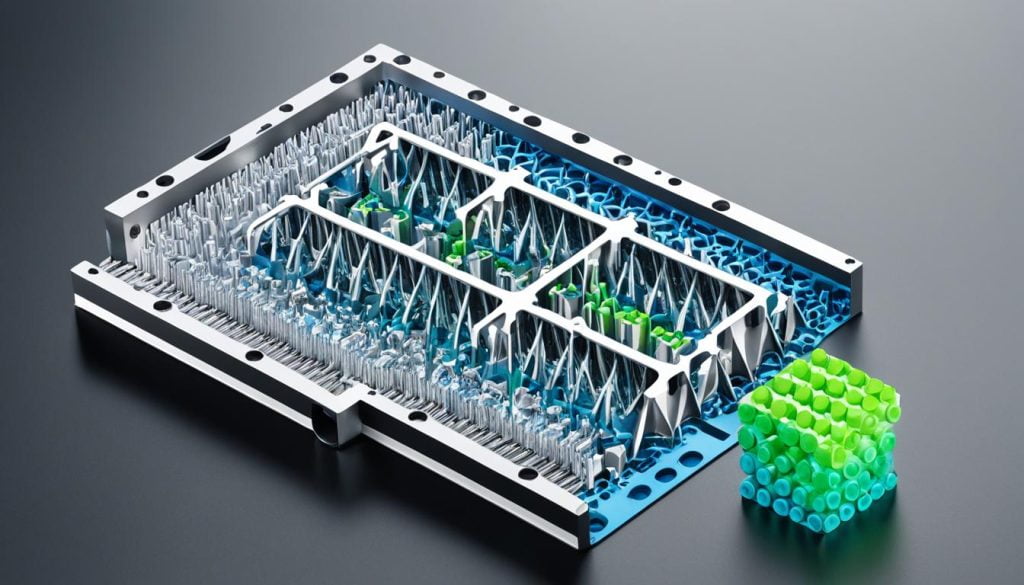
Producing Finished Products
When it comes to fabricating finished products, CNC machining takes the spotlight. With its lightning-fast speed, wide array of surface finish options, and suitability for high-volume production, CNC machining is the go-to choice for manufacturers looking to create polished, high-quality products.
On the other hand, additive manufacturing is reserved for more specialized or complex parts with low production volumes. Utilizing additive manufacturing for these specific applications allows manufacturers to take advantage of its design flexibility and the ability to create intricate geometries that would otherwise be challenging to produce using traditional methods.
While additive manufacturing has its merits, metal parts frequently rely on subtractive manufacturing due to cost considerations. Adding material layer by layer can be an expensive process, making subtractive manufacturing, with its proven track record, a more cost-effective option for producing metal components in larger quantities.
By leveraging the strengths of CNC machining and subtractive manufacturing, manufacturers can achieve finished product fabrication with precision, efficiency, and cost-effectiveness. CNC machining ensures the desired surface finishes, dimensional accuracy, and scalability needed for high-volume production, while subtractive manufacturing enables manufacturers to craft metal parts without breaking the bank.
Comparing Additive and Subtractive Manufacturing for Finished Product Fabrication
| Additive Manufacturing | Subtractive Manufacturing | |
|---|---|---|
| Precision | Moderate | High |
| Surface Finishes | Varies (post-processing required) | Smooth and precise |
| Cost | Higher for larger volumes | Cost-effective for high-volume production |
| Prototyping | Excellent for rapid prototyping | Less suitable for prototyping due to material wastage |
| Complexity | High geometric complexity achievable | Can handle complex geometries |
Choosing the right manufacturing method for producing finished products is crucial to ensure the desired quality, cost-efficiency, and timeliness. While additive manufacturing offers design freedom and specialty applications, CNC machining remains the top choice when it comes to high-volume production and achieving impeccable surface finishes. By carefully considering the specific requirements of your project, you can optimize your production process and create outstanding finished products.
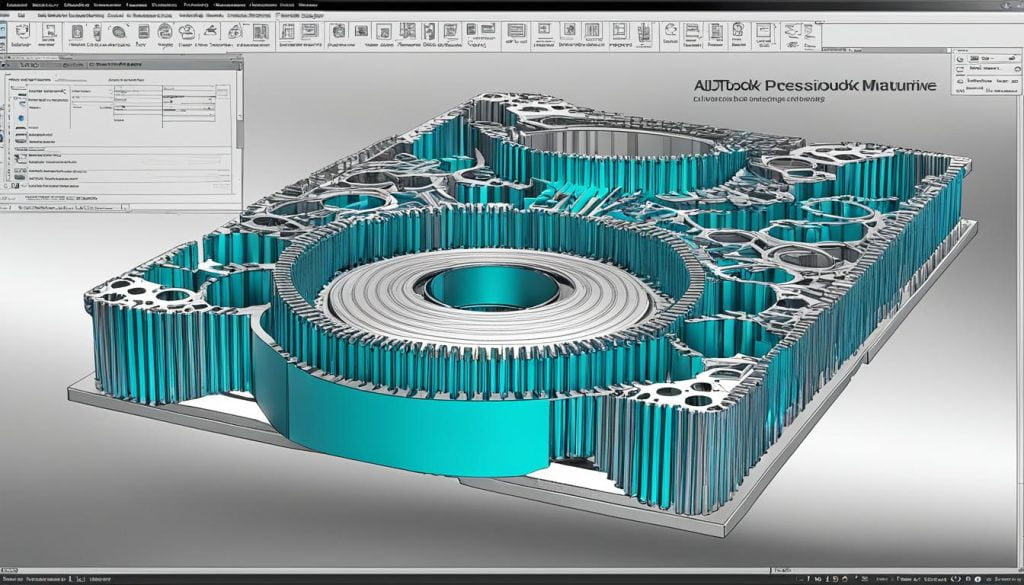
Autodesk CAM Software for CNC Machining
When it comes to CNC machining, efficiency and precision are key. That’s where Autodesk CAM software comes in. With its advanced capabilities and seamless integration with existing Autodesk platforms, it streamlines the entire workflow from design to generating the CNC code for machining.
Whether you’re working on milling, turning, or wire EDM processes, Autodesk CAM software automates the process, saving you time and minimizing errors. This powerful tool optimizes subtractive manufacturing, ensuring that you get the most out of your CNC machine.
With Autodesk CAM software, you can unleash the full potential of your CNC machining operations. It offers:
- Automation: Say goodbye to tedious manual programming. The software automates the generation of toolpaths, reducing the risk of human error and accelerating your machining process.
- Efficiency: By streamlining the workflow, Autodesk CAM software maximizes productivity. It helps you achieve faster cycle times and higher throughput, saving you valuable time and resources.
- Precision: Accuracy is crucial in CNC machining, and Autodesk CAM software delivers. It enables you to achieve tight tolerances and exceptional surface finishes, ensuring the quality of your finished parts.
But don’t just take our word for it. See the results for yourself:
“Autodesk CAM software has revolutionized our CNC machining operations. It has significantly improved our efficiency and helped us deliver high-quality parts faster. The automation capabilities have been a game-changer for our production process.” – John Smith, Manufacturing Manager at XYZ Manufacturing.
Discover the power of Autodesk CAM software for CNC machining and take your subtractive manufacturing to the next level. Transform your designs into reality with speed, precision, and ease.
| Key Features of Autodesk CAM Software: | Benefits: |
|---|---|
| Automation of toolpath generation | Reduces manual programming and minimizes errors |
| Efficient workflow | Faster cycle times and higher throughput |
| Precision machining | Accurate results with tight tolerances and exceptional surface finishes |
Additive and Subtractive Manufacturing Equipment Costs and Training
When it comes to additive manufacturing equipment, the costs can vary significantly depending on the type and scale of the machines. From affordable desktop printers to large industrial systems, there is a wide range of options to choose from. The affordability of desktop printers makes them a popular choice for small-scale projects and prototyping.
Training requirements for additive manufacturing equipment also differ based on the complexity of the machines. Desktop printers usually have minimal training requirements, with intuitive user interfaces and simplified workflows. However, for industrial systems, dedicated staff members are often needed to operate and maintain the equipment, resulting in more extensive training programs.
On the other hand, subtractive manufacturing equipment costs depend on factors such as machine complexity and size. CNC machines, milling machines, and other subtractive manufacturing equipment can be a significant investment for manufacturers. The costs range from smaller, more affordable machines suitable for workshops to larger, industrial-grade systems used for large-scale production.
In terms of training for subtractive manufacturing, it goes beyond just operating the machines. Training programs encompass software usage, maintenance procedures, machine operation, and finishing techniques. This comprehensive training ensures that operators have the skills and knowledge to maximize the capabilities of subtractive manufacturing equipment.
Overall, while additive manufacturing equipment costs can vary from affordable to expensive, training requirements tend to be minimal for desktop printers and more extensive for industrial systems. On the other hand, subtractive manufacturing equipment costs depend on complexity and size, with comprehensive training programs covering various aspects of machine operation and maintenance.
Additive and Subtractive Manufacturing Facility and Ancillary Equipment
When it comes to setting up a manufacturing facility for additive and subtractive processes, there are a few considerations to keep in mind. Additive manufacturing, also known as 3D printing, can be done in office or workshop environments, making it a versatile option for various settings. However, certain industrial-scale printers may require dedicated spaces due to their size and specialized requirements.
Ancillary equipment plays an essential role in both additive and subtractive manufacturing. For additive manufacturing, additional equipment such as cleaning stations, post-curing systems, and finishing tools may be necessary. These ancillary equipment pieces help ensure the quality and functionality of the printed parts.
On the other hand, subtractive manufacturing, which involves material removal processes like CNC machining, is typically carried out in workshops. It requires larger dedicated spaces to accommodate industrial-scale machinery and ensure optimal performance.
Ancillary equipment for subtractive manufacturing includes various tooling options such as cutting tools, clamps, and fixtures. Additionally, handling systems like robotic arms or conveyors help streamline the workflow and enhance efficiency.
Comparing Facility Requirements
When it comes to facility requirements, additive manufacturing offers more flexibility, as it can be integrated into existing office or workshop spaces. On the other hand, subtractive manufacturing demands larger dedicated areas with proper ventilation and safety measures in place.
It’s important to assess your specific needs and production requirements when planning your facility layout. Consider factors such as space availability, workflow efficiency, and the integration of ancillary equipment to optimize your manufacturing process.
The Importance of Ancillary Equipment
Ancillary equipment plays a crucial role in both additive and subtractive manufacturing. In additive manufacturing, cleaning stations help remove support materials, post-curing systems aid in the final curing of printed parts, and finishing tools ensure the desired surface texture and appearance.
Similarly, subtractive manufacturing relies on various tooling options to achieve precise material removal. Cutting tools, clamps, and fixtures assist in holding the workpiece securely while allowing for accurate machining operations. Additionally, the proper handling systems ensure smooth material transportation and efficient workflow.
Additive and Subtractive Manufacturing Facility Comparison
| Additive Manufacturing Facility | Subtractive Manufacturing Facility |
|---|---|
| Can be set up in office or workshop environments | Requires larger dedicated spaces |
| Flexibility in integrating into existing spaces | Demands proper ventilation and safety measures |
| Ancillary equipment includes cleaning stations, post-curing systems, and finishing tools | Ancillary equipment includes various tooling options and handling systems |
By considering the facility requirements and investing in the right ancillary equipment, you can create an optimized manufacturing environment that meets your production needs. Whether you choose additive or subtractive manufacturing, having the right setup and equipment is crucial for achieving high-quality, efficient results.
Conclusion
Additive and subtractive manufacturing technologies each have their own strengths and play important roles in product development and manufacturing. By understanding the differences and applications of these two methods, you can optimize your production processes and leverage the benefits of both approaches.
Whether you are looking for versatility or the precision of subtractive production, combining additive and subtractive manufacturing can offer the best of both worlds. Additive manufacturing, such as 3D printing, allows for the creation of complex geometries and is ideal for rapid prototyping and low-volume production. On the other hand, subtractive manufacturing, like CNC machining, provides smoother surface finishes and precise tolerances, making it suitable for producing finished products and high-volume production.
By utilizing both additive and subtractive manufacturing technologies, you can achieve an optimized production process that meets your specific needs. This hybrid approach enables you to leverage the design freedom and speed of additive manufacturing while benefiting from the precision and surface finishes of subtractive manufacturing. The key is to understand the strengths of each technology and apply them strategically throughout your product development and manufacturing journey.
So, whether you’re exploring advanced additive manufacturing techniques or embracing the efficiency of subtractive manufacturing, remember to consider the unique advantages of each technology. By leveraging both additive and subtractive manufacturing, you can unlock new possibilities and create high-quality products with an optimized production process that truly harnesses the power of these innovative technologies.
FAQ
What is additive manufacturing?
Additive manufacturing is a process that builds objects by adding material layer by layer, based on CAD models. It is also known as 3D printing technology and is commonly used for rapid prototyping, manufacturing tooling, and short-run production.
What is subtractive manufacturing?
Subtractive manufacturing involves removing material from solid blocks using machining processes, such as turning, drilling, milling, and grinding. It is commonly used in CNC machining and is ideal for creating parts with tight tolerances and complex geometries.
What are the applications of additive and subtractive manufacturing?
Additive manufacturing is commonly used for rapid prototyping, manufacturing tooling, and low-volume production. Subtractive manufacturing is often used for fabricating finished parts and high-volume production. Each method has strengths depending on the size, complexity, and material requirements of the part.
What is hybrid additive and subtractive manufacturing?
Hybrid manufacturing combines the versatility of additive manufacturing with the advantages of subtractive methods. Specialist machines can perform both operations, allowing for the creation of complex parts. It is particularly useful for repairing worn or broken parts.
What are the differences between additive and subtractive manufacturing?
Additive manufacturing builds parts layer by layer, while subtractive manufacturing removes material to create parts. Additive processes offer design freedom, but are slower and require post-manufacturing methods for finishing. Subtractive manufacturing offers smoother surface finishes and precise tolerances.
When is CNC machining preferred over additive manufacturing?
CNC machining, a subtractive manufacturing process, is often preferred for fabricating finished products due to its speed, surface finish choices, and suitability for high-volume production. Additive manufacturing is reserved for specialist or complex parts with low production volumes.
What CAM software does Autodesk offer for CNC machining?
Autodesk offers advanced CAM software that automates the workflow from design to generating the CNC code for machining. The software integrates with existing Autodesk platforms and speeds up subtractive manufacturing processes such as milling, turning, and wire EDM.
What are the equipment costs and training requirements for additive and subtractive manufacturing?
Additive manufacturing equipment costs range from affordable desktop printers to expensive industrial machines. Training for desktop printers is minimal, while industrial systems require dedicated staff and extensive training. Subtractive manufacturing equipment costs vary depending on the complexity and size of the machine. Training for subtractive manufacturing involves software, maintenance, operation, and finishing.
What are the facility requirements for additive and subtractive manufacturing?
Additive manufacturing can be done in office or workshop environments, with some industrial printers requiring dedicated spaces. Ancillary equipment such as cleaning, post-curing, and finishing systems may be necessary. Subtractive manufacturing is suitable for workshops and requires larger dedicated spaces for industrial systems. Ancillary equipment includes various tooling and handling systems.
How can additive and subtractive manufacturing be leveraged for optimized production processes?
By understanding the differences and applications of additive and subtractive manufacturing, product designers and manufacturers can combine the versatility of additive production with the strength and precision of subtractive manufacturing. This allows for optimized production processes and improved product development.