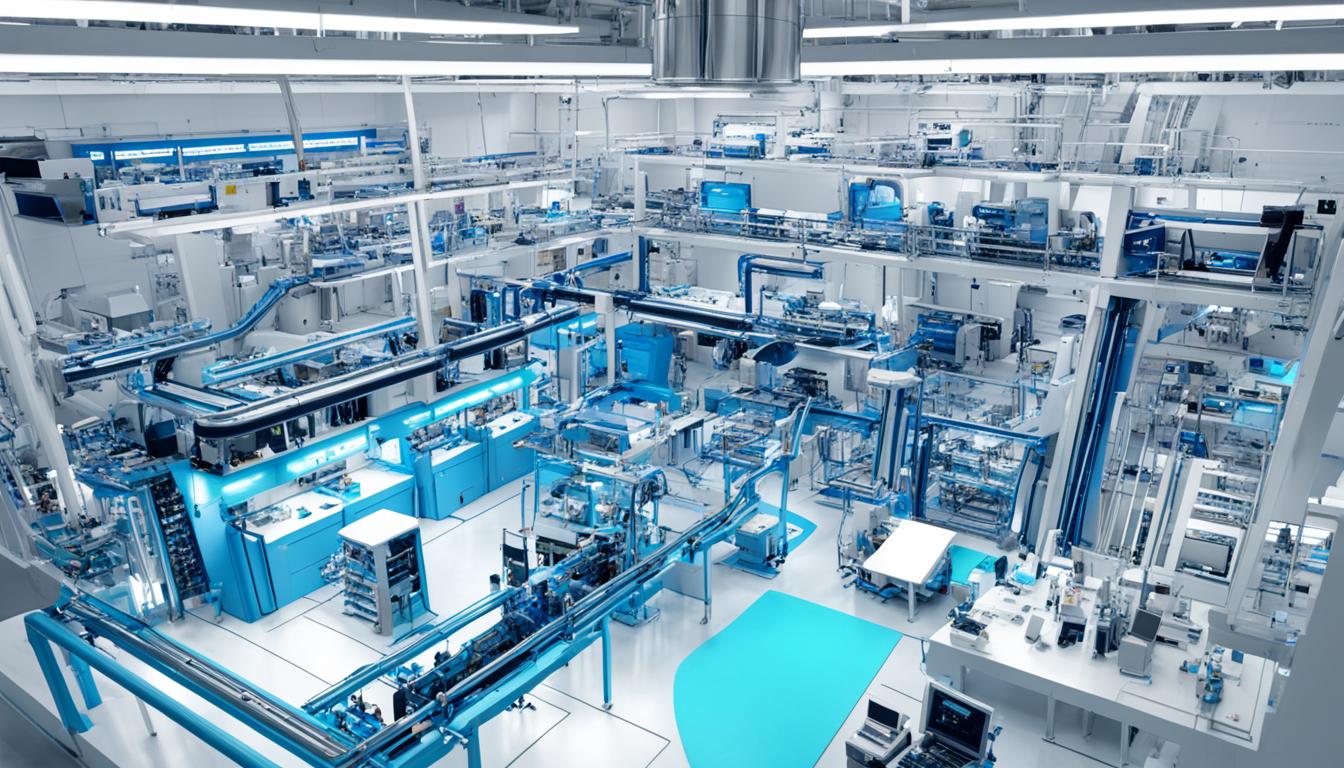
As you traverse the landscape of today’s global economy, it’s clear that pivotal manufacturing industries play a central role in shaping the prosperity of nations. These sectors are much more than mere factories and assembly lines; they are the very backbone of our economic structure. By producing the goods that are fundamental to our daily lives, they create job opportunities and drive forward the wheels of innovation. The interconnectivity of major manufacturing areas amplifies their importance, offering a window into the complex network of production that fortifies our modern world.
Focusing on key industrial sectors such as automotive, technology, and pharmaceuticals, you catch a glimpse of how these areas not only supply essential products but also embody the spirit of progress and technology. It’s this fusion of creativity with manufacturing prowess that keeps the economy vibrant and responsive to the ever-changing needs of society.
Key Takeaways
- Understand the integral role that manufacturing industries play in driving economic development.
- Explore the ripple effect of manufacturing on job creation and innovation across sectors.
- Recognize the synergy between various manufacturing sectors and how they power the global economy.
- Acknowledge the importance of automotive, technology, and pharmaceuticals in industrial production.
- Grasp how these key sectors are central to meeting the demands of our contemporary lifestyle and economy.
The Impact of Key Manufacturing Industries on the Global Economy
The vitality of primary manufacturing sectors can hardly be overstated when it comes to their role as the global economic engine. These industries are not just cogs in the wheel; they are the very drivers of wealth, shaping the livelihood of billions. The influence of industrial production, encompassing everything from consumer goods to advanced machinery, ripples across the entire fabric of the global economy. As we navigate through this discourse, keep at the forefront of your mind the unparalleled contribution of these sectors to employment, GDP, and trade relations.
- Job Creation: Primary manufacturing sectors consistently prove to be a cornerstone for employment opportunities. From factory workers to engineers, these industries create diverse job roles pivotal for economic stability and growth.
- Economic Contribution: Industrial production significantly bolsters a nation’s Gross Domestic Product (GDP). Through the fabrication of goods and the subsequent exportation, countries forge a path of prosperity.
- Trade and Competitiveness: Skilled labor, innovation, and high-quality production standards establish strong trade relations and competitive advantages internationally, allowing nations to thrive in a connected global marketplace.
Enabling the cultivation of secondary markets and augmenteing services, the impact of manufacturing industries extends far beyond their immediate outputs. Infrastructures built around these sectors, such as transport, retail, and finance, flourish as a result, encapsulating the true influence of these behemoths in the industrial arena.
| Industry | Employment Increase | Percentage of GDP | Yearly Export Value |
|---|---|---|---|
| Automotive | 1.7% | 2.9% | $1.2 Trillion |
| Technology | 2.1% | 3.1% | $877 Billion |
| Pharmaceuticals | 1.4% | 2.3% | $550 Billion |
In dispensing these insights, it is abundantly clear that industrial production forms a fulcrum upon which the world’s economy balances. Data-driven assessments reveal the vast expanses of growth and development emanating from these primary manufacturing sectors. As ambitious nations continue to harness the power of these sectors, they propel not just their own fortunes but contribute to the enrichment of the global economic tapestry.
Exploring the Top Manufacturing Sectors
As we delve into the world of industrial prowess, it is clear that certain leading industrial segments stand out for their contribution to the global economic tapestry. These are the bastions of innovative achievements and are integral in shaping the current and future landscapes of primary production sectors.
Automotive and Aerospace
The synergy between the automotive and aerospace industries represents a cornerstone of technological advancement and economic growth. With companies like Boeing and Toyota pushing the envelope in efficiency and design, these sectors navigate the increasing challenges of sustainability and environmental regulations by leveraging cutting-edge technologies and processes. Noteworthy trends include electric vehicle proliferation in the automotive sector and the pursuit of more fuel-efficient aircraft in aerospace, both driven by consumer demand and environmental considerations. Huge investments in research and development also underscore the economic significance of these industries, continually driving them to new heights.
Electronics and Technology
Arguably the most rapidly evolving sector, electronics and technology have become ubiquitous in our daily lives. Giants like Apple and Samsung dictate market fluctuations with each product launch, showcasing how consumer demand drives this industry’s incredible pace. The emergence of the Internet of Things (IoT), 5G technology, and smart devices represent just a slice of the innovation pie that keeps this industry at the cutting edge of the market. This unyielding advancement cycle not only drives economic growth but also continuously redefines consumer lifestyle and communication.
Pharmaceutical and Chemical Products
In a world where health crises can arise unexpectedly, the pharmaceutical and chemical sectors are pivotal. Firms such as Pfizer and Bayer are at the forefront, deeply invested in R&D to deliver life-saving drugs and treatments. The resilience and adaptability of these industries become evident as they respond to pandemics and healthcare shifts, navigating complex regulatory environments to bring innovations from the laboratory to the global market. Their role is indispensable in maintaining public health and thus, they represent a significant slice of the primary production sectors.
Industrial Production and Technological Advancements
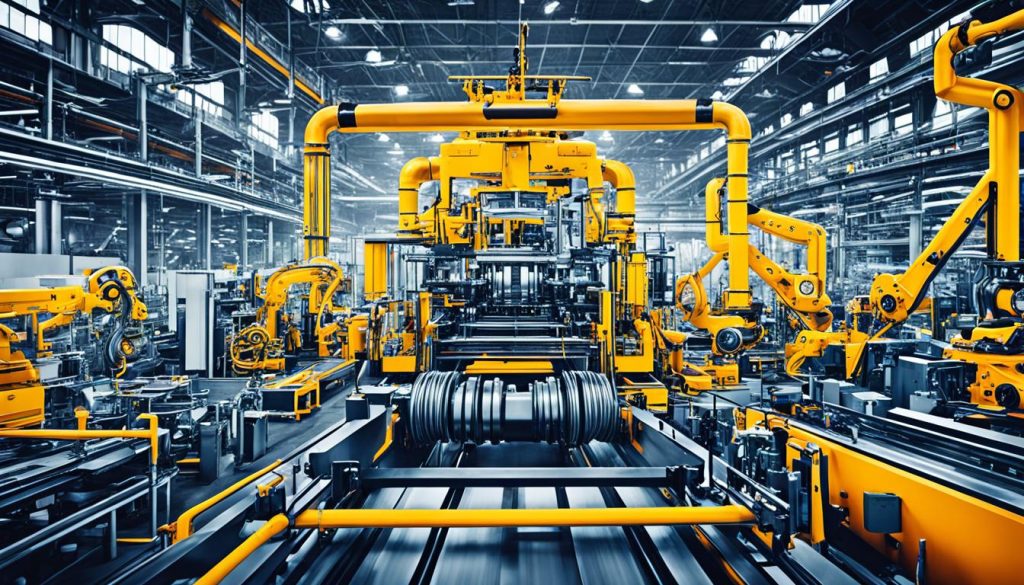
As we delve into the dynamic world of manufacturing, your understanding of the interplay between technology and industrial production will deepen. The recent surge in technological advancements in manufacturing has not only reshaped how products are crafted but has also set new standards for efficiency and quality.
Innovations in Automation
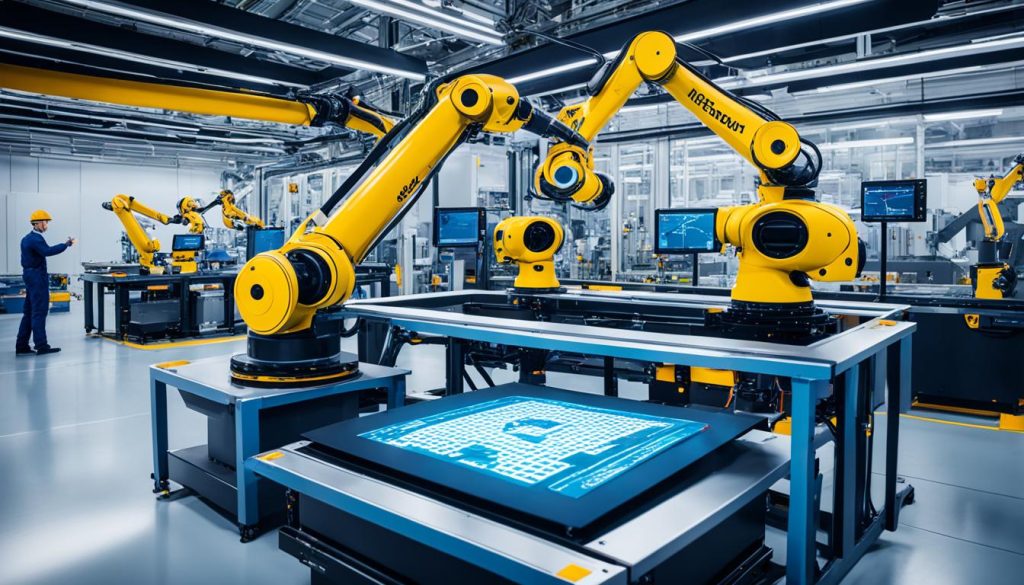
In an era where automation in industrial production is becoming more prevalent, companies are harnessing cutting-edge technologies to stay ahead. From robotics to programmable logic controllers, these tools enable manufacturers to reduce human error, enhance precision, and minimize the need for manual labor. Here’s a glimpse into how automation is reinventing the factory floor:
- Robotic assembly lines that operate with remarkable speed and accuracy
- Automated quality control systems that consistently ensure product excellence
- Material handling robots that safely and efficiently move heavy components
These innovations are not only driving production standards higher but are also creating safer work environments for humans, by handling tasks that are considered dangerous or repetitive.
The Role of Artificial Intelligence
Moving beyond the mechanical, we witness artificial intelligence functioning as the cerebral cortex of modern manufacturing. AI in key manufacturing industries transforms vast arrays of data into actionable insights, leading to smarter, more proactive decision-making. Let’s consider AI’s pivotal applications:
- Predictive Maintenance: AI algorithms predict equipment failures, reducing downtime and maintenance costs.
- Quality Control: Advanced image recognition ensures precision and uniformity in production, far surpassing human capabilities.
- Supply Chain Management: AI’s predictive analytics enable companies to respond swiftly to market demands and manage inventory more effectively.
As AI continues to permeate every facet of production lines, the once-static factory environments become dynamic hubs capable of self-regulation and optimization.
| Technological Aspect | Impact on Manufacturing |
|---|---|
| Robotics and Automation | Increases output and consistency while decreasing production errors and safety hazards. |
| Machine Learning Algorithms | Enables predictive maintenance, reducing interruptions and maintenance-related expenditures. |
| AI-Driven Quality Control | Delivers superior quality products with less waste and greater adherence to standards. |
| Smart Supply Chain Solutions | Optimizes inventory levels and enhances just-in-time manufacturing processes. |
Your grasp of these advancements not only equips you with insight into current trends but also prepares you for the fast-approaching future of manufacturing—one where technology and production merge to create systems of unparalleled efficiency and intelligence.
The Dynamics of Primary Manufacturing Sectors
As we encapsulate the essence of our discussion, it’s crucial to understand that the dynamism of the primary production sectors rests on a multifaceted foundation. Staffing strategies within these sectors are undergoing transformation, pushing industries to attract and retain a skilled workforce in the face of technological disruption. Investment in R&D has become the cornerstone for maintaining competitiveness, empowering key manufacturing industries to not only augment economic output but to also pioneer societal advancements and lay the groundwork for future innovation.
The adaptive capacities of the top manufacturing sectors are constantly tested by challenges such as globalization and shifting consumer preferences. These sectors are compelled to continuously evolve, ensuring that the products and services rendered meet the high-quality demands of a global market. At the intersection of challenge and opportunity lies sustainability—a concept now deeply woven into the fabric of industry practices. Embracing eco-friendly operations and sustainable resource management has become a pivotal goal, reflecting the changing ethos of both producers and consumers.
As your lens zooms out to appraise the larger landscape, remember that these primary production sectors are not just economic entities; they are influential players in a complex societal tableau. They hold the capacity to mold technological frontiers and define the trajectory of economic and social progress. Encountering the rapid pace of change, these sectors must continue to be resilient and innovative, ensuring that their contributions go beyond the financial, enriching the quality of life and leading the march toward a more efficient and sustainable future.
FAQ
What defines key manufacturing industries?
Key manufacturing industries are defined by their significant role in providing essential goods, generating employment, and stimulating innovation. These industries are pivotal for economic development due to their contribution to a nation’s gross domestic product (GDP) and their influence on global trade and economic stability. Industries such as automotive, technology, and pharmaceuticals are notable examples of key industrial sectors.
Why are some manufacturing industries considered pivotal within the economy?
Certain manufacturing industries are considered pivotal because they serve as the backbone of the economy, fueling growth through industrial production. They are major manufacturing areas that create a ripple effect, supporting secondary markets and services, fostering trade relations, and enhancing a country’s competitive edge internationally. Moreover, these key industrial sectors drive innovation and technological advancements that shape the future of societies globally.
How do key manufacturing industries impact the global economy?
These industries act as a global economic engine that drives wealth and prosperity worldwide. They significantly contribute to creating employment, adding to a country’s GDP, and stimulating secondary markets. Key manufacturing industries also play a vital role in fostering healthy trade relations and ensuring that nations maintain a competitive standing in the international market, which in turn affects the global economic landscape.
What are some of the leading industrial segments currently?
Some of the leading industrial segments in the current market include the automotive and aerospace sectors, which are noted for their innovations and economic significance. Electronics and technology sectors are also leading segments due to their rapid growth, consumer demand, and continual advancements. Additionally, the pharmaceutical and chemical products sectors play a key role due to their focus on R&D, regulatory compliance, and responsiveness to health crises, making them primary production sectors within the industrial ecosystem.
How are technological advancements like automation shaping industrial production?
Technological advancements such as automation are revolutionizing manufacturing processes by increasing efficiency, improving productivity, and creating safer working environments. Automation has enabled industries to minimize human error, reduce costs, and enhance product quality. These innovations have made it possible for key manufacturing industries to stay competitive in a rapidly evolving technological landscape.
What is the role of artificial intelligence in key manufacturing industries?
Artificial intelligence plays a transformative role in key manufacturing industries by streamlining production lines and enhancing efficiency. AI technologies are instrumental in predictive maintenance, quality control, supply chain management, and fostering data-driven decision-making. The integration of AI in manufacturing has led to smarter, more responsive industrial operations and is a pivotal factor in the industry’s future development and sustainability.
What defines the dynamics within primary manufacturing sectors?
The dynamics within primary manufacturing sectors are defined by several factors, including staffing levels, the extent of investment in R&D, regulatory changes, and industry-specific challenges and opportunities. These sectors must navigate globalization, evolving consumer preferences, and the drive for sustainable practices as they adapt to technological and economic changes. The dynamics of these sectors detail how they respond to external pressures while maintaining their role in generating economic output and societal progress.