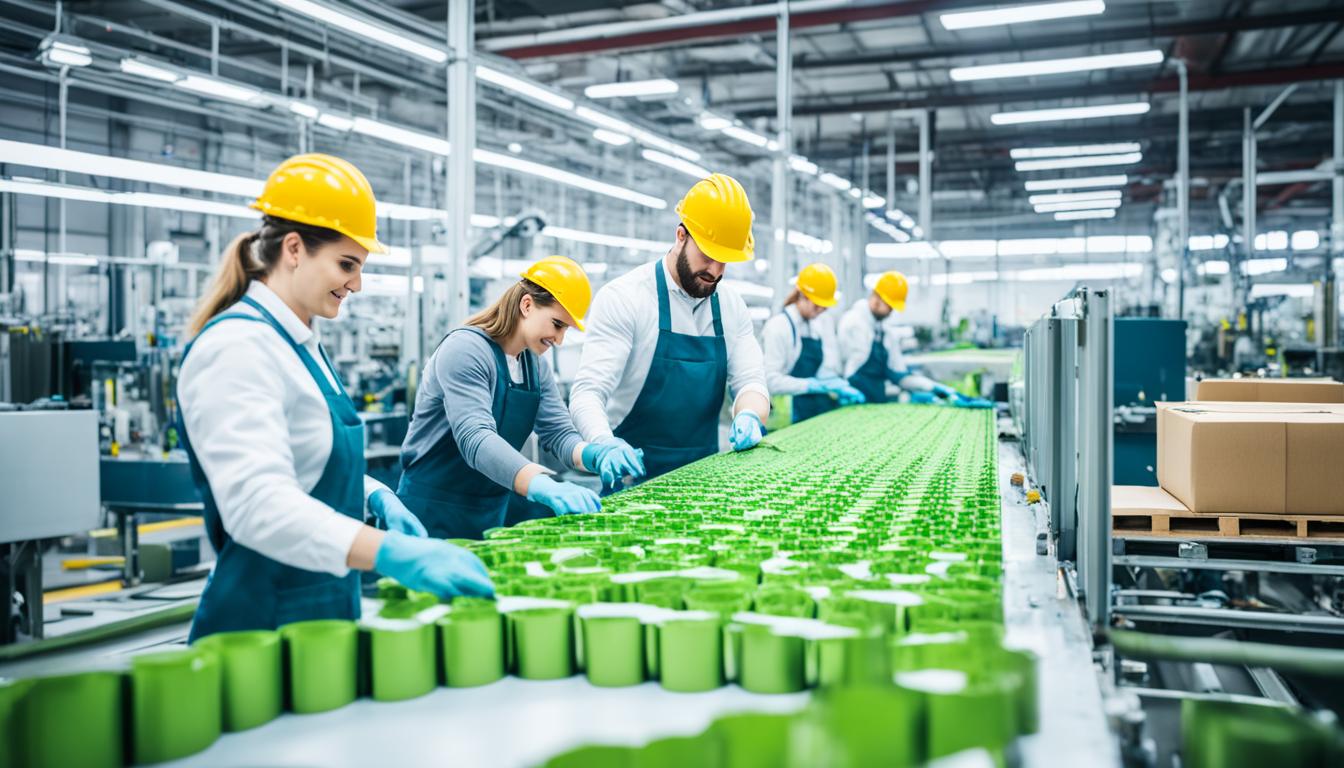
The concept of a circular economy challenges you, as a manufacturer, to rethink your approach to design, production, and shipping. It aims to bring materials back into the economy through sustainable production processes and reduce waste. By adopting a circular economy mindset, you can optimize resource efficiency, minimize environmental impact, and implement eco-friendly manufacturing practices.
Implementing a closed-loop system in your manufacturing processes allows you to maximize the use of resources, reduce reliance on virgin materials, and minimize waste generation. This shift towards circular manufacturing is not only beneficial for the environment, but it also aligns with consumer demand for products produced using sustainable practices.
Key Takeaways
- Sustainable production processes and resource efficiency are key elements of circular manufacturing.
- Implementing a circular economy in manufacturing involves adopting eco-friendly practices and reducing waste.
- Circular supply chain management plays a crucial role in achieving a closed-loop system.
- Green manufacturing practices can help minimize the environmental impact of manufacturing processes.
- By embracing circular economy principles, manufacturers can create a more sustainable and environmentally conscious future.
The Importance of Circular Economy in Manufacturing
Circular economy practices are gaining importance in the manufacturing industry due to their potential to minimize environmental impact. By adopting circular economy strategies, manufacturers can reduce waste, optimize resource efficiency, and promote sustainable production processes.
This shift towards circular manufacturing is driven by consumer demand for products produced using eco-friendly practices and the financial benefits associated with waste reduction initiatives.
Benefits of Circular Economy in Manufacturing
Implementing circular economy principles in manufacturing offers several key advantages:
- Waste reduction: Circular economy practices enable manufacturers to minimize waste generation by reusing materials and products.
- Resource efficiency: By optimizing resource usage and promoting sustainable production processes, circular manufacturing minimizes the consumption of finite resources.
- Cost savings: The reduction in waste generation and the efficient use of resources lead to financial savings for manufacturers.
- Eco-friendly manufacturing: Circular economy strategies align with the increasing demand for products that are produced using sustainable and environmentally friendly methods.
By embracing circular economy principles, manufacturers can contribute to a more sustainable and eco-friendly future while also gaining financial benefits.
“Circular economy practices enable manufacturers to minimize waste generation by reusing materials and products.”
Case Study: Patagonia’s Circular Economy Initiatives
An example of a company actively practicing circular economy in manufacturing is Patagonia. They have implemented various initiatives to minimize waste and promote resource efficiency:
| Initiative | Description |
|---|---|
| Worn Wear Program | Patagonia encourages customers to repair and reuse their clothing through its Worn Wear program. They provide repair services and offer used products for sale. |
| Recycled Materials | Patagonia incorporates recycled materials, such as plastic bottles and nylon, into their products to reduce the demand for virgin resources. |
| Product Lifecycle Initiative | Patagonia focuses on extending the lifespan of their products through design for durability and repairability, reducing the need for new purchases. |
Patagonia’s circular economy initiatives not only contribute to waste reduction and resource efficiency but also showcase the financial benefits of adopting circular manufacturing practices.
Standards and Business Models for Circular Economy in Manufacturing
To effectively implement circular economy principles in manufacturing, new standards and business models are needed. These standards and business models will help companies achieve their circular economy goals, measure their progress, and demonstrate the results. Organizations like NIST’s Systems Integration Division work alongside industry and standards organizations to address the research and development of these standards. The aim is to consistently measure progress and show results in achieving a circular supply chain management and green manufacturing practices.
By establishing standards, manufacturers can ensure that their processes align with the principles of a circular economy. These standards provide guidelines on resource efficiency, waste reduction, and sustainable manufacturing practices. Adhering to these standards not only promotes environmentally friendly practices but also helps companies gain credibility and customer trust in their commitment to sustainability.
Additionally, developing business models that prioritize circular economy principles is crucial. Circular business models focus on extending the lifespan of products, promoting product reuse, and creating value from waste materials. By embracing circular business models, companies can reduce their environmental impact, create new revenue streams, and foster a more sustainable economy.
Implementing circularity in manufacturing requires a shift in mindset and collaborative efforts between industry players, regulatory bodies, and standards organizations. By working together, we can establish the necessary standards and business models to drive sustainable manufacturing practices and make measurable progress towards a circular economy.
Benefits of Standards and Business Models for Circular Economy
The implementation of standards and business models for circular economy in manufacturing offers several benefits:
- Promotes resource efficiency and waste reduction
- Enables consistent measurement of progress towards circular economy goals
- Enhances credibility and customer trust
- Creates new revenue streams through value creation from waste materials
- Reduces environmental impact and fosters a more sustainable economy
By embracing circular economy standards and business models, manufacturers can be at the forefront of sustainable manufacturing practices, driving positive change in their industry.
| Benefits of Standards and Business Models for Circular Economy |
|---|
| Promotes resource efficiency and waste reduction |
| Enables consistent measurement of progress towards circular economy goals |
| Enhances credibility and customer trust |
| Creates new revenue streams through value creation from waste materials |
| Reduces environmental impact and fosters a more sustainable economy |
Circular Economy in Automotive Manufacturing
The automotive industry plays a crucial role in embracing circular economy practices to drive sustainability and resource efficiency. With EU regulations mandating a high percentage of automobile weight to be recycled or reused, manufacturers are actively exploring innovative solutions to retain and recapture the value of their products. This includes embracing recycling and remanufacturing methods to reduce waste and improve resource efficiency.
By adopting circular economy principles in automotive manufacturing, companies can significantly reduce the demand for new materials and minimize their environmental footprint. This not only aligns with regulatory requirements but also demonstrates a commitment to sustainable production processes.
Recycling in the Automotive Industry
The automotive industry has made significant strides in recycling materials to reduce waste and conserve resources. Manufacturers prioritize recycling by implementing efficient collection and processing systems for end-of-life vehicles. This ensures the recovery of valuable components, such as metals and plastics, that can be reused or repurposed.
Recycling in the automotive industry helps achieve several benefits:
- Reduces the extraction of raw materials
- Conserves energy by using recycled materials instead of processing new ones
- Minimizes waste sent to landfills
Remanufacturing for Extended Product Life
Remanufacturing is another key practice in the automotive industry that exemplifies circular economy principles. It involves refurbishing used components to extend their lifespan and restore them to original specifications.
The benefits of remanufacturing in the automotive industry include:
- Reducing the need for new component production
- Lowering production costs by reusing existing materials and components
- Decreasing energy consumption and emissions associated with manufacturing new components
Resource Efficiency and Circular Supply Chains
Resource efficiency is a key goal of circular economy practices in the automotive industry. Manufacturers strive to optimize material usage, minimize waste generation, and enhance overall energy efficiency throughout the supply chain.
Implementing circular supply chain management strategies allows for:
- Maximizing the use of recycled materials in production
- Streamlining material flow and reducing transportation costs
- Minimizing the environmental impact of logistics and distribution processes
Table: Examples of Circular Economy Practices in the Automotive Industry
| Company | Circular Economy Practices |
|---|---|
| Ford | Utilizes recycled plastics in vehicle components and interior materials |
| BMW | Implements remanufacturing processes for engines and transmissions |
| Tesla | Promotes electric vehicle battery recycling and materials recovery |
Financial Benefits of Circular Manufacturing
Circular manufacturing offers significant financial benefits for companies. By embracing circular economy principles and implementing sustainable manufacturing practices, businesses can not only reduce their environmental impact but also improve their bottom line. Here are some of the key financial benefits associated with circular manufacturing:
1. Cost Savings
Implementing circular manufacturing practices can lead to significant cost savings for companies. By optimizing resource efficiency and minimizing waste generation, businesses can reduce their reliance on expensive raw materials and energy-intensive processes. This can result in lower production costs and improved overall financial performance.
2. New Revenue Streams
Circular manufacturing opens up new opportunities for generating revenue. Companies can explore innovative ways to put value on waste materials and by-products through recycling, remanufacturing, or repurposing. By finding new markets for these secondary resources, businesses can create additional revenue streams and tap into previously untapped sources of income.
3. Reduced Energy Consumption
Circular manufacturing focuses on maximizing resource efficiency, which includes minimizing energy consumption. By implementing energy-efficient practices and optimizing production processes, businesses can lower their energy bills and reduce operational costs. This not only helps companies save money but also contributes to the reduction of CO2 emissions, supporting their sustainability goals.
4. Waste Reduction
Circular manufacturing aims to minimize waste generation throughout the production cycle. By implementing waste reduction strategies such as recycling, reusing, and remanufacturing, businesses can reduce disposal costs and the associated environmental impact. This translates into financial savings and improves the overall sustainability of their operations.
5. Enhanced Reputation and Customer Demand
Embracing circular manufacturing demonstrates a company’s commitment to sustainability and environmental stewardship. This can lead to an enhanced reputation and increased customer demand for their products. With growing awareness and preference for eco-friendly and socially responsible brands, companies that adopt circular manufacturing practices can attract a larger customer base and gain a competitive edge in the market.
“Research by the Ellen MacArthur Foundation suggests that transforming the way goods are made and used can address a substantial portion of CO2 emissions.”
In conclusion, circular manufacturing not only brings environmental benefits but also provides companies with significant financial advantages. By reducing costs, generating new revenue streams, minimizing energy consumption, and optimizing waste management, businesses can improve their profitability while contributing to a more sustainable future.
Strategies for Circular Business Models in Manufacturing
When it comes to adopting circular business models in manufacturing, companies have a variety of strategies to choose from. These strategies enable companies to achieve economic sustainability and successfully implement circular manufacturing practices. Some key strategies include:
1. Retaining Product Ownership
One strategy is for companies to retain ownership of their products throughout their lifecycle. By maintaining control over the products, companies can ensure that the materials are properly managed, reused, or recycled at the end of their useful life. This approach promotes product stewardship and allows companies to extract maximum value from their products.
2. Extending Product Lifespan
Extending the lifespan of products is another important strategy in circular manufacturing. By designing products that are durable, modular, and easy to repair, companies can reduce the need for new products and minimize waste. Additionally, offering repair services and providing replacement parts can help customers prolong the life of their products, contributing to a more sustainable and circular economy.
3. Designing Products for Recycling
A crucial aspect of circular manufacturing involves designing products for recyclability. This means considering the materials used, their compatibility for recycling, and the ease of disassembly. By incorporating recyclable materials and designing products with easy-to-separate components, manufacturers can facilitate the recycling process and support the circular flow of materials.
By adopting these strategies, companies can contribute to the circular economy by reducing waste, extending product lifecycles, and promoting resource efficiency.
“Adopting circular business models in manufacturing is crucial for promoting resource efficiency and reducing waste, ultimately contributing to a more sustainable and circular economy.” – Circular Manufacturing Expert
Benefits of Circular Business Models
| Benefits | Description |
|---|---|
| Waste Reduction | By retaining ownership and extending product lifespan, companies can reduce waste generation and minimize environmental impact. |
| Resource Efficiency | Designing products for recycling and incorporating recyclable materials can help optimize resource utilization. |
| Cost Savings | Implementing circular business models can lead to cost savings through reduced material consumption and improved operational efficiency. |
| Closed-Loop Systems | Circular business models enable the creation of closed-loop systems, where materials are continuously reused, reducing the need for new resources. |
| Sustainable Brand Image | Adopting circular manufacturing practices can enhance a company’s reputation as an environmentally responsible and sustainable brand. |
The benefits of circular business models in manufacturing are numerous, offering cost savings, resource optimization, and a positive environmental impact. By implementing these strategies, companies can move towards a more sustainable and circular future.
Case Studies of Circular Manufacturing Success
Several companies have successfully implemented circular manufacturing practices, showcasing tangible success stories in reducing waste, conserving resources, and creating new business opportunities. Let’s explore two prominent examples: Apple and Philips.
Apple
Apple, renowned for its innovative technology products, has made significant strides in incorporating circular manufacturing principles. The company employs sustainable practices by incorporating nearly 20% recycled materials, such as gold and rare earth elements, in its products. By reusing these valuable resources, Apple not only reduces waste but also contributes to resource conservation. This circular approach aligns with Apple’s commitment to environmental sustainability.
Philips
Another notable success story in circular manufacturing is Philips. The company focuses on remanufacturing, a process that involves refurbishing and extending the lifecycle of medical imaging equipment. By remanufacturing their products, Philips reduces the environmental impact of electronic waste while simultaneously creating value. This approach demonstrates the potential of circular manufacturing in the healthcare industry, where sustainability and resource efficiency are critical.
These success stories from Apple and Philips highlight the effectiveness of circular manufacturing in reducing waste, conserving resources, and driving business growth. By adopting circular practices, companies can not only contribute to a more sustainable future but also create tangible value for their products and services.
Factors to Consider When Starting Circular Manufacturing
When embarking on the journey of circular manufacturing, careful consideration of various factors is essential to ensure successful implementation. By evaluating these factors, companies can make informed decisions and drive their sustainability efforts forward. Some key considerations for starting circular manufacturing include:
Remanufacturing Existing Products
One crucial aspect to consider is the remanufacturing of existing products. Remanufacturing involves extending the lifespan of products for both existing and new customers. By refurbishing and reusing products, companies can reduce waste, conserve resources, and promote a more sustainable approach to manufacturing.
Economic and Sustainability Implications
Implementing circular manufacturing practices necessitates a thorough evaluation of the economic and sustainability implications. Companies should consider factors like resource scarcity and evolving environmental regulations. By understanding these implications, organizations can develop strategies that align with their business goals while prioritizing sustainability and minimizing their environmental footprint.
“Circular manufacturing requires a shift in mindset and a holistic approach to resource management. By embracing the circular economy, companies can create new business opportunities while contributing to a more sustainable future.”
By assessing these key factors, companies can set a strong foundation for implementing circular manufacturing practices. This intentional approach enables businesses to optimize resource utilization, reduce waste, and pave the way for a more sustainable and circular economy.

Tools and Solutions for Circular Manufacturing
Transitioning to circular manufacturing requires effective tools and solutions to model costs, analyze potential benefits, and optimize processes. SAP offers a range of solutions, including the SAP S/4HANA platform, designed to support companies in their circular manufacturing journey.
With the SAP S/4HANA platform, businesses can leverage cutting-edge modeling capabilities to assess the cost implications of adopting circular manufacturing practices. By integrating industry-specific models and metrics, companies gain a comprehensive understanding of material costs, potential product reuse, and the overall sustainability benefits of circular manufacturing at scale.
Through advanced data analysis and predictive modeling, companies can make data-driven decisions to enhance their circular manufacturing initiatives. The SAP solutions allow businesses to assess the financial and environmental impacts of various strategies and identify the most efficient path forward.
By utilizing SAP’s tools and solutions for circular manufacturing, businesses can:
- Model and predict cost implications
- Analyze material costs and potential for product reuse
- Optimize circular manufacturing processes
- Make informed decisions based on data and insights
- Maximize the potential benefits of circular manufacturing
By leveraging the capabilities of SAP’s solutions, companies can drive innovation, increase efficiency, and unlock the potential of circular manufacturing to create a sustainable and profitable future.
Potential Benefits of SAP’s Circular Manufacturing Solutions
| Potential Benefits | Explanation |
|---|---|
| Cost Reduction | Identify cost-saving opportunities through optimized material reuse and waste reduction. |
| Sustainability | Measure and track environmental impact, such as energy consumption and emissions. |
| Resource Optimization | Maximize the use of resources through efficient product lifecycle management. |
| Market Advantage | Position your company as a leader in sustainable manufacturing practices, attracting environmentally conscious customers and investors. |
| Innovation | By embracing circular manufacturing, businesses can drive innovation and develop new business models. |
Conclusion
The implementation of circular economy principles in manufacturing is revolutionizing the way products are produced and consumed. By adopting sustainable manufacturing practices and embracing circular business models, companies can take significant steps towards reducing waste, improving resource efficiency, and minimizing their environmental impact. With the development of standards, business models, and tools, the transition to circular manufacturing becomes more accessible, enabling companies to measure their progress and showcase the financial and environmental benefits of embracing circular economy principles.
By prioritizing sustainable manufacturing practices, companies can minimize waste generation throughout the entire product lifecycle. This includes optimizing material usage, minimizing packaging waste, and implementing innovative recycling and remanufacturing techniques. Such practices not only help reduce landfill burden but also contribute to a more efficient use of finite resources.
The circular economy is not only environmentally beneficial but also financially rewarding. By implementing circular manufacturing, companies can reduce operational costs, generate new revenue streams, and tap into the potential of a rapidly growing market. It is estimated that by 2050, circular manufacturing initiatives could unlock a staggering $25 trillion in economic value.
Embracing the circular economy in manufacturing is a vital step towards a more sustainable and environmentally conscious future. The development and adoption of standards, business models, and tools play a pivotal role in supporting and accelerating this transition. As manufacturers continue to integrate circular economy principles into their operations, they contribute to a more resource-efficient and waste-free world, paving the way for a greener and more prosperous future.
FAQ
What is the concept of a circular economy in manufacturing?
The concept of a circular economy challenges manufacturers to rethink their approach to design, production, and shipping. It aims to bring materials back into the economy through sustainable practices and reduce waste.
What are the benefits of adopting circular economy practices in manufacturing?
By adopting circular economy strategies, manufacturers can reduce waste, optimize resource efficiency, and promote sustainable production processes. This shift is driven by consumer demand for eco-friendly products and the financial benefits associated with waste reduction initiatives.
Are there any standards and business models for circular economy in manufacturing?
Yes, new standards and business models are being developed to help companies achieve their circular economy goals, measure their progress, and demonstrate the results. Organizations such as NIST and ASTM International are working on these standards.
How does circular economy apply to the automotive industry?
Circular economy practices can have a significant impact on the automotive industry. EU regulations require a high percentage of automobile weight to be recycled or reused. Manufacturers are exploring methods like remanufacturing to retain and recapture the value of their products.
What are the financial benefits of circular manufacturing?
Circular manufacturing can reduce energy consumption, minimize operational waste, and generate new revenue streams by putting value on waste. Research suggests that trillion could be up for grabs by 2050 through circular manufacturing initiatives.
What are some strategies for implementing circular business models in manufacturing?
Companies can choose from various strategies, such as retaining product ownership, extending product lifespan, and designing products for recycling. The choice of strategy depends on factors like the ease of accessing used products and the ease of recycling materials.
Are there any successful examples of circular manufacturing practices?
Yes, companies like Apple and Philips have successfully implemented circular manufacturing practices. Apple incorporates nearly 20% recycled materials in its products, while Philips refurbishes medical imaging equipment through remanufacturing.
What factors should companies consider when starting circular manufacturing?
Companies should consider factors like the remanufacturing of existing products, economic and sustainability implications, and evolving environmental regulations when starting circular manufacturing.
What tools and solutions are available for circular manufacturing?
SAP offers solutions like the SAP S/4HANA platform, which allows users to model and predict the cost and potential benefits of adopting circular manufacturing practices.
What are the overall benefits of circular economy in manufacturing?
Circular economy and manufacturing can reduce waste, improve resource efficiency, and minimize the environmental footprint of manufacturing processes, leading to a more sustainable and environmentally conscious future.