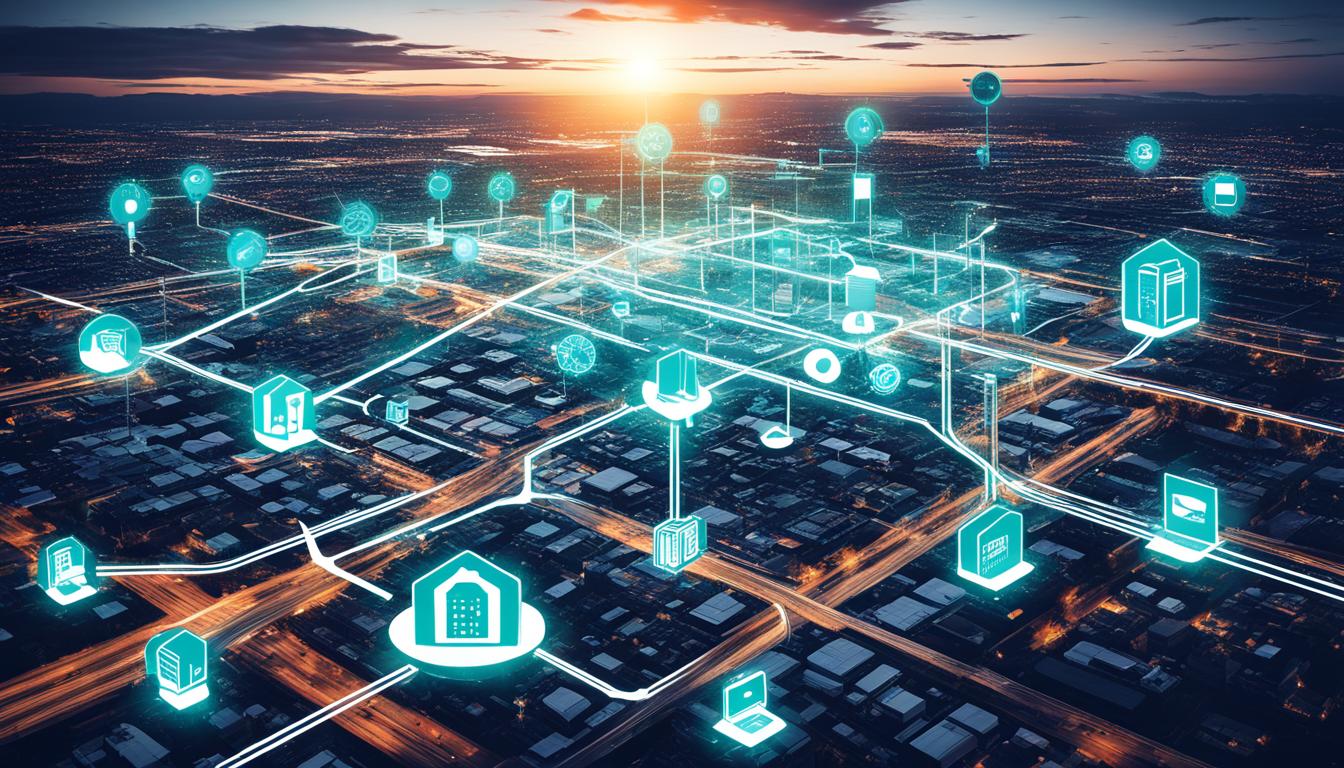
Did you know that the global industrial IoT market is projected to reach a value of $751.3 billion by 2026? This staggering figure reflects the immense impact of smart sensors and Industrial IoT on the manufacturing industry. Smart sensors are transforming the way factories operate, providing real-time data, automation, and cost savings.
Key Takeaways:
- Smart sensors and Industrial IoT are revolutionizing the manufacturing industry.
- Smart sensors enable real-time data collection, automation, and cost savings.
- They play a crucial role in monitoring equipment, assets, and systems in various industries.
- These sensors contribute to improved maintenance practices and efficient decision-making.
- As technology advances, smart sensors will continue to shape the future of manufacturing.
The Role of Sensors in Industrial Robotics
When it comes to industrial robotic automation, sensing technology plays a crucial role in transforming manufacturing floors into connected and reliable factories. Sensors are the foundation for data collection, ensuring long-term, reliable, stable, and accurate performance. They enable the collection of valuable data that drives efficiency and productivity in manufacturing processes.
Specifically, sensors are instrumental in condition monitoring and predictive maintenance applications. Vibration specification parameters, such as wide frequency response and low drift, enable precise monitoring of equipment health and help identify potential issues before they become major problems. Additionally, sensors made from compatible materials are utilized for measuring the hydrostatic level of storage tanks in factories or suppliers’ facilities, ensuring optimal operations.
“Sensors are like the eyes and ears of industrial robotics, providing the essential data needed for effective decision-making and process optimization.”
By collecting real-time data, sensors bridge the gap between physical operations on the manufacturing floor and the digital realm of intelligent systems. This data collection enables seamless integration and communication between different components of the industrial automation ecosystem, improving overall efficiency and responsiveness.
To further illustrate the importance of sensors in industrial robotics, consider the following example:
| Sensor Type | Function |
|---|---|
| Optical Sensors | Detect the presence and position of objects, enabling precise pick-and-place operations. |
| Force/Torque Sensors | Measure the force and torque applied by the robot, ensuring safe and collaborative interactions with humans. |
| Proximity Sensors | Detect the proximity of objects, allowing robots to navigate and avoid collisions. |
| Temperature Sensors | Monitor the operating temperature of robotic components to prevent overheating and optimize performance. |
As technology continues to advance, sensors in industrial robotics will play an even more critical role in driving efficiency, productivity, and intelligent decision-making. With their ability to collect and analyze data in real-time, sensors empower manufacturers to unlock new levels of automation, ultimately shaping the future of manufacturing.
Benefits of Smart Sensors in Industrial IoT
Smart sensors in Industrial IoT provide numerous benefits to businesses like yours. Harnessing their power enables real-time data collection and automation, leading to increased efficiency and significant cost savings. These intelligent sensors play a vital role in monitoring critical equipment and improving diagnostic capabilities.
Here’s how your business can benefit from the integration of smart sensors:
- Real-time data: Smart sensors facilitate the collection of real-time data, providing valuable insights into your manufacturing processes. With access to up-to-date information, you can make informed decisions quickly and effectively.
- Automation: Incorporating smart sensors into your operations automates various tasks, reducing the need for manual intervention. This automation streamlines processes, enhances productivity, and frees up your workforce to focus on more strategic initiatives.
- Cost savings: By continuously monitoring critical equipment, smart sensors contribute to cost savings through preventive maintenance. Instead of waiting for breakdowns, these sensors trigger maintenance tasks based on pre-determined thresholds, avoiding costly repairs and minimizing downtime.
- Improvements in monitoring: Smart sensors enable in-depth monitoring of equipment performance and health. With real-time data and analytics, you gain better insights into potential issues, allowing for proactive maintenance and optimization of operations.
- Integration capabilities: Smart sensors seamlessly integrate with your existing systems and software, consolidating data from various sources into a centralized platform. This integration provides a comprehensive view of your operations, simplifying decision-making and improving overall business processes.
Integrating smart sensors into your Industrial IoT infrastructure can unlock a range of benefits, improving operational efficiency, reducing costs, and enhancing your competitive edge. With access to real-time data, automation, and better monitoring capabilities, you can optimize your manufacturing processes and stay ahead of the curve.
Smart sensors in Industrial IoT offer real-time data collection, automation, cost savings, monitoring improvement, and integration capabilities, empowering businesses like yours to thrive in the ever-evolving landscape of the manufacturing industry.
Take a look at the table below to see a comparison of the advantages that smart sensors bring to your business:
| Advantages | Description |
|---|---|
| Real-time data | Enables access to up-to-date information for better decision-making. |
| Automation | Reduces manual intervention and streamlines processes for increased productivity. |
| Cost savings | Triggers preventive maintenance tasks, minimizing repairs and downtime. |
| Improvements in monitoring | Enhances equipment performance monitoring and enables proactive maintenance. |
| Integration capabilities | Seamlessly integrates with existing systems and software for streamlined data analysis and decision-making. |
By embracing smart sensors in your Industrial IoT strategy, you can unlock the full potential of your manufacturing operations and drive sustainable growth.
Learn more about the impact of smart sensors on Industrial IoT
If you’re interested in delving deeper into the topic of smart sensors and their role in Industrial IoT, stay tuned for the upcoming sections of this article. We’ll explore different types of smart sensors, industries benefiting from their implementation, as well as their working principles and potential advantages and disadvantages.
Types of Smart Sensors in Industrial IoT
In industrial IoT environments, a wide variety of smart sensors are utilized to monitor and control various aspects of industrial processes. These sensors play a crucial role in ensuring optimal performance and efficiency. Let’s take a closer look at some of the key types of smart sensors commonly used in the industry:
1. Level Sensors
Level sensors are instrumental in measuring the volume of space in a container. They are commonly used in industries such as manufacturing, oil and gas, and agriculture to monitor fluid levels, ensuring optimal production and preventing overflow or leakage.
2. Temperature Sensors
Temperature sensors are designed to monitor the component temperature in industrial processes. They help maintain the required temperature levels for efficient operation, prevent overheating or freezing, and ensure product quality and safety.
3. Pressure Sensors
Pressure sensors are essential for monitoring the pressure of gases or fluids in various industrial applications. They enable precise control of pressure levels, helping to optimize performance, prevent damage, and ensure safety in systems such as hydraulic systems, pneumatic systems, and pipelines.
4. Infrared Sensors
Infrared sensors utilize thermal imaging technology to detect and measure temperature variations in industrial processes. They are widely used in applications such as predictive maintenance, energy auditing, and temperature monitoring of equipment, providing valuable insights into the health and efficiency of industrial systems.
5. Proximity Sensors
Proximity sensors are employed to detect the location of objects or people in relation to the sensor. They play a vital role in industrial automation, ensuring safety, and enabling precise control. Proximity sensors are commonly used in robotics, conveyor systems, and assembly lines to detect the presence, absence, or position of objects.
These smart sensors, with their advanced capabilities, significantly contribute to the monitoring and control of industrial processes. By providing real-time data, they help optimize performance, prevent failures, and make informed decisions for efficient and reliable operations.
Industries Benefiting from Industrial Sensors
Industrial sensors are like the superheroes of various industries, helping them achieve efficiency, accuracy, and safety. From agriculture to healthcare, manufacturing to fleet management, and oil and gas, these sensors play a vital role in monitoring and optimizing operations. Let’s take a closer look at how industrial sensors are revolutionizing these industries:
Agriculture
In the world of agriculture, industrial sensors are the backbone of advanced farming techniques. They assist with weather stations, providing real-time data on temperature, humidity, and rainfall, helping farmers make informed decisions to optimize crop growth. Industrial sensors are also used in irrigation equipment to monitor soil moisture levels and ensure precise watering. Additionally, they are integrated into crop machinery to enable automated control, improving productivity and reducing waste.
Healthcare
In the fast-paced healthcare industry, smart sensors are crucial for maintaining equipment, managing inventory, and promoting patient safety. These sensors monitor essential medical devices, alerting healthcare professionals in case of malfunctions or maintenance requirements. They also ensure proper inventory management by monitoring stock levels and automatically generating alerts when supplies need replenishing. Moreover, smart sensors continuously track patients’ vital signs, enabling timely interventions to improve patient outcomes.
Manufacturing
In the realm of manufacturing, sensors are the guardians of efficiency and quality control. They monitor assets and production lines, ensuring smooth operations and minimizing downtime. By providing real-time data on equipment performance, industrial sensors enable process control and preventive maintenance, preventing costly breakdowns and optimizing production schedules. These sensors play a crucial role in ensuring that products meet the highest quality standards, facilitating better decision-making and customer satisfaction.
Fleet Management
In the world of fleet management, industrial sensors act as spies, keeping a close eye on vehicles and machinery. These sensors track locations, fuel consumption, and vehicle conditions, enabling fleet managers to optimize routes, reduce fuel costs, and plan maintenance efficiently. By collecting data on vehicle health, such as engine performance and tire pressure, industrial sensors ensure proper maintenance, prolonging the lifespan of fleet assets and ensuring the safety of drivers and cargo.
Oil and Gas
Oil and gas facilities rely on industrial sensors to keep operations running smoothly and safely. These sensors are deployed to detect leaks, monitor pressure levels, and track the performance of critical assets. By alerting operators to potential leaks or anomalies, sensors help prevent accidents, mitigate environmental risks, and maintain the integrity of oil and gas facilities. Additionally, industrial sensors allow for effective predictive maintenance, ensuring that maintenance activities are performed before equipment failure occurs, reducing downtime and maximizing productivity.
Industrial sensors have proven their worth across various industries, delivering valuable insights, improving efficiency, and enhancing safety. By harnessing the power of these sensors, businesses can unlock new levels of productivity and achieve sustainable growth.
Working Principle of Smart Sensors
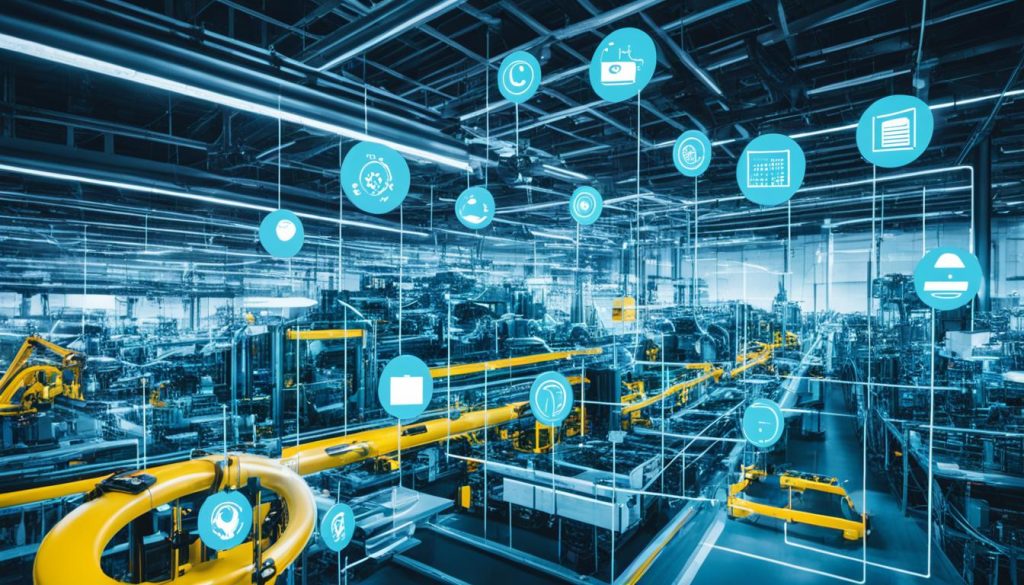
When it comes to smart sensors, it’s not just about detecting input from the physical environment. These advanced sensors are equipped with the power to perform complex functions thanks to their built-in compute resources. Let’s dive deeper into how smart sensors work and why they are essential in industrial IoT applications.
At the core of a smart sensor is a base sensor that captures data from the environment it’s monitoring. This data may include temperature, pressure, proximity, or other relevant parameters. The base sensor converts these physical inputs into an analog signal, laying the foundation for the next step in the process.
The analog signal is then processed by a microprocessor embedded within the smart sensor. This microprocessor plays a crucial role in data processing and signal conditioning. It filters out noise, performs signal processing algorithms, and converts the analog signal into a digital format, making it easier to work with and analyze.
Once the data is in a digital format, it can be communicated to external devices or a centralized system for further analysis and action. Smart sensors are often equipped with wireless communication technology, allowing them to transmit the processed data over networks, enabling real-time monitoring and decision-making.
The working principle of smart sensors can be summarized in four key steps:
- Input detection: The base sensor captures data from the physical environment.
- Data processing: The microprocessor within the smart sensor filters noise, performs signal processing, and converts the analog signal into a digital format.
- Compute resources: The built-in microprocessor uses its computational capabilities to analyze the processed data.
- Signal conditioning: The smart sensor prepares the data for transmission to external devices or a centralized system.
Smart sensors are the backbone of Industrial IoT applications, providing crucial data that enables automation, efficient decision-making, and predictive maintenance. The combination of accurate input detection, sophisticated data processing, robust compute resources, and effective signal conditioning makes smart sensors indispensable in various industries.
Advantages and Disadvantages of Smart Sensors
Smart sensors offer a multitude of advantages that contribute to the efficiency and productivity of industrial operations. Firstly, they provide energy efficiency by accurately measuring and monitoring energy consumption, allowing businesses to identify areas for improvement and implement strategies for conservation. This not only reduces costs but also promotes sustainability.
Another key advantage is the ability of smart sensors to access and collect data in difficult environments. Whether it’s monitoring equipment in remote locations or capturing data in harsh conditions, these sensors ensure that valuable information is readily available for analysis and decision-making.
In terms of performance, smart sensors are designed to deliver high accuracy and reliability. They provide real-time measurements and enable businesses to make informed decisions based on accurate data. With built-in analytics capabilities, these sensors offer advanced data analysis, providing actionable insights that drive operational efficiency and optimization.
“Smart sensors are like the Sherlock Holmes of the industrial world. They collect clues in the form of data, analyze them, and uncover hidden patterns, helping businesses solve mysteries and improve performance.”
However, it is important to consider the disadvantages of smart sensors as well. One potential issue is the susceptibility to tampering and hacking. As these sensors rely on wireless communication and connectivity, they can be vulnerable to data breaches or unauthorized access. Ensuring data security and implementing robust cybersecurity measures is crucial to protect sensitive information.
Additionally, the initial costs of implementing smart sensor technology can be high. The procurement and installation of sensor systems, as well as the necessary infrastructure and integration, incur significant expenses. Moreover, the maintenance of smart sensors requires regular monitoring, calibration, and software updates, which may require specialized IT expertise.
To summarize, smart sensors offer numerous benefits, including energy efficiency, access to data in challenging environments, high performance with built-in analytics. However, organizations must address data security concerns and be prepared for the costs and maintenance associated with these advanced sensor systems.

Smart Sensors in IoT Deployments
Smart sensors play a crucial role in IoT deployments, whether in smart homes or industrial settings. These devices enable seamless data collection and contribute to energy efficiency and sustainability efforts. However, deploying IoT devices requires careful consideration of power consumption, stable online connectivity, and efficient data handling capabilities.
When it comes to data collection, smart sensors prove to be invaluable. They can gather and transmit real-time data from various sources, providing a comprehensive view of the environment. Whether it’s temperature, humidity, motion, or other pertinent information, smart sensors ensure that no detail goes unnoticed.
Moreover, these sensors contribute to energy efficiency by optimizing resource usage. By monitoring power consumption and automating processes, they help reduce wastage and promote sustainable practices. This not only benefits the environment but also translates into cost savings for businesses.
However, while integrating IoT devices, maintaining stable online connectivity is essential. Smart sensors need a reliable internet connection to transmit data securely and efficiently. A stable online connection ensures smooth communication between devices and enables seamless interaction with cloud platforms for further data processing.
Additionally, smart sensors must be capable of handling large volumes of data. As IoT deployments generate an immense amount of information, it’s important for sensors to efficiently process and transmit this data for analysis. Proper data handling enables businesses to extract valuable insights and make informed decisions based on accurate and timely information.
Smart sensors are crucial for data collection and analysis in IoT deployments.
In summary, smart sensors are indispensable in IoT deployments, playing a vital role in data collection, energy efficiency, and sustainability. Proper consideration of power consumption, stable online connectivity, and efficient data handling ensures seamless integration and optimal performance of IoT devices. These sensors continue to drive innovation and enable businesses to harness the full potential of IoT technologies for improved efficiency and decision-making.
Conclusion
Smart sensors and Industrial IoT are revolutionizing the manufacturing industry, bringing real-time data, automation, and cost savings to businesses. By enabling the monitoring and control of critical equipment, these sensors greatly improve maintenance practices and enhance overall efficiency. Their role in predictive maintenance ensures the smooth operation of manufacturing processes, eliminating costly downtime.
The future of manufacturing lies in the seamless integration of smart sensors and Industrial IoT. As technology advances, these sensors will continue to play a pivotal role in transforming businesses across various industries. They provide invaluable insights for efficient decision-making, allowing businesses to optimize processes, reduce costs, and achieve better profitability.
With the power of predictive maintenance, smart sensors enable businesses to proactively address maintenance needs, preventing equipment failures and extending the lifespan of assets. This not only saves on repair and replacement costs but also enhances production efficiency. By leveraging the capabilities of smart sensors, manufacturers will remain competitive in an ever-evolving market, adopting proactive approaches to optimize their operations and make informed decisions.
FAQ
How are smart sensors and Industrial IoT revolutionizing the manufacturing industry?
Smart sensors and Industrial IoT are providing real-time data and automation, making industrial processes more efficient and cost-effective. They play a crucial role in collecting data and transforming manufacturing floors into connected and reliable factories of the future.
What is the role of sensors in industrial robotics?
Sensors collect data that helps transform manufacturing floors into connected and reliable factories. They ensure long-term, reliable, stable, and accurate performance. Vibration specification parameters are critical for condition monitoring and predictive maintenance applications.
What are the benefits of smart sensors in Industrial IoT?
Smart sensors enable real-time data collection and automation, resulting in increased efficiency and cost savings. They improve monitoring and diagnostic capabilities, reduce labor costs, allow for better integration of data, and enable informed decision-making and improved business processes.
What are the different types of smart sensors used in industrial IoT environments?
Level sensors measure volume, temperature sensors monitor component temperature, pressure sensors monitor gases or fluids, infrared sensors are used for thermal imaging, and proximity sensors detect the location of objects or people.
Which industries benefit from industrial sensors?
Industrial sensors are used in agriculture for weather stations, healthcare for monitoring equipment and vital signs, manufacturing for monitoring assets and production lines, fleet management for tracking vehicles, and oil and gas facilities for leak detection and asset tracking.
How do smart sensors work?
Smart sensors detect input from the physical environment and use built-in compute resources to perform predefined functions. They consist of a base sensor, a microprocessor for data processing, and wireless communication technology to transmit the processed data to external devices or a centralized system.
What are the advantages and disadvantages of smart sensors?
Smart sensors offer energy efficiency, access to data in remote locations, high performance, and built-in analytics. However, they are susceptible to tampering and hacking, require regular maintenance, and have high costs and a need for expertise in IT.
How do smart sensors fit into IoT deployments?
Smart sensors are essential components of IoT deployments in both smart homes and industrial settings. They enable data collection, contribute to energy efficiency and sustainability, and require consideration of power consumption, stable online connectivity, and the ability to handle large volumes of data.
What are the future implications of smart sensors and Industrial IoT in manufacturing?
With the continuous advancement of technology, smart sensors will continue to revolutionize the manufacturing industry by enabling predictive maintenance and improving overall efficiency. They contribute to efficient decision-making and help businesses achieve better profitability.