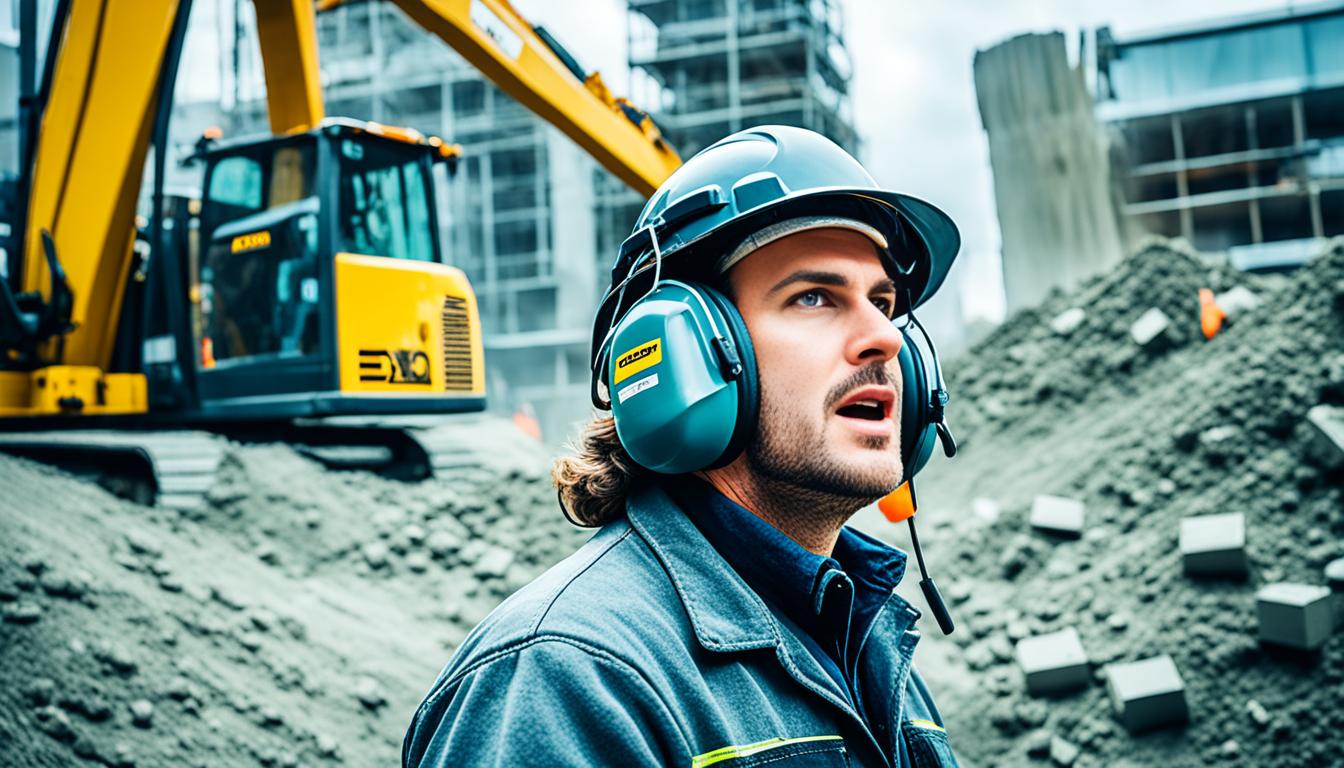
Did you know that occupational noise exposure affects an estimated 30 million workers in the United States alone? The harmful effects of noise can lead to permanent hearing loss, reduced productivity, and increased absenteeism. In order to mitigate these risks and protect the well-being of workers, a comprehensive hearing conservation program is essential.
Key Takeaways:
- A comprehensive hearing conservation program is necessary to prevent occupational hearing loss.
- Noise exposure affects an estimated 30 million workers in the United States.
- The harmful effects of noise include permanent hearing loss, reduced productivity, and increased absenteeism.
- A hearing conservation program should include measures such as measuring noise levels, providing free annual hearing exams, training employees on hearing protection, and evaluating the effectiveness of hearing protectors.
- Workplaces with effective hearing conservation programs have higher productivity and fewer instances of absenteeism.
Occupational Noise Exposure
Occupational noise exposure is a prevalent and concerning hazard in various workplaces, affecting millions of workers in the US. It is estimated that around 30 million workers are exposed to hazardous noise on a regular basis. Such exposure can have detrimental effects on their hearing health, including the development of noise-induced hearing loss (NIHL).
Exposure to high levels of noise in the workplace not only poses a risk to an individual’s hearing but can also have non-hearing related consequences. Prolonged exposure to excessive noise can lead to heightened stress levels, fatigue, and reduced productivity, impacting overall well-being and job performance.
To ensure the prevention of occupational hearing loss and the protection of workers’ health, employers must implement a comprehensive hearing conservation program. This program should include various measures aimed at addressing the risks associated with occupational noise exposure.
Monitoring Noise Levels
One of the key components of an effective hearing conservation program is the regular monitoring of noise levels within the workplace. By conducting noise assessments and measurements, employers can identify areas where noise levels exceed permissible limits and take appropriate actions to control and reduce exposure.
Providing Hearing Protection Devices
To protect workers from the harmful effects of noise exposure, employers should provide appropriate hearing protection devices (HPDs). HPDs, such as earmuffs and earplugs, help reduce the intensity of noise reaching the ears, safeguarding the individual’s hearing health. It is crucial to ensure that the provided HPDs are of good quality, well-fitting, and properly maintained.
Conducting Audiometric Testing
Regular audiometric testing plays a vital role in monitoring employees’ hearing health and detecting any changes or signs of noise-induced damage. By conducting audiometric exams, employers can identify individuals who may be experiencing early signs of hearing loss and take necessary measures to prevent further deterioration.
Offering Training to Employees
Employee education and training are essential in raising awareness about the risks of occupational noise exposure and promoting proper hearing protection practices. Workers should be educated on the importance of using hearing protection devices, the proper technique for inserting earplugs or wearing earmuffs, and the need for regular hearing screenings.
By implementing a comprehensive hearing conservation program and adhering to these preventive measures, employers can significantly reduce the risk of noise-induced hearing loss and ensure the overall well-being and safety of their workforce.
| Noise Control Measures | Hearing Protection Devices | Audiometric Testing | Employee Training |
|---|---|---|---|
| Monitoring and controlling noise levels in the workplace | Providing high-quality hearing protection devices | Regular audiometric testing to monitor hearing health | Training employees on the proper use of hearing protection |
| Implementing engineering and administrative controls to reduce noise | Ensuring proper fit and maintenance of hearing protection devices | Identifying early signs of hearing loss and taking preventive measures | Creating awareness about the risks of noise exposure and hearing loss |
| Evaluating effectiveness of noise control measures | Offering a variety of hearing protection options | Providing necessary support and resources for individuals with hearing loss | Encouraging regular hearing screenings and follow-up care |
Hearing Conservation Program
A hearing conservation program is essential for protecting the hearing health of workers exposed to occupational noise. This comprehensive program aims to prevent initial hearing loss, preserve remaining hearing, and equip employees with the knowledge and tools to safeguard their hearing.
Employers play a crucial role in implementing and maintaining a hearing conservation program. As part of this program, employers are required to:
- Measure noise levels in the workplace to identify areas of concern.
- Offer free annual hearing exams to employees to monitor their hearing health.
- Provide training and education on the risks of noise exposure and the proper use of hearing protection devices.
- Supply employees with effective hearing protection devices, such as earmuffs and earplugs.
- Evaluate the effectiveness of hearing protectors to ensure optimal performance and protection.
- Implement noise control measures to reduce overall exposure to hazardous noise levels.
Implementing a hearing conservation program not only protects the hearing health of employees but also has a positive impact on workplace productivity. Studies have shown that workplaces with effective hearing conservation programs experience higher productivity levels and lower rates of absenteeism.
Table: Benefits of a Hearing Conservation Program
| Benefits | Description |
|---|---|
| Prevents occupational hearing loss | A comprehensive program reduces the risk of hearing loss caused by prolonged exposure to high levels of noise. |
| Preserves remaining hearing | By providing appropriate hearing protection devices and implementing noise control measures, the program helps preserve employees’ existing hearing capabilities. |
| Enhances productivity | Workplaces with effective hearing conservation programs experience higher levels of productivity due to reduced workplace distractions and improved communication. |
| Reduces absenteeism | Employees in environments with lower noise levels are less likely to experience work-related health issues, leading to reduced absenteeism. |
| Ensures compliance with regulations | A well-implemented hearing conservation program fulfills legal obligations and ensures compliance with occupational safety and health standards. |
Hearing protection devices play a crucial role in the success of a hearing conservation program. These devices, such as earmuffs and earplugs, create a physical barrier that reduces the amount of noise reaching the employee’s ears. It is important to provide employees with the appropriate type of hearing protection device based on their specific noise exposure level and job requirements.
Remember, implementing a comprehensive hearing conservation program, including noise control measures, training and education, and regular monitoring and evaluation, is crucial for protecting employees’ hearing health and creating a safe work environment.
Noise Control Measures
When it comes to protecting workers from hazardous noise in the workplace, implementing effective noise control measures is crucial. The goal is to eliminate or minimize exposure to noise, reducing the risk of hearing loss and creating a safer working environment. Employers can employ a combination of engineering controls, administrative controls, and personal protective equipment (PPE) to achieve noise control.
Engineering Controls: Engineering controls involve modifying or relocating equipment and machinery to reduce noise at its source. This can be done by implementing noise-reducing technologies, incorporating sound barriers, or installing vibration isolation systems. By addressing the source of noise directly, employers can effectively minimize noise levels and protect workers from excessive noise exposure.
Administrative Controls: Administrative controls focus on implementing policies and procedures to manage noise exposure. These controls include adjusting work schedules to reduce the duration of exposure, limiting the number of employees in high-noise areas, and implementing a Hearing Conservation Program. By establishing and enforcing these controls, employers can effectively mitigate and manage workplace noise.
Personal Protective Equipment (PPE): PPE, such as earmuffs and earplugs, act as a last line of defense against noise exposure. When properly fitted and used, PPE can significantly reduce the amount of noise reaching the worker’s ears. However, it’s important to note that PPE should not be solely relied upon for noise control. It should be combined with engineering and administrative controls for optimal protection.
By implementing a combination of these noise control measures, employers can effectively reduce workplace noise, minimize the risk of hearing loss, and create a safer and healthier work environment for their employees.
Environmental Noise Management
In addition to Occupational Noise Exposure, it is important to address the impact of noise in the surrounding environment. Environmental Noise Management plays a critical role in protecting your hearing health outside of the workplace. By implementing soundproofing solutions, you can reduce noise levels and minimize the risk of noise-induced hearing loss in various settings.
Environmental noise management involves employing a range of techniques and technologies to mitigate noise pollution. Let’s explore some soundproofing solutions that can effectively control noise and safeguard your hearing:
- Installation of Noise Barriers:
- Use of Acoustic Panels:
- Implementation of Noise Control Technologies:
Noise barriers, such as walls or fences, can block or deflect sound waves, reducing the noise levels that reach you. These barriers can be made from materials like concrete, wood, or even natural vegetation, effectively minimizing environmental noise intrusion.
Acoustic panels are designed to absorb and dampen sound vibrations. Proper placement of these panels in key areas can help to reduce echoing, reverberation, and noise transmission, creating a quieter and more comfortable environment.
Advanced noise control technologies, such as active noise cancellation systems or white noise generators, can actively counteract or mask unwanted noise. These technologies employ real-time analysis and precision sound adjustments to create an improved acoustic environment.
Benefits of Environmental Noise Management
Implementing soundproofing solutions and effectively managing environmental noise can bring several benefits:
“Environmental Noise Management helps preserve your hearing health by reducing exposure to excessive noise levels in various settings, ensuring a peaceful and safe environment.”
- Protection of Hearing Health: By minimizing noise levels, environmental noise management helps prevent noise-induced hearing loss and related health issues.
- Improved Quality of Life: Reduced exposure to environmental noise can enhance overall well-being, promote relaxation, and enable better concentration and productivity.
- Enhanced Comfort: An environment with lower noise levels fosters a sense of tranquility and comfort, making it easier to sleep, study, work, and enjoy leisure activities.
To effectively manage environmental noise and protect your hearing health, it is essential to understand the specific noise sources in your surroundings and tailor soundproofing solutions accordingly. Consult with professionals experienced in acoustic design and engineering to ensure a comprehensive and effective approach to environmental noise management.

With the implementation of soundproofing solutions, you can create a quiet and peaceful environment, safeguarding your hearing health and enhancing your overall well-being.
| Benefits of Environmental Noise Management | |
|---|---|
| Protection of Hearing Health | By reducing exposure to excessive noise levels, environmental noise management prevents noise-induced hearing loss and related health issues. |
| Improved Quality of Life | Reduced environmental noise promotes relaxation, concentration, productivity, and overall well-being. |
| Enhanced Comfort | Lower noise levels create a tranquil environment, supporting better sleep, study, work, and leisure activities. |
Understanding Noise and Hearing Loss
Noise is defined as unwanted sound and is one of the most common hazards in workplaces. The ear perceives sound through variations in atmospheric pressure, and excessive or prolonged exposure to intense vibrations can damage the microscopic hairs in the inner ear, leading to noise-induced hearing loss (NIHL). This type of hearing loss, known as sensorineural hearing loss, is permanent and cannot be restored.
It is important to understand the mechanisms of noise and its impact on hearing to effectively implement noise control and hearing conservation measures.
The Hazards of Noise Exposure
“Excessive or prolonged exposure to intense noise can harm your hearing, leading to permanent sensorineural hearing loss. This type of hearing loss occurs gradually over time and usually affects both ears equally.”
When noise enters the ear, it causes the eardrum to vibrate, which in turn stimulates the cochlea, a spiral-shaped structure in the inner ear. Inside the cochlea are tiny hair cells that convert sound vibrations into electrical signals. These signals are then transmitted to the brain, allowing us to perceive sound.
However, when exposed to loud or prolonged noise, these hair cells can become damaged or even die, leading to hearing loss. This type of hearing loss, known as noise-induced hearing loss (NIHL), is irreversible and permanent.
Sensorineural hearing loss can have a significant impact on an individual’s quality of life. It can make it difficult to communicate, affect social interactions, and even lead to emotional and psychological issues.
Noise Control and Hearing Conservation
“Implementing effective noise control measures and hearing conservation programs can help prevent noise-induced hearing loss and protect your long-term hearing health.”
By understanding the dangers of noise exposure and its impact on hearing, employers can take proactive steps to protect employees from excessive noise in the workplace. This includes implementing engineering controls to reduce noise levels, providing personal protective equipment such as earplugs or earmuffs, and educating workers on the importance of hearing conservation.
Additionally, regular monitoring of noise levels and audiometric testing can help identify individuals who may be at risk of developing noise-induced hearing loss. This allows for early intervention and the implementation of necessary measures to prevent further damage.
Overall, a comprehensive approach to noise control and hearing conservation is essential for promoting a safe and healthy work environment and preserving employees’ long-term hearing health.
Importance of Training and Education
Training and education are critical components of a successful hearing conservation program. By providing employees with the necessary knowledge and skills, organizations can effectively prevent occupational hearing loss and protect the overall health and well-being of their workforce.
Regular training sessions should be conducted to educate employees about the risks associated with noise exposure, the proper use of hearing protection devices, and the importance of regular hearing exams. This training helps employees understand the potential consequences of noise exposure and equips them with the tools and information needed to protect their hearing.
Supervisors also play a crucial role in ensuring the success of a hearing conservation program. They should be trained to effectively oversee and support employees in the use and care of hearing protectors. By providing guidance and reinforcement, supervisors can create a culture of safety and encourage employees to prioritize hearing protection.
Furthermore, training programs should be regularly evaluated and revised to ensure their ongoing effectiveness. This evaluation allows organizations to identify areas for improvement and update training content to reflect the latest industry standards and best practices. By continuously enhancing training materials, organizations can further enhance their hearing conservation efforts.
In conclusion, training and education are fundamental elements of any hearing conservation program. By investing in the knowledge and skills of employees and supervisors, organizations can create a safe and healthy work environment, reducing the risk of occupational hearing loss and promoting overall well-being.

Monitoring and Evaluation
Monitoring and evaluation play a critical role in maintaining the effectiveness of a hearing conservation program. By regularly assessing noise levels, conducting audiometric testing, and keeping accurate records, employers can ensure the ongoing protection of their employees’ hearing health. Here’s how these components contribute to the success of the program:
Noise Measurement
Accurate noise measurement is vital for understanding and addressing noise exposure risks within the workplace. By measuring noise levels at various locations and during different tasks, employers can identify areas with high noise levels and prioritize noise control efforts. This helps in implementing targeted interventions to reduce noise exposure and protect employees from potential hearing damage.
Audiometric Testing
Regular audiometric testing is essential for monitoring employees’ hearing health and detecting any changes in their auditory abilities. This involves conducting thorough hearing exams for all workers exposed to hazardous noise levels. By tracking the results of these tests over time, employers can identify trends and take appropriate measures to prevent further hearing loss or provide necessary interventions for affected employees.
Record Keeping
Accurate record-keeping ensures the proper documentation of noise exposures, audiometric results, and follow-up actions. Employers should maintain detailed records of noise measurement data, including the locations, duration, and intensity of noise exposure. These records can help track the effectiveness of noise control measures, facilitate audits and inspections, and support compliance with occupational safety and health regulations.
Effective monitoring and evaluation are the foundation of a robust hearing conservation program. By measuring noise levels, conducting audiometric testing, and maintaining accurate records, employers can proactively identify risks, intervene when necessary, and ensure the ongoing effectiveness of their hearing protection efforts.
Regular evaluation of the program enables employers to identify areas for improvement and make necessary adjustments to enhance its effectiveness. It also helps in ensuring compliance with regulations and industry standards. By continuously monitoring and evaluating the program, employers can create a safer and healthier working environment for their employees.
Having a complete understanding of noise exposure levels, employees’ hearing health, and the effectiveness of control measures is vital for the success of a hearing conservation program. Through proper monitoring and evaluation, employers can safeguard their workforce from the risks of occupational noise exposure and promote long-term hearing wellness.
Referrals and Continuous Improvement
In some cases, referrals to external sources for consultation or treatment may be necessary to address specific hearing-related concerns. However, it is important to make these referrals only when essential to avoid unnecessary expenses and ensure that employees receive the most appropriate care and support for their hearing health.
Continuous improvement plays a vital role in the effectiveness of hearing loss prevention programs. By regularly reviewing policies, procedures, and performance, organizations can identify any deficiencies and make necessary adjustments to enhance the program’s overall impact. This ongoing commitment to improvement ensures that the program remains up-to-date and in line with the evolving needs and best practices in hearing conservation.
Continuous improvement efforts can involve soliciting feedback from employees, conducting regular assessments, and benchmarking against industry standards. These actions allow organizations to identify areas for enhancement and implement strategic changes that lead to better outcomes for employees’ hearing health.
The Importance of Continuous Improvement
Continuous improvement is crucial because it allows organizations to constantly enhance their hearing loss prevention programs and adapt to changes in the workplace environment, regulations, and technological advancements. By staying proactive and responsive, organizations can address potential gaps or emerging issues and ensure that their hearing conservation efforts are always aligned with industry best practices.
Regular evaluations and revisions of policies and procedures provide an opportunity to assess the effectiveness of existing control measures and identify areas for improvement. For example, if a specific type of hearing protection device consistently falls short in meeting employees’ comfort and effectiveness requirements, a continuous improvement approach would entail evaluating alternative options, seeking employee feedback, and implementing changes accordingly.
By placing a strong emphasis on continuous improvement, organizations demonstrate their commitment to the well-being of their employees and the effectiveness of their hearing conservation efforts. This proactive approach not only helps protect employees from occupational hearing loss but also contributes to a positive work environment, higher job satisfaction, and enhanced productivity.
Benefits of Continuous Improvement in Hearing Loss Prevention Programs
| Benefits | Description |
|---|---|
| Better protection | Continuous improvement ensures that the hearing conservation program evolves to provide the most effective protection against occupational hearing loss. |
| Enhanced employee engagement | By actively involving employees in the continuous improvement process, organizations foster a sense of ownership and engagement, leading to better program adoption and compliance. |
| Adaptation to changing environments | Continuous improvement allows organizations to adapt their hearing conservation program to changing workplace conditions, new technologies, and emerging risks. |
| Cost savings | By identifying areas for improvement and implementing more efficient practices, organizations can reduce costs associated with hearing loss prevention without compromising employee safety. |
Continuous improvement ensures that the hearing loss prevention program remains effective and responsive to the dynamic nature of workplace environments and evolving industry standards. By actively seeking ways to enhance the program, organizations optimize their efforts to protect employees’ hearing health.
Conclusion
In conclusion, the implementation of a comprehensive hearing conservation program is of utmost importance when it comes to protecting workers from occupational hearing loss. By prioritizing noise control measures, providing training and education, and conducting regular monitoring and evaluation, employers can create a safe and healthy working environment.
Adhering to regulations and showing a commitment to continuous improvement ensures that organizations can effectively prevent hearing loss and preserve the well-being of their workforce. Investing in the resources and strategies necessary to control noise levels and promote hearing conservation not only protects employees but also contributes to higher productivity and reduced absenteeism.
Remember, noise control and hearing conservation go hand in hand in safeguarding hearing in noisy work environments. By taking proactive measures and staying vigilant, you can create a workplace where employees can thrive without compromising their hearing health. Prioritizing the implementation of a comprehensive hearing conservation program is an investment that will yield long-term benefits for both your employees and your organization.
FAQ
Why is a comprehensive hearing conservation program necessary?
A comprehensive hearing conservation program is necessary to prevent occupational hearing loss and protect workers from the harmful effects of noise exposure. The program includes measures such as measuring noise levels, providing free annual hearing exams, training employees on hearing protection, and evaluating the effectiveness of hearing protectors.
How common is occupational noise exposure?
Occupational noise exposure is a common hazard in workplaces, with an estimated 30 million workers in the US exposed to hazardous noise. It can cause noise-induced hearing loss (NIHL) and other non-hearing-related effects such as stress, fatigue, and reduced productivity.
What does a hearing conservation program aim to achieve?
A hearing conservation program aims to prevent initial occupational hearing loss, preserve remaining hearing, and provide workers with the necessary knowledge and tools to protect themselves. It includes measuring noise levels, providing free annual hearing exams, and offering training and hearing protection devices.
What are the best strategies for noise control?
The best strategy for noise control is to eliminate or minimize exposure to hazardous noise. This can be achieved through engineering controls, administrative controls like adjusting work schedules, and the use of personal protective equipment such as earmuffs and earplugs.
How can environmental noise be managed?
Environmental noise management involves implementing soundproofing solutions to reduce noise levels in the surrounding environment. This can include installing noise barriers, using acoustic panels, or implementing noise control technologies.
Why is it important to understand noise and its impact on hearing?
Excessive or prolonged exposure to intense vibrations can damage the inner ear, leading to noise-induced hearing loss (NIHL). Understanding the mechanisms of noise and its impact on hearing helps in implementing effective noise control and hearing conservation measures.
What role does training and education play in hearing conservation?
Training and education play a crucial role in the success of hearing conservation programs. Regular training should educate employees on the risks of noise exposure, proper use of hearing protection devices, and the importance of regular hearing exams.
What is the importance of monitoring and evaluation in hearing conservation?
Monitoring noise levels and conducting regular audiometric testing are essential for assessing risks and monitoring employees’ hearing health. Accurate record-keeping ensures proper documentation of exposures and results, while evaluation helps identify areas of improvement and ensure the program remains effective.
Are referrals and continuous improvement important in hearing conservation?
Referrals to outside sources may be necessary in some cases, but continuous improvement of the hearing loss prevention program is vital to address any deficiencies. Regular reviews help identify areas for improvement and ensure the program remains effective.
What is the importance of noise control and hearing conservation?
Noise control and hearing conservation are crucial for safeguarding hearing in noisy work environments. By implementing a comprehensive hearing conservation program, including noise control measures, training and education, and regular monitoring and evaluation, employers can prevent occupational hearing loss and protect their workforce.