Did you know that businesses waste up to 70% of their resources on non-value-added activities? This staggering statistic highlights the urgent need for implementing lean manufacturing principles to eliminate waste and optimize operations. Lean manufacturing, a management philosophy derived from the Toyota Production System, is a proven approach to increasing efficiency and maximizing profitability. By following a strategic roadmap and embracing lean methodologies, you can transform your business and gain a competitive edge in the ever-evolving manufacturing industry.
Key Takeaways:
- Lean manufacturing aims to eliminate waste in order to increase company profitability.
- The Toyota Production System (TPS) serves as a successful model for implementing lean manufacturing principles.
- There are eight steps to apply lean manufacturing, including waste elimination, reducing inventory, and extending employee autonomy.
- Waste reduction is crucial in lean manufacturing, resulting in cost savings, improved quality, and increased customer satisfaction.
- Value Stream Mapping (VSM) is a powerful tool used to identify waste and streamline the production process.
The Importance of Waste Reduction in Lean Manufacturing
Waste reduction is a critical aspect of implementing lean manufacturing principles. By identifying and eliminating wasteful activities, businesses can optimize their operations, enhance productivity, and achieve significant cost savings. At the same time, waste reduction strategies promote sustainability and align with societal expectations for responsible manufacturing practices.
Lean manufacturing recognizes various categories of waste that commonly occur in the manufacturing process. By understanding these waste categories, businesses can develop targeted strategies to address them effectively. Some key waste categories in manufacturing include:
- Overproduction: Producing more than what is needed, leading to excess inventory and increased costs for storage, maintenance, and handling.
- Waiting time: Idle time during production due to delays, poor scheduling, or inefficient processes.
- Transport: Unnecessary movement of materials or products, which adds time, cost, and potential for damage.
- Excess inventory: Having more inventory than necessary, tying up capital and increasing the risk of obsolescence or deterioration.
- Motion: Inefficient movements of employees or equipment, including excessive walking, bending, or reaching.
- Defectives: Errors or defects in products that require rework, repairs, or scrapping.
- Over-processing: Performing unnecessary operations or using excessive resources that do not provide additional value to the end product.
Implementing waste reduction strategies within lean manufacturing can yield significant benefits for businesses. Cost savings can be achieved through reduced material usage, optimized inventory management, and improved operational efficiency. By eliminating non-value-added activities, businesses can also enhance product quality, reduce lead times, and improve customer satisfaction.
“Waste reduction is not just about cost savings; it is about creating value and delivering quality products efficiently.”
Employing lean implementation strategies, such as Value Stream Mapping (VSM) and Kaizen (continuous improvement), can help organizations identify waste sources, prioritize improvement opportunities, and implement effective waste reduction measures. VSM allows businesses to visualize the entire production process and identify areas of waste, bottlenecks, and inefficiencies. The Kaizen approach encourages employees at all levels to contribute to waste reduction efforts, fostering a culture of continuous improvement and innovation.
By adopting waste reduction strategies and integrating lean principles into their manufacturing processes, businesses can optimize efficiency, reduce costs, and gain a competitive advantage in today’s dynamic marketplace. Embracing lean manufacturing is not just a strategic move; it is a commitment to sustainable growth and operational excellence.
Value Stream Mapping in Lean Manufacturing
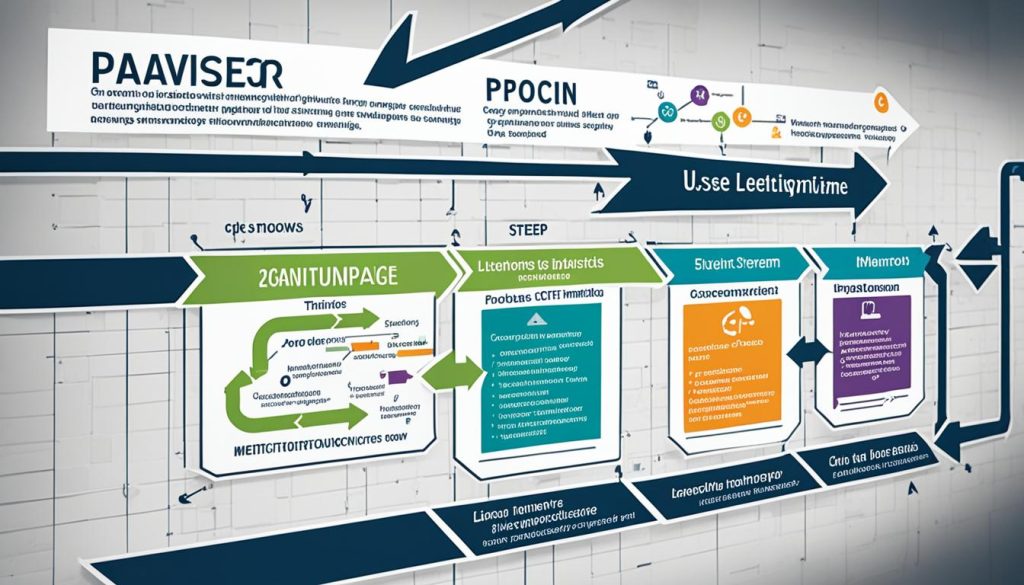
In the world of lean manufacturing, value stream mapping (VSM) is a powerful tool that enables you to gain valuable insights into your production process. By visually mapping the flow of materials and information, VSM helps you identify areas of waste and inefficiency, allowing you to make targeted improvements.
With value stream mapping, you can analyze both value-adding and non-value-adding activities in your production process. This enables you to identify bottlenecks, eliminate unnecessary steps, and optimize the flow of work.
To create a value stream map, you start by documenting the current state of your process. This involves mapping out each step, noting the time and resources required, and identifying any areas of waste or imbalance. By visualizing this information, you can easily see where improvements can be made.
Once the current state has been mapped, the next step is to design a future state map. This map outlines your ideal vision for the process, incorporating improvements identified during the analysis of the current state. It serves as a guide for implementing changes and helps you visualize the desired outcomes.
VSM serves as a roadmap for lean implementation, allowing you to prioritize improvement efforts and focus on areas that deliver the greatest value. By using this tool, you can streamline your production process, reduce waste, improve quality, and increase overall efficiency.
Benefits of Value Stream Mapping
VSM offers several key benefits for lean manufacturing:
- Identification of waste: Value stream mapping helps you identify and eliminate waste in your production process. By visualizing the flow of materials and information, you can easily spot areas that are causing delays, unnecessary inventory, or excess transportation.
- Improved efficiency: Through value stream mapping, you can optimize the flow of work, eliminate bottlenecks, and improve the overall efficiency of your production process. This leads to shorter lead times, reduced costs, and increased customer satisfaction.
- Targeted process improvements: VSM allows you to pinpoint specific areas for improvement, enabling you to prioritize your efforts and allocate resources effectively. By focusing on the most critical areas of waste, you can achieve quicker and more impactful results.
Value stream mapping is a valuable lean tool and technique for any organization striving to eliminate waste, streamline processes, and achieve operational excellence. By leveraging the power of VSM, you can drive continuous improvement and create a more efficient, productive, and profitable manufacturing operation.
Continuous Improvement in Lean Manufacturing
Continuous improvement is a fundamental principle in lean manufacturing. It involves constantly seeking ways to improve processes and eliminate waste. By embracing a culture of ongoing learning, experimentation, and openness to change, organizations can drive efficiency, productivity, and innovation.
The Kaizen Approach
A key concept in continuous improvement is Kaizen, a Japanese term meaning “change for the better.” Kaizen encourages employees at all levels of the organization to participate in identifying and implementing small, incremental improvements. This approach empowers individuals to take ownership of their work and contribute to the overall success of the organization.
“In a continuous improvement culture, every employee is empowered to make suggestions and implement changes.”
– John Shook, Chairman and CEO of the Lean Enterprise Institute
Implementing the Kaizen approach involves creating a structured process for generating and implementing ideas for improvement. This can include regular meetings or brainstorming sessions where employees can share suggestions, review processes, and implement changes.
Benefits of Continuous Improvement
Continuous improvement in lean manufacturing brings numerous benefits to organizations:
- Increased Efficiency: By consistently seeking ways to optimize processes, organizations can reduce waste, lower costs, and improve productivity.
- Enhanced Quality: Continuous improvement helps identify and eliminate sources of defects and errors, leading to improved product and service quality.
- Improved Customer Satisfaction: By eliminating waste and improving processes, organizations can better meet customer expectations and deliver products or services on time and with higher quality.
- Empowered Employees: Involving employees in the improvement process fosters a sense of ownership, engagement, and motivation.
Continuous improvement is an ongoing journey rather than a destination. It requires a commitment from leadership, active participation from employees, and a culture that supports innovation and learning. By embedding continuous improvement into the fabric of an organization, businesses can remain competitive and adapt to changing market demands.
Engaging Employees in Lean Manufacturing
Engaging employees is crucial to the success of implementing lean manufacturing strategies in your business. By involving your employees in the process, you can tap into their knowledge and expertise, boost morale, and drive continuous improvement. Here’s how you can engage your employees and create a thriving lean culture:
Empowerment and Accountability
Empower your employees by giving them the authority to make decisions and providing them with the necessary tools and training. This will increase their sense of ownership and accountability in their work. When employees feel empowered, they are more likely to take initiative, contribute innovative ideas, and actively participate in improving processes.
Team Collaboration
Encourage collaboration by creating teams that work together towards a common goal. Collaboration promotes knowledge sharing, creativity, and cross-functional problem-solving. By fostering a collaborative environment, you can leverage the diverse skills and perspectives of your employees to find efficient solutions and drive continuous improvement.
Measuring Work Progress
Establish a system for measuring work progress and celebrate achievements. This can be done through setting key performance indicators (KPIs) and regularly tracking and communicating progress to employees. Recognizing and rewarding employees for their contributions to lean initiatives can motivate them to continue their efforts and maintain a high level of engagement.
“Employee engagement can make or break the success of lean implementation. When employees are engaged, they become active participants in the lean journey, driving positive change and delivering value to customers.”
By actively engaging your employees in the implementation of lean manufacturing strategies, you can create a culture of continuous improvement and drive sustainable results. Your employees are your greatest asset, and by empowering them, fostering collaboration, and measuring work progress, you can unlock their full potential in achieving operational excellence.

| Benefits of Employee Engagement in Lean Manufacturing |
|---|
| Improved productivity |
| Enhanced quality and efficiency |
| Innovation and problem-solving |
| Higher employee retention |
| Positive work culture |
Customer Focus in Lean Manufacturing
In lean manufacturing, one of the key pillars is a strong focus on the customer. By prioritizing customer needs and expectations, companies can align their processes to deliver value and eliminate waste effectively. Understanding what customers truly value allows organizations to optimize their operations and stay competitive in the market.
Seeking customer feedback is essential in the lean implementation process. By actively collecting and analyzing feedback, companies can gain valuable insights into areas of improvement and ensure customer satisfaction. This feedback can serve as a driving force for continuous improvement, helping companies enhance their products and services.
By incorporating customer feedback into the development and improvement of products, companies can strengthen their competitive advantage. This iterative approach ensures that the final products align with customer preferences, leading to higher customer satisfaction and loyalty. It also helps businesses respond swiftly to market demands and stay ahead of the competition.
Obtaining Customer Feedback: A Systematic Approach
To gather customer feedback effectively, companies should employ a systematic approach that allows for comprehensive data collection and analysis. Implementing the following strategies can ensure a robust and structured feedback process:
- Surveys: Conducting surveys, either online or offline, is a common method to collect customer feedback. Designing well-crafted and targeted surveys can provide valuable insights into customer preferences and expectations.
- Focus groups: Organizing focus groups allows companies to have in-depth discussions with a select group of customers. These sessions enable direct interaction and rich qualitative feedback that can uncover specific pain points and opportunities for improvement.
- Online reviews and ratings: Monitoring online platforms and review sites where customers share their experiences can offer valuable feedback. Analyzing these reviews and ratings can uncover trends and identify areas that require attention.
- Customer support interactions: Tracking and analyzing customer support interactions, such as phone calls or online chats, can provide insights into common issues faced by customers. This data can help identify gaps and improve customer service processes.
By implementing these customer feedback strategies and utilizing a systematic approach, companies can gather valuable data to inform their lean implementation strategies. This data-driven approach ensures that improvement efforts are targeted and aligned with customer needs and expectations.
Benefits of Customer Focus in Lean Manufacturing
The benefits of a strong customer focus in lean manufacturing are significant and wide-ranging:
| Benefits | Description |
|---|---|
| Enhanced product quality | By incorporating customer feedback into the product design and development process, companies can create products that better meet customer needs, resulting in higher quality and improved customer satisfaction. |
| Increased customer satisfaction | Aligning processes with customer preferences and expectations ultimately leads to higher levels of customer satisfaction. Satisfied customers are more likely to become repeat customers and vocal advocates for the company. |
| Improved competitiveness | By delivering products and services that align with customer demands, companies can gain a competitive edge in the market. Understanding and meeting customer needs allows businesses to differentiate themselves from competitors. |
| Higher customer loyalty | Creating products and experiences that consistently meet and exceed customer expectations builds trust and fosters loyalty. Loyal customers are more likely to continue doing business with a company, increasing customer retention and profitability. |
| Identification of new opportunities | By closely listening to customer feedback, companies can identify emerging market trends, unmet needs, and areas for innovation. This enables businesses to proactively seize new opportunities and stay ahead in a rapidly changing market. |
By focusing on customer feedback and integrating it into lean manufacturing processes, companies can create a customer-centric culture that drives continuous improvement and business growth.
Collaboration with Suppliers in Lean Manufacturing
Collaborating with suppliers is key to successful lean manufacturing implementation. By involving suppliers in the lean process, you can create mutually beneficial partnerships that drive efficiency and value creation. Supplier collaboration allows for streamlined supply chains, reduced lead times, and improved overall operational efficiency. Together with your suppliers, you can identify opportunities for waste reduction and implement lean practices that deliver value to your customers.
When collaborating with suppliers, it’s important to establish clear communication channels and build trust. By working together and sharing information, you can enhance visibility into the supply chain, identify potential bottlenecks, and reduce disruptions. Collaboration also enables a better understanding of customer demand, ensuring that the right products are delivered at the right time.
Here are some key benefits of supplier collaboration in the context of lean manufacturing:
- Enhanced supply chain efficiency and responsiveness.
- Improved product quality and reduced defects.
- Reduced lead times and faster time-to-market.
- Optimized inventory levels and decreased carrying costs.
Moreover, collaboration with suppliers can foster a culture of continuous improvement. By working together to identify inefficiencies and waste, you can implement strategies to drive lean practices throughout the entire supply chain, resulting in improved performance and customer satisfaction.
Practical Example: Supplier Collaboration in the Automotive Industry
“Supplier collaboration has been a game-changer in our lean manufacturing journey. By involving our suppliers early on and fostering strong partnerships, we have achieved significant improvements in our supply chain processes. Working together, we have reduced lead times, eliminated unnecessary inventory, and improved product quality. This collaboration has not only benefited our organization but has also strengthened the relationships with our suppliers, leading to better overall performance.”
– John Johnson, Supply Chain Manager at XYZ Automotive
Table: Benefits of Supplier Collaboration in Lean Manufacturing
| Benefits | Description |
|---|---|
| Enhanced supply chain efficiency and responsiveness | By collaborating with suppliers, you can improve the flow of materials, reduce lead times, and respond more quickly to customer demand. |
| Improved product quality and reduced defects | Close collaboration with suppliers enables early identification and resolution of quality issues, resulting in higher-quality products and reduced defects. |
| Reduced lead times and faster time-to-market | Supplier collaboration allows for better coordination and synchronization of activities, leading to shorter lead times and faster product launches. |
| Optimized inventory levels and decreased carrying costs | By collaborating with suppliers, you can optimize inventory levels, reduce excess stock, and lower carrying costs, resulting in improved financial performance. |
Supplier collaboration is a critical aspect of lean manufacturing that drives efficiency, value creation, and continuous improvement. By fostering strong partnerships with suppliers, you can optimize your supply chain, reduce waste, and deliver superior products to your customers.
Overcoming Challenges in Implementing Lean Manufacturing
Implementing lean manufacturing can be a transformative process that offers numerous benefits. However, organizations often face several challenges along the way. By understanding and addressing these challenges, companies can increase their chances of successful implementation and reap the rewards of lean manufacturing.
The Lean Implementation Challenges
- Resistance to Change: Implementing lean manufacturing requires a significant shift in mindset and work processes. Resistance to change can come from employees who are accustomed to traditional ways of working and may fear the unknown.
- Cost of Transition: Investing in the transition to lean manufacturing can be a major obstacle for organizations, especially for small or resource-constrained businesses. The cost of new equipment, training, and process changes may initially seem daunting.
- Need for Continual Improvement: Lean manufacturing is not a one-time effort; it requires ongoing commitment to continuous improvement. Sustaining the lean culture and constantly identifying areas for optimization can be challenging.
- Organizational Culture: A supportive organizational culture is crucial for successful lean implementation. In some cases, the existing culture may not align with the principles of lean, making it difficult to drive change and engage employees.
To overcome these challenges, organizations need to be proactive and strategic in their approach:
- Strong Leadership: Effective leadership is essential for guiding the organization through the lean implementation process. Leaders must communicate the vision, set clear expectations, and provide the necessary resources and support.
- Employee Buy-In: Engaging employees from all levels of the organization is crucial for successful implementation. Employees should be involved in the decision-making process, educated about the benefits of lean, and empowered to contribute their ideas and suggestions.
- Ongoing Training and Education: Providing employees with the necessary training and education on lean principles and techniques is essential for building their skills and knowledge. This enables them to actively participate in process improvement efforts.
- Addressing Organizational Culture: Addressing and aligning the organizational culture with lean principles is key to overcoming resistance to change. Creating a supportive environment that encourages collaboration, innovation, and continuous improvement is essential.
By addressing these challenges head-on, organizations can increase their chances of successful lean implementation and improve their manufacturing processes.
See the table below for a comparison of common challenges faced during lean implementation and their impact on the failure rate:
| Challenges | Impact on Failure Rate |
|---|---|
| Resistance to Change | High |
| Cost of Transition | Moderate |
| Need for Continual Improvement | High |
| Organizational Culture | Moderate |
Conclusion
Implementing lean manufacturing can revolutionize your organization and drive significant improvements in efficiency and profitability. By prioritizing waste reduction, continuous improvement, employee engagement, customer focus, and collaboration with suppliers, you can optimize your operations and stay ahead in the competitive manufacturing industry.
Throughout the implementation process, you may encounter challenges such as resistance to change and the cost of transitioning to a lean system. However, by approaching these obstacles strategically and maintaining a commitment to ongoing improvement, you can overcome them and pave the way for long-term success.
Embracing lean manufacturing principles enables you to achieve operational excellence and create a culture of innovation and efficiency within your organization. By eliminating waste, empowering your employees, aligning with customer needs, and collaborating with suppliers, you position your business for sustained growth and superior performance in the ever-evolving manufacturing landscape.
FAQ
What is lean manufacturing and how can it be implemented in a business?
Lean manufacturing is a management philosophy that aims to eliminate or reduce waste in order to increase company profitability. It can be implemented by following a series of steps, including waste elimination, reducing inventory, shortening production cycles, and extending employee autonomy.
Why is waste reduction important in lean manufacturing?
Waste reduction is crucial in lean manufacturing because it helps streamline operations and improve efficiency. By identifying and eliminating wasteful activities, businesses can achieve cost savings, improved quality, and increased customer satisfaction.
What is value stream mapping and how is it used in lean manufacturing?
Value stream mapping is a visual tool used in lean manufacturing to identify and analyze the flow of materials and information through a production process. It helps identify value-adding and non-value-adding activities, as well as areas for improvement. Value stream mapping is essential for identifying opportunities for waste reduction and streamlining the production process.
What is continuous improvement and how does it relate to lean manufacturing?
Continuous improvement is a fundamental principle in lean manufacturing. It involves constantly seeking ways to improve processes and eliminate waste. Kaizen, a key concept in continuous improvement, encourages employees at all levels to participate in identifying and implementing small, incremental improvements.
How can employee engagement be fostered in lean manufacturing?
Engaging employees is critical to the success of lean manufacturing. By involving employees in the implementation process, companies can tap into their knowledge and expertise, improve morale, and drive continuous improvement. Empowering employees to make decisions and providing them with the necessary tools and training can increase their sense of ownership and accountability.
Why is customer focus important in lean manufacturing?
Customer focus is essential in lean manufacturing because it helps align processes to deliver value and eliminate waste. By understanding customer needs and expectations, companies can identify areas for improvement and ensure customer satisfaction. Incorporating customer feedback into the development and improvement of products enhances competitive advantage and drives business growth.
How does collaboration with suppliers contribute to lean manufacturing?
Collaboration with suppliers is important in lean manufacturing as it helps streamline the supply chain, reduce lead times, and improve overall efficiency. By involving suppliers in the lean implementation process, companies can identify opportunities for waste reduction and implement lean practices that deliver value to customers.
What are the common challenges in implementing lean manufacturing and how can they be overcome?
Common challenges in implementing lean manufacturing include resistance to change, the cost of investing in the transition to lean, and the need for continual improvement. Overcoming these challenges requires strong leadership, employee buy-in, ongoing training and education, addressing organizational culture, and creating a supportive environment for lean implementation.
How can organizations benefit from implementing lean manufacturing?
Implementing lean manufacturing can transform organizations by streamlining operations, increasing efficiency, and achieving operational excellence. By focusing on waste reduction, continuous improvement, employee engagement, customer focus, and collaboration with suppliers, companies can enhance their competitiveness and achieve long-term success in the manufacturing industry.