
Quality control (QC) is a crucial element in maintaining consistent levels of quality across all industries. Along with quality assurance (QA), QC plays a vital role in verifying that products meet regulations, are safe, and free from defects. While quality assurance focuses on production methods and inspections assess finished parts, QC ensures that manufacturing processes are performed appropriately.
In this article, we will explore various quality control tools and techniques that are used to ensure product excellence and customer satisfaction. We will also discuss the differences between QA and QC, highlighting their distinct roles in the quality management process.
Key Takeaways:
- Quality control is essential for maintaining consistent levels of quality in all industries.
- Along with quality assurance, it helps verify that products meet regulations and are free of defects.
- QC focuses on manufacturing processes to ensure their appropriate execution.
- QA and QC have distinct roles in the quality management process.
- Understanding the differences between QA and QC is crucial for implementing effective quality control measures.
Techniques for Quality Control
When it comes to quality control, several techniques have proven effective in ensuring high standards and customer satisfaction. Among the commonly used techniques are Total Quality Management (TQM), Six Sigma, and Lean production.
“Total Quality Management (TQM) involves employee participation in the continuous improvement of processes to meet customer needs.”
TQM takes a holistic approach to quality control, emphasizing the involvement of every employee in the organization. By encouraging employee participation, TQM fosters a culture of continuous improvement and ensures that the customer’s needs are met effectively.
“Six Sigma aims to eliminate inefficiencies and defects, resulting in consistent products and services.”
The Six Sigma methodology focuses on identifying and eliminating variations and defects in processes. It applies statistical analysis to measure and improve process performance, ensuring consistent quality in products and services.
“Lean production focuses on increasing productivity and reducing waste.”
Lean production streamlines processes, eliminating non-value-added activities and reducing waste. By identifying and eliminating inefficiencies, lean production maximizes productivity and enhances overall quality control efforts.
Combining these techniques—TQM, Six Sigma, and Lean production—enables organizations to establish robust quality control practices, leading to enhanced customer satisfaction, increased operational efficiency, and improved bottom-line results.
| Technique | Description |
|---|---|
| Total Quality Management (TQM) | Involves employee participation in continuous improvement to meet customer needs |
| Six Sigma | Aims to eliminate inefficiencies and defects, ensuring consistent products and services |
| Lean production | Focuses on increasing productivity and reducing waste |
Types of QC Tools
There are seven basic quality control tools used for improving processes. These tools play a crucial role in identifying and analyzing various aspects of quality control. Let’s take a closer look at each of these tools:
Cause-and-Effect Diagram
The Cause-and-Effect Diagram, also known as a Fishbone Diagram or Ishikawa Diagram, is a visual tool used to identify potential causes of issues or problems. It helps teams brainstorm and organize possible causes into categories, making it easier to identify the root causes of problems.
Check Sheet
A Check Sheet is a simple and effective tool used to collect and analyze data over time. It enables teams to track the frequency of specific events or occurrences, making it easier to identify patterns and trends. Check Sheets are particularly useful for detecting process variations and monitoring quality control measures.
Control Chart
A Control Chart is a statistical tool used to study process changes over time. It provides a visual representation of data collected at regular intervals, enabling teams to monitor process performance, identify trends, and detect any signs of instability or out-of-control processes.
Histogram
A Histogram is a graphical representation of data distribution. It depicts the frequency or count of data points within specified intervals or bins. Histograms help teams visualize the spread and variation of data, enabling them to identify patterns, outliers, and potential areas for improvement.
Pareto Chart
A Pareto Chart is a bar chart that displays the frequency of occurrences in descending order. It helps teams identify and prioritize the most significant factors or categories contributing to a problem or issue. By focusing on the vital few, teams can allocate their resources efficiently and address the root causes of quality control issues.
Scatter Diagram
A Scatter Diagram is a graphical tool used to analyze the relationship between two variables. It helps teams identify correlations, patterns, or trends in data and determine whether changes in one variable affect another. Scatter diagrams are particularly useful for identifying potential cause-and-effect relationships.
Stratification
Stratification involves sorting or grouping data into categories or layers based on specific criteria. It helps teams analyze data more effectively by isolating variables and identifying patterns within each stratum. Stratification enables teams to gain in-depth insights into the quality control process and make data-driven decisions.
These quality control tools are invaluable for organizations striving to achieve superior quality in their products and processes. Each tool provides a unique perspective on quality control and enables teams to identify and address issues systematically.
Let’s now explore another aspect of quality control – the importance of quality control labels – in the next section.
Quality Control Labels
When it comes to quality control needs, DuraMark Technologies is a trusted provider of label solutions. With their expertise in manufacturing safety and compliance, as well as manufacturing inventory management, DuraMark offers a comprehensive range of label solutions to meet the unique requirements of various industries.
Specializing in variable data printing, product-specific kitting, and just-in-time manufacturing, DuraMark Technologies ensures that their labels not only comply with safety regulations but also enable efficient inventory management. Their labels are designed to communicate crucial information and warnings, facilitating compliance and enhancing workplace safety.
DuraMark Technologies is recognized as a leading label supplier across North America, offering enterprise solutions for communication and tracking purposes. Their high-quality labels provide vital information regarding product identification, batch number, expiration date, and more.
With DuraMark’s quality control labels, manufacturers can streamline their processes, enhance product identification, and ensure adherence to safety and compliance standards. These labels play a critical role in mitigating risks, optimizing workflow, and maintaining consistency in the production line.
Key Features of DuraMark’s Quality Control Labels:
- Designed for manufacturing safety and compliance
- Variable data printing for accurate and up-to-date information
- Product-specific kitting for streamlined inventory management
- Just-in-time manufacturing support for efficient production processes
- Enterprise solutions for effective communication and tracking
By utilizing DuraMark Technologies’ quality control labels, manufacturers can improve operational efficiency, enhance safety measures, and ensure compliance with industry regulations. These labels not only provide critical information but also serve as a visual reminder of the importance of quality control throughout the manufacturing process.
Importance of Quality Control Tools and Techniques
Quality control tools and techniques are crucial for ensuring product excellence and customer satisfaction. They play a significant role in maintaining rigorous standards and ensuring that processes are efficient while minimizing defects. Quality assurance practices, along with the QA QC process and standards, are essential components of effective quality control efforts.
Quality assurance practices involve implementing systematic procedures to ensure that products and processes meet predetermined quality requirements. This includes establishing quality objectives, conducting regular audits, and implementing corrective actions when necessary. By adhering to quality assurance practices, organizations can proactively identify and address potential issues, minimizing the likelihood of defects and customer dissatisfaction.
The QA QC process is a systematic approach that involves inspecting, testing, and monitoring various stages of production to ensure compliance with established quality standards. It encompasses activities such as raw material inspections, in-process inspections, and final product inspections. By implementing a robust QA QC process, organizations can identify and rectify any deviations from quality standards, ensuring the delivery of high-quality products to customers.
QA QC standards serve as a benchmark for quality control efforts, providing guidelines and requirements for organizations to follow. These standards define the criteria that products and processes must meet to ensure they are safe, reliable, and fit for their intended use. Adhering to QA QC standards helps organizations establish a culture of quality and ensures consistent quality across all stages of production.
By embracing quality control tools and techniques, organizations can enhance their ability to deliver products that meet customer expectations and comply with regulatory requirements. These tools and techniques enable organizations to identify and address quality issues, improve process efficiency, and minimize defects. Incorporating quality assurance practices, following the QA QC process, and adhering to QA QC standards are integral to achieving product excellence, customer satisfaction, and maintaining a competitive edge in the market.
Implementing quality control tools and techniques is a strategic investment that can yield significant long-term benefits for organizations. By proactively ensuring product quality and customer satisfaction, organizations can enhance their reputation, build customer loyalty, and drive sustainable growth.
| Benefits of Quality Control Tools and Techniques | Why they matter |
|---|---|
| Improved product quality | Ensures products meet or exceed customer expectations |
| Higher customer satisfaction | Delivers high-quality products that meet customer needs |
| Reduced costs | Minimizes waste, rework, and product defects |
| Enhanced efficiency | Optimizes processes and improves overall productivity |
| Compliance with regulations | Ensures products meet safety and industry standards |
Basics of Quality Management Tools
Quality management tools play a crucial role in ensuring effective quality control and continuous improvement. These tools provide valuable insights into data, relationships, and processes, enabling organizations to make informed decisions and enhance their product quality. Let’s explore some of the key quality management tools:
Charts
Charts are graphical representations of data that help visualize trends, patterns, and variations. They provide a clear and concise way to present information, making it easier to analyze and identify areas for improvement. Charts can be used to track performance metrics, monitor process changes, and compare data sets.
Histogram
A histogram is a type of chart used to display the distribution of data. It represents the frequency of occurrence for different values within a dataset, allowing for a better understanding of the data’s spread and identifying any outliers or abnormalities.
Scatter Diagram
A scatter diagram, also known as a scatter plot, is a graphical tool used to explore the relationship between two variables. It helps determine if there is a correlation or pattern between the variables, enabling organizations to make data-driven decisions.
Control Chart
A control chart is a statistical tool used to monitor process variations over time. It tracks data points from a process and compares them to predetermined control limits. Control charts enable organizations to distinguish between natural variations and special causes of variation, allowing them to take appropriate corrective actions.
Check Sheet
A check sheet is a simple data collection tool used to gather and organize data systematically. It is designed to facilitate data recording in a structured manner, making it easier to analyze and identify trends or issues.
Ishikawa Diagram
An Ishikawa diagram, also known as a fishbone diagram or cause-and-effect diagram, is a visual tool used to identify and analyze the potential causes of a problem. It helps explore multiple factors that contribute to an issue and facilitates problem-solving and root cause analysis.
Flowchart
A flowchart is a graphical representation of a process, illustrating the sequence of steps or activities involved. It helps visualize the entire workflow, identify bottlenecks or inefficiencies, and streamline processes for improved quality control.
Pareto Chart
A Pareto chart is a bar chart that displays individual factors in descending order of significance. It helps identify the most significant factors contributing to a problem or issue, enabling organizations to prioritize their efforts and allocate resources effectively.
These quality management tools empower organizations to collect and analyze data, identify root causes, monitor process variations, and prioritize problems. Implementing these tools can enhance quality control efforts, drive continuous improvement, and ultimately deliver products and services that meet or exceed customer expectations.
Statistical Quality Control Tools and Techniques
Statistical quality control tools and techniques play a vital role in ensuring the efficiency and effectiveness of quality control processes. By utilizing these tools, organizations can identify areas for improvement and make data-driven decisions to enhance product quality and customer satisfaction.
Flowchart
A flowchart is a visual representation of a process, allowing quality control teams to identify bottlenecks, inefficiencies, and potential areas for improvement. It provides a step-by-step overview of the process flow, highlighting critical steps and dependencies. With a clear understanding of the process flow, companies can optimize their operations and eliminate unnecessary steps or redundancies.
Pareto Chart
A Pareto chart is a combination of a bar graph and a line graph, used to identify and prioritize the most significant quality issues. It displays the frequency or occurrence of different problems in descending order, helping quality control teams focus their efforts on resolving the most impactful issues first. By addressing the key problems identified on the Pareto chart, organizations can achieve significant quality improvements.
Control Chart
A control chart is a graphical tool used to monitor process variations over time. It helps identify if a process is stable and within statistical control limits or if there are any unusual variations that require investigation. By tracking and analyzing data points on a control chart, organizations can proactively take corrective actions to maintain process stability and achieve consistent product quality.
Check Sheet
A check sheet is a simple and structured form used to collect data and record occurrences or defects during the quality control process. It allows quality control teams to gather information systematically, making it easier to identify patterns or trends. By using check sheets, organizations can effectively track data, streamlining the data collection process and facilitating data analysis.
Scatter Diagram
A scatter diagram is a graphical representation of the relationship between two variables. It helps quality control teams analyze correlations and identify cause-and-effect relationships. By plotting data points on a scatter diagram, organizations can gain insights into how changes in one variable may impact another, enabling them to make informed decisions to improve product quality and overall process efficiency.
By leveraging these statistical quality control tools and techniques, organizations can optimize their quality control processes, enhance product quality, and exceed customer expectations. These tools enable data-driven decision-making, proactive issue identification, and continuous improvement, driving organizational success in a competitive market.
Total Quality Management (TQM)
Total Quality Management (TQM) is an integrated approach that emphasizes continuous improvement, personal discipline, teamwork, and quality circles. It aims to involve every member of the organization in improving processes and delivering products and services that meet or exceed customer expectations.
TQM focuses on creating a culture of quality where every employee takes ownership of their work and actively contributes to ongoing improvements. It encourages individuals to embrace personal discipline and accountability to ensure that quality standards are consistently met. Through teamwork, employees collaborate to identify areas for improvement, share best practices, and implement innovative solutions.
Continuous improvement is at the core of TQM, driving organizations to constantly evaluate their processes and make incremental advancements. This approach involves regularly monitoring performance, analyzing data, identifying bottlenecks, and implementing changes to optimize efficiency and effectiveness.
Quality circles are an important aspect of TQM, empowering employees to come together in small groups to solve specific quality-related issues. These circles encourage open communication, brainstorming, and problem-solving to enhance the overall quality of products and services.
By embracing TQM, organizations can create a culture of quality and achieve sustainable business success through improved operational efficiency, increased customer satisfaction, and enhanced competitiveness in the market.
| TQM Principles | Description |
|---|---|
| Continuous Improvement | TQM emphasizes the concept of continuous improvement, encouraging organizations to constantly evaluate and enhance their processes to achieve higher levels of quality. |
| Personal Discipline | TQM promotes personal discipline among employees, ensuring that everyone takes responsibility for their work and consistently meets quality standards. |
| Teamwork | TQM emphasizes the importance of teamwork, encouraging collaboration and knowledge sharing among employees to drive quality improvements. |
| Quality Circles | TQM encourages the formation of quality circles, where employees come together to identify and solve quality-related issues through collective brainstorming and problem-solving. |
Failure Mode and Effects Analysis (FMEA)
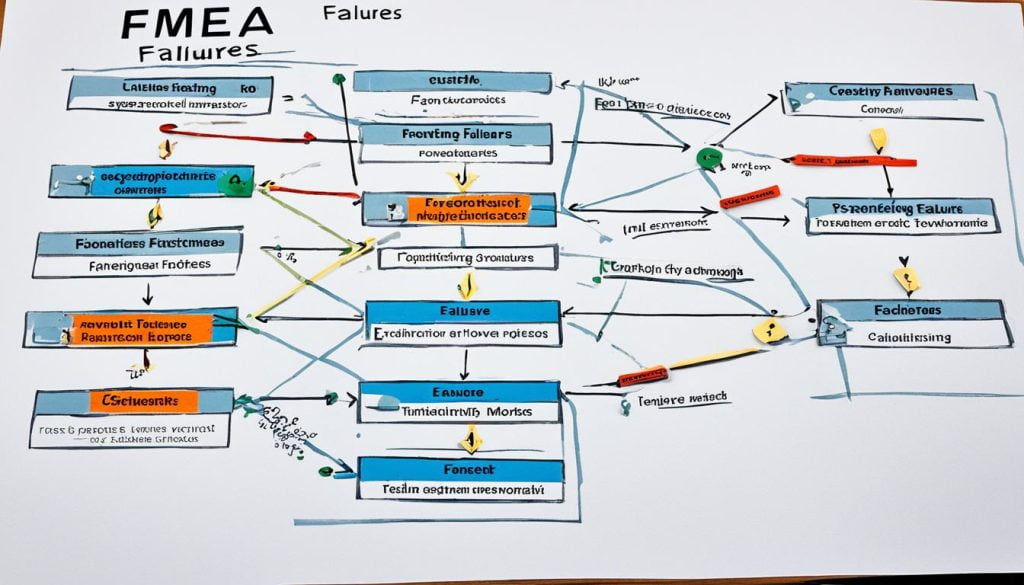
Failure Mode and Effects Analysis (FMEA) is a systematic approach used to identify and analyze potential failures in processes, systems, products, or services. By conducting an FMEA, organizations can proactively identify areas of potential risk and develop strategies to mitigate them before they impact the quality of processes or products.
There are two types of FMEA: Design Failure Mode and Effects Analysis (DFMEA) and Process Failure Mode and Effects Analysis (PFMEA). DFMEA is primarily focused on design-related failures, aiming to identify potential vulnerabilities or weaknesses in the design phase of a product’s development. On the other hand, PFMEA focuses on process-related failures, analyzing the potential risks and effects of process variations, deviations, or flaws.
FMEA plays a crucial role in quality control as it helps organizations in two key ways. Firstly, it assists in identifying potential failures, allowing teams to take preventive actions to minimize risks. By proactively addressing failure modes, organizations can reduce the likelihood of defects, production delays, and customer dissatisfaction. Secondly, FMEA aids in predicting process performance by analyzing potential failures and their effects. This predictive analysis allows organizations to optimize their processes, enhance product quality, and improve overall efficiency.
Key Steps in the FMEA Process
- Identify potential failure modes: This involves brainstorming and analyzing all possible ways in which a process, system, or product could fail.
- Determine the effects of failures: Evaluate the consequences of each failure mode, including the impact on product quality, safety, and customer satisfaction.
- Assign severity, occurrence, and detection ratings: Assess the severity of each failure mode’s effects, the likelihood of its occurrence, and the ability to detect it. These ratings provide a basis for prioritizing failure modes for further action.
- Develop and implement preventive or corrective actions: Identify measures to prevent failures from occurring or to minimize their effects. These actions may include process improvements, design changes, or additional quality controls.
- Monitor and review: Continuously monitor and review the effectiveness of the preventive or corrective actions taken. This ongoing evaluation helps refine the FMEA process and enables organizations to respond proactively to emerging risks.
| Benefits of FMEA | Challenges of FMEA |
|---|---|
|
|
Kaizen and Checklist
In the pursuit of continuous improvement and maintaining quality management activities, two important tools come into play: Kaizen and Checklist.
Kaizen is a philosophy rooted in continuous improvement, involving every member of an organization in contributing to the enhancement of systems and processes. By encouraging a mindset of ongoing refinement, Kaizen fosters a culture of innovation, efficiency, and excellence. It empowers employees to identify areas for improvement, suggest solutions, and implement changes that lead to enhanced quality and productivity.
To ensure the smooth execution of quality management activities and maintain a structured approach to managing quality, the use of checklists is invaluable. Checklists serve as a comprehensive guide, outlining all the necessary steps and tasks that must be completed to guarantee the highest levels of quality. By following a checklist, organizations can avoid overlooking essential activities, streamline their quality management processes, and minimize the risk of errors and omissions.
Benefits of Kaizen and Checklist in Quality Management
Implementing Kaizen and using checklists in quality management activities yield several valuable benefits:
- Continuous Improvement: Kaizen fosters a culture of continuous improvement, encouraging employees to seek innovative solutions and implement incremental changes over time.
- Enhanced Efficiency: Checklists ensure that quality management activities are carried out systematically and consistently, reducing the risk of overlooked tasks or errors.
- Standardization: By implementing checklists, organizations establish standardized processes, ensuring that quality management activities are uniformly executed across different teams and projects.
- Reduced Waste: Kaizen and checklists assist in identifying inefficiencies and eliminating waste, leading to more streamlined processes and optimal resource utilization.
- Improved Documentation and Compliance: Checklists provide documentation of completed quality management activities, enabling organizations to demonstrate compliance with industry regulations and standards.
In summary, Kaizen and checklists serve as powerful tools in the arsenal of quality management activities. While Kaizen drives continuous improvement and innovation, checklists ensure that key tasks are completed consistently, enabling organizations to maintain rigorous standards and achieve customer satisfaction.
| Kaizen | Checklist |
|---|---|
| Philosophy of continuous improvement | Ensures necessary tasks are completed |
| Involves all members of the organization | Streamlines quality management processes |
| Fosters innovation and efficiency | Minimizes errors and omissions |
| Drives a culture of excellence | Establishes standardized processes |
| Identifies areas for improvement | Reduces waste and optimizes resource utilization |
| Provides documentation for compliance |
Conclusion
In conclusion, the use of quality management tools and techniques is crucial in maintaining rigorous standards and achieving customer satisfaction. Companies that implement proven practices such as Total Quality Management (TQM), Failure Mode and Effects Analysis (FMEA), and Kaizen can optimize their product excellence and ensure that their processes consistently meet or exceed customer expectations.
TQM emphasizes continuous improvement, personal discipline, teamwork, and quality circles, involving every member of the organization in enhancing processes. FMEA provides a systematic approach to identifying potential failures and mitigating risks, while Kaizen promotes a philosophy of continuous improvement across all levels of the organization.
Through the application of these quality management tools and techniques, companies can streamline their operations, eliminate inefficiencies, and deliver products and services that consistently meet the rigorous standards set by both industry regulations and customer demands. By achieving and maintaining high levels of product quality, companies can not only enhance their reputation but also build long-term customer loyalty, ultimately leading to increased customer satisfaction and business success.
FAQ
What is the difference between quality assurance and quality control?
Quality assurance focuses on production methods and processes, while quality control ensures that manufacturing processes are performed appropriately.
What are some common techniques used in quality control?
Three common techniques used in quality control are Total Quality Management (TQM), Six Sigma, and Lean production.
What are some types of quality control tools?
Some types of quality control tools include Cause-and-Effect Diagrams, Check Sheets, Control Charts, Histograms, Pareto Charts, Scatter Diagrams, and Stratification.
What is DuraMark Technologies known for in quality control?
DuraMark Technologies specializes in manufacturing safety and compliance labels, manufacturing inventory management, variable data printing, product specific kitting, and just-in-time manufacturing.
Why are quality control tools and techniques important?
Quality control tools and techniques help maintain rigorous standards, ensure efficient processes, and minimize defects, ultimately leading to customer satisfaction. They are an integral part of quality assurance practices and the QA QC process.
What are some basics of quality management tools?
Quality management tools include various charts, histograms, scatter diagrams, control charts, check sheets, Ishikawa diagrams, flowcharts, and Pareto charts. These tools help visualize data, monitor process variations, collect data, identify root causes, map processes, and prioritize problems for effective quality management.
What are some statistical quality control tools and techniques?
Statistical quality control tools and techniques include flowcharts, Pareto charts, control charts, check sheets, and scatter diagrams. These tools are used to analyze relationships, monitor process variations, and collect and visualize data to improve quality assurance and manage quality control effectively.
What is Total Quality Management (TQM)?
Total Quality Management (TQM) is an integrated approach that emphasizes continuous improvement, personal discipline, teamwork, and quality circles. It aims to involve every member of the organization in improving processes and delivering products and services that meet or exceed customer expectations.
What is Failure Mode and Effects Analysis (FMEA)?
Failure Mode and Effects Analysis (FMEA) is a systematic approach to identifying and analyzing potential failures in processes, systems, products, or services. It includes Design Failure Mode and Effects Analysis (DFMEA) for design-related failures and Process Failure Mode and Effects Analysis (PFMEA) for process-related failures. FMEA helps predict process performance and mitigates potential risks to ensure quality control.
How does Kaizen contribute to quality control?
Kaizen is a philosophy of continuous improvement that involves all members of the organization contributing to improving systems and processes. Checklists are a tool used in quality control to ensure that all necessary quality management activities are completed, providing a structured approach to managing quality.
What is the importance of quality control tools and techniques?
Quality control tools and techniques are essential for maintaining rigorous standards, optimizing product excellence, and achieving customer satisfaction. By implementing proven practices like TQM, FMEA, and Kaizen, companies can ensure that their processes consistently meet or exceed customer expectations.