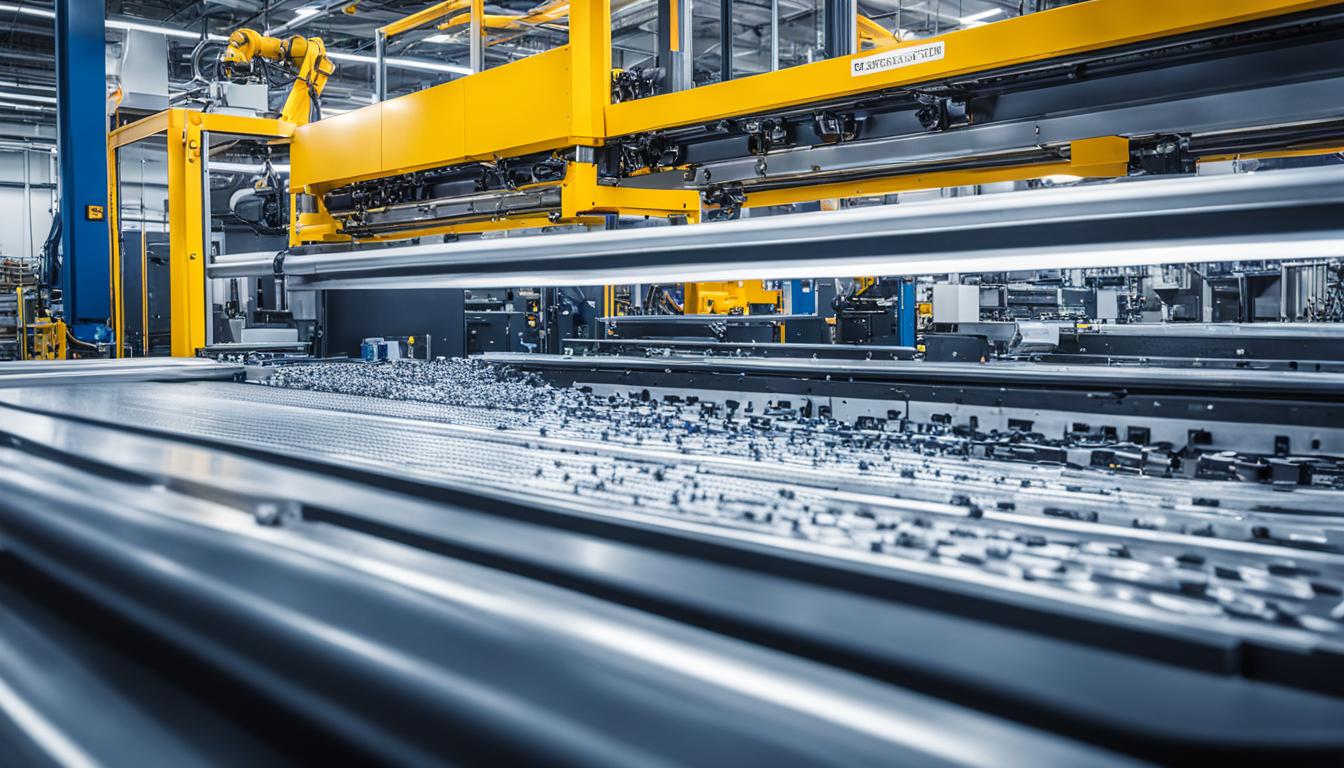
Lean manufacturing is a philosophy of continuous improvement focused on eliminating waste and increasing efficiency. It emphasizes quality built into product and process design, following Lean Manufacturing principles. Many manufacturers adopt Six Sigma techniques to further enhance quality management.
Key Takeaways:
- Lean manufacturing aims to eliminate waste and increase efficiency.
- Quality is emphasized in product and process design.
- Six Sigma techniques complement Lean Manufacturing principles.
- Lean practices help reduce errors and defects in manufacturing.
- Adopting Lean Manufacturing principles can lead to significant quality improvement.
The Origin of Lean Manufacturing
Lean manufacturing, a philosophy focused on eliminating waste and improving efficiency, has its origins in the Toyota Production System developed after World War II. Inspired by Henry Ford’s mass production techniques, Toyota sought to reduce waste and actively involve employees in the manufacturing process. By adopting Just In Time (JIT) production and other lean manufacturing principles, Toyota achieved higher quality products and increased customer satisfaction.
Toyota’s approach emphasized reducing batch sizes and streamlining production processes to eliminate waste. The company recognized that by minimizing waste, they could improve efficiency, reduce costs, and deliver products more quickly to meet customer demand. The success of lean manufacturing methods at Toyota led to their adoption by American manufacturers, who further evolved these principles into the modern practice known as lean manufacturing.
One of the key concepts in lean manufacturing is Just In Time (JIT) production, which focuses on delivering materials and components to the production line exactly when they are needed. This approach helps minimize inventory costs and prevents excess inventory from tying up valuable resources. By implementing JIT production, manufacturers can achieve smoother, more efficient production flows and reduce waste caused by overproduction and excess inventory.
Lean manufacturing principles also emphasize the active involvement of employees at all levels of the organization. By empowering employees to identify and address waste, inefficiencies can be quickly identified and resolved, leading to improved quality and productivity. This employee engagement fosters a culture of continuous improvement, where everyone is encouraged to contribute ideas and identify opportunities for optimization.
“The Toyota Production System is a unique approach that focuses on waste reduction and employee involvement, resulting in higher quality products and improved customer satisfaction.” – Laura Simmons, Lean Manufacturing Expert
The adoption of lean manufacturing principles has had a significant impact on the manufacturing industry. By eliminating waste and focusing on efficient production processes, manufacturers can achieve cost savings, improve product quality, and deliver more value to their customers. Lean manufacturing continues to evolve and adapt to meet the changing demands of the industry, driving continuous improvement and helping companies stay competitive in the global market.
Lean Manufacturing Quality Management Principles
Lean manufacturing principles not only aim for efficiency but also embody a set of quality management principles. Just In Time (JIT) production, a core component of lean manufacturing, requires a smooth continuous flow from raw materials to finished goods and emphasizes quality built into the design.
- JIT production ensures that the right quantity of materials is delivered at the right time, eliminating excess inventory and minimizing waste.
- Quality built into design means that product quality is considered and planned right from the initial stage of design and development. By incorporating quality measures and standards during the design phase, potential errors and defects are prevented and overall product quality is improved.
- Mistake proofing is a lean practice that involves creating systems and processes that are designed in such a way that errors and defects become nearly impossible to make. By implementing mistake-proofing techniques, manufacturers reduce the risk of errors, defects, and rework, ensuring high-quality output.
- Intelligent automation plays a crucial role in lean manufacturing quality management. By leveraging advanced technologies and automated systems, manufacturers can streamline processes, minimize human errors, and achieve consistent quality levels. Intelligent automation also allows for real-time monitoring and data analysis, facilitating continuous improvement efforts.
“By integrating JIT production, quality built into design, mistake proofing, and intelligent automation, manufacturers can establish a robust quality management system that ensures high-quality products while optimizing efficiency and reducing waste.”
Lean manufacturing quality management principles create a foundation for delivering products that meet customer expectations, with minimal waste and maximum efficiency. These principles align with the overall goals of lean manufacturing, which seeks to create value for customers while optimizing resources.
The Role of JIT Production
Just In Time (JIT) production, a key component of lean manufacturing, plays a critical role in quality management. By implementing JIT production, manufacturers can achieve a smooth and continuous flow of materials and processes, eliminating bottlenecks and reducing inventory. This lean practice ensures that raw materials are available precisely when needed, minimizing the risk of defects and allowing for better quality control throughout the production process.
Improving Quality Assurance With Six Sigma
Six Sigma is a powerful problem-solving methodology that works hand-in-hand with lean manufacturing principles to drive quality improvement in manufacturing operations. By focusing on reducing defects and errors within six sigma of the mean, Six Sigma aims for less than 3.4 defects per million opportunities, ensuring a high level of quality assurance.
There are two primary methodologies used in Six Sigma: DMAIC (Define, Measure, Analyze, Improve, Control) and DMADV (Define, Measure, Analyze, Design, Verify). DMAIC is employed for improving existing processes, while DMADV is used for creating new processes and products. Both methodologies provide structured frameworks for problem-solving and continuous improvement.
The combination of lean manufacturing and Six Sigma can lead to significant quality improvements and cost reductions. While lean manufacturing eliminates waste and optimizes efficiency, Six Sigma focuses on reducing variations and defects, resulting in robust, high-quality processes and products.
“Six Sigma creates a disciplined problem-solving culture in organizations, driving continuous improvement and customer satisfaction through data-driven decision-making.”
Implementing Six Sigma requires the use of statistical and analytical tools to measure, analyze, and improve processes. These tools help identify root causes of defects or errors, enabling organizations to implement effective solutions and prevent recurrence. By following the DMAIC or DMADV methodology, companies can ensure systematic problem-solving and achieve sustainable quality improvements.
Let’s take a look at an example of how Six Sigma can be applied to a manufacturing process:
| Steps | Description |
|---|---|
| Define | Clearly define the problem statement and project goals. |
| Measure | Collect data and establish baseline measurements for the process. |
| Analyze | Identify root causes of defects or errors by analyzing the collected data. |
| Improve | Implement solutions to address the identified root causes. |
| Control | Put controls in place to sustain the improvements and monitor the process for any variations. |
By following these structured steps and utilizing data-driven decision-making, organizations can achieve substantial improvements in quality, ultimately leading to higher customer satisfaction, reduced costs, and increased competitiveness in the market.
What is Lean Manufacturing?
Lean manufacturing is a methodology that focuses on eliminating waste and delivering customer value. It uses various tools and practices to identify and eliminate inefficiencies in the manufacturing process.
Examples of waste include inefficient processes, idle time, underutilized talent, and excess inventory.
By reducing waste, lean manufacturing improves production efficiency and overall operations.
Lean Manufacturing Tools
| Tool | Description |
|---|---|
| Kanban System | A visual system for managing inventory and controlling production flow. |
| Value Stream Mapping | A tool for identifying and optimizing the flow of value in a manufacturing process. |
| Poka-Yoke | Practices and devices designed to prevent errors or defects from occurring. |
Lean Manufacturing Practices
- Continuous Improvement: Regularly seeking ways to optimize processes and reduce waste.
- 5S System: A workplace organization methodology focused on cleanliness and efficiency.
- Just-in-Time Production: Minimizing inventory and producing goods only when needed.
- Single-Piece Flow: Manufacturing products one piece at a time to reduce defects and improve quality.
By implementing these tools and practices, manufacturers can streamline their operations, improve productivity, and deliver value to customers.
Lean Manufacturing Training and Implementation
Implementing lean manufacturing involves training employees and utilizing various tools and strategies to enhance operational efficiency and reduce waste. Two key tools that facilitate the implementation of lean principles are value stream mapping and Kanban boards.
Value stream mapping
Value stream mapping is a visual tool that helps identify and optimize the flow of value through the manufacturing process. It allows stakeholders to understand the current state of the production process and identify areas of waste, such as unnecessary inventory or waiting time. By mapping the value stream, manufacturers can strategically streamline operations, eliminate non-value-added steps, and improve overall efficiency.
Kanban boards
Kanban boards provide a visual representation of workflows and the status of tasks within a manufacturing process. They enable teams to track the progress of work and identify potential bottlenecks or delays. By visualizing the flow of work, teams can improve collaboration, prioritize tasks, and ensure a smooth and continuous workflow. Kanban boards facilitate the implementation of a pull system, wherein tasks are pulled based on actual demand rather than pushed based on arbitrary schedules.
Successfully implementing lean manufacturing requires a comprehensive approach that encompasses continuous delivery and a strong focus on collaboration. Continuous delivery ensures that work is completed and delivered in a timely manner, reducing the accumulation of unfinished tasks or inventory. The pull system, supported by Kanban boards, promotes collaboration by allowing teams to self-organize, adjust their workloads, and optimize efficiency.
By implementing lean manufacturing tools such as value stream mapping and Kanban boards, manufacturers can achieve sustainable improvements in operational efficiency, resource utilization, and waste reduction.
Benefits of Lean Manufacturing
Lean manufacturing offers several significant benefits to manufacturers. By implementing lean principles, companies can achieve waste reduction, time savings, cost savings, and improved quality. Let’s explore these benefits in detail:
1. Waste Reduction:
Lean manufacturing focuses on identifying and eliminating waste in all its forms. This includes reducing unnecessary inventory, streamlining production processes, and optimizing resource utilization. By minimizing waste, manufacturers can increase efficiency and reduce costs. Waste reduction also contributes to environmental sustainability, making lean manufacturing a responsible and eco-friendly approach.
2. Time Savings:
Through lean manufacturing, manufacturers can identify and eliminate inefficiencies that cause delays or slow down production. By implementing lean practices such as value stream mapping and continuous improvement, companies can optimize workflows, streamline processes, and reduce cycle times. This results in significant time savings, enabling manufacturers to meet customer demands more efficiently and improve overall productivity.
3. Cost Savings:
Lean manufacturing helps companies reduce costs by eliminating waste, improving efficiency, and optimizing resource allocation. By identifying and eliminating non-value-added activities, manufacturers can reduce expenses associated with excess inventory, overproduction, and rework. Lean practices also lead to cost savings by minimizing defects, improving quality, and reducing warranty claims or customer complaints.
4. Improved Quality:
Quality improvement is a central focus of lean manufacturing. By implementing practices such as mistake-proofing (Poka-Yoke) and total productive maintenance (TPM), manufacturers can enhance product quality and reliability. Lean manufacturing principles also emphasize building quality into the design and process, ensuring that products meet or exceed customer expectations. Improved quality leads to higher customer satisfaction, repeat business, and a competitive advantage in the market.
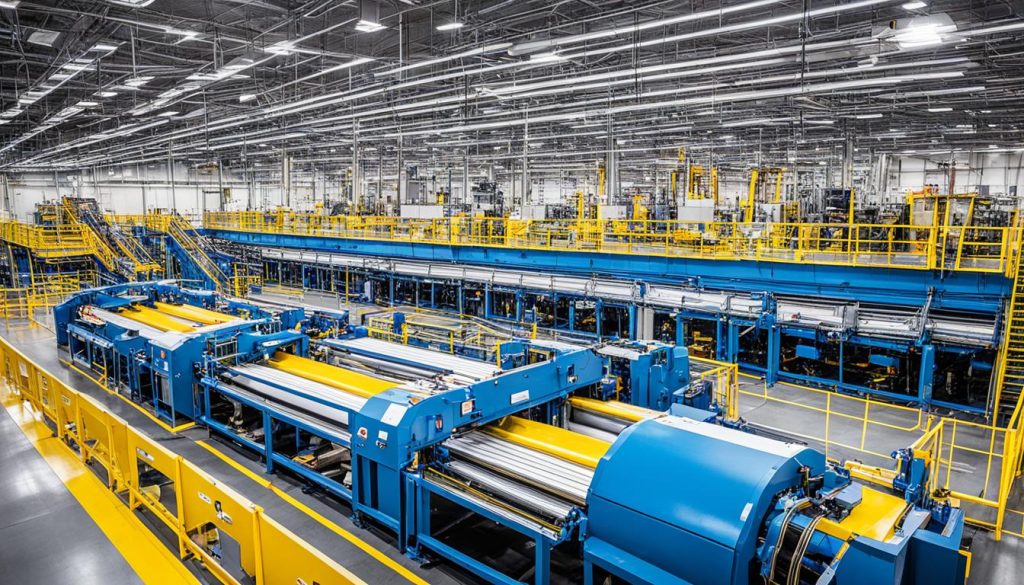
In conclusion, lean manufacturing offers significant advantages to manufacturers. By reducing waste, optimizing time and cost, and improving product quality, companies can achieve enhanced operational efficiency, customer satisfaction, and profitability. Embracing lean principles is crucial for organizations seeking to stay competitive and thrive in today’s dynamic manufacturing landscape.
Measuring Manufacturing Quality With Lean Principles
Lean principles can be used as an effective means of measuring and improving manufacturing quality. By implementing quality at the source (QATS) practices, manufacturers empower their employees to detect and address defects or errors in real-time. This approach ensures that quality becomes the responsibility of every worker involved in the production process, leading to improved product quality and reduced waste.
Identifying and eliminating manufacturing errors and defects early on is essential for minimizing waste and the production of non-quality products. By embracing lean principles, manufacturers can establish a culture of continuous improvement and quality assurance, enhancing overall production efficiency.
“Quality at the source empowers employees to take ownership of the manufacturing process and ensure that every product leaving the production line meets the highest quality standards.”
By utilizing lean principles, such as waste reduction and process optimization, manufacturers can achieve measurable improvements in quality and reduce the likelihood of product defects. This not only leads to cost savings but also enhances customer satisfaction and brand reputation.
Lean manufacturing’s focus on waste reduction and continuous improvement aligns with the goal of improving manufacturing quality. With quality at the source, manufacturing errors and defects are proactively addressed and eliminated, resulting in higher-quality products and increased customer confidence.
Benefits of Implementing Quality at the Source:
- Real-time defect detection and correction
- Reduced waste and non-quality production
- Enhanced product quality and customer satisfaction
- Improved efficiency and productivity
By incorporating quality at the source into their manufacturing processes, companies can achieve significant improvements in overall quality and cost-effectiveness. Empowering employees to take ownership of quality assurance leads to a culture of continuous improvement and waste reduction, resulting in tangible benefits for the organization.
| Benefits | Impact |
|---|---|
| Cost Savings | Reduced waste and non-quality production lead to cost savings. |
| Improved Customer Satisfaction | Higher-quality products result in increased customer satisfaction and loyalty. |
| Enhanced Brand Reputation | Consistently delivering high-quality products builds a positive brand reputation. |
Value Stream Mapping for Waste Reduction and Quality Improvement
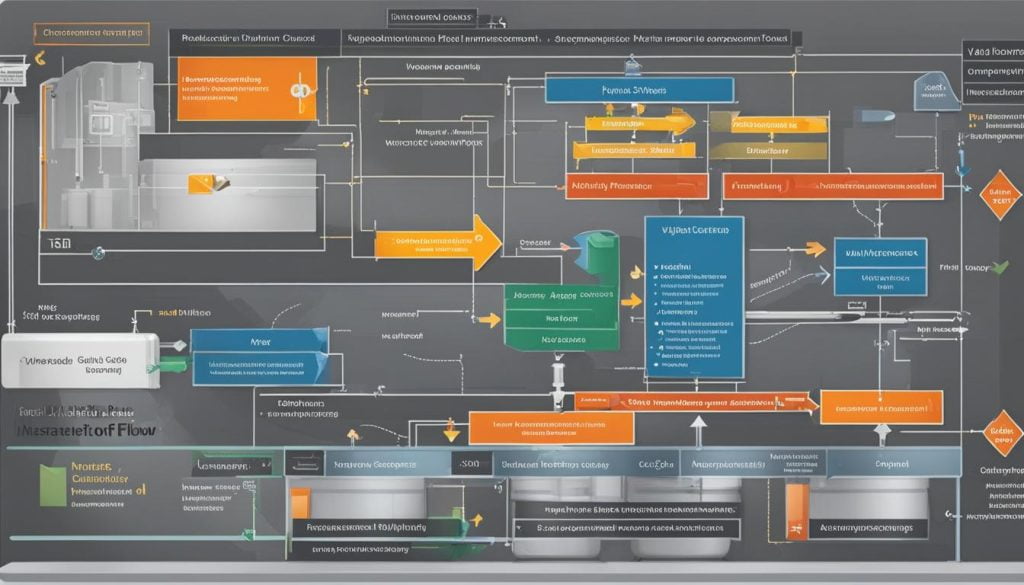
Value stream mapping is a powerful tool utilized in the lean manufacturing approach to analyze and optimize the flow of material and information through the manufacturing process. By visualizing the entire manufacturing process from start to finish, value stream mapping helps identify areas of waste and inefficiency, leading to better quality and reduced costs.
Through value stream mapping, managers and production teams can gain a comprehensive understanding of how materials, information, and resources are utilized throughout the manufacturing process. This includes identifying bottlenecks, excess inventory, and activities that do not add value to the final product.
By using value stream mapping, manufacturers can proactively address waste and areas for improvement, ultimately leading to better quality products and increased efficiency. It provides a holistic view of the manufacturing process, allowing for targeted interventions at specific points to improve flow and overall productivity.
One of the main benefits of value stream mapping is its ability to highlight process inefficiencies and waste. This can include excessive waiting times, unnecessary transportation and movement of materials, overproduction, and excessive rework. By identifying and eliminating these waste elements, manufacturers can optimize their processes, reduce costs, and improve the overall quality of their products.
Moreover, value stream mapping enables organizations to identify areas where quality improvement initiatives can be implemented. By pinpointing specific steps or stages that contribute to defects or quality issues, manufacturers can develop targeted solutions and process improvements to enhance overall quality. This helps prevent defects and potential issues from occurring, leading to improved customer satisfaction and reduced rework.
Overall, value stream mapping is a valuable tool for waste reduction and quality improvement in the manufacturing process. It provides a visual representation of the value flow, allowing manufacturers to identify and address inefficiencies and waste that hinder quality and productivity. By implementing changes based on the insights gained from value stream mapping, manufacturers can drive continuous improvement, reduce costs, and deliver higher-quality products to their customers.
| Benefits | Description |
|---|---|
| Identifying Waste | Value stream mapping helps identify and eliminate waste elements in the manufacturing process, leading to cost reductions and improved efficiency. |
| Improving Quality | By pinpointing areas that contribute to defects and quality issues, value stream mapping enables targeted quality improvements, resulting in higher customer satisfaction. |
| Optimizing Processes | Through visualizing the entire manufacturing process, value stream mapping allows for the identification of process inefficiencies and opportunities for improvement. |
| Enhancing Productivity | By eliminating waste and streamlining processes, value stream mapping increases overall productivity and reduces non-value-added activities. |
Defining Value and Customer Focus for Quality Improvement
Lean principles emphasize the importance of defining value and creating a customer-focused environment in order to drive quality improvement. By understanding customer needs and aligning resources to meet those needs effectively, manufacturers can minimize waste and enhance their overall operational efficiency.
This customer-centric approach involves eliminating unnecessary features or products that do not add value to the customer. By streamlining the manufacturing process and reducing wasteful activities, manufacturers can ensure that products are manufactured and delivered quickly, meeting customer expectations. This not only improves customer satisfaction but also leads to cost savings and increased profitability.
Identifying Customer Needs
One of the key aspects of defining value is identifying and understanding customer needs. This requires manufacturers to actively engage with customers, conduct market research, and gather feedback to gauge their preferences and expectations.
“The customer’s perception is your reality.” – Kate Zabriskie
By listening to customer feedback and studying market trends, manufacturers can gain insights into what customers truly value. This information serves as a basis for aligning production processes, product designs, and service offerings to meet those specific needs. By delivering products and services that address customer pain points and provide unique value, manufacturers can differentiate themselves in the marketplace.
Minimizing Waste and Errors
A customer-focused environment also plays a crucial role in quality improvement. By understanding customer expectations and incorporating them into the manufacturing process, manufacturers can identify and eliminate errors that may compromise product quality.
Implementing lean practices such as mistake-proofing and intelligent automation can help reduce errors and defects, ensuring high-quality output. By designing processes and systems that are error-resistant, manufacturers can greatly enhance quality assurance and minimize waste.
Continuous Improvement
Defining value and creating a customer-focused environment are ongoing processes. Manufacturers must continually adapt and refine their operations to meet changing customer needs and expectations.
Through continuous improvement initiatives such as Kaizen events and value stream mapping, manufacturers can identify areas for enhancement and implement strategies for quality improvement. By involving employees at all levels of the organization and fostering a culture of continuous learning and innovation, manufacturers can drive significant improvements in product quality and customer satisfaction.
Using Lean Principles for Boosting Manufacturing Quality
Lean principles are not only effective for waste reduction but also for boosting manufacturing quality. By visualizing manufacturing processes through tools like value stream mapping, manufacturers can identify areas for improvement and eliminate process factors that hinder product quality. Implementing lean techniques like quality at the source empowers employees to detect and address defects in real-time, leading to improved product quality and overall manufacturing efficiency.
Value stream mapping, a key lean tool, allows manufacturers to analyze and optimize the flow of material and information in the manufacturing process. By identifying waste and areas for improvement, manufacturers can make targeted changes that enhance product quality and reduce costs. This comprehensive visual representation of the manufacturing process provides valuable insights that drive quality improvement initiatives.
“Value stream mapping has been a game-changer for our manufacturing operations. It has helped us identify critical steps in the process that were negatively impacting product quality. Through targeted improvements, we have significantly improved our quality metrics and customer satisfaction.” – Jane Stevens, Quality Manager at XYZ Manufacturing
Furthermore, lean principles emphasize quality at the source, meaning that every employee is responsible for detecting and addressing defects during the manufacturing process. This real-time approach to quality control prevents the production of non-conforming products and reduces rework, ensuring that only high-quality products reach customers. By empowering employees to take ownership of quality, manufacturers can achieve sustained improvements in product quality and minimize costly manufacturing errors.
Implementing lean principles also encourages a culture of continuous improvement. By regularly analyzing and optimizing manufacturing processes, manufacturers can proactively identify and address quality issues and bottlenecks. This ongoing commitment to quality improvement leads to more efficient operations and higher customer satisfaction.
Benefits of Using Lean Principles for Manufacturing Quality Improvement
Using lean principles for boosting manufacturing quality offers significant benefits to manufacturers:
- Improved product quality: Eliminating process factors that hinder quality and empowering employees to address defects in real-time leads to higher product quality standards.
- Enhanced manufacturing efficiency: By visualizing and optimizing manufacturing processes, lean principles help streamline operations, reducing waste and increasing overall efficiency.
- Reduced costs: The elimination of waste and manufacturing errors leads to cost savings by reducing rework, scrap, and non-quality products.
- Higher customer satisfaction: Improved product quality and on-time delivery result in increased customer satisfaction and loyalty.
By embracing lean principles for quality improvement, manufacturers can establish a competitive advantage in the market by delivering high-quality products efficiently and effectively.
| Lean Principles for Boosting Manufacturing Quality | Benefits |
|---|---|
| Visualizing manufacturing processes through value stream mapping | Identification of areas for improvement and elimination of process factors hindering product quality |
| Implementing quality at the source | Real-time defect detection and addressing, improving overall product quality |
| Culture of continuous improvement | Proactive identification and resolution of quality issues, leading to higher efficiency |
Conclusion
The adoption of lean manufacturing principles is paramount for manufacturers seeking to improve the quality of their operations. By prioritizing waste reduction, empowering employees, and delivering value to customers, manufacturers can achieve heightened efficiency, cost savings, and remarkable product quality. Introducing lean manufacturing, complemented by Six Sigma techniques, further enhances quality assurance and fosters substantial performance improvements. Embracing lean principles is an essential strategy for manufacturers aiming to optimize their operations and effectively compete in today’s dynamic market.
FAQ
What is lean manufacturing?
Lean manufacturing is a philosophy of continuous improvement focused on eliminating waste and increasing efficiency in the manufacturing process.
Where did lean manufacturing originate from?
Lean manufacturing originated from the Toyota Production System, which was developed post-World War II. It took inspiration from Henry Ford’s mass production techniques but focused on reducing waste and actively involving employees in the production process.
How does lean manufacturing focus on quality management?
Lean manufacturing principles emphasize quality built into product and process design. Practices such as mistake proofing and intelligent automation help reduce errors and defects, ensuring high-quality output.
How does Six Sigma complement lean manufacturing?
Six Sigma is a problem-solving methodology that focuses on reducing defects and errors. It can be used in conjunction with lean manufacturing to further enhance quality assurance and improve overall performance.
What are the benefits of lean manufacturing?
Lean manufacturing reduces costs, improves time management, increases productivity, and leads to improved product and service quality, resulting in higher customer satisfaction.
What tools and strategies are used for implementing lean manufacturing?
Lean manufacturing uses tools such as value stream mapping, Kanban boards, continuous delivery, and the pull system to improve efficiency and reduce waste in manufacturing operations.
How can lean principles be used to measure and improve manufacturing quality?
Lean principles, such as quality at the source, empower employees to detect and address defects or errors in real-time, minimizing waste and improving product quality.
How does value stream mapping contribute to waste reduction and quality improvement?
Value stream mapping helps analyze and optimize the flow of material and information in the manufacturing process. By visualizing the process and identifying areas for improvement, manufacturers can reduce waste and improve quality.
How does lean manufacturing focus on customer needs and product quality?
Lean manufacturing emphasizes defining value and creating a customer-focused environment. By understanding customer needs and eliminating unnecessary features or products, manufacturers can improve product quality and overall manufacturing efficiency.
How can lean principles boost manufacturing quality?
Lean principles enable manufacturers to identify areas for improvement, eliminate process factors that hinder quality, and empower employees to address defects in real-time, leading to improved product quality and overall manufacturing efficiency.
How can lean manufacturing drive quality improvement in manufacturing operations?
By focusing on waste reduction, empowering employees, and delivering value to customers, lean manufacturing can achieve higher efficiency, cost savings, and improved product quality, leading to overall quality improvement in manufacturing operations.