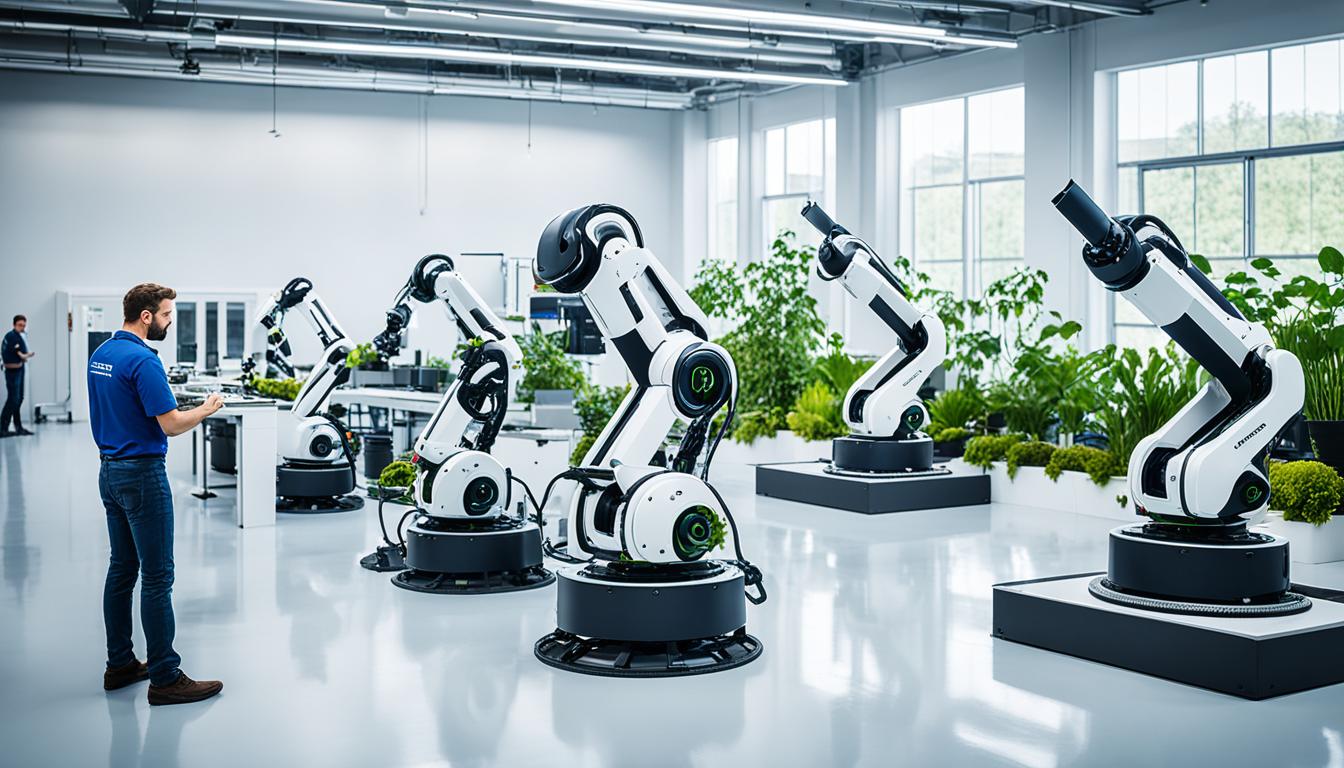
Imagine a world where the physical and digital converge to create new paradigms of innovation and efficiency in production. You are now entering the transformative era of The Future of Manufacturing, where traditional processes give way to groundbreaking manufacturing innovations driven by a digital transformation. In this new landscape, value is no longer anchored to the mere existence of physical products but is intricately linked to services and experiences they provide.
These advancements dictate a shift away from mass production to more personalized, demand-driven manufacturing models. Manufacturers are now tapping into the potential of “smart” connected products, defining an intricate digital ecosystem where each product can become a platform for new services. To stay competitive, embracing these digital transformation in manufacturing trends is not just advisable; it’s imperative.
Key Takeaways
- Manufacturing innovation now extends beyond physical goods to include the provision of services and experiences.
- Digital transformation in manufacturing is driven by consumer demands for personalization and customization.
- Traditional barriers to market entry are eroding, giving rise to agile and distributed manufacturing models.
- “Smart” products are increasingly serving as platforms, fostering a closer relationship between manufacturers and consumers.
- The future of manufacturing is being shaped by technological advancements that enable new business models and strategies.
- Staying ahead requires adopting innovative approaches and fully comprehending the shift towards digitized, service-oriented offerings.
Revolutionary Shifts in Production and Value Creation
As you delve into the modern manufacturing landscape, you’ll notice a profound transformation characterized by the Industry 4.0 impact. This evolution is marked by the adoption of advanced manufacturing technologies and an accelerated shift towards automation in production. Rethinking traditional business models becomes a necessity as manufacturers strive to meet dynamic consumer preferences that now favor more personalized and on-demand solutions.
This revolution in manufacturing sees a transition from built-to-stock practices to an emphasis on built-to-order capabilities, diminishing the role of intermediaries. Here, the goal is straightforward: to offer tangible products that act as gateways to enhanced experiences and services—a stark departure from the erstwhile focus on sheer product output.
The pace at which technology advances has effectively lowered barriers to market entry, presenting ripe opportunities for newcomers—especially those adept with advanced manufacturing technologies. This egalitarian landscape invites entities of all scales to partake in the manufacturing dialogue, ushering in an exciting range of innovations that hold the potential to redefine market norms.
However, organizations must approach this new environment with an acute awareness of their sector’s unique demands. The extent of regulation, product intricacy, and the existing level of digitization are all quintessential factors shaping the trajectory and velocity at which these shifts occur within different manufacturing sectors.
The table below showcases the impact of these shifts across various facets of the manufacturing world:
| Aspect | Pre-Industry 4.0 Paradigm | Post-Industry 4.0 Paradigm |
|---|---|---|
| Business Model | Mass production, built-to-stock | Customization, built-to-order |
| Market Entry | High barriers for scale and learning | Lowered barriers, enabling small-scale entrants |
| Product Value | Mostly intrinsic to the physical product | Linked to services and experiences enabled by the product |
| Consumer Role | Reactive and passive | Active, demanding personalization |
Whether you’re a burgeoning start-up or an established conglomerate, understanding these foundational shifts is pivotal. It’s not just about crafting physical commodities; it’s about architecting pathways for clients to unlock value in a myriad of unparalleled forms—and it’s here that the true future of manufacturing resides.
In sum, manufacturers willing to harness advanced manufacturing technologies, and adapt to the Industry 4.0 impact, while enabling automation in production, will likely emerge as architects of the new production paradigm. It’s a realm where innovation, agility, and customer-centricity converge to redefine value creation in manufacturing.
The Rise of Smart Products and Customization
Welcome to the new era of manufacturing where the proliferation of smart factories and the digital transformation in manufacturing stand at the vanguard of industry progress. Today’s consumer demands innovation, not just in products but in experiences—ushering in an age of personalized solutions that cater to individual preferences.
Emerging Consumer Demands
As the modern marketplace evolves, so too do the expectations of consumers who now seek a participatory role in the creation of their purchased goods. This evolution is fueling a significant shift as you, the consumer, begin requesting high levels of customization and personalization—elements that are critically reshaping traditional manufacturing dynamics. The product is no longer a static offering but an extension of the personal identity and creativity of customers who are increasingly seen as co-creators.
Transition from Physical to Service-Based Offerings
The industrial landscape is witnessing a monumental transition, one where tangible products play the dual role of fulfilling immediate needs while also acting as gateways to ongoing services. The emphasis has tilted from ownership to utility as consumers prefer to access a suite of services, indicative of the growing trend towards a service-based economy within manufacturing sectors.
Integration of Sensors and Connectivity in Manufacturing
The transformative power of integrated sensors and enhanced connectivity within products cannot be understated. This merger of digital and physical aspects catalyzes the creation of smart products that are capable not only of self-optimization but also of interacting within broader digital ecosystems. It’s a progression that is dramatically redefining value propositions and elevating the significance of data in the production arena.
By embracing these changes, you stand on the precipice of the next wave in manufacturing trends, where the interplay between innovative production techniques and heightened customer expectations will determine the path forward in this exciting journey of manufacturing transformation.
Barriers Eroding in Traditional Manufacturing
As you witness the evolution of the industry, it’s clear that the era of large, monopolistic manufacturers is being challenged. Exponential advancements in technology are dismantling long-standing barriers in the manufacturing sector, giving rise to a new breed of market players. These developments are opening doors previously closed to smaller entities, fostering a highly competitive and diverse marketplace.
New Entrants Leveraging Advanced Technologies
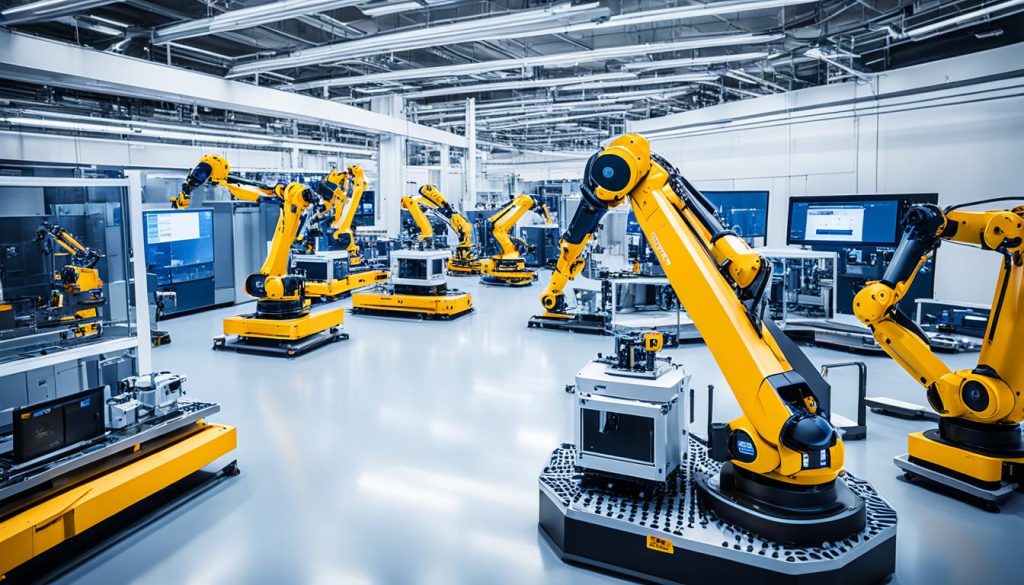
With the democratization of advanced manufacturing technologies, new entrants are carving their niche in markets once dominated by established firms. These visionaries utilize cutting-edge tools and insights to craft highly customized offerings, precisely tuned to the demands of today’s discerning customers. By harnessing the power of smart factories, these agile players are altering the landscape, proving that size doesn’t dictate capability in the modern manufacturing arena.
Redefining Economies of Scale through Agile Models
In tandem with these technological shifts, a new conception of economies of scale is emerging. No longer bound to massive, centralized plants, the focus has pivoted to nimble, sustainable manufacturing practices within distributed localities. Agile manufacturing models are on the rise, affording businesses with the agility to swiftly adapt and excel amid changing market conditions. This new paradigm blends efficiency with adaptability, redefining what it means to achieve economies of scale in the current manufacturing ecosystem.
Increasing Speed to Market and Customer Engagement
In the quest for manufacturing innovation, a pivotal trend emerges: the acceleration of speed to market. It’s an era where digital transformation in manufacturing takes center stage, underpinning the urgency to not just produce, but also to deliver at unprecedented rates. Central to this drive is the integration of automation in production, which streamlines processes and cuts down the time from concept to customer.
But speed is only part of the equation. The modern manufacturer understands that to truly connect with consumers, deeper engagement is required. Smart products, empowered by digital advancements, are blurring the lines between producers and consumers, facilitating a more active and personalized relationship.
Innovative manufacturers recognize that long-term success comes not solely from the rapid delivery of products, but also from fostering meaningful connections with their customers.
Consider how sophisticated data analytics, high-speed robotics, and IoT connectivity are becoming the mainstays of the shop floor, all in a bid to reduce the time gap between demand signal and supply response. When these elements are skillfully combined, they not only bolster the manufacturing process but also enrich customer interaction and responsiveness.
Let’s visualize this transformation through a comparison:
| Elements | Traditional Manufacturing | Modern Manufacturing |
|---|---|---|
| Speed to Market | Slower, batch-oriented production | Rapid, on-demand manufacturing |
| Customer Engagement | Transactional, limited interaction | Dynamic, continuous dialogue |
| Customization | Standardized products | Highly personalized offerings |
| Production Approach | Pre-determined schedules | Flexible, adaptable processes |
The contemporary manufacturing landscape is characterized by a spirited rush towards faster, more agile practices that intertwine richly with the fabric of customer preferences. As such, you’re invited to partake in this journey where efficiency and connectivity become the linchpins of success.
Intuition and foresight pave the way for manufacturers adopting technologies that not only promise superior speed and efficacy but also ensure that the heartbeat of customer relations beats stronger than ever before.
Let it be clear: manufacturers that excel in this dance of rapid production and deep customer engagement will be the ones charting the course for a future that values both keen responsiveness and penetrating insight.
Sustainable Practices in Modern Manufacturing
As the world gravitates towards a greener future, sustainable manufacturing practices are no longer optional but a critical element of modern industry. Introducing environmentally-friendly methods into production processes has become a paramount goal for companies looking to reduce their carbon footprint and align with a society that values planetary stewardship.
Adoption of Environmentally Conscious Production
Driving the charge towards sustainability, forward-thinking manufacturers are embedding environmentally conscious production practices across all levels of operations. This involves a comprehensive approach that encompasses everything from energy-efficient machinery to waste reduction protocols. The Industry 4.0 impact on sustainability is profound, as it enables the integration of smart technologies that optimize resource utilization and enhance production efficiency, further minimizing environmental impact.
Incorporating Renewable Energy and Materials
Another cornerstone of sustainability in manufacturing is the shift towards renewable energy in manufacturing. Utilizing sources like solar, wind, and bioenergy not only curtails reliance on fossil fuels but also ushers in a new era of clean energy consumption in industrial operations. Moreover, the integration of renewable materials into the product lifecycle marks a significant step in curbing the industry’s ecological footprint and promoting a circular economy.
The marriage of blockchain and AI technologies with renewable initiatives marks another leap forward. These digital solutions underpin the traceability of sustainable materials and authenticate the ethical sourcing and production processes. Their incorporation into the manufacturing ecosystem exemplifies the industry’s dedication to genuine sustainability, combining traditional practices with cutting-edge innovations for a healthier planet.
As you can see, the manufacturing industry’s commitment to sustainable practices is a testament to its adaptability and responsibility. Embracing these approaches not only fulfills ethical obligations to the environment but also resonates with a global consumer base that prizes ecological mindfulness. These strategies pave the way for a future where manufacturing not only meets the demands of today but does so without compromising the integrity of tomorrow’s world.
Industry 4.0: Integrating the Physical and Digital Worlds
The advent of Industry 4.0 has initiated a transformative era in manufacturing, characterized by the convergence of robust physical systems with cutting-edge digital technologies. This amalgamation is giving rise to smart factories, where the entire value chain, from raw material input to end-product delivery, is optimized through digital intelligence. As you navigate this new industrial reality, your understanding of where and how these technologies make an impact is essential.
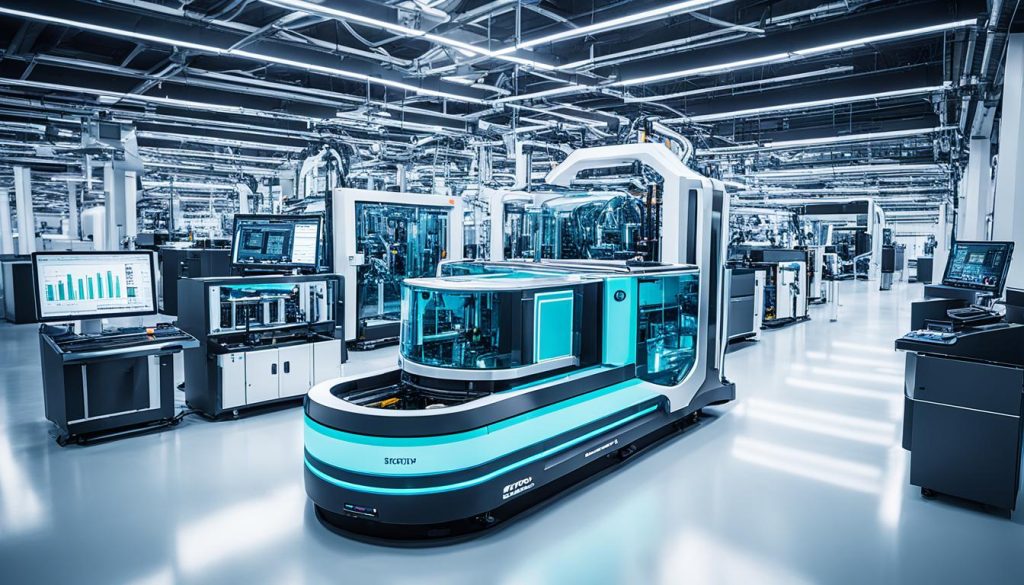
In this symbiotic integration, digital transformation in manufacturing is not a mere buzzword; it’s the bedrock of innovation that propels businesses forward. Let’s explore the critical layers where the Industry 4.0 impact is most profound.
Impact of IoT and Connectivity
The Internet of Things (IoT) is the neural network of smart factories. By interlinking machines, workpieces, and systems, IoT allows for an unprecedented level of connectivity and real-time data exchange. This optimizes the efficiency of manufacturing processes, enabling you to anticipate and respond swiftly to any operational challenges.
Imagine each component in the production line endowed with sensors, each collecting and transmitting data in real time. This information unlocks invaluable insights into operational performance, resource management, and production outcomes. The result? A manufacturing environment that is not only seamlessly connected but also astoundingly intelligent.
AI and Machine Learning in Production
The power of artificial intelligence (AI) and machine learning introduces a predictive prowess into the production process. By leveraging these advanced technologies, manufacturers are transforming how they diagnose issues, plan maintenance, and innovate products. AI algorithms assimilate vast streams of data from IoT devices, learning and evolving to foresee equipment malfunctions before they disrupt production.
Machine learning algorithms delve deep into historical performance data to pinpoint patterns and anomalies, ensuring an agile response to both known and unpredicted challenges. This capability not simply minimizes downtime but also aids in the creation of more responsive supply chain networks.
Through the lens of Industry 4.0, your grasp of these digital touchpoints is imperative. The integration of the physical with the digital world is not a distant possibility but the present reality, reshaping manufacturing foundations and sculpting the blueprint of future industry landscapes. Embrace it, and you place yourself firmly at the forefront of this industrial revolution.
Automation and the Evolving Workforce
The transformative wave of automation in production has not just improved efficiency but has ushered in a significant shift in the workforce dynamics of the manufacturing sector. With a surge in labor shortages, a phenomenon heightened by the Great Resignation, the industry faces the dual task of filling skilled roles and redefining workplace environments.
Key to the resilience of manufacturers is the integration of advanced manufacturing technologies that serve a twofold purpose. First, these technologies enhance the capabilities of the manufacturing process, enabling companies to meet the increasing market demands with agility. Second, and perhaps more crucially in today’s context, they fulfill an emerging need to align job designs with the aspirations of a new and tech-savvy generation entering the workforce.
As the sector transforms, the importance of sustainable manufacturing practices becomes ever more apparent, not merely for environmental considerations, but as a compelling attribute to attract a workforce that values sustainability and innovation.
Yet, beyond mere automation, what the industry currently strives for is creating an environment that fosters growth, learning, and a shared sense of purpose. Employers now recognize the need to go beyond competitive pay—benefits, work-life balance, and a progressive work culture are now pivotal in securing and nurturing talent.
Below is an illustration of the impact of automation and technology on the workforce in manufacturing:
| Workforce Aspect | Before Automation | After Automation |
|---|---|---|
| Role of Workers | Manual operation predominant | Collaborators with machines |
| Skills Demand | Traditional manufacturing skills | Advanced technical skills and digital literacy |
| Recruitment and Retention | Attracted by job security and pay | Motivated by innovation, sustainability, and growth opportunities |
| Job Design | Repetitive tasks | Creative problem-solving, operational efficiency |
| Employee Development | Limited scope for upskilling | Continuous learning and skill enhancement integral to roles |
This paradigm shift doesn’t discount the human element; rather, it places greater emphasis on the synergy between technology and workforce creativity. Companies leading the charge are those investing not just in advanced manufacturing technologies but also in people—cultivating a workforce skilled and adaptable, ready to thrive alongside evolving automation landscapes.
Your role as a stakeholder in this modern manufacturing era is critical. Understanding the nuances behind the ongoing workforce transformation will prepare you to embrace future-ready strategies, ensuring a robust, efficient, and human-centric approach to production and progress.
Innovative Business Models Reshaping Manufacturing
The industrial terrain is undergoing a paradigm shift, where sustainable manufacturing practices and Industry 4.0 impact are setting the stage for innovative business models that challenge the traditional concepts of product ownership. Dynamic, access-based services are coming to the forefront, transforming how consumers interact with manufacturers and signaling a new age of collaborative and transparent production powered by automation in production.
From Product Ownership to Access-Based Services
Gone are the days of simple transactions culminating in product ownership. Today’s cutting-edge manufacturing landscape espouses access over possession, spawning services that cater to the user’s need for flexibility and the manufacturer’s desire to maintain a connection with their clientele. This new mindset is not just about a transaction; it’s about creating an enduring relationship where manufacturers continually provide value, and consumers enjoy ongoing benefits.
Leveraged Growth Strategies for Incumbents and Newcomers
As the manufacturing environment evolves, opportunities for leveraged growth abound, particularly for incumbents rooted in scale and newcomers nimble with innovation. A bilateral approach suggests that while well-established entities might consolidate their foothold through specialization, startups and smaller players can capitalize on fragmented market segments. This strategic interplay may involve shared platforms where partners come together to enhance overall consumer value—echoing a movement towards a more interconnected and interdependent industrial ecosystem.
In leveraging these strategies, manufacturers embrace paradigms like ‘product to platform’ and ‘ownership to access,’ which not only streamline production but also elevate customer engagement. This emerging business approach manifests as an interconnected network where resources, data, and expertise coalesce to optimize the manufacturing process and, ultimately, the customer experience.
The union of sustainable manufacturing practices, coupled with the Industry 4.0 impact and automation in production, is paving the way for a manufacturing sector brimming with abundance—for the producers, consumers, and the broader global ecosystem.
Conclusion
As we edge closer to mastering The Future of Manufacturing, it’s clear that the journey is marked not by a uniform roadmap but by the strategic adaptation to a rapidly changing landscape. The advent of these manufacturing trends signifies a pivotal shift from traditional operational models to an era where advanced manufacturing technologies take the helm. The inertia of old methodologies simply no longer suffices; to chart a successful course in this new epoch, you must remain agile, receptive to innovation, and attuned to the evolving demands of both industry and consumer.
Digital transformation is now the crucible in which manufacturing excellence is forged. The integration of AI, the metaverse, and web3 technologies with the tenets of Industry 4.0 presents a vista replete with opportunities, reshaping the very fabric of how manufacturing is perceived and executed. To ride the wave of change, your strategic gaze must extend beyond immediate horizons and seek out leverage points where influence can morph into lasting competitive advantage.
In essence, the narrative weaving through manufacturing trends is one that celebrates the synergy of technology and human ingenuity. As you navigate this reshaped territory, remember that your foresight into these shifts is critical. Those who seize these transformative tools and pivot towards innovative business models are the ones poised to thrive amidst the dynamics of an inexorably advancing industrial frontier.
FAQ
What are the key factors driving The Future of Manufacturing?
The Future of Manufacturing is driven by advances in digital transformation, such as Industry 4.0 technologies, automation in production, and innovative manufacturing trends. Shifts in consumer demands for customization, sustainable practices, and the integration of smart technologies are also pivotal.
How is digital transformation impacting manufacturing innovation?
Digital transformation in manufacturing is leading to the creation of smart factories, where advanced manufacturing technologies enable greater efficiency and customization. It allows for the collection and analysis of data to optimize processes and improve product development, impacting manufacturing innovation significantly.
What role do advanced manufacturing technologies play in Industry 4.0?
Advanced manufacturing technologies are at the core of Industry 4.0, facilitating automation in production, real-time data monitoring, and enhanced connectivity within factories. This leads to improved operational efficiency, production flexibility, and the ability to respond swiftly to market changes.
How are consumer demands changing the manufacturing landscape?
Consumers now demand more personalization, timely delivery, and sustainable products. As a result, manufacturers are increasingly focused on creating customizable and smart products, shifting away from mass production towards more agile and consumer-centered production models.
Why is there a shift towards service-based offerings in manufacturing?
Manufacturing is moving towards service-based offerings to meet the growing demand for products-as-a-service, where the focus is on the utility and experiences products provide rather than just the physical goods. This shift enables manufacturers to form ongoing relationships with customers, fostering loyalty and recurring revenue streams.
What sustainability practices are being incorporated into modern manufacturing?
Sustainable manufacturing practices include the adoption of green production technologies, use of renewable energy and materials, implementation of waste-reduction techniques, and development of products with extended lifecycles or that are recyclable at end-of-use.
How is IoT technology transforming the manufacturing industry?
IoT technology is transforming the manufacturing industry by enabling smart factories with interconnected devices that can communicate and make decisions in real-time. It leads to enhanced monitoring, predictive maintenance, and an overall increase in production efficiency.
What is the impact of AI and machine learning on manufacturing production?
AI and machine learning impact manufacturing by automating complex tasks, optimizing production processes, providing predictive analytics, and facilitating intelligent decision-making, which results in increased productivity and reduced downtime.
How are automation and the evolving workforce connected in manufacturing?
Automation in manufacturing is reshaping the workforce, creating a demand for higher-skilled jobs that involve managing and working alongside automated systems. It is also seen as a solution to labor shortages and as a way to attract a younger generation by offering more technologically advanced and engaging roles.
How are innovative business models reshaping the manufacturing sector?
New business models, such as subscription services and product-as-a-service, are reshaping the manufacturing sector by prioritizing access to services over ownership of physical products. These models encourage manufacturers to focus on long-term customer relationships and recurring revenue, shifting from a transactional to a service-oriented approach.
What are leveraged growth strategies in the manufacturing industry?
Leveraged growth strategies involve using existing assets and capabilities to expand into new markets or segments, often through partnerships, acquisitions, or co-creation with customers. These strategies enable both incumbents and new market entrants to scale quickly and tap into new revenue streams.