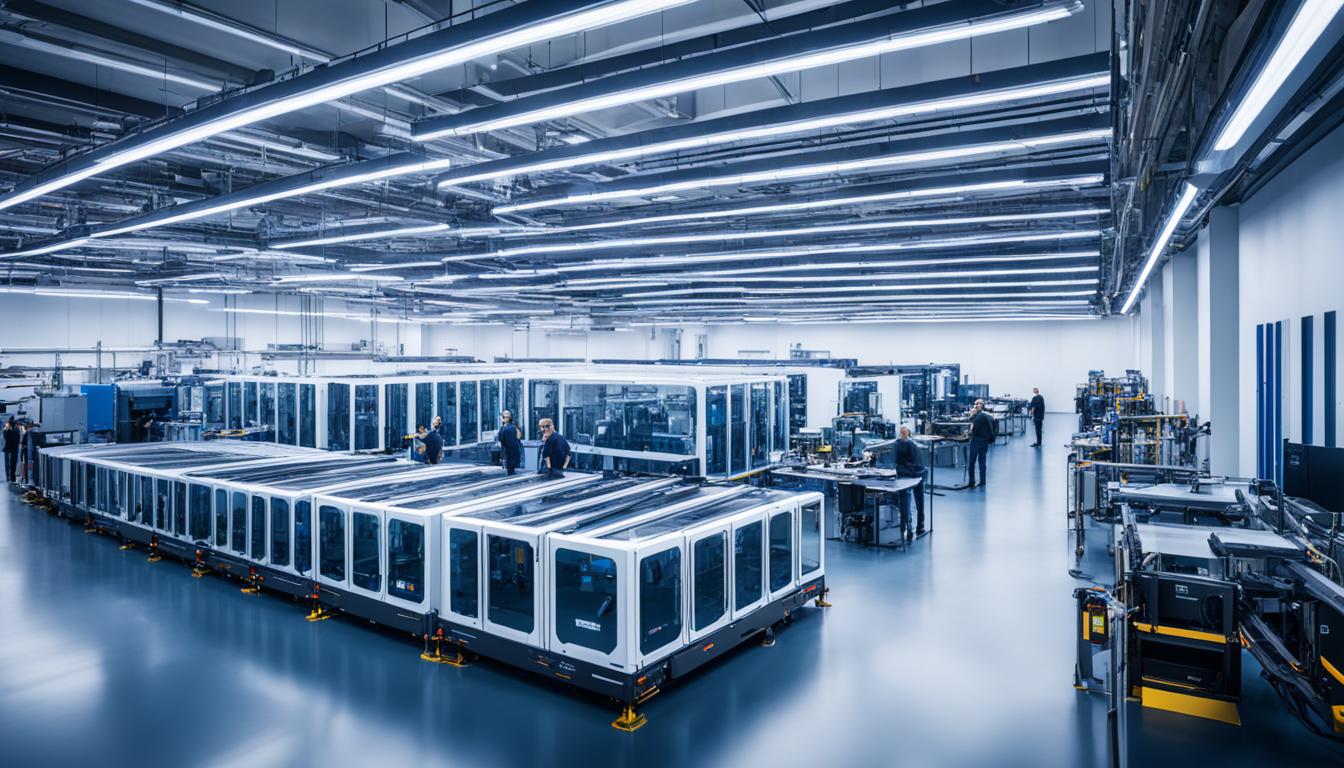
As you navigate the ever-evolving landscape of industrial production, you’ve likely encountered the term ‘additive manufacturing.’ This breakthrough, commonly known as 3D printing technology, has dramatically reshaped the way we think about creating products. High-powered sectors are staking claims in this new territory, unveiling a future where industrial 3D printing is not just a side act, but the star of the manufacturing applications show.
Think of 3D printing as your sculptor, carving out possibilities previously relegated to the imagination. It allows you—manufacturers and innovators—to transcend traditional barriers, offering unparalleled flexibility and efficiency in bringing concepts to life. From intricate aerospace components to tailor-made consumer goods, 3D printing technology is creating a world where complex designs are no longer the privilege of the few but a standard capability within your industry.
Prepare to have your preconceptions of production turned upside down. Additive manufacturing is cutting the ties of conventional tooling, infusing your workflows with speed, and serving up an impressive menu of materials tailored for bespoke needs. Industrial 3D printing is not just changing the game; it is the game, with your role as its prime strategist.
Key Takeaways
- 3D printing technology is revolutionizing manufacturing industries by providing new ways to create and design products.
- Adoption of additive manufacturing offers unique advantages, including complex design execution and rapid product evolution.
- Industrial 3D printing enables production on demand, significantly reducing inventory and storage costs.
- The technology supports manufacturing applications across numerous sectors, establishing a new standard for how we produce goods.
- Leaders in manufacturing are leveraging 3D printing to gain a competitive edge through innovation and agile responsiveness to market demands.
- With industrial 3D printing, the emphasis shifts from quantity to customized quality, transforming customer experiences and expectations.
The Evolution and Impact of 3D Printing Technology in Manufacturing
Witness a revolution that not only sparked as an innovative rapid prototyping avenue but has also matured into a core element of modern manufacturing. Embrace the sweeping changes 3D printing technology has brought across diverse industrial landscapes. Companies are now harnessing the full suite of benefits of 3D printing in manufacturing, asserting its role beyond initial concepts to vital production applications.
The Transition from Prototyping to Full-Scale Manufacturing
What began as a novel method to quickly visualize product designs has burgeoned into an essential advanced manufacturing technology. With 3D printing, prototypes transcend their transient role, becoming the vanguards of a new era where they seamlessly evolve into a series of functional, market-ready products. This transition heralds a paradigm shift in manufacturing tactics and strategies, propelling industries into an age of agility and innovation.
Expanding Industries: From Aerospace to Consumer Goods
From the heights of aerospace where companies like GE and Boeing materialize intricate designs into lightweight components to the everyday accessibility of consumer goods, 3D printing has spread its roots deep and wide. This versatility of applications showcases the technology’s capacity to meet sector-specific demands while delivering on the promise of intricate and robust end-use products.
New Business Models Emerging with Additive Manufacturing
The advent of additive manufacturing is carving out new business models, leaving behind the old constraints of mass production. Now, you can witness companies realigning their operational philosophies to tap into the extensive 3D printing solutions for production. This means reduced inventory costs, diminished lead times, and the agility to tailor offerings to the market’s pulse, carrying the potential to redefine your production landscape.
- Reduced lead times for tooling and production.
- On-demand manufacturing reduces inventory overheads.
- Opportunities for customization create new market niches.
- Adaptability to rapidly changing consumer preferences.
As these 3D printing applications continue to grow, so too does the competitiveness of those adopting these advanced methods. Step into the future with confidence, knowing that every layer added through this technology consolidates not only materials but also a foundation for enduring industrial success.
Innovative Applications of 3D Printing in Aerospace and Defense
Delve into the transformative world where rapid prototyping and aerospace & defense 3D printing applications converge, ushering in a new era of manufacturing innovation. The aerospace and defense sectors have been pioneering the integration of additive manufacturing, exploiting its capacity to enhance existing processes and introduce groundbreaking methods of production.
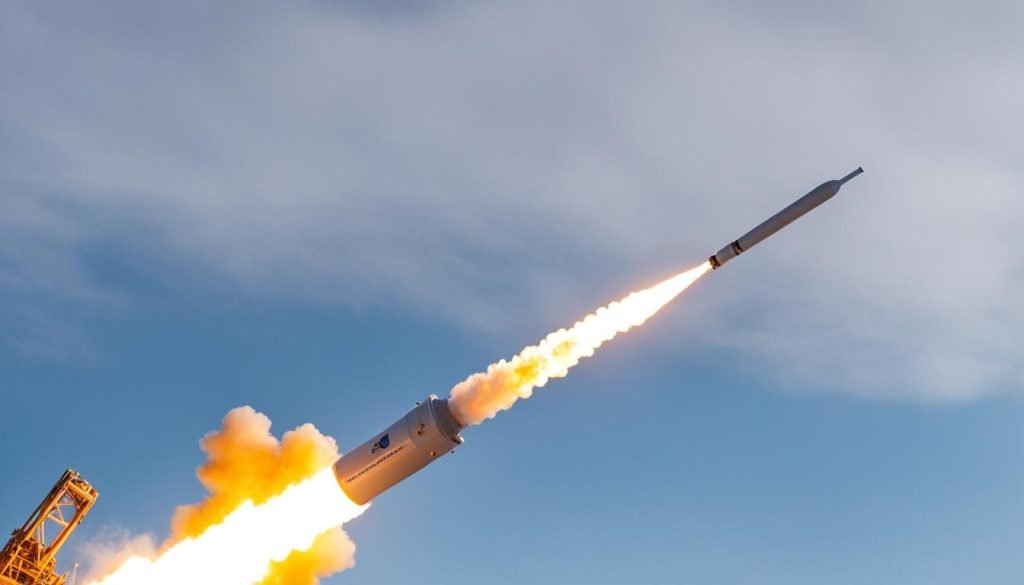
Illustrative of this innovation is ArianeGroup’s success in drastically streamlining the creation of the Ariane 6 launcher’s injector head. Through 3D printing, a design that once demanded 248 individual components has been reduced to a single, intricately structured piece, demonstrating a remarkable reduction in both manufacturing time and cost.
Airbus’s application of 3D printing to craft spacer panels for their A320 aircraft represents another leap in manufacturing. By eliminating traditional methods like injection molding, Airbus can fabricate lighter and more complex components that contribute to overall aircraft weight reduction, a critical factor in aerospace efficiency.
Equipping the defense sector with innovative capabilities, Nano Dimension’s partnership with Harris Corporation reflects another facet of 3D printing’s growth. Their collaboration has put forth a new standard in the production speed and design ingenuity of electronic parts such as antennas, pivotal for military communications.
Here’s a glimpse into how these aerospace giants are leveraging 3D printing for enhanced efficiency and product superiority:
| Company | Application | Technology Used | Outcome |
|---|---|---|---|
| ArianeGroup | Injector head for Ariane 6 | SLM 3D printing | Time reduced to 35 hrs, 50% cost reduction |
| Airbus | A320 spacer panels | FDM 3D printing | 15% lighter components, increased production speed |
| Nano Dimension & Harris Corporation | 3D-printed Antennas | 3D printing of electronics | Revolutionized design and manufacturing process |
As you continue to monitor the progress within your industry, consider how the capabilities of 3D printing could transform your own production strategies and competitive positioning. The examples set by these industry leaders underscore the vast potential of additive manufacturing in delivering custom, high-performance, and cost-effective solutions in aerospace and defense.
Advanced Materials Elevating 3D Printing Capabilities
The advent of additive manufacturing has been fortified by the diversification of 3D printing materials, propelling an industrial evolution with consequential innovations in production methods. This new wave of manufacturing is not just improving processes but is transforming them, ushering in an era of material sophistication and strategic sustainability.
Engineering-Grade Thermoplastics and Metal Powders
Engineering-grade thermoplastics such as ULTEM and metal powders including titanium and aluminum are at the forefront, driving the ingenuity inside the realm of additive manufacturing. The capabilities of these advanced materials are vast, spanning from high-temperature resistance to superior strength-to-weight ratios, which are pivotal for high-performance sectors like aerospace and defence. The integration of reinforced Nylon and the possibility to print with high-performance alloys are testament to how far 3D printing technology has come.
Material Efficiency and Sustainability in Manufacturing
In a stark contrast to the waste-intensive methods of traditional subtractive manufacturing, 3D printing stands out for its material efficiency. It is a testament to the technology’s principles of sustainability and conservation of raw materials. This precise use of materials, where required, substantially reduces waste, aligning with the greater objectives of environmentally conscious manufacturing practices.
Moreover, the continually expanding library of 3D printing materials opens new avenues for innovation, with groundbreaking properties that cater to specific industrial needs. Industries are now empowered to pursue projects that were once considered cost-prohibitive or technically challenging, enhancing both the functionality and the longevity of the products they create.
As we march forward in this new manufacturing era, it is the materials that will define the breadth and depth of 3D printing’s impact. Let us delve into a table that illustrates the fusion of additive manufacturing with state-of-the-art materials, highlighting their significance in a manufacturing context:
| Material | Properties | Applications | Benefits |
|---|---|---|---|
| ULTEM | High strength and thermal stability | Aerospace components, automotive parts | Ability to withstand extreme conditions |
| Reinforced Nylon | Durability, flexibility | Consumer goods, mechanical parts | Versatility in use and stress absorption |
| High-performance alloys | Superior mechanical properties | Medical implants, high-stress environments | Longevity and reliability in critical applications |
| Titanium | Excellent strength-to-weight ratio | Defense equipment, aerospace structures | Weight reduction while maintaining integrity |
| Aluminum | Lightweight, corrosion-resistant | Automotive components, industrial machinery | Energy efficiency and sustainability |
These advancements in 3D printing materials are not just enhancing the possibilities of what can be printed; they are redefining the entire process of design and manufacturing. As you navigate the dynamic landscape of your industry, consider how these materials can elevate your manufacturing capabilities and equip you with the tools necessary to remain at the cutting edge.
3D Printing Solutions for Production: Rapid Prototyping to End-Use Parts
Embracing 3D printing in manufacturing marks an innovative leap from traditional production methods to a dynamic process where rapid prototyping swiftly leads to 3D printed end-use parts. Imagine developing a concept in the morning and by the end of the day, holding a tangible part ready for deployment. This is the reality of manufacturing with modern 3D printing technology.
With the implementation of 3D printing solutions for production, businesses are witnessing a remarkable decrease in the time taken to convert ideas into viable products. Custom-fit parts, which once took weeks to manufacture and required extensive labor, can now be produced within hours. This rapid turnaround is revolutionizing industries, allowing companies to adapt to market demands with agility and maintain a competitive edge.
The realm of 3D printing is typified by its astounding versatility, catering to a vast array of manufacturing needs. From simple tools to complex geometries that traditional methods could hardly achieve, additive manufacturing stands ready to assist. Whether you need a replacement gear impossible to find on the market or a customized fixture that optimizes your assembly line, 3D printers like the Formlabs Fuse 1+ 30W are instrumental in bringing these solutions to life.
Advanced rapid tooling capabilities deliver on-demand production that is reshaping industry benchmarks for efficiency and turnaround times.
A look into the practical applications of 3D printing in manufacturing underscores the significant impact of this technology:
- Reduced dependency on outsourced parts, ensuring control over the supply chain.
- Capability to produce complex tools and components on-site within hours.
- Enhanced ability to respond to unforeseen production challenges with rapid prototyping.
Notably, the Formlabs Fuse 1+ 30W has become synonymous with industrial flexibility and efficiency. Having an industrial 3D printer in-house means you’re no longer at the mercy of part suppliers or cumbersome logistics. Downtime becomes a thing of the past – broken parts are 3D printed on the spot, and production marches onward.
Here’s how 3D printing in manufacturing translates into significant productivity gains:
| Process | Traditional Method | 3D Printing Solution | Impact |
|---|---|---|---|
| Prototyping Speed | Weeks to months | Hours to days | Massive reduction in development cycle |
| Cost of Custom Parts | High due to molds/tooling | Significantly reduced | Cost-efficiency, especially for low-volume |
| Inventory Management | Extensive warehousing | Print-on-demand | Drastically cut inventory costs |
By integrating 3D printing into your production workflow, you tackle operational challenges head-on, relying more on in-house capabilities and less on external vendors. Let the promise of additive manufacturing power your next leap in product development and gain the competitive advantages that 3D printing affords across a multitude of applications.
Strategic Adoption of 3D Printing in Industrial Settings
The integration of 3D printing in manufacturing is more than a technological advancement; it’s a strategic business decision revolutionizing production processes. Manufacturing leaders are now recognizing the transformational impact of additive manufacturing on the core aspects of their operating strategies, leading to a paradigm shift in how products are designed, produced, and brought to market.
How 3D Printing is Shaping Operational Strategies
Consider the powerful influence of 3D printing as it realigns manufacturing priorities and procedures. Gone are the days of oversized inventories and prolonged assembly lines, replaced by on-demand production with reduced assembly requirements and minimal waste. Additive manufacturing delivers unparalleled turnaround times, empowering you to keep pace with the market’s incessant demands for innovation.
Revolutionizing Supply Chains with Additive Manufacturing
Traditional supply chains are undergoing an untethering process, made possible through strategic adoption of 3D printing technologies. This disruption in traditional logistics is not only about cutting costs but redefining the very tenets of manufacturing logistics. Your ability to produce components on-site with 3D printers conserves resources, circumventing delays caused by transportation hurdles and simplifying inventory management.
By reducing formerly insurmountable supply chain barriers, industries can now explore new markets, diversify product lines, and offer customers what they need when they need it. It’s an operational renaissance where agility meets the production process, and it’s yours to command.
| Advantage | Impact on Operations | Impact on Supply Chain |
|---|---|---|
| Speed to Market | Accelerated product development cycles | Decreased reliance on long lead times |
| Customization | Facilitated production of tailored products | Enhanced ability to meet specific customer needs |
| Reduced Overhead | Lower operational costs with decreased inventory | Streamlined warehousing requirements |
| Design Innovation | Creation of complex geometries unachievable before | Flexible response to market trends |
As the landscape of 3D printing in manufacturing continues to evolve, so must your strategies. Adapting to these innovations in additive manufacturing not only strengthens your product offerings but also protects and propels your business to new heights of operational efficiency and market responsiveness. The future of manufacturing is additive, and the key to unlocking its full potential lies within your strategic adoption of these technologies.
3D Printing in Manufacturing: The Competitive Advantage
The rapid expansion of additive manufacturing technologies into the manufacturing sector is a testament to its ability to deliver a substantial competitive advantage. Its impact on the industry is undeniable, as it paves the way for the creation of high-performance parts, complex in design and intricacy. These are the kinds of components that, through traditional means, would be difficult to construct both economically and technically.
Your company’s ability to adapt and respond quickly to ever-changing market demands is crucial for maintaining an edge over competitors. With 3D printing, design complexities become surmountable, enabling the production of tailor-made products that meet specific customer needs. This personalized approach not only fosters customer satisfaction but also strengthens brand loyalty and market presence.
Moreover, embracing 3D printing within your manufacturing operations can lead to significant reductions in lead times for product design and development. The technology mitigates the need for extensive inventory, allowing for the production of parts on demand, which in return translates to increased cost savings and decreased material waste. This streamlined approach to manufacturing encapsulates the essence of efficiency, redefining the standards of production and distribution.
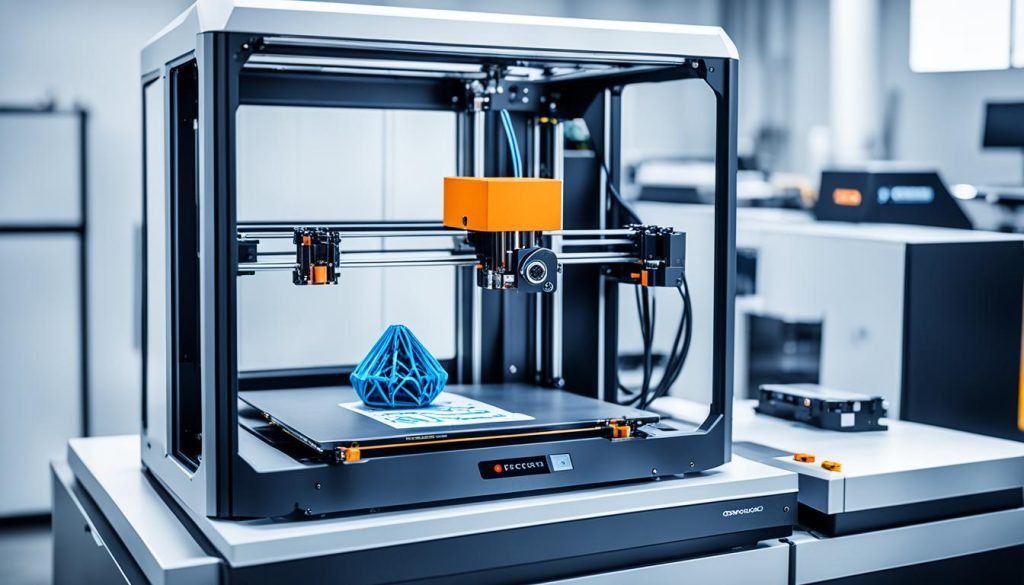
Additive manufacturing technologies champion an innovative environment where creativity and customization merge with technical execution. By incorporating this capability into your production process, it invites a reimagining of product development, where the only limit is the extent of one’s ingenuity.
3D printing is not merely a technological enhancement; it is a transformative tool that reshapes the entire manufacturing landscape, instilling agility, innovation, and fiscal prudence across all operations.
- Reduced time from concept to market-ready product
- Decentralized production facilities allow for closer proximity to end-users
- Less waste through precise, on-demand production
- Greater flexibility in product customization and iteration
- Streamlined supply chain with reduced inventory requirements
In conclusion, your pursuit of excellence in the manufacturing domain necessitates the adoption of revolutionary technologies like 3D printing. The strategic implementation of this tool can elevate your products, satisfy your customers, and ensure your business remains a dominant force in a competitive market.
Fostering Innovation through Industrial 3D Printing Platforms
As the industrial 3D printing landscape forges ahead, it’s the robust platforms that are becoming the epicenters of growth and innovation. These digital arenas are where the latest in 3D printing technology converges with brilliant minds to build a future where the impossible becomes possible.
The Role of Platforms in Standardizing and Connecting 3D Printing Ecosystems
In the transition towards a digitally integrated industrial environment, 3D printing platforms emerge as crucial nodes that bind the ecosystem. They provide a common language for machines, software, designers, and manufacturers. This unity fosters seamless collaboration, propelling innovation and ensuring a consistent quality across the board.
Implications for Future 3D Printing Industry Standards
The importance of establishing industry-wide standards can’t be overstated. As the conduit through which ideas flow from conception to production, platforms not only standardize these processes but also gather invaluable data—data that reveal patterns, trends, and opportunities for further refinement of industrial 3D printing techniques and applications.
Let’s consider the following breakthroughs made possible through 3D printing platforms:
| Development | Incorporation in Platform | Benefit to Industry |
|---|---|---|
| Standardized file formats | Easy upload and sharing | Streamlined design to production pipeline |
| Data-driven material selection | Integrated databases | Optimized printing processes |
| Real-time collaboration features | Accessible via cloud | Accelerated innovation cycles |
| Automated quality control systems | Built-in on platforms | Consistency and reliability of end products |
Encountering these advancements, it’s essential to recognize that your engagement with 3D printing technology is increasingly symbiotic with these platforms. They pave the way for improved productivity, lower operational costs, and an arena where innovation in 3D printing is not just celebrated but exponentially multiplied.
Benefits of 3D Printing in Manufacturing: Cost Savings and Efficiency
Discover the transformative 3D printing benefits in the realm of manufacturing, where efficiency and cost savings are redefining industry standards. 3D printing, with its capability of producing highly complex parts without the need for excessive tooling, drastically reduces material waste. This approach aligns perfectly with the lean manufacturing principles widely adopted within the industry, carving out a niche where production is as fiscally responsible as it is innovative.
Your role in this manufacturing revolution carries substantial influence, as the ability to print parts on-demand serves as a buffer against potential supply chain volatility. The resulting operational nimbleness ensures you maintain pace with shifting market demands. The significant reduction in inventory dependence is a game-changer, fostering a just-in-time production model that underscores the essence of manufacturing efficiency. Moreover, the pared-down need for labor-intensive assembly processes due to 3D printing’s additive nature paves the way for remarkable cost savings and elevated productivity.
Embrace the future today as 3D printing propels your production capabilities forward. With accelerated time-to-market, your innovations can swiftly transition from digital blueprints to tangible assets in the hands of customers. Seize the opportunity to fine-tune operations, diminish operational expenditures, and secure a leading position in an era geared towards efficiency. By effectively leveraging the benefits of 3D printing, you are equipped to navigate the challenges of modern manufacturing, ensuring your business emerges as a frontrunner in this new industrial epoch.
FAQ
What has been the evolution of 3D printing in the manufacturing industry?
3D printing, also known as additive manufacturing, has evolved from a rapid prototyping tool to a key component of full-scale production in numerous industries. It now enables the creation of complex components, tooling aids, and even final products across sectors such as aerospace, healthcare, consumer goods, and automotive.
How is 3D printing impacting industries like aerospace and consumer goods?
In the aerospace industry, 3D printing has become integral for producing lightweight components and tooling, contributing to fuel efficiency and reduced emissions. For consumer goods, it allows for the customization and rapid production of products, often with complex designs that are difficult or impossible to create with traditional manufacturing methods.
What are some business models that have emerged due to additive manufacturing?
Business models that capitalize on the benefits of 3D printing include on-demand manufacturing services, digital inventory and cloud-based design repositories, and tailored production strategies that minimize waste and enhance supply chain flexibility.
What are some innovative applications of 3D printing in aerospace and defense?
Aerospace and defense industries use 3D printing for a range of applications including the creation of intricate engine parts, lightweight structural components, custom electronics, and the repair or retrofitting of existing military equipment.
What advanced materials are used in 3D printing and how do they elevate capabilities?
Advanced materials such as engineering-grade thermoplastics, metal powders (like titanium and aluminum), and high-performance alloys are used in 3D printing. These materials enhance product performance due to their strength-to-weight ratios and durability, while also opening up new design possibilities.
How does 3D printing contribute to material efficiency and sustainability?
3D printing is inherently more material-efficient than traditional manufacturing because it adds material layer by layer, precisely where needed, reducing waste. Additionally, because parts can be manufactured closer to where they’re needed, the environmental impact associated with transportation is lessened.
How is 3D printing solving production challenges with rapid prototyping to end-use parts?
3D printing allows for rapid prototyping, enabling more iterations in less time, and it supports manufacturing of end-use parts on-demand, reducing inventory and allowing for custom designs. This flexibility in production means a faster response to market changes and customer needs.
In what ways is 3D printing shaping operational strategies in industrial settings?
3D printing influences operational strategies by providing agility in manufacturing processes, allowing for quick adaptations to design changes, cost-effective low volume production, and reducing the need for extensive inventory due to on-the-spot manufacturing capabilities.
How does 3D printing revolutionize supply chains?
Additive manufacturing revolutionizes supply chains by enabling localized production, reducing the need for inventory, and providing the ability to produce parts on-demand. This leads to decreased logistics complexity, lower shipping costs, and improved responsiveness to market demands.
What competitive advantage does 3D printing offer in manufacturing?
3D printing offers manufacturers a competitive advantage through the ability to produce complex and custom parts quickly, reduce lead times, minimize material wastage, and adapt rapidly to market changes and consumer preferences, often at a lower overall cost.
How do industrial 3D printing platforms foster innovation?
Industrial 3D printing platforms foster innovation by connecting designers, engineers, and manufacturers. They facilitate the exchange of designs, streamline production workflows, and can create a collaborative ecosystem that accelerates the development of new products and manufacturing techniques.
What are the implications for future 3D printing industry standards?
As the use of 3D printing expands, there will be an increasing need for industry standards to ensure compatibility and quality across the 3D printing ecosystem. This includes developing standard material classifications, process guidelines, and ensuring designs are optimized for additive manufacturing.
How do the cost savings and efficiency benefits of 3D printing manifest in manufacturing?
Cost savings and efficiency in 3D printing come through the reduction of waste, reduced inventory needs due to just-in-time production, streamlined supply chains, and savings in material and labor costs enabled by the technology’s ability to produce complex parts without the need for multiple manufacturing steps or assembly.