
Imagine the journey of a product from inception as a mere raw material to its final form, arriving at your doorstep. This journey is the essence of Supply Chain Management (SCM), a multifaceted process central to a business’s operational success. Within the strategic framework of SCM, intricate components such as procurement, inventory control, logistics, and transportation management play critical roles. A robust SCM system not only ensures that a company’s goods and services are delivered efficiently but also provides a substantial competitive edge.
Whether you’re a business owner overseeing your enterprises’ expansive operations or a consumer curious about the intricacies behind the arrival of your online order, understanding the nuances of SCM can be transformative. Strategic SCM techniques encompass not only the physical movement of products but also the management of data, finances, and the intricate dance of networked relationships between suppliers and customers.
In a marketplace where timing is as crucial as quality, your ability to master these elements of SCM can determine your brand’s resilience in the face of competition. With the ever-evolving demands of consumers and the relentless pace of technology, it’s essential to stay informed on how sophisticated supply chain strategies are shaping the business landscapes you navigate daily.
Key Takeaways
- SCM is critical for the effective flow of goods from suppliers to consumers, optimizing business operations.
- It integrates procurement, inventory control, logistics, and transportation management for overall business success.
- Strategic SCM techniques are vital for maintaining a competitive edge in today’s market.
- Supply chain professionals strive to ensure cost-efficiency and timely delivery to meet consumer demand.
- In the digital age, managing supply chains involves a complex coordination of data, resources, and relationships.
- With the average U.S. supply chain manager making $109,645 to $140,513 annually, the role indicates its value in the industry.
- Effective SCM is indispensable in preventing costly business errors like product recalls and legal issues.
The Essence of Supply Chain Management in Modern Business
As you delve into the world of modern enterprise, you’ll quickly discover that Supply Chain Management (SCM) is not just a mere component of business—it’s a critical driver of competitive advantage. SCM’s core objective is streamlining business operations to deliver products and services with unmatched efficiency and speed, a demand of economic SCM that champions both performance and profitability.
Understanding the importance of SCM requires a look at how it impeccably merges rigorous planning, sourcing, production, and delivery to match the vibrant pace of today’s markets. It manifests in the artful balance of fulfilling customer demands and scaling business efficiencies, a balancing act that directly reflects on consumer satisfaction.
Take, for instance, the transformative initiatives of Walgreens Boots Alliance Inc., a beacon in the realm of SCM effectiveness. Their strategic investment in supply chain technology not only exemplifies the importance of SCM but also underscores its potential to bolster business acumen, predicting market waves and mastering inventory management with unparalleled foresight.
Central to the success of SCM is its pivotal role in ESG initiatives. It goes beyond mere logistics and cost savings, penetrating the layers of ethical operations encompassing human rights, animal welfare, sustainability, and ingredient transparency—essentially reshaping the corporate ethos. This integration creates an economical SCM framework supportive of not just effective business operations but also a healthier planet and equitable society.
Here’s an illustration highlighting the comparative benefits of a fine-tuned SCM strategy:
| Benefits | Description | Impact on Business |
|---|---|---|
| Waste Elimination | Reduction of redundant steps in product delivery | Leaner operations and increased margins |
| Customer Satisfaction | Alignment of end-to-end process to consumer needs | Enhanced brand loyalty and repeat business |
| Efficiency Gains | Streamlined inventory and logistics management | Reduced overhead and faster market response |
| ESG Commitment | Integration of ethical practices in SCM | Improved company image and stakeholder trust |
Through the lens of Walgreens Boots Alliance Inc., one can perceive how strategic SCM aids not only in navigating but in commanding the turbulent seas of market demand, always keeping a keen eye on the horizon of economic SCM to ensure enduring prosperity.
Conclusively, a company’s ability to leverage SCM for business efficiency and consumer satisfaction becomes the yardstick against which its market dominance is measured. It is the invisible yet much-felt pulse behind every successful product in your hands, a testament to the silent workings of a powerful, graceful, and environmentally conscious supply chain.
Understanding the Five Critical Phases of Supply Chain Management
Embarking on an exploration of Supply Chain Management (SCM) reveals a process broken into strategic phases, each critical to business agility and customer satisfaction. These phases embody the comprehensive approach to efficient operations from inception to conclusion.
Planning: Predicting and Matching Supply with Demand
Effective SCM planning is foundational in synchronizing supply with the ebbs and flows of market demand. To avoid bottleneck scenarios, predictive analysis tools are utilized for aligning procurement with production schedules, ensuring that product delivery meets customer timelines without surplus or shortfall.
Sourcing: Choosing the Right Suppliers and Managing Relationships
Vendor management extends beyond mere transactions to build robust partnerships with suppliers. It permeates every facet of sourcing, guaranteeing the procurement of high-quality materials and fostering supply chain resilience, with suppliers rated on their reliability and responsiveness to dynamic market conditions.
Manufacturing: From Raw Materials to Finished Products
In the manufacturing arena, raw materials metamorphose into the products that satisfy consumer desires. This is where production efficiency is paramount, reducing waste and adhering to cost-effective practices while upholding quality—pivotal for retaining competitive advantage.
Delivery: Logistics and Distribution Channels
Sophisticated distribution channels ensure that the product journey from the warehouse to the customer’s hands is punctual and unharmed. Companies that hone their logistic strategies are adept at navigating the complexities of delivery, reinforcing the promise of customer delight with every package sent.
Returns: Managing Reverse Logistics and Customer Satisfaction
The cycle of SCM does not end at the point of delivery; reverse logistics dictate the management of customer returns. Companies must deploy efficient systems for handling returns, an essential component for maintaining trust and satisfaction amongst consumers, turning potential losses into opportunities for improvement.
“Supply Chain Management is a tapestry of planning, coordination, and execution that, when managed effectively, can weave the very fabric of business success and customer loyalty.”
As businesses strive to stay at the forefront of their industries, the nuanced understanding and implementation of these SCM phases are non-negotiable. It’s the symphony of these moving parts, from SCM planning to reverse logistics, that collectively form an unbroken chain of efficiency and customer returns satisfaction.
Streamlining Operations with Effective Supply Chain Strategies
As you explore the potential of your business, consider the critical role of SCM streamlining in achieving operational efficiency. A tailored approach to supply chain optimization can not only refine your processes but also introduce cost-efficient practices for long-term success. Faced with the unique demands of your industry, adopting the optimal SCM strategy is pivotal; whether your requirements are consistent or you’re navigating the complexities of custom orders, a well-chosen model supports cost-saving SCM and helps sustain a lean supply chain.
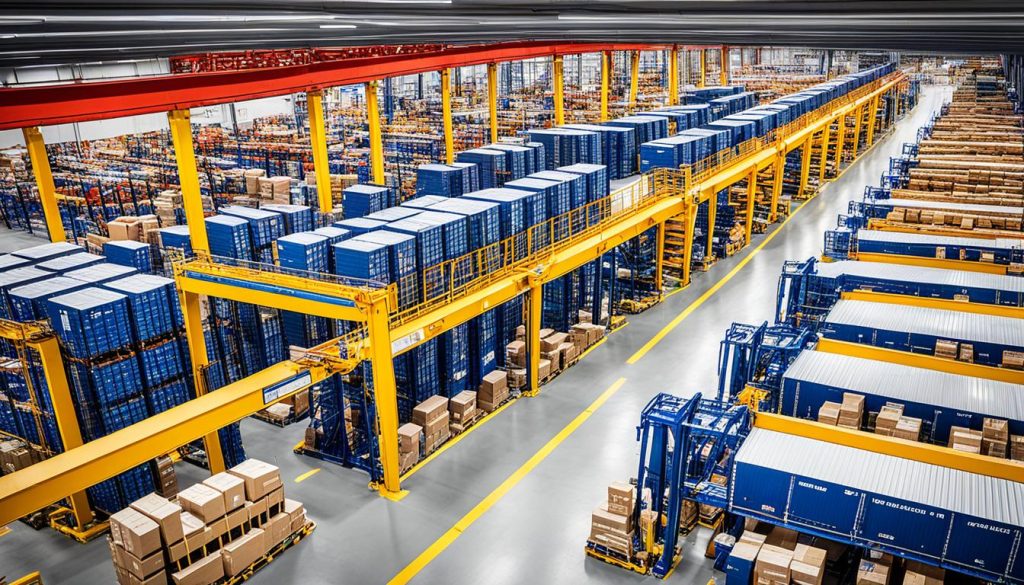
Let’s delve into the variety of supply chain models that can be deployed to enhance your operational effectiveness:
- Continuous Flow – Ideal for mature industries with stable demand, allowing for uninterrupted production and a steady supply chain.
- Agile – Best suited for environments where demand is unpredictable or custom products are the norm, providing the necessary flexibility.
- Fast – Geared towards products with short life cycles, this model is about quickly turning around products to maximize on trends.
- Flexible – Tailored for industries that experience seasonality, enabling adjustments in production to match peak and off-peak demands.
- Efficient – Ideal for highly competitive markets with thin margins, where efficiency in SCM processes grants a business edge.
- Custom – For organizations with specialized needs that do not fit into traditional models, custom SCM strategies are formulated.
The following table presents an insightful comparison of these strategic approaches to give you a clearer perspective on which methodology could best streamline your supply chain:
| Model | Suitability | Core Advantage | Business Impact |
|---|---|---|---|
| Continuous Flow | Mature industries with stable demand | Consistent production and supply | Reliability in product availability |
| Agile | Unpredictable or custom demand | Adaptability and responsiveness | Customer satisfaction and retention |
| Fast | Short lifecycle products | Rapid market entry and exit | Capitalization on market trends |
| Flexible | Seasonal industries | Scalability of production | Cost control during demand fluctuations |
| Efficient | Tight-margin competitive markets | Streamlining processes to reduce costs | Enhanced profitability and market position |
| Custom | Unique or non-standard requirements | Bespoke solutions for complex challenges | Strategic advantage in niche markets |
The pathway to an optimized supply chain necessitates strategic selection among these models. By aligning your business’s unique challenges with an appropriate supply chain strategy, you can unlock operational efficiency that propels your company towards greater profitability and a more robust market presence. A commitment to SCM streamlining is a commitment to the overall health and agility of your business operations.
Supply Chain Management: Linking Production, Shipment, and Distribution
Stepping into the universe of Supply Chain Management (SCM), you uncover the intricate networks that seamlessly connect production, product shipment, and SCM distribution. At the heart of this extensive network lies centralized management, serving as the cornerstone for operational supremacy and SCM efficiency. Centralization not only streamlines the flow of goods from inception to delivery, but it also emphasizes the elimination of extraneous expenses, allowing your organization to maneuver the market with impeccable pace and precision.
The adeptness of integrated supply chains cannot be overstated, incorporating a multifaceted collaboration between actors and processes. To witness a tangible example, one must only observe the digitized landscape of contemporary SCM—a landscape burgeoning with advancements such as Artificial Intelligence (AI), Machine Learning, and the Internet of Things (IoT). This digital revolution extends SCM’s capabilities, empowering leaders to make well-informed decisions swiftly, ensuring agility in an ever-fluctuating market terrain.
A vanguard in this domain, SCM has transitioned from a function of mere oversight to one of proactive engagement, forging connections that not only move product but also mold enduring inter-organizational alliances. With each thread within SCM meticulously woven together, stakeholders experience a harmonious orchestration of production, logistics, and product distribution bound by an unwavering dedication to efficiency and customer fulfillment.
The following table delineates how key components of SCM contribute to the supply chain’s success, underscoring the symbiotic relationship that product flow has with cost management and efficiency:
| SCM Component | Function | Impact |
|---|---|---|
| Production Synchronization | Aligning manufacturing outputs with market demand | Reduces waste, avoids overproduction and stockouts |
| Shipment Optimization | Streamlining shipping routes and methods | Decreases transportation costs, improves delivery times |
| Distribution Efficiency | Enhancing distribution center operations | Quicker order turnaround, higher customer satisfaction |
| Centralized Management | Unified oversight of supply chain activities | Uniformity in strategy and practice, improved risk management |
| Integrated Technology | Implementing AI, IoT for data-driven insights | Enables predictive analytics, better demand forecasting |
Integrated supply chains are no longer a luxury but a necessity, with centralized management acting as the helm of this sophisticated vessel. As you maneuver your enterprise through the waves of global commerce, SCM stands as your loyal compass—guiding you towards unfaltering productivity, expedited shipment, and distribution success. It is this strategic navigation of SCM principles that ultimately underscores a company’s proficiency in delivering value to its end-consumers, fortifying its standing in a competitive marketplace.
How Technology is Transforming Supply Chain Management
The digital era has ushered in a transformative phase for SCM technology transformation, altering the essence of how supply chains operate. Leaping far beyond the traditional methods of manual management and oversight, today’s SCM is powered by an arsenal of technological innovations. These groundbreaking tools pave the way for more agile, intelligent, and transparent supply chain processes, tailored to meet the complexities of the modern business environment.
Your understanding of this technological shift is paramount, as it redefines every touchpoint in the supply chain continuum, from forecasting to customer service. Let’s unravel how this tide of innovation is setting new benchmarks in SCM.
Big Data and Predictive Analytics in SCM
In the vast realm of big data, SCM finds its compass through predictive analytics. These robust tools process and analyze the enormous volumes of data generated across supply chains, giving you foresight into consumer behavior, market trends, and potential supply chain disruptions. Innovations like on-the-fly analytics make SCM not just reactive, but proactive, transforming your inventory allocation and enhancing overall supply chain resilience.
The Role of AI and Machine Learning in SCM
Next, embrace the disruptive forces of AI in SCM and machine learning. These intelligent systems operate as the new nerve center—the control tower for modern supply chains. By continuously learning from data and identifying patterns, AI enhances decision-making, from procurement to delivery. It enables automation of mundane tasks, freeing up your human capital to focus on growth and innovation.
Blockchain Technology for Enhanced Transparency and Trust
Completing the triad of technological evolution in SCM, blockchain SCM offers unmatched transparency and trust. This decentralized ledger technology is particularly impactful in sectors requiring airtight tracking of products, such as foods and pharmaceuticals. Blockchain enables all stakeholders to view the journey of a product in real-time, ensuring that every handoff in the supply chain is recorded and immutable—fostering trust and simplifying compliance.
As these technologies converge, they create a supply chain ecosystem that is both resilient and responsive, setting a new standard for supply chain excellence. Blockchain technology, big data, and predictive analytics are no longer futuristic ideals; they are here, and they are now rewriting the rules of SCM. Wise adoption and integration of these technologies will set apart the leaders in supply chain management, who can leverage these capabilities for strategic advantage and superior performance.
In sum, the trajectory of SCM is ascending towards newer heights, propelled by technological advancements that yield greater efficiencies and unlock greater value. Your involvement in this transformation will be crucial to capturing the immense potential that SCM technology transformation has to offer.
Vendor Management and Its Impact on Supply Chain Effectiveness
In the intricate tapestry of Supply Chain Management (SCM), vendor management strategies are pivotal. Your business’s capacity to forge influential supplier relationships directly determines the pulse and potency of your entire supply network. By honing these relationships and employing effective vendor management, you catalyze the integration and synchronization needed for an agile and responsive SCM system – one that adeptly handles the complexities of purchasing processes and fluctuating market demands.
Let’s dissect how strategic vendor management impacts every sphere of SCM effectiveness:
- SCM systems that invest in robust vendor management strategies promote integration and yield harmony across procurement operations.
- Supplier performance metrics forge a standard of excellence, driving the suppliers to meet and exceed your operational benchmarks.
- SCM vendor integration finesses the procurement process, streamlining interactions and transactions with suppliers, thereby curbing lag and surplus inventory.
- Supplier relationships that are cultivated on transparency and trust can pivot and adapt to meet emergent industry trends and demand spikes.
Your approach to vendor management also answers the essential question: How can your SCM architecture support swift and seamless order fulfillment and manage product returns without compromising customer satisfaction? It’s about embedding resilience into your vendor management, ensuring that your supplier network can withstand and adapt to market shivers.
The table below showcases the dimensions of vendor management and its notable impact on supply chain effectiveness:
| Vendor Management Dimension | Key Aspects | Business Impact |
|---|---|---|
| Supplier Selection | Compatibility with company standards, Financial stability, Innovation capability | Assures quality and continuity in the supply chain, reduces risk of supply disruption |
| Performance Evaluation | Quality of goods or services, Timeliness of delivery, Responsiveness to contingencies | Enhances supply chain reliability, promotes continuous improvement |
| Relationship Management | Communication clarity and consistency, Collaboration opportunities, Conflict resolution | Strengthens alliance, enables joint growth, ensures smooth problem resolution |
| Contract Compliance | Adherence to terms, Monitoring and enforcement, Periodic reviews | Minimizes legal risks, safeguards interests, aligns expectations |
| SCM Integration | System compatibility, Information sharing, Process linkage | Improves real-time decision making, reduces inventory holding costs, accelerates product to market |
Ultimately, your ability to navigate and nurture supplier relationships through adept vendor management strategies can supercharge your SCM, leading to advanced operational adaptability and sustainable corporate growth. Your company’s commitment to such strategies indicates a deliberate prioritization of efficiency and a proactive appetite for excellence in supply chain effectiveness.
Warehouse Operations: The Backbone of Supply Chain Management
As the heartbeat of any successful Supply Chain Management (SCM) infrastructure, warehouse operations maintain the vital flow of goods that businesses rely on daily. The efficiency and effectiveness of warehousing are paramount for managing inventory levels, which in turn, are key to ensuring swift inventory turnover and reducing costly holding times.
Understanding the complexity of warehousing goes beyond just housing products. It encompasses a myriad of strategic elements such as stock management, precise inventory forecasting, and the implementation of advanced tracking systems. These components are essential for achieving an optimum state of warehousing effectiveness. A misstep in this aspect could ripple through the entire SCM, underlining the necessity of mastering warehouse operations for a robust SCM ecosystem.
The harmony between warehouse operations and SCM flows into every facet of product storage and distribution. Effective stock management strategies not only keep overhead low but also ensure that products are readily available for order fulfillment, enhancing the customer’s experience with your brand.
Now, let’s take a closer look at the impeccable organization of a well-tuned warehouse system and its impact on inventory turnover:
| Warehouse Function | Role in SCM | Impact on Inventory Turnover |
|---|---|---|
| Accurate Stock Records | Ensures that all inventory levels are up-to-date for timely order processing. | Reduces instances of stockouts and overstock, streamlining the supply chain. |
| Efficient Space Utilization | Maximizes warehouse storage efficiency with strategic placement of goods. | Accelerates picking and packing processes, leading to faster shipping. |
| Advanced Automation | Integrates technology for precise tracking and handling of inventory. | Decreases manual errors, speeding up the replenishment cycle. |
| Streamlined Receiving Procedures | Implements effective systems for the quick intake of incoming goods. | Fosters readiness for sale or manufacturing, preventing lag times. |
| Dynamic Order Picking | Organizes inventory for optimal order fulfillment. | Minimizes the time between order placement and dispatch. |
Remember, in your SCM strategies, maintaining a laser focus on your warehouse operations is non-negotiable. It is the foundation on which the agility and responsiveness of your supply chain rest, ensuring that products move smoothly from the warehouse shelf to the customer’s hands. With the SCM landscape continually evolving, it becomes all the more critical to stay at the forefront of warehousing innovations, ensuring your business’s warehousing effectiveness is not left behind.
Your quest for unparalleled SCM efficiency can be greatly complemented by diligently monitoring and refining your warehouse processes. Regular reviews of your warehousing operations equip you to handle the ever-increasing demands of the modern market, keeping your supply chain resilient and responsive—with every product’s journey from shelf to shipment flawlessly executed.
Transportation Management and Its Role in SCM
As you delve deeper into the realm of Supply Chain Management (SCM), you’ll quickly discover the pivotal role transportation management plays in the orchestration and success of the entire system. Navigating the web that connects production centers to the end user, transportation becomes a linchpin for the SCM logistics network. It embodies the precision and analytical care that turns customer expectations into delivered reality.
The efficient movement of products, governed by expertly applied transportation management, ensures that your businesses’ fleet operates at peak performance. Here, fleet management combines with logistic strategies, harnessing the full power of transportation to enhance service quality and cut extraneous costs. The optimization that defines transportation management is not just about moving goods; it’s about driving customer satisfaction and business growth.
Reaching the pinnacle of efficiency in this arena necessitates the use of seamless delivery channels. Strategically designed channels ensure that products are not only delivered within expected timeframes but also maintained in perfect condition throughout their journey. A reliable and comprehensive delivery network connotes the health of your SCM, equating the swift compass of transportation management with the overall success of delivering to the market’s beat.
In optimizing your logistics solutions, the decisions you make impact the dynamic flow of goods, information, and services from supplier to customer. Successful integration of logistics solutions into your SCM goes beyond reduction in transit times—it’s about crafting an adaptable system that can rapidly respond to the unexpected, safeguarding the uninterrupted flow of commerce.
Let’s illustrate the integration of transportation management with SCM through an insightful table:
| SCM Aspect | Transportation Management Contribution | Business Impact |
|---|---|---|
| Cost Efficiency | Optimization of routes and carrier selection | Reduction in shipping costs and enhanced profitability |
| Delivery Timeliness | Reliable scheduling and tracking | Increased customer satisfaction and service quality |
| Fleet Utilization | Strategic fleet management and maintenance | Extended asset life and reduced downtime |
| Adaptability | Flexible delivery channels accommodating demand spikes | Business robustness in face of market volatility |
| Data Accuracy | Accurate reporting for improved SCM planning | Informed decision-making and more precise demand prediction |
As you survey the landscape of SCM solutions within your organization, appreciation of transportation management sharpens. It fulfills the necessity of linking each moving part of your supply chain to the rhythmic dance of global commerce, and in doing so, vitalizes the SCM logistics network which underpins your market reach.
In conclusion, remember that the journey of a product from creation to consumption relies heavily on the integrity and effectiveness of transportation management. It’s the close attention to logistics solutions and fleet management that will contribute to your success, emphasizing the integral nature of transportation within the broader scope of SCM. By mastering these aspects, you align the wheels of delivery with the engine of production, ensuring a synchronized and triumphant SCM system.
Demand Forecasting: Balancing Supply with Consumer Expectations
When it comes to Supply Chain Management (SCM), demand forecasting stands as a cornerstone of success. It’s where the intricacies of sales prediction and inventory planning meet the dynamism of consumer expectations. By harnessing the power of advanced analytic tools, companies are given the foresight to align their SCM demand alignment efforts with market trends, effectively optimizing stock levels and ensuring on-time product fulfillment. As you navigate the complexities of SCM, understanding the transformative role of demand forecasting can provide a significant edge in today’s competitive marketplace.

The practice of predicting future customer demand is both a science and an art, rooted firmly in data analysis yet requiring a touch of intuition. Through the fusion of historical data, market analyses, and trend recognition, SCM systems are empowered to achieve a harmony between supply and real-time consumer purchasing patterns. As such, accurate forecasting is not merely a byword for efficiency; it is synonymous with intelligent business practice, leading to profound enhancements in business responsiveness and profitability.
Demand forecasting doesn’t only impact the broader strokes of SCM—it resonates through every level, influencing how and when products are manufactured, the management of warehouse space, and the strategic deployment of distribution resources. This intricate feedback loop, once mastered, can lead to a more robust and seamless operation, ready to adapt to the shifting sands of consumer demand.
| Aspect of Demand Forecasting | Role in SCM | Benefits for Business |
|---|---|---|
| Market Trend Analysis | Identifying patterns and anticipating changes in consumer behavior | Proactive business strategies and product positioning |
| Inventory Level Adjustment | Aligning stock with forecasted demand | Lower holding costs and increased capital efficiency |
| Production Scheduling | Timing manufacture to align with demand peaks and troughs | Optimized utilization of manufacturing resources |
| Sales and Operations Planning | Coordinating cross-functional efforts to match supply with the forecast | Enhanced interdepartmental collaboration and customer satisfaction |
| Dynamic Pricing Strategies | Adjusting product pricing in response to demand forecasts | Maximized revenue through price optimization |
Embracing the mechanics of demand forecasting within your SCM is not just about getting ahead; it’s about not being left behind. As consumer expectations continue to evolve and the market becomes ever more volatile, your company’s ability to efficiently predict and meet these expectations will increasingly become a defining factor in its success. It’s here in the alignment of demand forecasting and SCM where the future of business agility and sustained growth is being shaped.
Inventory Management: Optimizing Stock Levels for Efficiency
Effective inventory management is a linchpin in the domain of Supply Chain Management (SCM). It necessitates a keen orchestration of SCM inventory optimization and stock level management. By harnessing the power of just-in-time inventory principles, businesses can tap into the pulse of consumptive patterns, adjusting supply chain inventory in a timely manner to meet demand without excess.
Maintaining an optimal balance between having enough inventory to satisfy customer orders and avoiding overstock is where order management ascends to the forefront. It involves detailed tracking and predictive analytics, crucial for streamlining the supply chain. This strategic maneuver not only conserves resources but also substantially curtails waste, culminating in a more efficient, cost-effective operation.
As you strive for excellence in SCM, attending meticulously to inventory levels becomes an exercise in precision. The objective is to maintain a lean inventory that is robust enough to prevent shortages yet agile enough to adapt to market dynamics—a balance of utmost importance in the fast-paced world of commerce.
| Inventory Strategy | Key Benefits | Impact on SCM |
|---|---|---|
| Just-In-Time Inventory | Reduces holding costs, minimizes overstock | Enhances efficiency, maximizes cash flow |
| Real-Time Analytics | Provides actionable insights, improves forecasting | Optimizes stock levels, informs purchase decisions |
| Dynamic Order Management | Responds adeptly to shifting demand, streamlines order fulfillment | Increases customer satisfaction, fortifies supply chain resilience |
| Automated Replenishment Systems | Initiates restocks based on pre-defined criteria, increases operational velocity | Reduces manual intervention, ensures product availability |
In the pursuit of SCM inventory optimization, it is not merely about monitoring current stock levels; it’s equally about projecting future inventory requirements. Intelligent systems and refined algorithms position your business to operate with a forward-looking perspective. This proactive stance equips you to maneuver through the unpredictable tides of consumer demand with confidence.
- Savvy SCM strategies employ inventory management systems that discern and react to sales trends, ensuring that products are at the right place, at the right time.
- Central to this strategy is the ability to synchronize supply chain inventory levels with real-time sales data, forging a responsive supply chain adaptable to customer needs.
- The agility afforded by just-in-time inventory systems cannot be overstated; it revolutionizes restocking procedures, translating sales data into streamlined inventory responses.
- Through integrative order management software, you can consolidate orders across various sales channels, maintaining visibility and facilitating strategic dispatch of goods.
To embody the zenith of SCM prowess, it is demanded of you to take the reins of inventory control with thoughtful precision. Employing analytical rigor coupled with strategic ingenuity, your approach to stock level management contextualizes not just present circumstances but also anticipated stakeholder needs—thereby sculpting an SCM framework resilient enough to thrive within the fluidity of an ever-evolving marketplace.
Conclusion
As we encapsulate the expansive landscape of Supply Chain Management (SCM), it becomes evident that effectively orchestrating a strategic supply chain reaps substantial SCM benefits. By intertwining inventory efficacy, proactive demand forecasting, and meticulous transportation management, businesses cement a successful SCM that propels efficiency, heightens cost-effectiveness, and escalates customer satisfaction to new heights. Reflecting upon the journey of SCM practices—from the meticulous alignment of procurement with production to the swift and accurate fulfillment of customer orders—your business emerges as a paragon of supply chain mastery.
The digital transformation era invokes a pivotal reflection on the adaptability in supply chain networks. As SCM assumes a pronounced role in the success trajectory of modern enterprises, it becomes imperative for organizations such as yours to engage with intelligent technologies and analytics-driven insights. These are the robust sails that navigate through the increasingly complex, demand-oriented market flows, granting an edge of resilience that intricately weaves into the very framework of a thriving business.
In conclusion, let the strategic principles of adaptability and innovation guide your SCM initiatives. Acknowledge that the core essence of a successful SCM lies in its ability to anticipate shifts and adapt accordingly. Inhabit the cutting edge where technology enables supply chain dynamism, and customer-centricity shapes operational tactics. This agility fortifies the supply chain against externalities, ensuring continuous alignment with both market demands and consumer preferences. Thus, your steadfast focus on optimizing the supply chain today lays the cornerstone for the enterprise endeavors of tomorrow, promising enduring prosperity within the intricate global tapestry of supply chains.
FAQ
What is Supply Chain Management?
Supply Chain Management (SCM) is a centralized approach to managing the complete flow of goods and services. It integrates key logistics processes, from procurement to strategic SCM techniques, to optimize inventory control, transportation management, and ultimately deliver value to customers.
Why is SCM crucial for giving businesses a competitive advantage?
Effective SCM is critical for businesses seeking a competitive advantage because it ensures business efficiency, reduces unnecessary costs, and helps deliver products to consumers quickly and reliably. It also supports ESG initiatives, elevating brand value and consumer satisfaction.
What are the critical phases of Supply Chain Management?
SCM comprises five critical phases: Planning, which predicts demand; Sourcing, involving selecting the right suppliers and maintaining strong relationships; Manufacturing, transforming raw materials into products; Delivery, which includes logistics and distribution; and Returns, managing reverse logistics and customer satisfaction.
How can businesses streamline operations with SCM?
Businesses can use various SCM strategies to streamline operations. These strategies can be specific to different industries and involve concepts such as lean supply chains and operational efficiency to optimize processes, reduce waste, and save costs.
In what ways does SCM link production, shipment, and distribution?
SCM serves as the force that seamlessly connects production, shipment, and distribution processes into an integrated supply chain. Centralized management and coordinated logistics ensure products are moved efficiently from production to the hands of consumers.
How is technology transforming SCM?
Technology, including AI, machine learning, blockchain, and big data with predictive analytics, is revolutionizing SCM by streamlining operations, automating decision-making, and improving transparency and trust within the global supply chain.
What role does vendor management play in achieving effective SCM?
Vendor management is a strategic approach that defines how companies select and collaborate with suppliers, impacting SCM effectiveness. It involves evaluating supplier performance, integrating vendors into the procurement process, and ensuring high-quality inputs for production.
Why are warehouse operations considered the backbone of SCM?
Warehouse operations are pivotal in SCM as they handle the storage and movement of goods within the supply chain. Ensuring effective warehousing means managing inventory turnover and stock levels proficiently for smooth and timely order fulfillment.
What is the impact of transportation management in SCM?
Transportation management is critical in SCM as it involves the strategic movement of goods. Effective transportation and logistical solutions are essential for ensuring products are delivered accurately and on-time, impacting overall supply chain success.
How does demand forecasting enhance SCM?
Demand forecasting is the practice of predicting customer demand to align supply accordingly. It is a key component of SCM that relies on analyzing market trends and sales data to plan inventory and ensure customer expectations are met.
What is the significance of inventory management in SCM?
Inventory management is vital in SCM as it ensures an optimal level of stock is maintained. It allows companies to meet demand without excess cost or waste, guided by strategic stock level management and just-in-time principles.