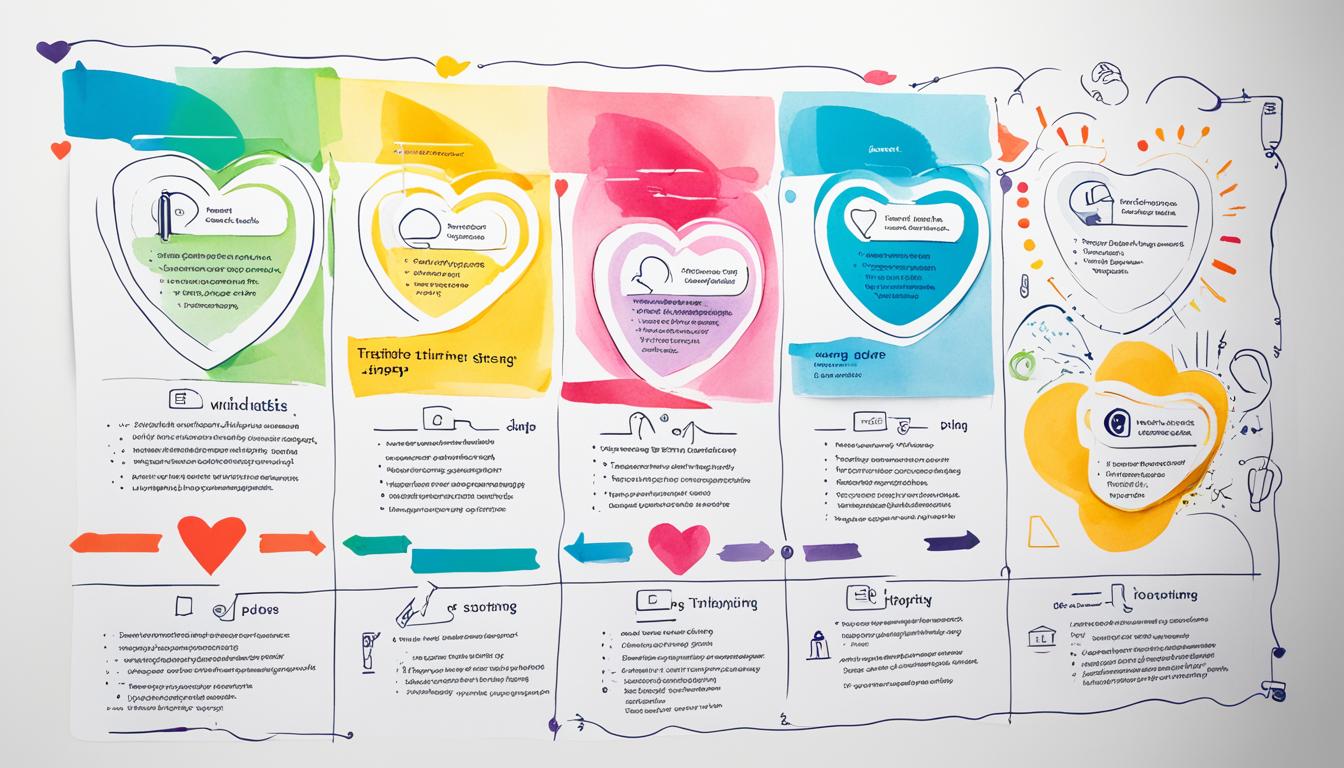
Embarking on the journey of product innovation requires a rich blend of creativity and rigor. Your vision to bring forth groundbreaking products is deeply intertwined with the principles of design thinking, which serves as the bedrock of this process. Design thinking insists on a user-centric approach to product creation, passionately advocating the crafting of solutions that are not just feasible, but also desirable and viable. It’s an adventure where the craft of user experience turns ideas into tangible, market-ready triumphs.
As you delve deeper into the world of product design and development, you’ll discover that the true essence of innovation is found in understanding the needs and aspirations of users. It’s not just about creating something new; it’s about sculpting a product that resonates, interacts, and stands out in the bustling marketplace. Your dedication to this process reflects a commitment to quality and an ambition to influence lives positively through thoughtful design.
Key Takeaways
- Design thinking is integral to building products that offer superior user experiences.
- Product innovation is a collaborative effort that hinges on deep user insights.
- Success in product development is measured by your ability to fulfill and exceed market needs.
- User-centric methodologies are key to creating designs that both function effectively and appeal aesthetically.
- Embracing an interdisciplinary approach can significantly enhance product relevance and appeal.
- Rigorous testing and user feedback are paramount for refining and perfecting product designs.
Understanding the Product Development Life Cycle
The transformative journey from a budding idea to a marketable product is defined by the product development life cycle—a comprehensive route that integrates various disciplines, methodologies, and strategic insights. As you navigate through this process, it’s crucial to understand that successful products result from harmonious collaboration across varied fields of expertise, uniting market research, concept development, and rapid prototyping into a singular, focused effort.
From Market Research to Product Launch
Market research serves as the cornerstone of the product development life cycle, providing invaluable data to inform decision-making. Through diligent analysis of market trends, consumer behavior, and competitive landscapes, you can identify lucrative opportunities and define customer needs. This level of understanding is essential for setting clear, attainable goals and creating a strategic foundation for concept development. Transcending beyond mere ideas, these concepts become the blueprints for products that are destined to make an impact.
The Interdisciplinary Nature of Product Creation
Appreciating the interdisciplinary nature of product creation enriches the development process, inviting perspectives from industrial design, engineering, user experience, and supply chain management, among others. This multitude of viewpoints fosters innovative solutions and enhances the product’s relevance and appeal. Integrating rapid prototyping within this context allows for tangible experimentation and brings concepts closer to reality, ensuring that each iteration advances the product’s function, design, and user satisfaction before its grand entry into the market.
This life cycle is not a mere sequence of steps but a dynamic synergy of expertise, insight, and vision. Each phase is an essential rung on the ladder to product success—meticulously conceived, expertly crafted, and rigorously tested. Your commitment to this interdisciplinary approach will be reflected in the innovative products you bring to life, products that meet today’s demands and shape tomorrow’s possibilities.
Innovating with Design Thinking
Embarking on the path of product innovation, you’ll find design thinking at its core. It’s a strategic approach that combines empathy for the context of a problem, creativity in the generation of insights and solutions, and rationality in analyzing and fitting solutions to the context. To innovate successfully, it’s essential to embrace this holistic process, which enables the melding of technology with human-centric needs.
Design thinking is much more than a buzzword; it’s a framework that fosters an environment where creativity thrives and the best products are born. It shifts the focus from conventional problem-solving to a more explorative process that seeks to understand customers on a deeper level, define specific user challenges, and address them with innovative solutions.
At the heart of design thinking is empathizing with users. You delve into the lives of your customers, observing and engaging to grasp their experiences and emotions. This empathy fuels your drive to generate ideas, as you begin to ideate with the aim of solving their problems in unique ways.
Next comes the prototype testing phase: an iterative, hands-on approach where solutions transform from abstract ideas to physical products. The value of prototyping lies in its ability to visualize the product, fostering feedback and insights that are critical for refinement. Every prototype brings you closer to a product that is not only feasible and desirable but also viable within the market.
Each cycle of brainstorming, prototyping, and testing sharpens the blade of innovation, cutting through the uncertainty to reveal a solution that is not only effective but also holds the potential to revolutionize the market. Design thinking encourages you to embrace failure as a stepping stone to success, where each misstep is a chance to learn and improve.
Remember, the true essence of design thinking lies not in the tools you use, but in the perspective shift it brings: it bolsters your patience for the process of discovery, deepens your understanding of users, and propels your product development forward with informed and inspired decision-making.
Your journey in product innovation, guided by the principles of design thinking, will invariably lead you to create products that resonate with users and stand out in today’s competitive landscape.
The Role of Market Research in Successful Product Outcomes
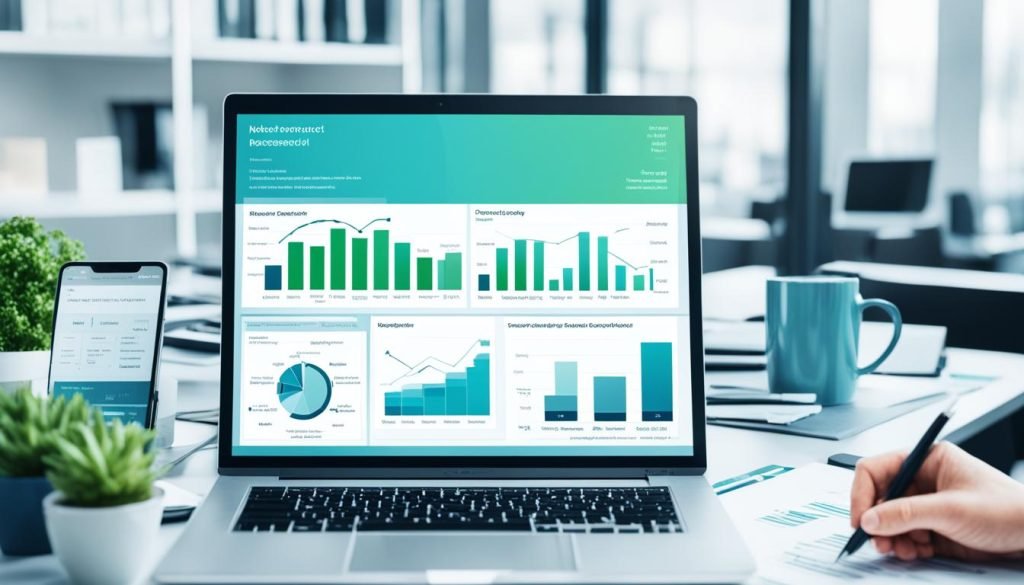
In today’s competitive market, product success is largely determined by a deep understanding of customer needs and industry trends. By engaging in thorough market research and competitive analysis, product development teams arm themselves with the insight needed to design solutions that are not only effective but truly remarkable in terms of user experience.
Identifying Customer Needs for Effective Solutions
Immersing yourself in market research is the first step in identifying the nuanced needs and preferences of your target customers. Understanding their daily challenges and desires through data-driven analysis allows you to conceptualize products that provide genuine solutions. To achieve this, employ a blend of surveys, user testing, and observational studies, ensuring that every facet of the user experience is meticulously accounted for in your product’s design.
Utilizing Competitive Analysis to Your Advantage
Equally as important as knowing your audience is understanding your competition. A competitive analysis sheds light on what others in your space are doing and reveals opportunities for differentiation. Scrutinize their strengths and weaknesses, market positioning, and customer feedback to discern how you can elevate your product above the rest. This strategic perspective not only informs your design decisions but also sharpens your market acumen, positioning your product as a leader in its category.
Essential Stages of Concept Development
Embarking on the concept development stage, you recognize its critical role in transforming budding ideas into fully realized product visions. It’s a multi-faceted journey where user experience, market alignment, and rapid prototyping converge to validate the robust nature of your product ideas.
At the outset, this pivotal phase places user experience at its core, asking key questions about the needs and desires of your end-users. As you generate potential product concepts, each idea is scrutinized to ensure alignment with the user’s expectations and the company’s strategic aim. Following this, a meticulous selection process ensues, weeding out less viable options and refining those with promise.
Subsequent to the selection, intensive feasibility studies come into play, merging market viability analyses with detailed user desirability assessments. This often-unseen groundwork forms the scaffold from which market-disrupting products arise.
It’s within this environment that rapid prototyping claims its eminent place. Prototypes act as a tangible bridge connecting the abstract to the concrete, offering a palpable expression of ideas that previously existed only in the digital realm or as sketches on a whiteboard. Constant iteration, guided by hands-on trials and interactions, drives each development iteration, edging closer to the ultimate user-approved product design.
Remember, successful concept development is as much about the journey as the destination. Each step, from user experience research to quick-turn prototypes, must be adeptly navigated to breathe life into world-class products.
Below, find a detailed overview of where concept development touches upon various other pivotal stages, illustrating the non-linear path products often take as they come to fruition:
| Stage | Description | Relevance to Concept Development |
|---|---|---|
| User Research | Exploration of user needs and pain points. | Forms the basis for initial concept ideation. |
| Idea Generation | Collection and brainstorming of new product ideas. | Sources concepts for development consideration. |
| Concept Selection | Evaluation and narrowing down of potential product ideas. | Filters out viable from non-viable concepts. |
| Feasibility Study | Assessment of market viability and user desirability. | Validates the practical potential of selected concepts. |
| Prototyping | Creation of scaled-down or simplified versions of concepts. | Allows tactile examination and evolution of the product form. |
| Prototype Testing | User testing of prototype for feedback. | Refines the concept according to real-world usage and perception. |
At this juncture, understanding and immersion in concept development become your allies, offering the foresight and adaptability necessary to innovate relentlessly. As you progress through this crucible of creation, remember that every iteration is a step closer to not just meeting, but exceeding user expectations with a product they’ll embrace.
Prototyping and User Experience: Bringing Ideas to Life
The translation of innovative concepts into tangible user experiences is intrinsically linked to the art and science of prototyping. A crucial phase within the product development process, prototype testing acts as an intermediary between the grains of imagination and the final product that users interact with. Achieving a balance between user experience and functionality during this stage determines the potential impact of your product in a competitive market.
Rapid Prototyping Techniques and Tools
Rapid prototyping is an agile and iterative approach closely tied to real-time user experience enhancements. Technologies like 3D printing have revolutionized this space, allowing for swift visualization and iteration. They bring your concept to life, enabling designers, stakeholders, and end-users to touch, feel, and interact with a model that closely resembles the end-product. Such techniques extend beyond mere aesthetics; they allow for comprehensive evaluations of design, ergonomics, and usability.
Tools like CAD software have become invaluable in rapid prototyping, offering the precision needed to create accurate and detailed models. Moreover, they save valuable time and resources, paving the way for multiple iterations without significantly impacting the development timeline. Rapid prototyping is fundamental for achieving a design that aligns perfectly with user expectations and market demands.
Importance of User Feedback in Refining Design
User feedback is the cornerstone of prototype testing and by extension, an impeccable user experience. By engaging with prototypes, users offer firsthand insights that are critical in refining product designs. This feedback loop is essential, empowering designers to make adjustments that are closely aligned with user needs and usage contexts. Such iterative cycles ensure that the final product not only solves user problems but does so in a way that is intuitive and delightful.
In collecting user feedback, diverse methods can be employed including user interviews, usability testing, and A/B testing. Each technique offers unique perspectives on how the product functions in the wild, often revealing opportunities for improvement that hadn’t been previously considered. Utilizing user feedback judiciously ensures the result is not just a testament to the ingenuity of its creators, but also a reflection of the voices of its intended users.
| Rapid Prototyping Technique | Benefits | Role in User Experience |
|---|---|---|
| 3D Printing | Quick physical model production | Tactile user interaction and feedback |
| CAD Modeling | Precision and detailed design replication | Early design visualization and alteration |
| Usability Testing | User-focused design insights | Enhancing intuitiveness and removing friction points |
| User Interviews | Qualitative feedback on design and functionality | Understanding user emotions and experiences |
| A/B Testing | Data-driven decision making | Optimizing user preferences for design elements |
Ultimately, rapid prototyping married with insightful user feedback gives rise to products that not only serve their intended purpose but also provide a user experience that is engaging, efficient, and above all, satisfying. As you embark on this iterative journey, treasure each round of critiques as a valuable step towards achieving excellence in design and delight in usability.
Industrial Design: Merging Functionality and Aesthetics
At the heart of any marketable product lies the expertise of industrial design, which intricately blends functionality and aesthetics. This synergy ensures that products not only capture the eye but also provide an optimal user experience. Your understanding of industrial design principles plays a pivotal role in developing products that people gravitate towards, not solely for their looks but for their practicality and comfort in daily use.
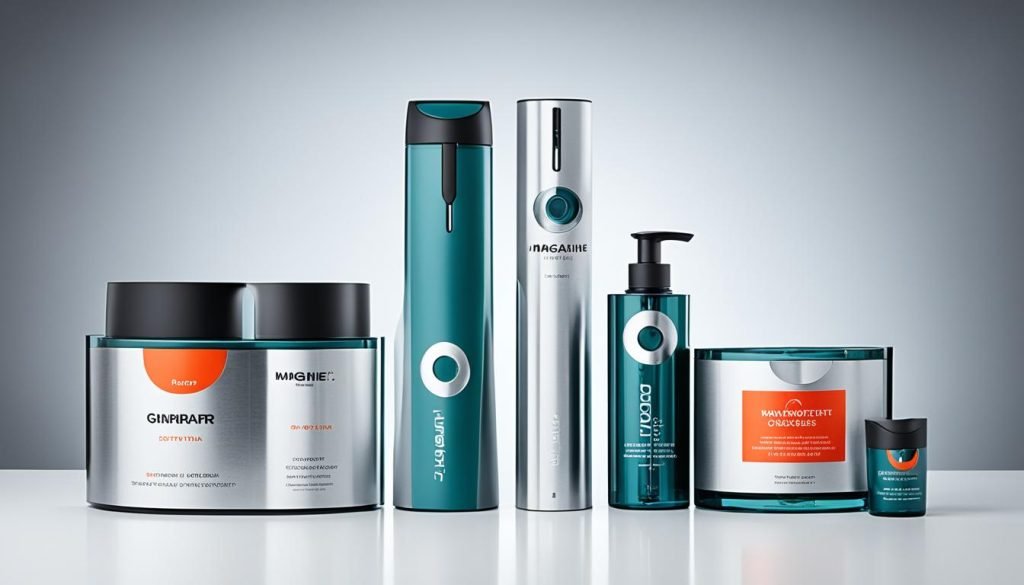
Industrial design is not just about creating something that looks good—it’s about crafting products that stand the test of time, make life easier, and do so sustainably. As you immerse yourself in the design process, remember that each material choice and design decision has implications far beyond the drawing board.
Principles of Ergonomics in Product Design
When it comes to product design, ergonomics is the key to user comfort and safety. By incorporating ergonomic principles, you ensure that products are designed with the user’s physical interaction in mind. This includes adjusting designs to fit different body types, reducing strain during use, and improving the overall user experience. Emphasizing ergonomics in industrial design is not only beneficial for user welfare but also enhances the product’s functionality and appeal.
Material Selection for Sustainability and Efficiency
Choosing the right materials is essential for sustainability and efficiency in product design. Sustainable materials not only reduce the environmental impact but also can improve the efficiency of the production process by maximizing resources and minimizing waste. As you survey materials, weigh options that are recyclable, durable, and have a lower carbon footprint. This mindfulness in material selection underscores a commitment to both the planet’s health and the longevity of your products, meeting the sophisticated demands of today’s conscious consumers.
Below is an example of how material considerations and principles of ergonomics intersect to create a product that exemplifies modern industrial design:
| Aspect | Ergonomic Benefit | Sustainability Factor |
|---|---|---|
| Material Texture | Enhances grip and user comfort | Selection of bio-based materials or recycled textures |
| Adjustability | Accommodates various user sizes and preferences | Use of modular components for easy repair and upcycling |
| Weight Distribution | Reduces fatigue during use | Efficient material usage with structural analysis for minimal waste |
Integrating Technical and Creative Aspects in Product Architecture
In the realm of product development, the fusion of technical prowess and creative vision into product architecture is a decisive stage. This architectural blueprint underpins the systemic integration of a product’s components and their interplay, ensuring that the final offering is not only functionally robust but also compellingly user-friendly. Delicate balance is the watchword as you, the innovator, draw upon market research to refine user experience and truly empathize with your audience.
At this juncture, the intertwining paths of imaginative concept sketching and pragmatic engineering are navigated. You dive into the user’s world, extracting salient insights that inform structural decisions, product features, and aesthetics. This iterative process of conception, refinement, and representation hinges on your attentive consideration of both market demands and the end-user’s practical reality.
Let’s consider the layers of product architecture where the blend of artistry and empiricism yields a harmonious user experience:
- The foundation is built on market research, honing in on consumer behaviors and latent needs.
- Structural design is then articulated, integrating these insights with technological viability.
- Interactive elements and interfaces are crafted to align with the envisioned user interactions.
- Creative flair and brand identity are woven into the fabric of the product’s external presentation.
- Finally, user feedback loops cultivate an architecture that resonates deeply with your audience’s expectations.
This complex weave of functionality, desirability, and attainability breathes life into your architectural vision, charting the course to a product that emerges not just as an item to be used, but an experience to be cherished. A well-conceived product architecture thus becomes a silent narrative of the user’s journey, reflecting their needs through its intuitive construction and seductive design.
As you chart the blueprint of your product’s architecture, remember that every technical specification and creative flourish encapsulates an element of the user’s story, underscoring the importance of integrating these aspects with thoughtfulness and precision.
To substantiate the multifaceted essence of product architecture, consider the following attributes that flesh out the interrelation between design elements and user satisfaction:
| Architectural Element | Technical Factors | Creative Influence | User Experience Foci |
|---|---|---|---|
| System Integration | Compatibility, Modularity | Seamless Aesthetics | Ease of Use, Accessibility |
| Materials Used | Durability, Function | Texture, Color Palette | Sensory Appreciation, Comfort |
| Interface Design | Responsiveness, Speed | Visual Layout, Branding | Intuitiveness, Engagement |
| Structural Layout | Spatial Efficiency, Safety Norms | Ergonomic Styling | User Navigation, Interaction |
Your approach to product architecture is, therefore, a delicate symphony of intuitive design and meticulous engineering, coordinated to achieve an end-product that not only functions flawlessly but also elicits a sense of delight and belonging in the user.
Design for Manufacturing: Streamlining for the Supply Chain
As you delve into optimizing product designs, the concept of Design for Manufacturing (DFM) emerges as a key strategy to enhance cost-effectiveness and efficiency within the supply chain. DFM is not just a design philosophy; it’s a proactive approach to product development that ensures each design decision contributes to a smoother, more streamlined manufacturing process that upholds standards of quality and market competitiveness.
Cost-Effective Manufacturing Processes
One of the primary benefits you’ll find when applying DFM principles is the substantial reduction in manufacturing costs. Cost-effective manufacturing is achieved by simplifying designs, minimizing the number of parts, and using standard components whenever possible. Moreover, DFM encourages the consideration of potential production hurdles early in the design phase, addressing issues that may otherwise escalate costs during manufacturing.
Here’s an impactful way DFM translates into cost savings:
| DFM Aspect | Cost Saving Method | Impact on Efficiency |
|---|---|---|
| Material Standardization | Bulk purchasing of standard materials | Reduces inventory complexity and cost |
| Part Consolidation | Fewer unique parts to produce | Lowers assembly time and resource usage |
| Design Simplification | Easy-to-manufacture components | Expedites production and reduces labor costs |
Design Considerations for Easier Assembly
In addition to cost savings, DFM provides the blueprint for creating products that are easier to assemble. By focusing on designs that facilitate assembly, you pave the way for products that can be assembled quickly and more reliably, contributing to a more robust supply chain. Easier assembly reduces labor hours and production times, thereby enhancing the overall throughput of manufacturing facilities.
Consider the following aspects of design that impact ease of assembly:
| Design Feature | Assembly Benefit | Contribution to Supply Chain |
|---|---|---|
| Modular Design | Simplified construction and maintenance | Improves scalability and adaptability |
| Unambiguous Orientation | Parts fit only in the correct way | Reduces assembly errors |
| Integration of Fasteners | Minimizes loose components | Streamlines inventory and assembly process |
By embracing these principles of DFM, you’ll ensure your product designs are not only innovative but also align with a cost-effective production methodology that benefits every stakeholder in the supply chain.
Product Innovation through Robust Design and Testing
The journey to pioneering product innovation is pivoted on the axis of a robust design, meticulously scrutinized through systematic prototype testing, it ensures that your product endures beyond the ordinary. Integrating durability and performance into every facet of your product’s life cycle is non-negotiable for standing the test of user engagement and market competition.
Assessing Product Durability and Performance
Your pathway to product innovation encompasses not merely the aesthetic elements but the resilient structure of your designs. As you embark on evaluating product durability and performance, it becomes essential to establish assessment protocols that challenge your product under stringent conditions, mirroring real-world scenarios.
Employing a comprehensive battery of stress tests and performance assessments is indispensable. From environmental resistance to load capacity, your commitment to robust design principles translates to a product fortified for longevity and reliability—ensuring that every user experience is consistent and exceeds expectations.
Adopting a User-Centric Approach to Design Testing
Focusing on a user-centric approach, prototype testing evolves your product beyond its conceptual inception. It is here where you validate the intricacies of user interaction, smooth out the rough edges, and, if needed, pivot to enhance user satisfaction.
By closely observing and integrating user feedback during the prototype evaluations, you refine your innovative designs. This symbiotic relationship between user trials and design modifications epitomizes the agile nature of product development, fostering not just functional utility but emotional connectivity with the end consumers.
Below is an illustration of how impactful user-centric design testing is in fine-tuning the subtle aspects that contribute to a product’s success:
| User Feedback | Design Improvement | User Experience Enhancement |
|---|---|---|
| Intuitive use | Simplified interfaces | Reduced learning curve |
| Ergonomic comfort | Adjustments to form factor | Increased product usage |
| Material choices | Eco-friendly, durable materials | Improved sustainability perceptions |
| Accessibility | Features for diverse user groups | Broader user acceptance |
| Reliability concerns | Enhanced quality controls | Trust in product longevity |
Fulfilling your vision for product innovation requires a fine equilibrium of robust design and an empathetic user engagement model. By bridging the gap between technical prowess and user-centric empathy, the process of prototype testing matures into a powerful tool. It transforms inventive ideas into products tailored for success in the bustling market ecosystem.
The Intersection of Patents and Intellectual Property in Product Development
As you navigate the challenging terrain of product development, the significance of patents and intellectual property (IP) becomes profoundly clear. These legal constructs are instrumental in safeguarding innovations, ensuring that your creative investments and technological advancements remain inaccessible to unfair exploitation. They grant you the security to unveil your breakthroughs without fear of copycats diminishing your competitive edge.
Understanding and managing your intellectual property rights is not a mere afterthought; it’s a strategic imperative that integrates closely with market analysis and product positioning. The act of patenting goes beyond legal protections—it signals to investors and the market at large that you are a serious contender, bringing forth novel contributions worthy of attention and respect.
Let’s explore the multifaceted benefits that intellectual property rights inject into the lifeblood of product development:
- Exclusive Rights: Patents furnish you with an exclusive right to commercialize your innovation, positioning your product uniquely within the market.
- Attracting Investments: Clear IP rights can significantly bolster your ability to attract investors, serving as a tangible asset that underscores the value and potential of your product.
- Boosting Market Value: A strong IP portfolio can enhance your company’s valuation, which is particularly salient in mergers, acquisitions, and partnerships.
- Facilitating Licensing and Partnerships: With solid patents in place, you have the leverage to negotiate licensing deals or enter strategic partnerships, opening new revenue streams and market possibilities.
The synergy between patents, intellectual property, and market analysis is unmistakable. A careful examination of market trends, accompanied by a keen IP strategy, sets a robust foundation for product longevity and success. It’s a narrative that not only encapsulates the essence of your creations but also narrates a story of innovation protected and potential unleashed.
Remember, the well-being of your product in the competitive arena depends significantly on your action toward protecting intellectual property—action that can dictate the trajectory of your product’s impact and legacy.
As you forge ahead in your product development journey, prioritize your patent strategy just as diligently as your marketing and design efforts. Intellectual property is not simply a legal formality; it’s the very currency of innovation, pivotal in securing your place within the market’s echelons and propelling your vision into reality.
Conclusion
Embarking on the pathway of product design and development is a multifaceted exploit, punctuated by critical milestones that transform vision into reality. Your immersion in this journey has acquainted you with the intricacies of industrial design, prototype testing, and a relentless focus on user experience—each an integral component in crafting remarkable products. As you harness the collective insights from thorough market research, innovative concept development, and relentless iterations of prototyping, you materialize products that stand as testaments to your dedication to exceed market needs and user expectations.
Your pursuit of excellence is visible in the incessant refinement catalyzed by prototype testing, ensuring that with each feedback loop, you inch closer to design perfection. It is the marriage of form and function through industrial design that imbues your products with an allure that captivates and a usability that satisfies. Infusing sustainability considerations into your design process is not just an ethical choice but a business imperative that resonates with the evolving consumer conscience. Your products become not only fixtures in today’s market but also harbingers of future industry standards.
Moreover, by vigilantly safeguarding your innovations through the procurement of patents and understanding of intellectual property laws, you shield your competitive advantage, allowing you to thrive in a marketplace where originality is prized. As such, the synergy of these elemental forces—prototype testing, industrial design, and user experience—girds a foundation that propels products from mere concepts to instrumental agents of industry innovation.
FAQ
What is Product Design and Development?
Product Design and Development is an interdisciplinary process that involves ideating, designing, and creating innovative products that aim to meet specific user needs and fill market gaps. It combines product innovation, design thinking, and a deep focus on user experience to create successful products.
How does the Product Development Life Cycle work?
The Product Development Life Cycle starts with market research to understand consumers and the competitive landscape. It progresses through various stages including product launch, emphasizing the integration of interdisciplinary teams from initial concept development to manufacturing and marketing.
Why is Design Thinking important in Product Development?
Design Thinking is integral to Product Development because it employs a user-centric approach to problem-solving, fostering innovation and ensuring the end product truly resonates with users. It involves empathizing with users, defining their problems, ideating solutions, creating prototypes, and testing.
How is Market Research pivotal to Product Development?
Market Research is crucial as it provides insights into the users’ behaviors, preferences, and pain points, which guide the development of products that accurately meet customer needs. It also involves competitive analysis, allowing teams to position their products distinctively in the market.
What constitutes effective Concept Development?
Effective Concept Development involves generating, selecting, and testing product ideas to ensure they address user needs and align with business goals. It incorporates business analysis and feasibility studies to refine the concepts, ensuring they are market-ready.
How are Prototyping and User Experience connected?
Prototyping is vital for conceptualizing product designs and experiencing hands-on feedback, thus significantly impacting user experience. It allows teams to identify and rectify design issues, ensuring the product is intuitive and satisfying for the end user.
How do Industrial Design principles impact product development?
Industrial Design combines aesthetics with functionality, adhering to principles of ergonomics and material science to create products that are not only visually appealing but also comfortable, safe, and sustainable.
What is the significance of Product Architecture?
Product Architecture is the blueprint of the product’s systems and components. It affects user experience by integrating technical and creative aspects to achieve a user-friendly and efficient design.
Why is Design for Manufacturing important?
Design for Manufacturing is essential for ensuring products can be efficiently produced at a reasonable cost without sacrificing quality. It involves considering the ease of assembly and streamlining the production process to enhance the supply chain.
How does Robust Design and Testing drive Product Innovation?
Robust Design and Testing are crucial for product innovation because they involve methodically evaluating and refining product designs to meet high durability and performance standards. A focus on user testing helps ensure that the product meets real-world demands.
What role do Patents and Intellectual Property play in Product Development?
Patents and Intellectual Property protect the unique aspects of product design and innovation, preventing unauthorized copying and providing a competitive edge in the market. They are essential for securing a company’s innovations and fostering ongoing creative development.