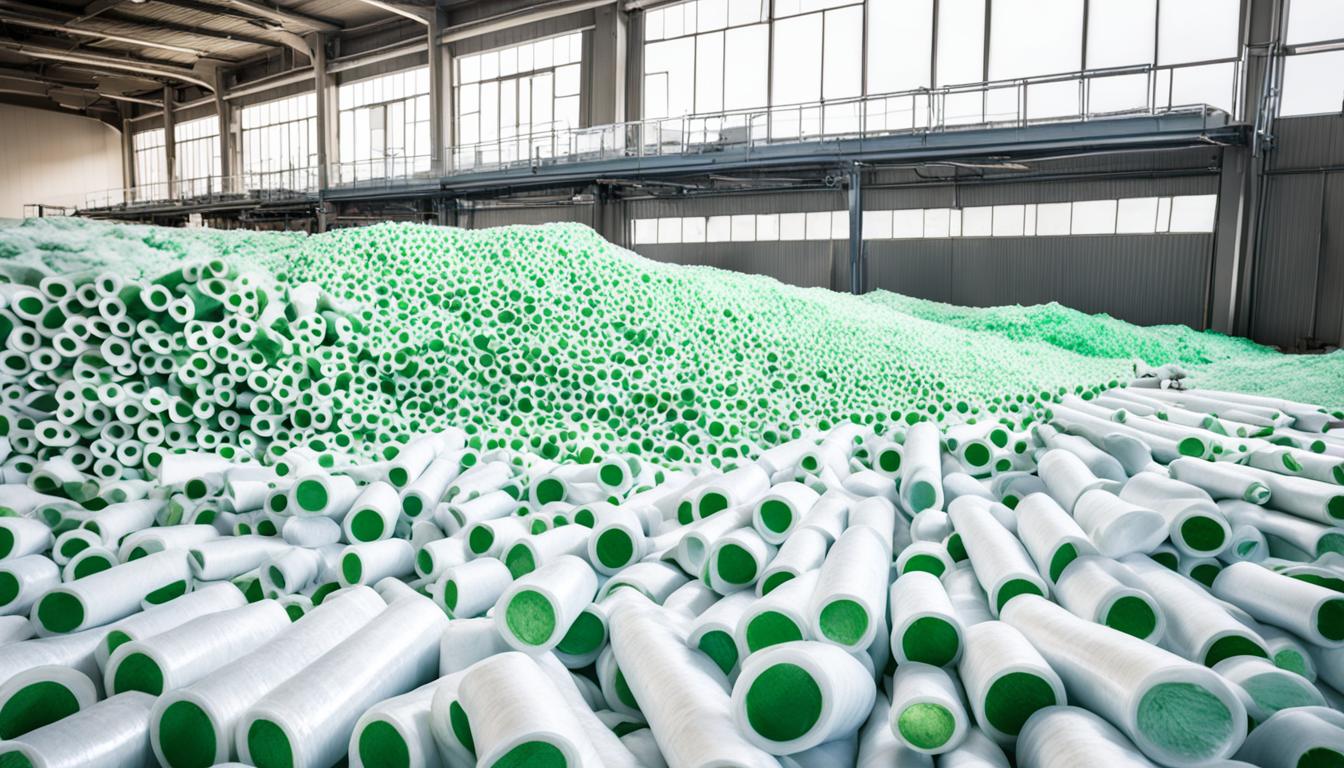
Did you know that the global biodegradable materials market is expected to reach a value of $4.2 billion by 2027, growing at a staggering CAGR of 13.3%? This remarkable statistic highlights the increasing importance of biodegradable materials in sustainable manufacturing and eco-friendly production practices. As the world becomes more conscious of the environmental impact of traditional materials, companies are embracing biodegradable alternatives to reduce waste, lower carbon emissions, and protect our planet.
Key Takeaways:
- Biodegradable materials play a crucial role in promoting sustainable manufacturing and eco-friendly production practices.
- Companies are increasingly adopting biodegradable alternatives to traditional materials to reduce waste and lower carbon emissions.
- The global biodegradable materials market is growing rapidly, driven by increasing consumer demand for sustainable products.
- Using biodegradable materials in manufacturing contributes to waste reduction, reduced pollution, and a more environmentally conscious future.
- MaterialsZone offers a data-driven solution for efficient biodegradable material development, reducing costs and optimizing the process.
Cork
Cork is a natural and biodegradable material obtained from the outer bark of the cork oak tree. It is commonly used as bottle stoppers, but its versatility goes beyond that. Cork finds applications in the construction industry, particularly in insulation and fireproofing.
Cork is a renewable material, as the bark can regenerate itself after harvest, making it an environmentally sustainable choice. Its fireproofing qualities make it a safe option for various building needs. Additionally, cork has the ability to reduce greenhouse gas emissions, contributing to greenhouse gas reduction efforts.
Although cork is a widely-used material, it is important to note that it takes several years before a cork oak tree can be stripped for the first time. This slow maturation process affects the availability and production of cork.
The price of cork powder, which is commonly used in cork-based composites, ranges from $0.30 to $0.80 per kilogram, making it a cost-effective option for sustainable production.
In summary, cork offers a biodegradable and sustainable solution for various industries, particularly the building industry. Its insulation and fireproofing qualities, coupled with its renewable nature and greenhouse gas reduction capabilities, make it a valuable material for the construction sector. Moreover, its reusable properties contribute to waste reduction efforts, making it an eco-friendly choice.
Hemp
Hemp is a versatile and renewable material that offers a wide range of applications. Derived from the cannabis family, hemp is primarily cultivated for its fiber and edible seeds. With low THC content, it is a valuable resource for creating biodegradable materials.
Hemp’s versatility is evident in its ability to be used for various purposes, including biofuel production, clothing manufacturing, plastic alternatives, and paper production. It provides a sustainable and eco-friendly solution in these industries, reducing reliance on non-renewable resources and minimizing carbon emissions.
One of the significant advantages of hemp is its potential to replace traditional paper production, contributing to the reduction of deforestation worldwide. By utilizing hemp fibers, which are naturally abundant and grow in adverse conditions, the need for timber-based paper can be significantly reduced.
Furthermore, the use of hemp in the production of biodegradable materials contributes to the overall reduction of carbon emissions. Hemp plants absorb carbon dioxide during their growth, making them an effective tool in combating climate change.
“Hemp offers a sustainable and versatile solution for various industries, including biofuel, clothing, plastic, and paper production. Its renewable nature and ability to thrive in adverse conditions make it an ideal choice for reducing deforestation and carbon emissions.”
Benefits of Hemp
- Renewable: Hemp is a fast-growing crop that can be cultivated multiple times a year, making it a readily available and sustainable resource.
- Biodegradable: Hemp products naturally decompose over time, minimizing environmental impact and reducing waste accumulation.
- Versatile: Hemp can be used in multiple industries, including textiles, construction, and biofuel production, showcasing its flexibility and adaptability.
- Deforestation Reduction: By utilizing hemp fibers for paper production, the need for timber-based paper can be reduced, helping combat deforestation.
To illustrate the potential of hemp as a renewable and versatile material, let’s take a closer look at some of its applications:
| Application | Description |
|---|---|
| Biofuel | Hemp can be processed into biofuel, providing a renewable and carbon-neutral alternative to fossil fuels. |
| Clothing | Hemp fibers can be spun into fabric, creating durable and breathable clothing options. |
| Plastic Alternatives | Hemp-based plastics are biodegradable and offer a sustainable alternative to petroleum-based plastics. |
| Paper Production | Hemp fibers can be used to create paper products, reducing the demand for timber-based paper and contributing to deforestation reduction. |
By embracing hemp as a biodegradable and renewable material, industries can make significant strides in reducing their environmental footprint, mitigating deforestation, and achieving sustainable production practices.

Biodegradable Materials in Everyday Products
There is a growing demand for biodegradable materials in everyday products, as consumers are becoming more conscious of the need for eco-friendly alternatives. These biodegradable materials offer sustainable solutions that help reduce the impact of plastic waste on the environment. Let’s explore some of the popular biodegradable products available:
Bamboo Straws
Bamboo straws have gained popularity as a biodegradable alternative to plastic straws. They are made from sustainably sourced bamboo, which is a fast-growing and renewable material. Bamboo straws can be reused and when discarded, they easily decompose, leaving no trace in the environment.
Cork Cutlery
Cork cutlery is an eco-friendly option for disposable utensils. Cork is a biodegradable material obtained from the bark of the cork oak tree. It is lightweight, durable, and has natural antimicrobial properties. Cork cutlery can be composted after use, making it a sustainable choice for single-use utensils.
Mycelium Building Materials
Mycelium, the root structure of mushrooms, is being used to create biodegradable building materials. These materials are lightweight, strong, and have excellent insulation properties. They can be used in various construction applications, including insulation panels, packaging materials, and furniture.
Biodegradable Water Bottles
Plastic water bottles have a significant impact on our environment, but biodegradable water bottles made from plant-based materials provide a greener alternative. These bottles are compostable and break down into natural elements over time, reducing plastic waste and the carbon footprint associated with traditional plastic bottles.
Seaweed Packaging
Seaweed packaging is a biodegradable and sustainable alternative to traditional plastic packaging. It is made from seaweed extracts and can dissolve in warm water without leaving any harmful residues. Seaweed packaging is not only eco-friendly but also provides a protective barrier for food products, making it an ideal choice for packaging solutions.
Biodegradable Trash Bags
Biodegradable trash bags are a practical solution for waste management. These bags are made from biodegradable materials that break down naturally without harming the environment. Using biodegradable trash bags helps reduce the amount of plastic waste that ends up in landfills and contributes to a cleaner and healthier planet.
Biodegradable Pens
Biodegradable pens are a sustainable alternative to conventional plastic pens. They are made from biodegradable materials that can easily decompose over time. By using biodegradable pens, you can minimize your plastic waste and contribute to a more sustainable future.
Avocado-based Products
Avocado-based products, such as straws, cutlery, plates, and containers, are gaining popularity as biodegradable alternatives to their plastic counterparts. Avocado is a natural and biodegradable material that can be molded into various shapes and forms. These products offer a sustainable solution for single-use items, as they decompose naturally without leaving any harmful residues behind.
By incorporating biodegradable materials into everyday products, we can reduce our reliance on non-biodegradable plastics and promote a more sustainable and eco-friendly lifestyle. These biodegradable alternatives provide a greener choice without compromising on functionality or convenience.

With the use of biodegradable materials in everyday products, we can take a step towards a cleaner and greener future.
Advantages of Biodegradable Materials
Biodegradable materials offer numerous advantages that contribute to a more sustainable and environmentally friendly future. These materials play a vital role in reducing carbon emissions, minimizing waste, repurposing resources, recycling, reducing pollution, and ensuring non-toxicity. Let’s explore these benefits in more detail:
Reduction in Carbon Emissions
One of the significant advantages of biodegradable materials is their inherent ability to break down naturally without the need for forced chemical reactions. As a result, biodegradable materials contribute to a considerable reduction in carbon emissions, helping combat climate change and preserve the planet for future generations.
Waste Reduction
Biodegradable materials also make a significant impact in waste reduction. Unlike traditional materials that accumulate in landfills for centuries, biodegradable materials break down over time, minimizing the amount of waste generated. By choosing biodegradable alternatives, you can actively contribute to a healthier and cleaner environment.
Repurposing and Recycling
Another advantage of biodegradable materials is their versatility when it comes to repurposing and recycling. These materials can be transformed into new products through various innovative processes, reducing the need for resource extraction and minimizing environmental impact. By embracing biodegradable options and recycling initiatives, we can build a more sustainable circular economy.
Reduced Pollution
Biodegradable materials contribute to reduced pollution. As these materials naturally break down, they do not release harmful substances or toxins into the environment. By using non-toxic and environmentally friendly biodegradable materials, we can safeguard ecosystems, protect wildlife, and maintain the overall health of our planet.
Overall, the advantages of biodegradable materials are far-reaching and essential for creating a greener and more sustainable future. By incorporating these materials into our daily lives, businesses, and industries, we can effectively reduce our ecological footprint and pave the way for a healthier planet.
The Global Market for Biodegradable Materials
The global biodegradable materials market is a rapidly growing sector driven by increasing consumer demand for sustainable and eco-friendly products. In 2019, the market value of biodegradable materials reached $1.6 billion, and it is projected to grow at a compound annual growth rate (CAGR) of 13.3% from 2020 to 2027. By 2027, the market is expected to reach a value of $4.2 billion.
Biodegradable materials are finding applications in various industries, including consumer goods, packaging, textiles, agriculture, and more. As consumers become more conscious of their environmental impact, there is a growing preference for products made from biodegradable materials. This trend is driving the adoption of biodegradable materials across different sectors, leading to an expansion in the market.
The consumer goods industry is a significant contributor to the demand for biodegradable materials. With a focus on sustainability, companies are exploring alternative materials that can reduce their environmental footprint. Biodegradable packaging, such as compostable food containers and eco-friendly shopping bags, is gaining popularity among both businesses and consumers.
In the textiles industry, biodegradable materials offer a sustainable alternative to conventional fabrics. Fabrics made from materials like bamboo and hemp are not only biodegradable but also have other eco-friendly properties. Their growth in popularity is driven by factors such as their durability, breathability, and moisture-wicking capabilities.
The agricultural sector has also recognized the benefits of biodegradable materials. From bio-based mulch films to biodegradable seed coatings, these materials help improve crop productivity while minimizing environmental impact. The use of biodegradable materials in agriculture aligns with the growing focus on sustainable farming practices and the reduction of plastic waste in the industry.
Overall, the global market for biodegradable materials is expected to witness significant growth in the coming years. The demand for sustainable and eco-friendly products is driving innovation and investment in biodegradable materials, creating opportunities for manufacturers and suppliers in various industries. As the market expands, there will be increased research and development efforts to discover new biodegradable materials and improve existing ones.
Companies that embrace biodegradable materials in their production processes can not only meet consumer demands for sustainability but also contribute to a more environmentally conscious future.
| Year | Market Value (in billion USD) |
|---|---|
| 2019 | 1.6 |
| 2020-2027 (CAGR: 13.3%) | 4.2 |
Challenges in Developing Biodegradable Materials
Developing biodegradable materials comes with various challenges. One of the main challenges is the expense involved in the development process. Creating environmentally-friendly plastics and sourcing the proper biodegradable materials can be costly, requiring extensive research and development efforts. The expense of conducting experiments, ensuring the desired material properties, and obtaining the necessary certifications adds to the overall expense of biodegradable material development.
Sourcing the appropriate biodegradable materials poses another challenge. It is crucial to find sustainable and renewable sources for these materials to ensure their eco-friendly attributes. Establishing reliable supply chains and partnerships with suppliers who adhere to ethical and sustainable practices is key to obtaining high-quality biodegradable materials.
Furthermore, passing legislation that demands the eventual discard of manufacturing plastic presents a challenge to the widespread adoption of biodegradable materials. While there is a growing need for environmentally-friendly alternatives, transitioning from traditional manufacturing processes to biodegradable materials requires a significant shift in practices and infrastructure. Legislative changes can play a crucial role in encouraging manufacturers to invest in biodegradable materials, but they also raise questions about the feasibility of replacing existing plastic-based manufacturing systems.
“The challenges in developing biodegradable materials highlight the need for collaboration between researchers, manufacturers, and policymakers to overcome the obstacles and drive the adoption of eco-friendly alternatives.”
Overcoming these challenges will require a collective effort from various stakeholders. Researchers need to continue innovating and experimenting to develop cost-effective biodegradable materials with comparable properties to traditional plastics. Manufacturers must invest in new technologies and equipment to support the production of biodegradable materials at scale. Policymakers play a critical role in developing and enforcing regulations that prioritize eco-friendly manufacturing practices and incentivize the use of biodegradable materials.
By addressing these challenges head-on, the development and adoption of biodegradable materials can be accelerated, leading to a more sustainable future with reduced environmental impact.
MaterialsZone Solution for Biodegradable Material Development
When it comes to developing biodegradable materials, MaterialsZone offers a revolutionary solution. With their data-driven approach, they have transformed the traditional trial-and-error methodology, resulting in significant savings in time, effort, and costs. By leveraging advanced analytics and predictive modeling, MaterialsZone has reduced the number of experiments and iterations required to develop biodegradable materials, streamlining the entire process.
MaterialsZone’s data-driven approach ensures that R&D efforts are focused on the most promising avenues, maximizing efficiency and accelerating the development timeline. By analyzing vast amounts of data, including material properties, environmental impact, and cost factors, MaterialsZone identifies the most suitable materials and formulations, enabling low-cost production without compromising quality.
One of the key advantages of MaterialsZone’s solution is its ability to find substitute ingredients for biodegradable materials. This is particularly valuable in overcoming the challenges of ingredient sourcing and availability, as well as reducing reliance on materials that may have environmental or cost limitations. By exploring alternative ingredients that meet the desired performance criteria, MaterialsZone expands the range of options for biodegradable material development.
Through their innovative data-driven approach, MaterialsZone empowers manufacturers and researchers to create biodegradable materials with greater efficiency, lower costs, and improved sustainability. By harnessing the power of data analytics, MaterialsZone is revolutionizing the development of biodegradable materials, paving the way for a more environmentally friendly future.
Table: MaterialsZone’s Advantages for Biodegradable Material Development
| Advantages | Description |
|---|---|
| Data-driven approach | Utilizes advanced analytics to drive material development decisions |
| Reduced experiments and iterations | Saves time and effort by minimizing trial-and-error methodology |
| Optimizes R&D efforts | Focuses on the most promising avenues for biodegradable material development |
| Low cost materials | Identifies cost-effective materials and formulations for sustainable production |
| Substitute ingredients | Finds alternative ingredients to overcome sourcing and environmental challenges |
Conclusion
Biodegradable materials are essential in driving sustainable manufacturing and adopting eco-friendly production practices. These materials, such as bamboo, cork, hemp, and others, provide viable alternatives to conventional materials, enabling waste reduction, minimizing pollution, and lowering carbon emissions. As the global demand for sustainable products continues to rise, the biodegradable materials market is experiencing significant growth. Incorporating biodegradable materials in manufacturing processes allows companies to embrace green manufacturing practices and actively contribute to a more environmentally conscious future.
By utilizing biodegradable materials in manufacturing, companies can make a positive impact on the environment. These materials are designed to naturally decompose over time, minimizing the accumulation of waste in landfills. Their sustainable production practices help preserve natural resources and reduce the carbon footprint associated with traditional manufacturing methods.
Eco-friendly manufacturing processes aim to minimize harm to the environment and maximize resource efficiency. By implementing green manufacturing practices, companies can adopt cleaner and more sustainable production methods. This involves optimizing energy consumption, reducing water waste, and minimizing air pollution through the use of biodegradable materials and renewable energy sources.
In conclusion, the adoption of biodegradable materials in manufacturing is a crucial step towards sustainable production practices and eco-friendly manufacturing processes. As consumers become more environmentally conscious, the demand for sustainable products will continue to grow. Embracing biodegradable materials not only benefits the environment but also allows companies to align with consumer preferences, create a positive brand image, and contribute to a greener future.
FAQ
What are some examples of biodegradable materials used in everyday products?
Some examples of biodegradable materials used in everyday products include bamboo straws, cork cutlery, mycelium building materials, biodegradable water bottles made from plant-based materials, seaweed packaging, biodegradable trash bags, biodegradable pens, and avocado-based products such as straws, cutlery, plates, and containers.
What are the advantages of using biodegradable materials?
Biodegradable materials have several advantages. They contribute to the reduction in carbon emissions, help in waste reduction, can be repurposed or recycled, contribute to reduced pollution, and are non-toxic, making them safer for the environment and human health.
What is the global market size for biodegradable materials?
The global biodegradable materials market was valued at
FAQ
What are some examples of biodegradable materials used in everyday products?
Some examples of biodegradable materials used in everyday products include bamboo straws, cork cutlery, mycelium building materials, biodegradable water bottles made from plant-based materials, seaweed packaging, biodegradable trash bags, biodegradable pens, and avocado-based products such as straws, cutlery, plates, and containers.
What are the advantages of using biodegradable materials?
Biodegradable materials have several advantages. They contribute to the reduction in carbon emissions, help in waste reduction, can be repurposed or recycled, contribute to reduced pollution, and are non-toxic, making them safer for the environment and human health.
What is the global market size for biodegradable materials?
The global biodegradable materials market was valued at $1.6 billion in 2019 and is expected to reach $4.2 billion by 2027, growing at a CAGR of 13.3% from 2020 to 2027. Biodegradable materials find applications in various industries, including consumer goods, packaging, textiles, agriculture, and more.
What are the challenges in developing biodegradable materials?
Developing biodegradable materials comes with various challenges. Some of the main challenges include the expense involved in the development process, sourcing the proper biodegradable materials, and passing legislation that demands the eventual discard of manufacturing plastic, which poses a challenge to the widespread adoption of biodegradable materials.
How does MaterialsZone help in developing biodegradable materials?
MaterialsZone offers a data-driven solution for biodegradable material development. Their efficient workflow reduces the need for trial-and-error methodology and significantly reduces the number of experiments and iterations needed to develop biodegradable materials. This approach helps in reducing R&D efforts and costs. MaterialsZone also helps in optimizing the development of low-cost materials and finding substitutes for ingredients to overcome the challenges of biodegradable material development.
.6 billion in 2019 and is expected to reach .2 billion by 2027, growing at a CAGR of 13.3% from 2020 to 2027. Biodegradable materials find applications in various industries, including consumer goods, packaging, textiles, agriculture, and more.
What are the challenges in developing biodegradable materials?
Developing biodegradable materials comes with various challenges. Some of the main challenges include the expense involved in the development process, sourcing the proper biodegradable materials, and passing legislation that demands the eventual discard of manufacturing plastic, which poses a challenge to the widespread adoption of biodegradable materials.
How does MaterialsZone help in developing biodegradable materials?
MaterialsZone offers a data-driven solution for biodegradable material development. Their efficient workflow reduces the need for trial-and-error methodology and significantly reduces the number of experiments and iterations needed to develop biodegradable materials. This approach helps in reducing R&D efforts and costs. MaterialsZone also helps in optimizing the development of low-cost materials and finding substitutes for ingredients to overcome the challenges of biodegradable material development.