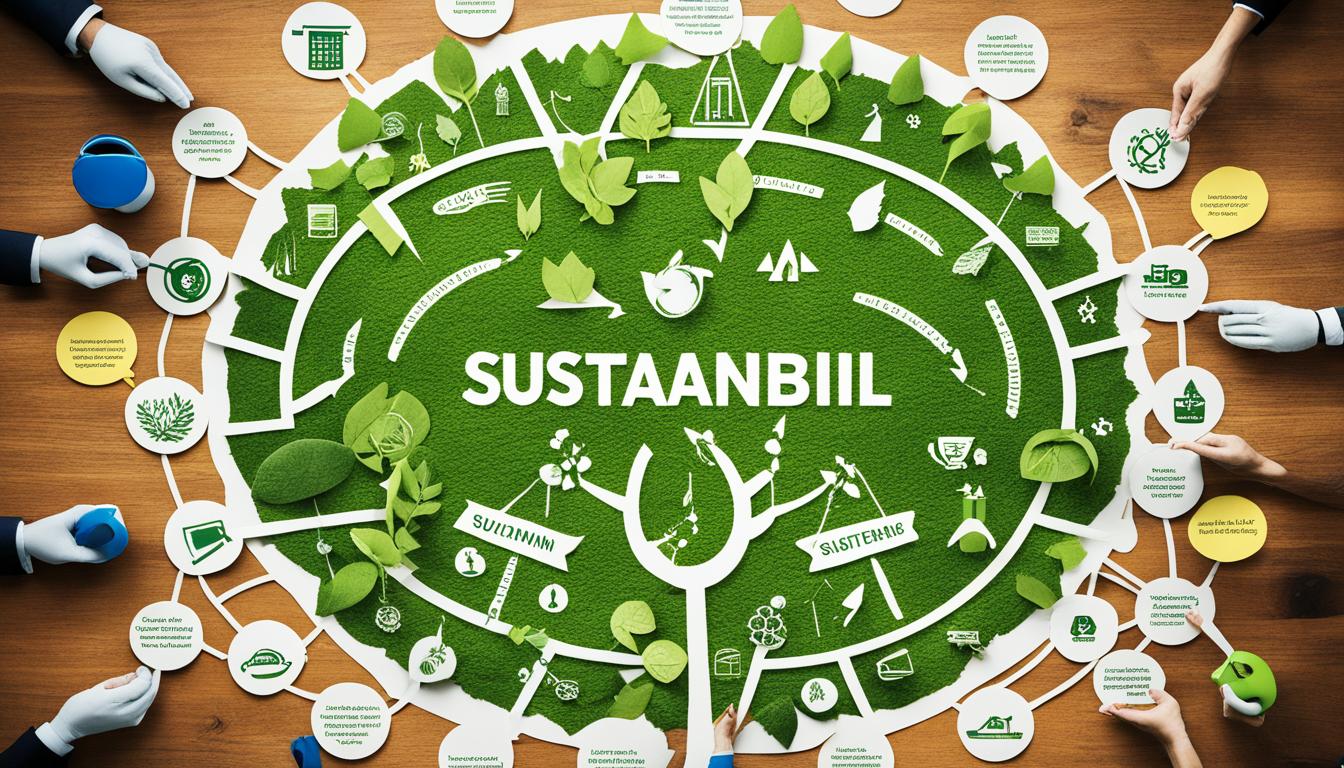
Sustainable Supply Chain Management is a strategic approach that focuses on integrating environmentally friendly practices, ethical sourcing strategies, and responsible supplier management into the entire supply chain. This approach aims to enhance efficiency, reduce environmental impact, and promote a greener future. According to recent studies and research, multinational corporations (MNCs) need to prioritize sustainability throughout their supply networks, addressing social and environmental responsibility at every level to mitigate financial and social risks.
Key Takeaways:
- Sustainable supply chain management integrates environmentally friendly practices and responsible supplier management.
- It aims to enhance efficiency, reduce environmental impact, and promote a greener future.
- Multinational corporations need to prioritize sustainability throughout their supply networks to mitigate risks.
- Addressing social and environmental responsibility in supply chains is crucial for long-term success.
- Strategic adoption of sustainable practices leads to improved financial performance and brand reputation.
Importance of Sustainable Supply Chains
Sustainable supply chains play a vital role in addressing pressing environmental and social issues. By adopting eco-friendly logistics, implementing green supply chain practices, and practicing environmentally conscious procurement, businesses can reduce their carbon footprint and minimize environmental degradation.
| Sustainable Practices | Benefits |
|---|---|
| 1. Eco-friendly logistics | – Reduces greenhouse gas emissions – Minimizes air and water pollution – Enhances operational efficiency |
| 2. Green supply chain practices | – Promotes resource conservation – Reduces waste generation – Encourages sustainable sourcing |
| 3. Environmentally conscious procurement | – Ensures ethical sourcing and fair labor practices – Improves working conditions – Supports responsible supplier management |
By considering ethical sourcing strategies, companies can improve working conditions, prevent forced labor, and promote fair labor practices. These sustainable practices in supply chains contribute to the overall well-being of workers, communities, and the planet.
Importance of Eco-friendly Logistics
Eco-friendly logistics focuses on minimizing the environmental impact of transportation and distribution processes. By embracing alternative transportation methods such as electric vehicles and optimizing logistics routes, businesses can significantly reduce carbon emissions and improve energy efficiency.
Benefits of Green Supply Chain Practices
Green supply chain practices prioritize resource conservation, waste reduction, and sustainable sourcing. Implementing these practices not only reduces environmental harm but also fosters long-term business sustainability by improving efficiency, reducing costs, and enhancing brand reputation.
Promoting Ethical Sourcing and Fair Labor Practices
Environmentally conscious procurement ensures that suppliers adhere to ethical standards, promoting fair labor practices and preventing exploitative working conditions. This commitment benefits not only workers but also helps companies build trust, attract socially responsible customers, and strengthen their brand image.
“Sustainable supply chains are a win-win for businesses and the environment. By adopting eco-friendly logistics, implementing green supply chain practices, and practicing environmentally conscious procurement, businesses can create a positive impact on the planet while enhancing their own operational efficiency and brand reputation.”
The Intersection of Sustainability and Supply Chains
There is a strong connection between sustainability and supply chains. Sustainable supply chain management focuses on reducing the carbon footprint of supply chains by implementing sustainable transportation solutions, such as utilizing electric vehicles or optimizing logistics routes. The concept of a circular economy supply chain is gaining traction, which emphasizes reducing waste, reusing materials, and promoting recycling throughout the supply chain. These practices not only reduce environmental impact but also improve resource efficiency and contribute to a more sustainable economy.
Reducing the carbon footprint in supply chains is crucial for mitigating the environmental impact of logistics operations. Embracing sustainable transportation solutions, such as electric vehicles and alternative fuels, can significantly reduce greenhouse gas emissions. By utilizing eco-friendly modes of transportation, businesses can minimize their carbon footprint while still meeting customer demands for timely and efficient deliveries.
In addition to sustainable transportation, the concept of a circular economy supply chain plays a vital role in reducing waste and promoting resource efficiency. This approach involves designing products with recyclability in mind, implementing effective recycling programs, and utilizing recycled materials in production. By closing the loop and creating a circular flow of resources, businesses can reduce the reliance on virgin materials, conserve natural resources, and minimize waste generation.
“The integration of sustainability principles into supply chains is essential for addressing environmental challenges and achieving a more sustainable future. By reducing the carbon footprint, embracing sustainable transportation, and adopting circular economy practices, businesses can contribute to a greener economy while still meeting the demands of the modern market.”
Ultimately, the intersection of sustainability and supply chains is crucial for creating a more environmentally conscious and resource-efficient future. By implementing sustainable transportation solutions and embracing circular economy principles, businesses can not only reduce their environmental impact but also improve their operational efficiency and enhance their brand reputation. Adopting these practices is an important step towards building a more sustainable and resilient supply chain.
Advantages of Sustainable Transportation in Supply Chains
When it comes to sustainable transportation solutions in supply chains, the benefits extend beyond environmental sustainability:
- Reduced fuel consumption and lower operating costs
- Enhanced operational efficiency through optimized logistics routes
- Improved brand reputation and increased customer loyalty
- Compliance with regulations and industry standards
- Access to government incentives and grants for sustainable practices
Benefits of a Circular Economy Supply Chain
Incorporating circular economy principles into the supply chain offers various advantages:
- Reduced reliance on virgin materials and lower resource consumption
- Minimized waste generation and landfill usage
- Cost savings through material reuse and recycling
- Decreased environmental impact and carbon emissions
- Enhanced supply chain resilience and adaptability
| Reducing Waste | Reusing Materials | Promoting Recycling |
|---|---|---|
| Minimizes landfill usage | Preserves natural resources | Conserves energy |
| Reduces environmental pollution | Lowers production costs | Reduces greenhouse gas emissions |
| Enhances brand reputation | Supports a circular economy | Encourages sustainable consumption |
Consumer and Investor Demands
With the increasing awareness of unethical practices in supply chains, such as child labor and forced labor, consumers are becoming more conscious about the social and environmental impacts of the products they purchase. As a result, responsible supply chain management has become a key consideration for consumers when choosing which companies to support.
Companies that actively manage the social and environmental impacts of their supply chains are more likely to attract and retain customers. By prioritizing sustainability and implementing responsible supply chain practices, businesses can enhance their brand reputation and appeal to the growing consumer demand for ethically produced goods.
Investors are also recognizing the importance of supply chain sustainability. They understand that companies with unsustainable practices face reputational and financial risks, and they prefer to invest in businesses that prioritize social and environmental responsibility. Investor preferences are shifting towards socially and environmentally sustainable investments, driving the need for businesses to demonstrate a commitment to responsible supply chains.
“The responsible supply chain is no longer just a nice-to-have; it’s a must-have. Consumers and investors alike are demanding transparency, ethical sourcing, and environmentally friendly practices. Businesses that fail to meet these demands risk losing customers and funding.”
To meet consumer and investor demands, companies must adopt responsible supply chain practices and communicate their efforts transparently. This includes implementing ethical sourcing strategies, ensuring fair working conditions, promoting sustainable production, and minimizing environmental impacts throughout the supply chain.
By aligning their supply chains with consumer demands for responsible products and investor preferences for ethical investments, businesses can secure their brand image, attract loyal customers, and unlock new investment opportunities.
The Importance of Responsible Supply Chains
Meeting consumer and investor demands for responsible supply chains goes beyond mere compliance with regulations. It reflects a genuine commitment to social and environmental sustainability, fostering a positive impact on workers, communities, and the planet as a whole.
| Consumer Demands | Investor Preferences | |
|---|---|---|
| Transparency | Consumers expect full transparency regarding the origins of products, ensuring no involvement of unethical practices in the supply chain. | Investors seek transparency in companies’ supply chain operations to assess potential risks and ensure alignment with ethical and sustainable practices. |
| Ethical Sourcing | Consumers favor products that are sourced ethically, ensuring fair treatment of workers and no exploitation. | Investors prioritize companies that demonstrate responsible sourcing practices, protecting against reputational and financial risks. |
| Environmental Impact | Consumers are increasingly concerned about the environmental impact of products, favoring companies that minimize their carbon footprint and promote sustainable production. | Investors consider companies’ environmental practices when evaluating long-term sustainability and resilience against climate-related risks. |
Climate Change and Global Disruption
The negative environmental impacts of supply chains, including greenhouse gas emissions and pollution, have significant consequences for climate change. As consumers become increasingly aware of these issues, they are more inclined to support businesses that prioritize sustainability. It is essential for companies to recognize the climate change impact of their operations and take proactive measures to reduce their carbon footprint.
Supply chain resilience is crucial in addressing the challenges posed by climate change and global disruptions. By building sustainable supply chains that consider the well-being of workers, communities, and the environment, businesses can adapt to changing circumstances and ensure the long-term viability of their operations.
“The future of supply chains depends on their ability to withstand the impacts of climate change and adapt to a rapidly changing world.”
A sustainable supply chain not only minimizes environmental impact but also ensures a more secure and resilient business model. By implementing climate change mitigation strategies such as renewable energy adoption, waste reduction, and efficient transportation systems, companies can contribute to a greener future while improving their overall operational efficiency.
Furthermore, sustainable supply chains that prioritize ethical sourcing and responsible supplier management help safeguard against the social and economic disruptions caused by climate change. By promoting fair working conditions, engaging with local communities, and supporting environmentally friendly practices, businesses can foster greater stability and resilience within their supply chains.
Benefits of Supply Chain Resilience
- Reduced vulnerability to climate-related disruptions
- Improved operational continuity and risk management
- Enhanced brand reputation and consumer trust
- Increased ability to adapt and innovate in response to changing market dynamics
- Closer collaboration with suppliers and stakeholders for shared resilience goals
By prioritizing supply chain resilience and taking decisive action to address the climate change impact, businesses can secure a competitive advantage while contributing to global sustainability efforts. The future success of supply chains lies in their ability to balance economic growth with environmental stewardship and social responsibility.

Increasing Legislation for Supply Chain Sustainability
Governments worldwide are enacting legislation to promote supply chain sustainability and ensure businesses uphold social and environmental practices. These regulations mandate companies to demonstrate their supply chain due diligence and report on their sustainability efforts. Compliance with such legislation is crucial for businesses to maintain ethical and legal supply chain practices.
For instance, the UK Modern Slavery Act requires companies to identify, prevent, and mitigate modern slavery in their operations and supply chains. This legislation aims to eradicate the exploitation of vulnerable individuals in supply chains. Likewise, California’s Transparency in Supply Chains Act mandates companies to disclose their efforts in eliminating human trafficking and modern slavery from their supply chains.
By implementing these regulations, governments are holding businesses accountable for fostering sustainable practices throughout their supply chains. This legislation drives transparency, discourages unethical practices, and encourages responsible sourcing, thereby promoting overall supply chain sustainability.

The UK Modern Slavery Act
The UK Modern Slavery Act, implemented in 2015, requires businesses with a global annual turnover of £36 million or more to publish an annual slavery and human trafficking statement. This statement outlines the steps taken to ensure that slavery and human trafficking are not taking place in the business or supply chain.
Companies are required to conduct due diligence, assess risks, and establish measures to prevent and address modern slavery. By adopting these practices, businesses contribute to the eradication of modern slavery and promote ethical sourcing strategies.
California’s Transparency in Supply Chains Act
California’s Transparency in Supply Chains Act, enacted in 2012, applies to retail sellers and manufacturers with annual worldwide gross receipts exceeding $100 million. These companies are required to disclose their efforts in eliminating slavery and human trafficking from their direct supply chains.
The act aims to raise awareness among businesses and consumers about modern slavery and human trafficking. By promoting transparency, companies can improve their supply chain practices, collaborate with suppliers to ensure ethical standards, and actively prevent these exploitative practices.
Technology and Data in Sustainable Supply Chain Management
Technology and data are indispensable tools in the realm of sustainable supply chain management. By harnessing the power of technology platforms and data analytics, businesses can gather valuable insights, enhance visibility into their supply chains, and effectively address the risks associated with negative environmental and social impacts.
One notable example of such technology is Sedex’s ethical data exchange platform. This platform enables businesses to access, analyze, and report on crucial supply chain information, including social and environmental performance. By leveraging the data provided by Sedex’s platform, companies can make informed decisions, design sustainable sourcing strategies, and actively monitor and improve their overall supply chain management practices.
Embracing technology-driven solutions facilitates a more transparent and accountable supply chain. It allows businesses to identify potential areas for improvement, optimize resource allocation, and assess the effectiveness of their sustainability initiatives. Additionally, it assists in establishing robust traceability processes, ensuring that companies can trace the origin of their products and materials while promoting responsible sourcing practices.
Benefits of Technology and Data in Sustainable Supply Chain Management:
- Enhanced data accuracy and real-time visibility across the supply chain
- Improved risk identification and mitigation strategies
- Optimized resource allocation and reduced wastage
- Increased collaboration and information sharing among stakeholders
- Streamlined reporting and compliance with regulations
By leveraging technological advancements and data-driven insights, businesses can build resilient, environmentally conscious supply chains that meet the demands of the modern world. By adopting sustainable supply chain management practices, companies can not only reduce their environmental impact but also contribute to the greater social and economic well-being of societies.
“Technology and data analytics empower businesses to make informed decisions, optimize processes, and drive positive change in sustainable supply chain management.”
| Technology and Data in Sustainable Supply Chain Management | Benefits |
|---|---|
| Enhanced data accuracy and real-time visibility across the supply chain | Allows businesses to make data-driven decisions and promptly respond to supply chain disruptions. |
| Improved risk identification and mitigation strategies | Enables businesses to identify potential risks and implement proactive measures to mitigate them. |
| Optimized resource allocation and reduced wastage | Helps businesses optimize resource usage, minimize waste, and achieve greater efficiency. |
| Increased collaboration and information sharing among stakeholders | Facilitates collaboration and transparency between supply chain partners, fostering sustainable practices. |
| Streamlined reporting and compliance with regulations | Allows businesses to efficiently track and report on their sustainability efforts, ensuring compliance with regulations. |
The integration of technology and data into sustainable supply chain management practices enables businesses to navigate the complexities of the modern world while working towards a greener and more responsible future.
MIT Sustainable Supply Chain Lab
The MIT Sustainable Supply Chain Lab is at the forefront of supporting organizations in improving logistics and supply chain operations, while prioritizing environmental and social sustainability. The lab conducts extensive research and develops initiatives aimed at revolutionizing supply chain practices. By blending academic expertise with practical application, the lab turns research outcomes into tangible solutions.
The research initiatives of the MIT Sustainable Supply Chain Lab encompass a diverse range of areas. Key focus areas include:
- Electrification of the supply chain to reduce carbon emissions and promote sustainable transportation
- Consumer-facing logistics sustainability to meet evolving consumer demands for eco-friendly products and services
- Carbon footprint reduction strategies to mitigate the environmental impact of supply chains
- Development of sustainable transportation solutions to enhance efficiency and reduce emissions
- Exploring circular supply chains that prioritize waste reduction, material reuse, and recycling
Through these research initiatives, the MIT Sustainable Supply Chain Lab aims to harness the potential of supply chains in achieving global sustainable development goals. By collaborating with industry-leading companies, institutions, and academics, the lab cultivates innovation and promotes continuous improvement in sustainable supply chain practices.
Image:
Conclusion
Sustainable supply chain management is a critical aspect of modern business operations, impacting environmental conservation, social well-being, and financial performance. By integrating sustainable practices throughout the supply chain, businesses can contribute to the achievement of global sustainability goals and build a greener future.
Adopting sustainable practices not only helps to reduce environmental impact and improve efficiency but also strengthens brand reputation and customer loyalty. Consumers are increasingly demanding responsible and sustainable products, which means businesses must prioritize sustainability to remain competitive in the market.
In addition, sustainable supply chain management attracts responsible investments, as investors are placing a greater emphasis on environmental, social, and governance (ESG) factors. By demonstrating a commitment to sustainable practices, businesses can enhance their appeal to socially conscious investors.
To drive positive change and build resilient, environmentally conscious supply chains, businesses should leverage innovative technologies, adhere to relevant regulations, and engage in collaborations with research institutions like MIT’s Sustainable Supply Chain Lab. Together, we can create a more sustainable and prosperous future for all.
FAQ
What is Sustainable Supply Chain Management?
Sustainable Supply Chain Management is a strategic approach that focuses on integrating environmentally friendly practices, ethical sourcing strategies, and responsible supplier management into the entire supply chain. This approach aims to enhance efficiency, reduce environmental impact, and promote a greener future.
How do sustainable supply chains contribute to environmental conservation?
By adopting eco-friendly logistics, implementing green supply chain practices, and practicing environmentally conscious procurement, businesses can reduce their carbon footprint and minimize environmental degradation. These sustainable practices in supply chains contribute to the overall well-being of workers, communities, and the planet.
What is the connection between sustainability and supply chains?
Sustainable supply chain management focuses on reducing the carbon footprint of supply chains by implementing sustainable transportation solutions, such as utilizing electric vehicles or optimizing logistics routes. The concept of a circular economy supply chain is gaining traction, which emphasizes reducing waste, reusing materials, and promoting recycling throughout the supply chain.
Why is meeting consumer and investor demands for responsible supply chains important?
Consumer awareness of unethical practices in supply chains, such as child labor and forced labor, has increased significantly. As a result, consumers are increasingly choosing to support companies that actively manage the social and environmental impacts of their supply chains. Similarly, investors are seeking socially and environmentally sustainable investments, considering the reputational and financial risks associated with unsustainable practices in supply chains.
How do supply chain practices impact climate change?
The negative environmental impacts of supply chains, including greenhouse gas emissions and pollution, contribute to climate change. Consumers are increasingly aware of these issues and are more likely to support businesses that prioritize sustainability. Additionally, supply chain resilience is essential in confronting the challenges posed by climate change and global disruptions.
What legislation exists for promoting supply chain sustainability?
Governments around the world are introducing legislation to promote supply chain sustainability and hold businesses accountable for their social and environmental practices. These regulations require companies to demonstrate and report on their supply chain due diligence. For example, the UK Modern Slavery Act mandates companies to identify, prevent, and mitigate modern slavery in their operations and supply chains.
How does technology and data play a role in sustainable supply chain management?
Businesses can use technology platforms and tools to gather data, increase visibility into their supply chains, and mitigate the risks associated with negative environmental and social impacts. Utilizing technologies and data-driven insights enables businesses to make informed decisions, design sustainable sourcing strategies, and improve overall supply chain management practices.
What is the MIT Sustainable Supply Chain Lab?
The MIT Sustainable Supply Chain Lab is dedicated to supporting organizations in improving logistics and supply chain operations while considering environmental and social sustainability. Their research initiatives focus on areas such as electrification of the supply chain, consumer-faced logistics sustainability, carbon footprint reduction, sustainable transportation, and circular supply chains.
Why is sustainable supply chain management important?
Sustainable supply chain management is a critical aspect of modern business operations, impacting environmental conservation, social well-being, and financial performance. Adopting sustainable practices throughout the supply chain not only supports the achievement of global sustainability goals but also strengthens brand reputation, meets consumer demands, and attracts responsible investments.