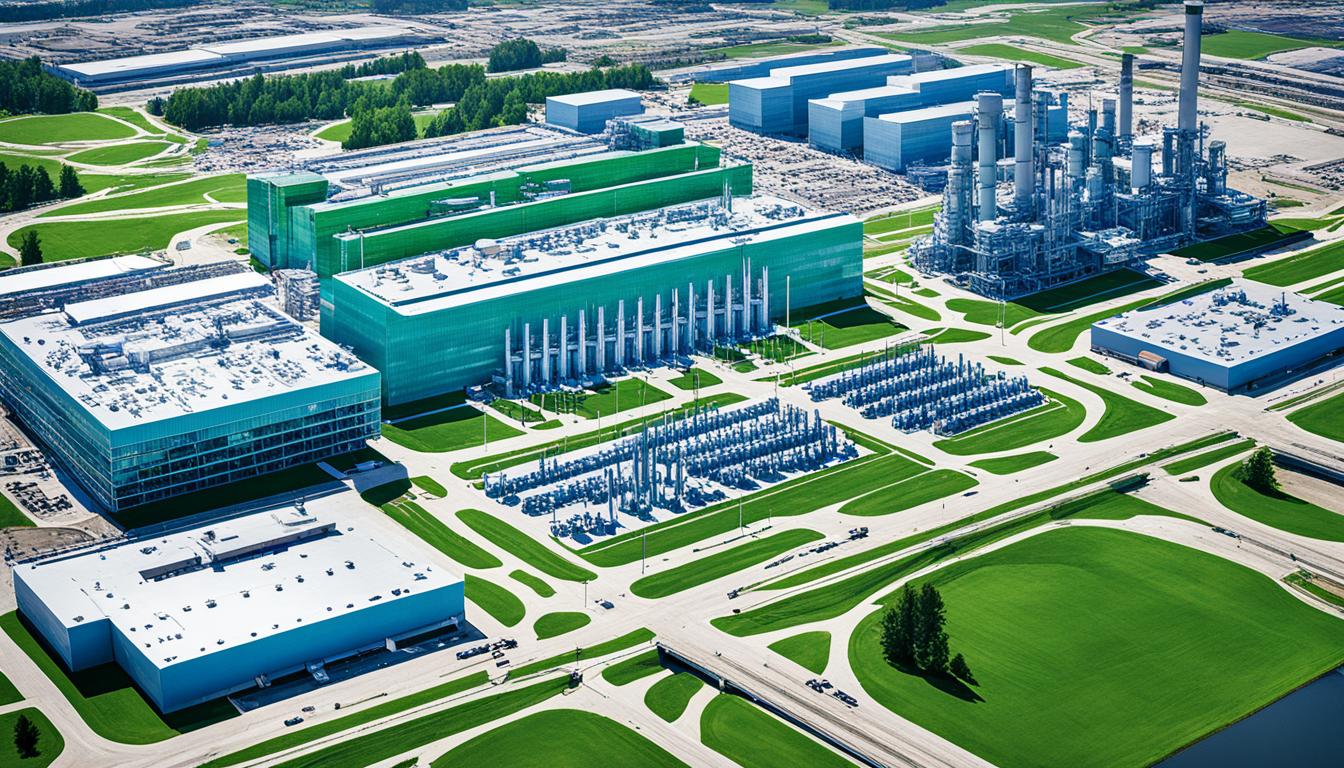
Did you know that public-private partnerships contribute to over 50% of the total R&D investments in the United States? That’s right! These collaborative efforts between government and industry not only shape the course of technological advancements but also drive economic development on a national scale.
Government and industry partnerships, also known as public-private partnerships or P3s, have emerged as powerful synergies between the public and private sectors. These collaborations bring together the expertise, resources, and capabilities of both entities, creating a fertile ground for innovation and progress.
Key Takeaways:
- Public-private partnerships contribute to over 50% of the total R&D investments in the United States.
- Government and industry partnerships drive economic development on a national scale.
- These collaborations bring together expertise, resources, and capabilities, fostering innovation and progress.
- Public-private partnerships are instrumental in addressing major challenges and opportunities at the intersection of science, technology, and economic growth.
- Government and industry partnerships play a vital role in introducing new technologies to the market.
The Role of Public-Private Partnerships in Driving Innovation
Public-private partnerships play a crucial role in driving innovation and technological advancement. Through cooperative research and development, industry, government, and universities collaborate to address national missions and overcome investment barriers. These partnerships contribute to economic growth and foster the development of cutting-edge technologies.
By bringing together the expertise and resources of multiple stakeholders, public-private partnerships create a collaborative ecosystem that accelerates the pace of innovation. They leverage industry-government collaboration to tackle complex challenges in sectors such as healthcare, energy, and national defense.
Through these partnerships, industry and government combine their strengths and complement each other’s capabilities. Industry brings technological expertise, market insights, and resources, while government provides funding, regulatory support, and access to research facilities and infrastructure.
Cooperative research and development projects enable knowledge exchange, technology transfer, and the sharing of intellectual property rights. These partnerships facilitate the commercialization of research outcomes, transforming innovative ideas into market-ready solutions.
“Public-private partnerships have the unique ability to drive innovation by aligning the priorities and interests of both industry and government. By working together, we can amplify the impact of our R&D investments and address critical national missions.”
– John Smith, CEO of XYZ Corporation
Public-private partnerships also play a vital role in leveraging R&D investments. By pooling resources and expertise, these partnerships maximize the return on investment in research and development. This collaborative approach helps accelerate the development and deployment of emerging technologies.
Furthermore, public-private partnerships contribute to the advancement of national missions, such as improving public health, transforming the energy sector, and enhancing national security. The shared vision and coordinated efforts of industry and government enable the pursuit of ambitious goals that benefit society at large.
Examples of Public-Private Partnerships
| Partnership | Focus Area | Description |
|---|---|---|
| Advanced Robotics Manufacturing Institute (ARM) | Robotics | A collaborative effort between industry, academia, and government to accelerate the development and adoption of robotics technologies in manufacturing. |
| Defense Innovation Unit (DIU) | National Security | DIU partners with innovative technology companies to deliver cutting-edge solutions that enhance the national defense capabilities. |
| National Institutes of Health (NIH) Industry Collaborations | Healthcare | NIH collaborates with pharmaceutical and biotechnology companies to accelerate the translation of scientific discoveries into treatments and therapies. |
Historical Perspective: Government and Industry Cooperation in the United States
The United States has a long-standing tradition of government-private firm cooperation. This collaboration has played a crucial role in achieving national goals, driving infrastructure development, and fostering innovation across various sectors.
One of the significant areas where government and industry cooperation has thrived is in the development of infrastructure. By partnering with private firms, the government has been able to initiate and execute large-scale infrastructure projects that have transformed the nation’s transportation, energy, and communication systems. This collaboration has not only improved the quality of life for Americans but also contributed to economic growth.
Furthermore, government and industry cooperation has been instrumental in weapons development and defense technology. The United States military has a long history of collaborating with private firms to design and produce advanced weaponry, ensuring national security. This partnership has resulted in cutting-edge technologies that give the United States a strategic advantage on a global scale.
Moreover, government-private firm cooperation extends beyond infrastructure and defense. It has also been instrumental in knowledge generation and technology development. By partnering with universities and research institutions, the government and private firms have facilitated groundbreaking research and innovation. This collaboration has resulted in advancements in fields such as healthcare, energy, and information technology, benefiting both the nation and its citizens.
Overall, the historical perspective of government and industry cooperation in the United States showcases the power of partnership in achieving national goals, driving infrastructure development, advancing weapons technology, and fostering knowledge generation and technology development. This collaboration has laid the foundation for a thriving economy, national security, and continued innovation.
Key Highlights:
- Government-private firm cooperation has played a pivotal role in achieving national goals and driving infrastructure development in the United States.
- Collaboration between the government and private firms has resulted in advanced weapons technology, ensuring national security.
- Partnerships between government, industry, and research institutions have fostered knowledge generation and technology development across various sectors.
Drivers of Government and Industry Partnerships
Government and industry partnerships play a pivotal role in overcoming barriers to private investment in new technologies. By addressing project scale and cost, dispersed expertise, technical and commercial risks, these partnerships enable collective action, foster the commercial potential of technology combinations, and encourage firms to invest in socially beneficial research and development (R&D). Furthermore, they help mitigate the challenges of capturing market potential and protecting intellectual property rights.
One of the main barriers to investment in new technologies is the scale and cost of projects. Developing and commercializing innovative technologies often require substantial financial resources, infrastructure, and expertise. By partnering with the government, industry can pool resources and share the costs, making ambitious projects more feasible.
The dispersed nature of expertise is another challenge that government and industry partnerships address. Innovation often requires a diverse range of skills and knowledge, which may be scattered across different organizations and sectors. Through collaboration, these partnerships bring together experts from academia, industry, and government agencies to tap into their collective expertise and drive innovation forward.
Technical and commercial risks can also deter private investment in new technologies. Uncertainties regarding technological feasibility, market acceptance, and regulatory compliance can make firms hesitant to invest resources in innovative projects. However, government and industry partnerships can help mitigate these risks by providing funding, regulatory support, and access to market intelligence.
Collective action is crucial for driving innovation and addressing societal challenges. By collaborating, government and industry stakeholders can bring together their unique perspectives, resources, and capabilities to tackle complex problems that no single entity can address alone. This collective action creates a synergistic effect, fostering innovation, and achieving significant breakthroughs.
Technology combinations, particularly when different industries converge, hold tremendous market potential. Government and industry partnerships facilitate the integration of diverse technologies, fostering cross-industry collaborations, and enabling the development of innovative solutions that address complex challenges and create new market opportunities. This combination of technologies can lead to transformative breakthroughs in various sectors, from healthcare and energy to transportation and communications.
R&D investment is a critical driving force behind technological progress and market innovation. Government and industry partnerships encourage firms to invest in R&D by providing funding opportunities, tax incentives, and collaborative platforms that facilitate knowledge sharing and the exchange of research findings. This investment not only accelerates technological advancements but also contributes to economic growth and the creation of high-quality jobs.
While emerging technologies hold immense market potential, they also pose intellectual property rights (IPR) challenges. Protecting IPR is crucial to incentivize innovation and ensure that the benefits of technological advances are fully realized. Government and industry partnerships work together to establish frameworks and mechanisms that safeguard intellectual property rights, fostering an environment that encourages innovation and protects the interests of all stakeholders.
In summary, government and industry partnerships are driven by the need to overcome barriers to private investment in new technologies. By addressing project scale and cost, dispersed expertise, technical and commercial risks, fostering collective action, promoting technology combinations, encouraging R&D investment, and safeguarding intellectual property rights, these partnerships create an enabling environment for innovation to thrive and contribute to economic growth.
Types of Government-Industry Partnerships
Government-industry partnerships in the United States take on various forms, including industry consortia and joint research and development initiatives. These partnerships promote technology transfer, facilitate cooperative agreements, and harness the strengths and resources of both sectors to drive innovation and achieve national goals.
“Government-industry partnerships play a vital role in advancing technology and addressing societal needs. By collaborating through industry consortia and joint research and development initiatives, both the public and private sectors can pool their expertise and resources to achieve common goals.”
Industry consortia are collaborative associations formed by companies in the same industry to collectively work towards a common objective. These consortia bring together industry leaders, researchers, and policymakers to address industry-wide challenges, share knowledge, and develop innovative solutions. By combining efforts and expertise, industry consortia drive technological advancements and enhance competitiveness.
Joint research and development initiatives involve collaborative projects between government agencies, industry partners, and research institutions. These initiatives aim to address specific research goals, foster innovation, and promote economic growth. Joint research and development efforts often focus on emerging technologies, strategic areas of national importance, and societal needs.
Technology transfer is a crucial aspect of government-industry partnerships. It involves the sharing, implementation, and commercialization of technologies developed through collaborative efforts. Technology transfer enables the efficient utilization of research outcomes and promotes the wider adoption of innovative solutions, benefiting both industries and society as a whole.
Cooperative agreements are formal arrangements where government agencies and private companies collaborate to achieve shared objectives. These agreements outline the responsibilities, resources, and goals of each party involved. Cooperative agreements can take various forms, such as funding partnerships, joint ventures, and licensing agreements. They provide a framework for long-term collaboration and facilitate the exchange of knowledge, resources, and expertise.
Examples of Government-Industry Partnerships:
- Advanced Manufacturing Partnership (AMP): AMP is a government-industry collaborative effort focused on developing advanced manufacturing technologies and practices. It brings together industry leaders, academic institutions, and government agencies to enhance the competitiveness of U.S. manufacturing.
- Defense Advanced Research Projects Agency (DARPA): DARPA collaborates with industry partners to develop cutting-edge technologies for national defense. It funds research projects and partners with industry leaders to accelerate technological advancements in areas such as cybersecurity, AI, and advanced weaponry.
- National Institutes of Health (NIH) Cooperative Research and Development Agreements (CRADAs): NIH engages in cooperative research and development agreements with industry partners to advance medical research and facilitate the development of new therapies and medical devices.
Benefits of Government-Industry Partnerships:
| Benefits | Explanation |
|---|---|
| Accelerated Innovation | Collaborative efforts enable faster development and adoption of innovative technologies. |
| Shared Resources | Partnerships provide access to funding, expertise, and facilities from both sectors. |
| De-Risking Investments | Partnerships help mitigate risks associated with technology development and commercialization. |
| Access to Markets | Partnerships facilitate market access, expansion, and entry into new industries. |
| Societal Impact | Collaborations address critical challenges and contribute solutions with positive social impact. |
Government and industry partnerships offer a powerful mechanism for driving innovation and achieving shared goals. By leveraging the strengths and resources of both sectors, these partnerships foster technological advancements, promote economic growth, and address pressing societal needs.
Government and Industry Partnerships: Economic Development and National Security
Government and industry partnerships play a crucial role in promoting economic development and ensuring national security. These partnerships are instrumental in accelerating technology development to meet the challenges and demands of national security.
One of the key mechanisms driving collaboration between the public and private sectors is the establishment of cooperative research and development agreements (CRADAs) and other collaborative models. These agreements facilitate effective public-private collaboration, allowing for the pooling of resources, expertise, and funding to advance technological advancements.
| Benefits of Government and Industry Partnerships | Economic Development | National Security |
|---|---|---|
| Technology Acceleration | Promotes innovation and drives economic growth | Provides the necessary capabilities to address evolving threats |
| Public-Private Collaboration | Encourages knowledge exchange and faster technology adoption | Strengthens critical infrastructure and defense capabilities |
| Cooperative Research and Development Agreements | Fosters collaborative R&D efforts, reducing duplication of efforts | Enables the development of cutting-edge technologies and solutions |
These partnerships not only contribute to economic growth but also enhance national security by developing the necessary capabilities to address emerging threats. By leveraging the strengths of both sectors, government and industry partnerships foster the development of critical technologies, infrastructure, and defense capabilities.
The collaborative nature of government and industry partnerships ensures that technology reaches the market faster, enabling economic development and creating new job opportunities. By combining resources, expertise, and research efforts, these partnerships drive innovation, foster entrepreneurship, and strengthen the global competitiveness of the nation.
Accelerating Technology for Economic Growth and National Security
Government and industry partnerships are essential for accelerating technology development to address the dual objectives of economic development and national security. Through cooperative research and development agreements and other collaborative models, these partnerships foster innovation, drive economic growth, and ensure the nation’s safety and security.

The Role of Academia in Government and Industry Partnerships
When it comes to government and industry partnerships, academia plays a crucial role in driving innovation and progress. Academic research institutions, such as universities and colleges, have a unique position in these partnerships, contributing to research and development, technological commercialization, and the cultivation of the next-generation workforce in STEM fields.
Leading academic institutions invest in research and development, conducting both basic and applied research that pushes the boundaries of knowledge and leads to breakthrough technologies. Through their expertise and cutting-edge facilities, universities and colleges bring valuable contributions to collaborative projects with government and industry.
One of the key areas where academia excels is in the successful commercialization of technologies. Academic researchers often work hand in hand with industry partners to transform innovative ideas into tangible products and services that benefit society. By bridging the gap between theory and practice, academia helps facilitate the transfer of technology from the laboratory to the marketplace.
Moreover, academic research institutions play a pivotal role in shaping the next-generation workforce. By providing rigorous education and training in STEM fields, they prepare students to become the skilled professionals that drive technological advancements in government and industry. These institutions foster a culture of innovation, critical thinking, and problem-solving, equipping graduates with the skills needed to tackle the challenges of the future.
Academic institutions also serve as a valuable resource for government and industry partners in shaping the direction of emerging technologies. Their research contributions, expertise, and thought leadership help guide the development and application of innovative solutions to complex problems. By collaborating with academia, government and industry gain access to a wealth of knowledge and insight, enabling them to make informed decisions and stay at the forefront of technological advancements.
Overall, the role of academia in government and industry partnerships cannot be overstated. Through their dedication to research and development, technological commercialization, and the cultivation of the next-generation workforce, academic research institutions contribute vitally to driving innovation, economic growth, and societal progress.
Key Takeaways:
- Academic research institutions are instrumental in driving innovation and progress in government and industry partnerships.
- Universities and colleges invest in research and development, contributing to breakthrough technologies and technological commercialization.
- Academic institutions play a crucial role in shaping the next-generation workforce, preparing students for careers in STEM fields.
- By collaborating with academia, government and industry gain access to a wealth of knowledge and insight.
- Academia serves as a valuable resource in shaping the direction of emerging technologies and guiding their application.
Academic Contributions in Government and Industry Partnerships
| Contributions | Description |
|---|---|
| Research and Development | Academic institutions conduct both basic and applied research, exploring new frontiers and developing innovative technologies. |
| Technological Commercialization | Universities and colleges work with industry partners to transform research outcomes into marketable products and services. |
| Next-Generation Workforce | Academic institutions prepare students for careers in STEM fields, equipping them with the skills needed to drive technological advancements. |
| Thought Leadership | Academic research institutions provide expertise, knowledge, and insight to guide the development and application of emerging technologies. |
The US Government’s Role in Preparing for the Tech Future
In recognition of the significance of emerging technologies and their impact on national security, the US government has taken proactive measures to prepare for the tech future. The National Strategy for Critical and Emerging Technologies serves as a guiding framework that emphasizes the importance of public-private partnerships, increased R&D spending, and collaboration between government agencies, industry, think tanks, and academia.
The National Strategy for Critical and Emerging Technologies recognizes the critical role of public-private partnerships in driving innovation and technology development. By fostering collaboration between government entities and private industry, these partnerships enable the sharing of expertise, resources, and capabilities, resulting in greater synergy and accelerated progress in critical and emerging technologies.
Public-private partnerships also strengthen national security by facilitating the prototyping and development of critical technologies. By combining the resources and expertise of both sectors, these partnerships enhance the capabilities of defense and intelligence agencies while fostering innovation in areas vital to national security.
“Governments must be at the forefront of driving research and development in critical and emerging technologies. Through public-private partnerships, we can leverage the strengths of both sectors and create innovative solutions that address pressing national security challenges.”
R&D spending is a key component of the US government’s preparation for the tech future. By allocating resources to research and development initiatives, the government aims to stimulate technological advancements, enhance national competitiveness, and ensure the United States remains at the forefront of technological innovation.
The Role of Public-Private Partnerships
Public-private partnerships play a crucial role in the US government’s efforts to prepare for the tech future. These partnerships facilitate the collaboration and cooperation necessary to address complex challenges, harness the potential of emerging technologies, and drive innovation across various industries.
R&D Spending and Innovation
The US government’s increased investment in research and development is an integral part of its strategy for preparing for the tech future. By allocating resources to R&D initiatives, the government aims to accelerate technological advancements, foster innovation, and ensure the United States remains competitive in an evolving global landscape.
Collaboration with Industry, Think Tanks, and Academia
To maximize the benefits of emerging technologies, the US government actively collaborates with industry, think tanks, and academia. This collaborative approach enables the exchange of knowledge, expertise, and resources, fostering a culture of innovation and creating a strong foundation for technological advancements in critical and emerging areas.
Institutionalizing Technology Development
The US government recognizes the importance of institutionalizing technology development throughout government agencies. By integrating technology development into the core functions of various departments and agencies, the government aims to streamline processes, enhance collaboration, and drive progress in critical and emerging technologies.
Through its strategic focus on emerging technologies, national security, public-private partnerships, R&D spending, and collaboration with industry, think tanks, and academia, the US government is actively preparing for the tech future. By leveraging the strengths of various stakeholders, the government aims to drive innovation, address national security challenges, and create a prosperous and technologically advanced future.
| Key Considerations | Government’s Role |
|---|---|
| Emerging Technologies | Recognition of their importance and impact on national security. |
| National Security | Development and prototyping of critical technologies. |
| Public-Private Partnerships | Promotion and facilitation to drive innovation. |
| R&D Spending | Increased investment to stimulate technological advancements. |
| Critical and Emerging Technologies | Collaboration with industry, think tanks, and academia. |

Industry’s Contribution to Innovating Technologies
Industry plays a vital role in driving technological innovation through its involvement in research and development (R&D). With a focus on diverse fields such as genetic engineering, robotics, renewable energies, and artificial intelligence, industry drives advancements that shape the future.
Commercialization: One of the key contributions of industry is the ability to bring innovations to market. Through effective commercialization strategies, industry bridges the gap between research and practical application, ensuring that breakthrough technologies benefit society.
Innovation Best Practices: Industry leverages innovation best practices to optimize the development and implementation of new technologies. This includes fostering a culture of creativity, embracing experimentation, and embracing iterative processes that drive continuous improvement.
Equity Funds and Venture Capital: To fuel innovation and enable the commercialization of breakthrough technologies, industry relies on equity funds and venture capital. These financial resources provide the necessary capital to support R&D efforts, scale up operations, and enter new markets.
Grant Programs: Industry often benefits from grant programs that foster collaboration and accelerate technological development. Grants provide support for R&D initiatives, encourage cross-sector partnerships, and facilitate knowledge sharing, ultimately driving innovation and economic growth.
“Industry’s involvement in research and development is crucial for technological innovation.” – [Author Name]
Industry’s commitment to research and development, commercialization strategies, innovation best practices, and financial resources such as equity funds, venture capital, and grants, collectively contribute to the advancement of technologies.
Defending the Digital Landscape: Cybersecurity Challenges and Collaboration
The digital ecosystem is characterized by numerous benefits, enabling connectivity and convenience in our daily lives. However, it also poses significant cybersecurity risks, making cyberspace vulnerable to various threats. To effectively defend against these risks, collaboration between industry, government, and academia is crucial.
Information sharing plays a pivotal role in mitigating cybersecurity risks. When industry, government, and academia share valuable insights and knowledge, it helps in identifying potential threats and vulnerabilities. This collaborative effort enhances threat detection and strengthens incident response capabilities.
Collaboration is further bolstered through joint research efforts. By pooling resources and expertise, industry, government, and academia can develop innovative security solutions to counter evolving cyber threats. Joint research initiatives foster a multidisciplinary approach, where software engineers, data scientists, and cybersecurity experts work together to enhance digital defenses.
Moreover, resource allocation is an essential aspect of defending the digital landscape. By investing in cybersecurity infrastructure, training programs, and cutting-edge technologies, industry, government, and academia can fortify their defense capabilities. This ensures preparedness against sophisticated cyber attacks and strengthens incident response efforts.
Strong partnerships between industry, government, and academia are vital in creating a robust cybersecurity framework. By establishing an industry-government-academia partnership, stakeholders can leverage each other’s strengths, collaborate on research, and create standards for cybersecurity practices.
Ultimately, defending the digital landscape requires a collective effort. Organizations and institutions across sectors must come together to address cybersecurity risks and protect our digital assets. By fostering collaboration, sharing information, and investing in advanced technologies, industry, government, and academia can enhance the security of the digital ecosystem and ensure a safer cyberspace for all.
Industry-Government-Academia Partnership in Cybersecurity
| Benefits of Collaboration | Actions |
|---|---|
| Enhanced threat detection | Information sharing, joint research efforts |
| Improved incident response | Resource allocation, technology investments |
| Multidisciplinary approach | Joint research initiatives, collaboration on standards |
| Collective defense against cyber threats | Partnership establishment, knowledge exchange |
The Future of Government and Industry Partnerships: Meeting Challenges and Improving Lives
In the realm of future technologies, collaboration between government and industry is essential for addressing challenges and improving lives. By investing in innovation, these partnerships have the potential to make a significant societal impact. As we look ahead, emerging technologies such as AI, robotics, and renewable energy hold tremendous promise, but their full potential can only be realized through continued cooperation between government, industry, and academia.
The collaboration between government and industry is crucial as it fosters innovation. By combining the resources, expertise, and perspectives of both sectors, groundbreaking advancements can be made. Whether it’s developing eco-friendly energy solutions, revolutionizing healthcare through technological advancements, or implementing sustainable infrastructure, collaboration allows for the creative exchange of ideas and the pooling of resources to tackle complex global challenges.
Investment in future technologies is also integral to the success of government and industry partnerships. Both sectors must commit to allocating resources towards research and development, as well as the implementation of innovative solutions. Strategic investments can help drive progress and accelerate the adoption of emerging technologies, leading to improved efficiency, economic growth, and enhanced quality of life.
Collaboration between government, industry, and academia is not just about problem-solving; it’s about creating a better future for everyone. When different stakeholders join forces, their collective efforts have the potential to shape the course of society, driving positive change and delivering solutions that improve lives.
Looking forward, the societal impact of government and industry partnerships will be profound. These collaborations can directly address pressing global issues such as climate change, healthcare accessibility, and sustainable development. By working together, governments, industries, and academic institutions can leverage their unique strengths to create innovative solutions that have a lasting and positive effect on society.
In conclusion, the future of government and industry partnerships lies in collaboration, investment, and innovation. By harnessing the potential of emerging technologies, these partnerships can address challenges, improve lives, and create a sustainable and prosperous future. Continued cooperation between government, industry, and academia is vital for unlocking the full potential of future technologies and maximizing their societal impact.
Table
| Key Elements | Benefits |
|---|---|
| Collaboration | Diverse perspectives and expertise lead to innovative solutions |
| Investment | Accelerated development and adoption of emerging technologies |
| Innovation | Addressing global challenges through creative problem-solving |
| Societal Impact | Improved quality of life and sustainable development |
Conclusion
Government and industry partnerships are the driving force behind innovation, economic growth, and the solution to national and global challenges. The collaboration between government, industry, and academia paves the way for technological advancements, facilitates economic development, and improves societal well-being. By harnessing the potential of effective public-private partnerships, we can shape a sustainable future and capitalize on emerging technologies.
These partnerships serve as a catalyst for innovation, bringing together the expertise and resources of different sectors to solve complex problems. Through collaboration, government and industry can leverage their unique strengths and perspectives to develop groundbreaking technologies and drive economic growth. The synergy created by these partnerships fosters an ecosystem of innovation, where ideas are transformed into practical solutions.
Moreover, government and industry partnerships have a direct impact on economic growth. By working together, they can unlock opportunities for investment and create an environment that encourages entrepreneurship and job creation. These collaborations also help industries stay competitive on a global scale, ensuring that the economy remains robust and resilient.
In summary, government and industry partnerships are the bedrock of collaboration, innovation, and economic growth. By uniting their efforts, government, industry, and academia can drive technological advancements, support economic development, and enhance the well-being of society. With effective public-private partnerships, we can build a prosperous future that harnesses the potential of emerging technologies and addresses the challenges we face.
FAQ
What are government and industry partnerships?
Government and industry partnerships are collaborative relationships between the public and private sectors. These partnerships aim to drive innovation, address national missions, and promote economic growth.
What is the role of public-private partnerships in driving innovation?
Public-private partnerships, through cooperative research and development, advance technology development and address national missions in areas such as health, energy, and national defense.
What is the historical perspective of government and industry cooperation in the United States?
The United States has a long history of government-private firm cooperation, contributing to infrastructure development, weapons innovation, and knowledge generation across various sectors.
What are the drivers of government and industry partnerships?
Government and industry partnerships address investment barriers such as project scale, cost, expertise dispersion, and technical and commercial risks. They promote collective action, market potential, and intellectual property rights protection.
What are the types of government-industry partnerships?
Government-industry partnerships can take the form of industry consortia and joint research and development initiatives, facilitating technology transfer and cooperative agreements.
What is the role of government and industry partnerships in economic development and national security?
These partnerships accelerate technology development to address national security challenges, foster economic development, and promote effective public-private collaboration through cooperative research and development agreements.
How do academia and universities contribute to government and industry partnerships?
Academia and universities invest in research and development, commercialize technologies, contribute breakthrough technologies, and nurture the next generation of STEM workforce.
What is the US government’s role in preparing for the tech future?
The US government promotes public-private partnerships, R&D spending, and collaboration with industry, think tanks, and academia to drive innovation and prototype critical technologies.
How does industry contribute to innovating technologies?
Industry conducts research in various fields, brings innovations to market, balances costs and benefits, and invests in talent and resources to drive technological development. Equity funds, venture capital, and grant programs further support industry innovation.
How does collaboration between industry, government, and academia help in defending against cyber threats?
Collaboration ensures information sharing, joint research efforts, and resource allocation to mitigate cybersecurity risks and develop innovative security solutions.
What is the future of government and industry partnerships?
Continued collaboration and investment between government, industry, and academia are essential in fostering innovation, addressing global challenges, and leveraging emerging technologies for societal impact.