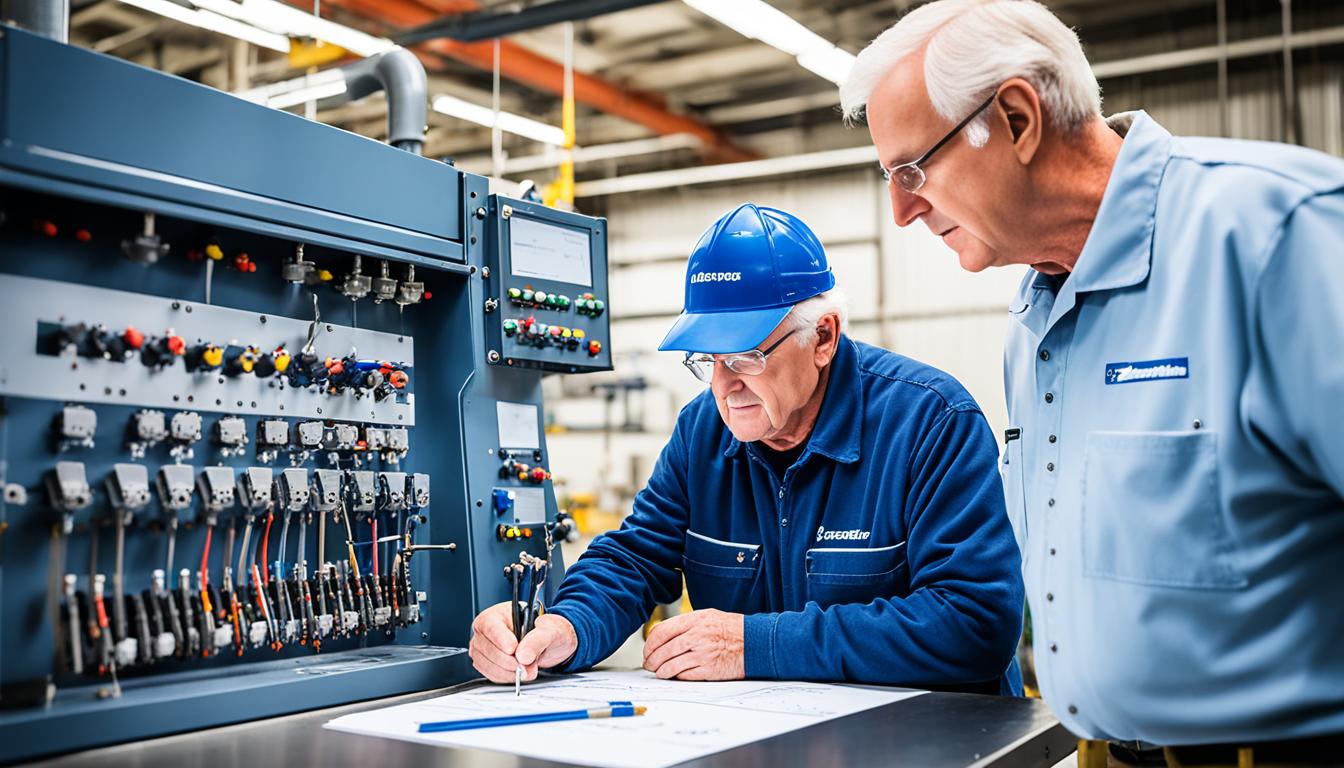
Did you know that mentorship programs in the manufacturing industry have been shown to reduce injuries, increase productivity and retention, and strengthen relationships between management and employees? It’s true! Mentorship programs have emerged as a powerful tool for driving employee development and creating a positive work environment in manufacturing companies. If you’re an HR manager in the manufacturing sector looking to implement an effective mentorship program, this article will guide you through the process step by step.
Key Takeaways:
- Mentorship programs in the manufacturing industry can reduce injuries, increase productivity and retention, and strengthen relationships between management and employees.
- Benefits of mentorship programs in manufacturing include increased safety awareness, enhanced employee productivity, improved job satisfaction, and the development of communication and leadership skills.
- HR managers can choose between 1-on-1 or group mentorship programs, and cohort or evergreen mentorship programs, based on their organization’s needs and goals.
- Naming the mentorship program, configuring the registration process, and launching and managing the program are critical steps for success.
- Specialized mentorship programs like the Women MAKE Mentorship Program and the Ohio Manufacturing Mentorship Program offer unique opportunities for women and students in the industry.
The Importance of Mentorship in Manufacturing
Mentorship programs in the manufacturing industry offer a wide range of benefits for both mentors and mentees. These programs play a crucial role in enhancing safety practices, improving productivity, and fostering a positive work environment.
Benefits of Mentorship Programs in Manufacturing:
- Safety Awareness and Practices: Mentorship programs help instill a culture of safety by providing guidance and support to newer employees. Mentors can share their experiences and knowledge, ensuring that safety protocols are followed diligently throughout the manufacturing process.
- Enhanced Employee Productivity: Having a mentor can significantly improve the productivity of mentees. Mentors can provide guidance on effective work techniques, time management, and problem-solving skills, enabling mentees to work efficiently and achieve their goals.
- Improved Job Satisfaction: Mentorship programs create a sense of belonging and professional growth, resulting in increased job satisfaction among employees. Mentees receive support and guidance, which boosts their confidence and motivation, ultimately leading to higher job satisfaction.
- Development of Communication Skills: Effective communication is essential in the manufacturing industry. Mentorship programs allow mentees to learn from experienced industry professionals, helping them develop strong communication skills needed to excel in their roles.
- Team Cohesion and Collaboration: Mentorship programs facilitate collaboration and teamwork among employees. Mentees have the opportunity to work closely with mentors, fostering relationships and creating a supportive work environment that encourages collaboration across the organization.
- Leadership Development: Mentorship not only benefits mentees but also helps mentors develop their leadership skills. Mentoring others allows experienced professionals to refine their leadership abilities and contribute to the growth and development of the next generation of manufacturing professionals.
In addition to these benefits, mentorship programs in manufacturing can be utilized for diversity, equity, and inclusion training, onboarding new hires, learning and development initiatives, as well as career development opportunities for employees at all levels.
These mentorship opportunities in the manufacturing industry have proven to be invaluable in driving success and growth within organizations. By implementing mentorship programs, companies can create a supportive and nurturing environment that fosters continuous learning, professional development, and overall employee well-being.
Choosing the Right Mentorship Program Format
When implementing a mentorship program in the manufacturing sector, you have the option to choose between a 1-on-1 or group program. Each format offers unique advantages and considerations that you should weigh when selecting the best fit for your organization.
1-on-1 Mentorship Program
An ideal option for individualized guidance and skill development, 1-on-1 mentorship pairs a seasoned employee with a less experienced one. This format allows for personalized attention and tailored guidance to address specific professional goals and challenges. It enables mentors to provide focused support, share industry insights, and facilitate career growth for their mentees.
Some benefits of a 1-on-1 mentorship program in the manufacturing sector include:
- Targeted skill development based on individual needs.
- Enhanced knowledge transfer from experienced mentors.
- Increased employee engagement and job satisfaction.
- Opportunities for mentees to build strong professional networks.
Group Mentorship Program
A group mentorship program fosters collaboration, team cohesion, and collective skill development among a group of employees. This format allows mentees to learn from multiple perspectives and benefit from shared experiences. Group mentorship promotes networking, peer learning, and the development of diverse skill sets that align with team objectives.
Key benefits of a group mentorship program for manufacturing professionals include:
- Building a sense of camaraderie and team spirit.
- Encouraging collaboration and knowledge sharing among mentees.
- Supporting the development of teamwork and communication skills.
- Creating opportunities for mentees to learn from different mentors.
While choosing a mentorship program format, consider the unique needs and goals of your organization. Assess the size, structure, and culture of your workforce to determine which format will best support your employees’ growth and development. Some organizations may even opt for a hybrid approach that combines elements of both 1-on-1 and group mentorship programs.
Ultimately, the success of your mentorship program in the manufacturing sector depends on aligning the program format with your organization’s objectives and fostering an environment that encourages mentorship and knowledge sharing.
Selecting a Cohort or Evergreen Program
In the world of manufacturing mentor programs, HR managers must make an important decision – cohort or evergreen? Choosing the right program format is crucial to ensure a successful mentorship experience for manufacturing professionals. Let’s explore the benefits and considerations of each option:
Cohort Programs
A cohort mentorship program runs for a fixed period of time and has a predetermined registration period. It is ideal for groups of new employees or interns who can benefit from a structured and time-bound mentorship experience. Cohort programs offer the following advantages:
- Structured and focused mentorship for a specific duration
- New employees or interns can learn together and build camaraderie
- Allows for targeted skill development and knowledge transfer
For example, a manufacturing company’s summer internship program may implement a cohort mentorship program to provide guidance and support to the interns during their tenure.
Evergreen Programs
An evergreen mentorship program, on the other hand, remains open at all times, allowing mentors and mentees to join or leave as needed. This format offers flexibility and ongoing support for manufacturing professionals. Key advantages of evergreen programs include:
- Continuous availability of mentorship opportunities
- Mentors and mentees can join or leave the program at their convenience
- Enables long-term relationships and career development
For instance, a manufacturing company seeking to provide mentorship opportunities to its employees throughout the year may opt for an evergreen program that accommodates their diverse needs and schedules.
When deciding between a cohort or evergreen program, HR managers should consider the organization’s hiring patterns and mentoring goals. A cohort program may be suitable for structured onboarding or internship initiatives, while an evergreen program offers ongoing support and professional development opportunities.
Now that we’ve explored the two program formats, let’s move on to the next section to delve into the naming and program details that can make your mentorship program stand out.
Naming and Details of the Mentorship Program
Choosing a clear and descriptive name for your mentorship program is crucial. A well-named program not only helps participants understand its purpose but also aligns their expectations accordingly. When creating your program, make sure to enter the program name in the designated field on your mentoring platform.
Alongside a clear name, it’s essential to provide detailed information about the program, including its goals and expectations. Communicating these details to potential participants helps them make informed decisions and ensures they have a clear understanding of what the mentorship program entails.
For example, if your mentorship program aims to enhance technical skills in manufacturing, you could name it “Technical Skills Development Initiative” or “Manufacturing Excellence Mentorship Program.” These names clearly convey the program’s purpose and attract participants who are specifically interested in improving their technical capabilities within the manufacturing sector.
Furthermore, include specific information about the program’s goals and expectations. Highlight the skills or knowledge participants can expect to gain through the program and outline the commitment required from both mentors and mentees. Clearly defining these details from the outset sets the foundation for a successful mentorship program.
Elements to Include in Program Details
| Program Details | Description |
|---|---|
| Program Name | A clear, descriptive name that conveys the program’s purpose. |
| Program Goals | Clearly defined objectives that participants should strive to achieve throughout the mentorship program. |
| Expectations | Specific commitments and responsibilities expected from mentors and mentees. |
| Duration | The length of the mentorship program, including the start and end dates. |
| Meeting Frequency | The frequency of mentor-mentee meetings, whether weekly, biweekly, or monthly. |
| Communication Channels | The platforms or tools participants will use to communicate with each other throughout the program. |
| Program Resources | Any materials, guides, or resources provided to support mentors and mentees in their journey. |
“A clear and descriptive name for a mentorship program not only attracts the right participants but also sets expectations for everyone involved.”
Configuring the Registration Questionnaire and Matching Rules
Configuring the registration questionnaire and matching rules is a crucial step in creating a successful mentorship program for manufacturing professionals. By customizing the registration process and implementing appropriate matching rules, HR managers can ensure that mentors and mentees are paired effectively based on their skills, experience, and goals.
When setting up the registration questionnaire, it’s important to gather relevant information that will help in the matching process. Consider including questions that address the specific needs and aspirations of the mentees, as well as the expertise and areas of interest of potential mentors. This will allow for better alignment and compatibility between mentors and mentees.
Once the registration questionnaire is designed, HR managers can focus on establishing matching rules that prioritize factors such as job titles, experience levels, and industry expertise. These rules should be set in a way that ensures mentees are paired with mentors who possess the knowledge and skills necessary to meet their developmental needs. Aligning mentors and mentees based on shared interests or career paths can further enhance the effectiveness of the pairing.
With the availability of modern mentoring platforms, configuring the registration questionnaire and matching rules has become easier than ever before. These platforms often provide user-friendly interfaces that allow HR managers to customize the registration process according to the unique requirements of their mentorship program. The platform may offer features such as dropdown menus, checkboxes, and text fields to easily collect the necessary information from participants.
The configuration options available on mentoring platforms not only allow for flexibility in designing the registration process but also enable HR managers to successfully match mentors and mentees based on the predetermined criteria. By leveraging these features effectively, HR managers can ensure that the mentorship program in the manufacturing industry is optimized to foster meaningful connections and facilitate valuable learning experiences.
When mentors and mentees are paired based on shared interests, expertise, and goals, they are more likely to establish a strong rapport and achieve meaningful outcomes. This, in turn, contributes to the overall success of the mentorship program and enhances the professional growth and development of manufacturing professionals.
| Mentorship Program Configuration Guidelines |
|---|
| 1. Customize the registration questionnaire to gather relevant information from participants |
| 2. Consider including questions that address the specific needs and aspirations of mentees and the expertise of potential mentors |
| 3. Set matching rules that prioritize factors like job titles, experience levels, and industry expertise |
| 4. Align mentors and mentees based on shared interests or career paths, if applicable |
| 5. Leverage modern mentoring platforms to easily configure the registration process |

Launching and Managing the Mentorship Program
Once you have set up the mentorship program, it’s time to launch and manage it effectively. Here are some essential steps to follow:
1. Turn on the Pairing Feature
On the mentoring platform, activate the pairing feature to pair mentors with mentees. This feature automates the matching process based on the preferences and criteria set during registration. By enabling this feature, you ensure that participants are paired up efficiently and begin their mentorship journey.
2. Customize Email Notifications
To keep participants informed and engaged, customize email notifications sent by the mentoring platform. These notifications can include reminders about upcoming meetings, important updates, and resources to support the mentorship relationship. Tailoring the notifications to align with your program’s branding and tone will enhance the overall experience for participants.
3. Set Rules for Program Access
Establish rules and guidelines for program access. Determine who can join the program, the eligibility criteria for mentors and mentees, and any prerequisites participants need to meet before they can enroll. These rules will help maintain program integrity and ensure that all participants are committed to the mentorship process.
4. Streamline Registration Process
Integrate the mentoring platform with your HR systems and employee directories, if possible. This integration will streamline the registration process by automatically populating employee information and reducing duplicate data entry. A seamless registration process encourages more employees to participate and simplifies the administrative tasks for HR managers.
5. Review Program Content
Before launching the program, thoroughly review all program content, including resources, agendas, and tasks. Ensure that the materials provided to mentors and mentees are comprehensive and aligned with the program’s objectives. By reviewing and refining the content, you can deliver a high-quality mentorship experience that meets the specific needs of your organization.
With these steps in place, you are ready to launch your mentorship program and facilitate valuable connections and growth opportunities within the manufacturing industry. Remember, ongoing program management and evaluation are crucial to its long-term success. Regularly monitor participant feedback, assess program outcomes, and make necessary adjustments to ensure continuous improvement.
| Benefits of Launching and Managing the Mentorship Program: |
|---|
| Increase employee engagement |
| Enhance knowledge sharing |
| Improve retention rates |
| Build a strong talent pipeline |
| Boost productivity and efficiency |
| Foster a positive work culture |
The Women MAKE Mentorship Program
The Manufacturing Institute’s Women MAKE Mentorship Program aims to close the gender gap in manufacturing by training female mentors and connecting them with younger women in the industry. This program provides professional guidance and career advancement opportunities for women in manufacturing. It also invites young women and girls interested in STEM and refugees seeking opportunities in the U.S. to join and inspire the next generation of female talent.
The Women MAKE Mentorship Program recognizes the importance of mentorship in empowering women and promoting diversity in the manufacturing sector. By pairing experienced female mentors with aspiring professionals, the program cultivates a supportive environment where knowledge-sharing and personal development thrive. Through the mentorship program, participants gain valuable insights, build strong networks, and enhance their skills to excel in their careers.
The Women MAKE Mentorship Program offers a structured framework that focuses on professional growth and leadership development. Mentees have the opportunity to learn from seasoned mentors who provide guidance, share industry knowledge, and offer valuable advice. The program also fosters a sense of community, allowing mentees to connect with like-minded individuals and build lasting relationships.
Participants in the Women MAKE Mentorship Program can explore various aspects of the manufacturing industry, ranging from operations and supply chain management to engineering and technology. The program emphasizes the importance of continuous learning and encourages mentees to expand their knowledge and expertise through training programs, workshops, and industry events.
The impact of the Women MAKE Mentorship Program extends beyond individual participants. By empowering women in manufacturing, the program contributes to a more inclusive and diverse industry. Through the mentorship program, participants become role models and advocates for gender equality, inspiring others to pursue careers in manufacturing.
“The Women MAKE Mentorship Program has been instrumental in my professional development. My mentor’s guidance and support have helped me navigate challenges, expand my network, and enhance my skills. I am grateful for the opportunities this program has provided.” – Sarah Johnson, Program Participant
Join the Women MAKE Mentorship Program today and become part of a community committed to empowering women in manufacturing. Together, we can bridge the gender gap and create a more inclusive and successful industry.
| Program Benefits | Program Details |
|---|---|
|
|
Ohio Manufacturing Mentorship Program for Students
The Ohio Manufacturing Mentorship Program offers valuable mentorship opportunities in manufacturing for 16- and 17-year-old students. This program aims to provide students with hands-on experience in the manufacturing industry, equipping them with the skills and knowledge necessary for a successful career in this field. Through training, mentorship, and guidance, the program fosters a passion for manufacturing among young individuals and helps them explore their potential in this industry.
Participating employers in the Ohio Manufacturing Mentorship Program play a crucial role in shaping the future of manufacturing. They provide students with the necessary training and education, ensuring compliance with state and federal laws governing the employment of minors. By offering mentorship and sharing their expertise, these manufacturers contribute to the development of the next generation of skilled professionals.
| Benefits of the Ohio Manufacturing Mentorship Program |
|---|
| 1. Hands-on experience: Students gain practical experience in the manufacturing industry, allowing them to apply their academic knowledge to real-world scenarios. |
| 2. Skill development: The program helps students develop essential skills such as problem-solving, teamwork, and communication, which are highly valuable in the manufacturing sector. |
| 3. Industry exposure: Students are exposed to various aspects of the manufacturing industry, providing them with a comprehensive understanding of different roles and opportunities. |
| 4. Mentorship and guidance: Through the program, students receive guidance from experienced mentors who share their knowledge, offer career advice, and help them navigate their professional journey. |
| 5. Career exploration: The program allows students to explore different career paths within the manufacturing industry, helping them make informed decisions about their future. |
The Ohio Manufacturing Mentorship Program serves as a valuable stepping stone for students interested in pursuing a career in manufacturing. By providing them with mentorship and training, the program equips students with the skills and experience needed to thrive in this dynamic industry.
Training and Tools for Mentors in manufacturing
Mentors play a crucial role in manufacturing mentorship programs, providing guidance and support to mentees. To ensure the success of these programs, mentors may need to undergo specific training and have access to the right tools. Training equips mentors with the necessary skills and knowledge to effectively guide their mentees, while tools enable them to navigate various aspects of the mentorship experience.
Training for mentors in manufacturing mentor programs typically involves reviewing mentorship guides and learning best practices. This training ensures that mentors understand their role, responsibilities, and the goals of the mentorship program. It may cover topics such as effective communication, leadership development, and fostering professional growth.
As part of the Ohio Manufacturing Mentorship Program, minor mentors have additional training requirements. They are responsible for providing training on general industry safety and health hazards, tool operation, and workplace safety to ensure a safe and secure mentoring environment. This training helps young mentors develop a comprehensive understanding of safety protocols and procedures.
Additionally, mentors may have access to various tools that enhance their mentoring capabilities. These tools can include online platforms or software that facilitate communication between mentors and mentees, track progress, and provide resources for mentorship activities. By utilizing these tools, mentors can effectively organize their mentoring sessions, set goals, and track the development of their mentees.
“Training is the key that unlocks the potential of mentors, empowering them to guide and inspire manufacturing professionals on their career journeys.”
Sample Mentorship Training Curriculum:
| Training Module | Topics Covered |
|---|---|
| Mentorship Fundamentals | Understanding the role of a mentor, setting expectations, effective communication, establishing trust |
| Leadership Development | Building leadership qualities, motivating mentees, providing constructive feedback, guiding career growth |
| Industry Knowledge | Understanding manufacturing processes, industry trends, best practices, and safety protocols |
| Professional Development | Developing mentoring skills, active listening, goal setting, time management, conflict resolution |
Providing mentors with comprehensive training and the necessary tools not only sets them up for success but also enhances the overall effectiveness of manufacturing mentorship programs. By investing in mentorship training and resources, organizations can foster a culture of continuous learning and professional development, while empowering mentors to guide and support future manufacturing professionals.

Getting Started with a Mentorship Program in Manufacturing
Are you an HR manager interested in creating a mentorship program in the manufacturing sector? Here’s how you can get started:
1. Connect with Your Local School District
Reach out to your local school district to explore mentorship opportunities in manufacturing. Collaborating with educational institutions helps bridge the gap between students and industry professionals, providing valuable mentorship experiences for aspiring manufacturing professionals.
2. Utilize a Mentoring Platform
Consider using a mentoring platform to connect with potential mentors and mentees within the manufacturing sector. These platforms provide a streamlined approach to matching participants based on their interests, skills, and goals. Additionally, they offer resources and tools to facilitate effective mentoring relationships.
3. Follow Guidelines and Checklists
Ensure you follow the relevant guidelines and checklists provided by the specific mentorship program or platform you’re using. These guidelines will assist you in structuring your mentorship program effectively, ensuring compliance with all applicable laws and regulations.
4. Emphasize Compliance
Compliance is essential when implementing a mentorship program, particularly when it involves the employment of minors. Familiarize yourself with the laws and regulations regarding mentorship programs and ensure that all necessary permissions and safeguards are in place.
Conclusion
Mentorship programs in the manufacturing industry are a valuable tool for employee development, increasing safety awareness, and improving overall productivity. By following the steps outlined in this guide, HR managers can create effective mentorship programs that yield positive results. Choosing the right program format, configuring the registration process, and effectively launching and managing the program are key factors to consider for success.
In addition to these general guidelines, specialized mentorship programs like the Women MAKE Mentorship Program and the Ohio Manufacturing Mentorship Program offer unique opportunities for women and students in the manufacturing industry. These programs provide tailored support and guidance to underrepresented groups, and help foster a diverse and inclusive work environment.
Implementing mentorship programs in manufacturing companies can unlock growth opportunities and create a positive work environment. By investing in mentorship for manufacturing professionals, organizations can strengthen relationships between managers and employees, enhance skills development, and ultimately drive business success.
FAQ
What are the benefits of mentorship programs in the manufacturing industry?
Mentorship programs in manufacturing can increase safety awareness, enhance employee productivity, improve job satisfaction, develop communication and leadership skills, foster team cohesion, and support diversity and career development.
What program format options do HR managers have when implementing a mentorship program in manufacturing?
HR managers can choose between a 1-on-1 mentorship program, which pairs a seasoned employee with a less experienced one, or a group mentorship program that fosters skill development and team cohesion among a group of employees.
What is the difference between a cohort and evergreen mentorship program in manufacturing?
A cohort mentorship program runs for a fixed period of time and has a fixed registration period, making it suitable for groups of new employees or interns. An evergreen mentorship program remains open at all times, allowing mentors and mentees to join or leave as needed.
How important is choosing a descriptive name for a mentorship program in manufacturing?
Choosing a clear and descriptive name for a mentorship program helps participants understand its purpose and align their expectations. It also helps to enter the program name in the designated field on the mentoring platform and provide program details, such as goals and expectations.
What should HR managers consider when configuring the registration questionnaire and matching rules?
HR managers should customize the registration questionnaire to gather relevant information for matching mentors and mentees. They should also set matching rules that prioritize factors like job titles or experience levels to ensure compatibility.
How can HR managers launch and manage a mentorship program in manufacturing?
HR managers can launch the program by turning on the pairing feature on the mentoring platform, customizing email notifications, and setting rules for program access. They can also integrate with HR systems and employee directories to streamline the registration process.
What is the Women MAKE Mentorship Program in manufacturing?
The Women MAKE Mentorship Program aims to close the gender gap in manufacturing by training female mentors and connecting them with younger women in the industry. It provides professional guidance, career advancement opportunities, and inspires the next generation of female talent in manufacturing.
What is the Ohio Manufacturing Mentorship Program for students?
The Ohio Manufacturing Mentorship Program allows 16- and 17-year-old students to gain experience in the manufacturing industry. It provides training, mentorship, and guidance to students interested in pursuing a career in manufacturing.
Do mentors in manufacturing mentorship programs need training?
Yes, mentors in manufacturing mentorship programs may need to undergo training to ensure a successful mentoring experience. Training typically includes reviewing mentorship guides and learning best practices, and in some cases, mentors may need to provide training on specific industry safety and health hazards.
How can HR managers get started with a mentorship program in manufacturing?
HR managers can connect with their local school district or use a mentoring platform to find interested participants. They should follow the guidelines and checklists provided by the specific program or platform and ensure compliance with all laws and regulations regarding mentorship programs and employment of minors.
What are the benefits of mentorship programs in manufacturing?
Mentorship programs in manufacturing can have a positive impact on employee development, safety, and productivity. By implementing mentorship programs, manufacturing companies can unlock growth opportunities and foster a positive work environment.