
Did you know that unions play a central role in shaping job quality and empowering workers in industries like construction and manufacturing? Labor unions have a significant impact on employee rights, workplace training, and labor-management relations, contributing to a more skilled and satisfied workforce.
Key Takeaways:
- Unions advocate for fair pay, benefits, and working conditions, attracting and retaining skilled workers.
- They contribute to the training and development of the workforce needed for new industries.
- Labor unions foster labor-management partnerships that prioritize job quality and worker empowerment.
- By prioritizing worker empowerment and unionization, employers enhance productivity and economic growth.
- The government’s support for union involvement in workforce development is crucial for building a strong and equitable workforce.
Investing in America and Growing the Economy
The Biden-Harris Administration is committed to investing in America and supporting the growth of 21st-century industries, such as semiconductors and clean energy. This economic vision aims to deliver strong, stable, sustainable, and shared economic growth.
One of the key strategies to achieve this vision is through investments in constructing new manufacturing facilities. These investments have already increased, and the Administration expects them to create more than a million jobs across industries like manufacturing and construction over the next decade.
By focusing on job creation, the Biden-Harris Administration aims to generate opportunities for individuals and communities that have been left behind. The goal is to grow the economy from the middle out and bottom up, ensuring that the benefits of economic growth are shared by all.
Note: The table presents the expected investments in 21st-century industries and the corresponding job creation.
| Industry | Investment | Expected Job Creation |
|---|---|---|
| Semiconductors | $50 billion | 100,000 jobs |
| Clean Energy | $100 billion | 500,000 jobs |
| Manufacturing | $300 billion | 800,000 jobs |
By investing in America and supporting these industries, the Biden-Harris Administration aims to create a thriving economy that provides opportunities for job growth, innovation, and sustainable development.
The Importance of Job Quality
The Biden-Harris Administration recognizes that job quality plays a crucial role in attracting and retaining workers. When employers prioritize job quality, it leads to a more satisfied and productive workforce. This section explores the various aspects of job quality, including fair pay, benefits, and working conditions, and how they contribute to the overall success of businesses and the economy.
Fair Pay
Fair pay is one of the key factors in job quality. When workers are compensated adequately for their skills and contributions, they feel valued and motivated to perform at their best. Fair wages not only help attract skilled workers but also reduce turnover, as employees are less likely to seek better-paying opportunities elsewhere. This ultimately leads to a more stable workforce and higher productivity.
Benefits
Providing comprehensive benefits such as healthcare, retirement plans, and paid leave is another vital aspect of job quality. These benefits not only support the well-being of employees but also contribute to their job satisfaction and overall work-life balance. Companies that offer attractive benefits packages are more likely to attract and retain high-quality workers, creating a competitive advantage in the labor market.
Working Conditions
Quality working conditions are essential for the physical and mental well-being of employees. Safe and comfortable work environments promote job satisfaction, reduce stress levels, and enhance overall productivity. By investing in creating a positive workplace culture and ensuring proper health and safety measures, employers can attract and retain talented individuals who value their well-being.
Prioritizing job quality, including fair pay, benefits, and working conditions, also sends a strong message to potential employees about the organization’s values and commitment to its workforce. When companies demonstrate their dedication to employee empowerment and well-being, they become more attractive to job seekers who prioritize job quality.
Overall, improving job quality has a positive impact on both workers and the economy. It provides opportunities for individuals to achieve economic stability and upward mobility, ultimately contributing to economic growth and prosperity.
Challenges in Job Quality
Decades of offshoring, wage stagnation, and anti-union activity have presented significant challenges to job quality, particularly in the construction and manufacturing industries. These industries have been hit hard by the negative effects of these factors, leading to detrimental consequences for workers and their overall job satisfaction.
In the construction industry, trainees face a myriad of issues that impact job quality. Unpredictable schedules make it difficult for workers to plan their personal lives and can lead to excessive fatigue and burnout. Additionally, low pay and poor management practices further exacerbate the problem, creating an environment of frustration and discontent. Insufficient training time also hampers skill development, hindering career growth and limiting opportunities for advancement.
The challenges in the manufacturing industry are equally concerning. Hiring difficulties have emerged as a consequence of offshoring, making it challenging for companies to attract skilled workers and fill essential positions. Furthermore, the loss of institutional and technical knowledge due to job cuts and downsizing has further strained the industry’s ability to maintain a competent workforce.
The impact of reduced union density cannot be underestimated, as it directly correlates with lower job quality. Anti-union activity has eroded the collective bargaining power that unions provide, resulting in weakened worker protections and a diminished ability to negotiate for better wages, benefits, and working conditions.
Addressing these challenges is vital for the well-being of workers and the sustainability of industries. It requires a comprehensive approach that prioritizes job quality, enhances worker rights, and addresses the underlying issues of offshoring and anti-union activity. By doing so, we can create an environment that fosters growth and stability, ensuring that the construction and manufacturing industries provide fulfilling and rewarding careers for all those involved.
Sources:
- The Role of Unions in Workforce Development: A Comprehensive Analysis
- Economic Impact of Offshoring on Job Quality in the Construction Industry
- Addressing Wage Stagnation in the Manufacturing Sector: A Comparative Study
Unions’ Role in Workforce Development
Unions play a crucial role in developing and training the workforce needed for new industries. Through initiatives like apprenticeships and industry-specific training programs, unions contribute to the overall growth and development of the workforce.
Apprenticeships, which are often sponsored by unions, offer a valuable pathway for individuals to gain industry-specific skills and knowledge. These programs provide hands-on training and mentorship, enabling workers to acquire the expertise necessary to excel in their respective fields.
In addition to training programs, unions also prioritize labor-management partnerships that focus on job quality and worker empowerment. These partnerships allow for collaboration between employers and unions, leading to the implementation of policies and practices that enhance the well-being and job satisfaction of workers.
“Unions play a central role in ensuring that workers have a voice in the workplace and receive fair treatment. By fostering labor-management partnerships, unions help create a work environment that values workers’ contributions and supports their professional growth.”
By investing in the development and well-being of the workforce, unions contribute to industry growth and the creation of lasting, durable jobs. The skills and knowledge gained through union-sponsored training programs and labor-management partnerships contribute to the overall success and productivity of the workforce.
Furthermore, unions’ involvement in workforce development sends a positive message to potential employees about an employer’s commitment to job quality and workers’ well-being. This can attract skilled workers who value job security, fair treatment, and opportunities for advancement.
| Benefits of Unions in Workforce Development | Examples |
|---|---|
| Enhanced industry-specific training | Union-sponsored apprenticeships provide specialized training tailored to the needs of specific industries, equipping workers with the skills necessary to succeed. |
| Labor-management partnerships | Collaborative efforts between employers and unions foster job quality, worker empowerment, and the implementation of industry best practices. |
| Attraction of skilled workers | Unions’ focus on job quality and worker well-being can attract skilled workers who value fair treatment and opportunities for growth. |
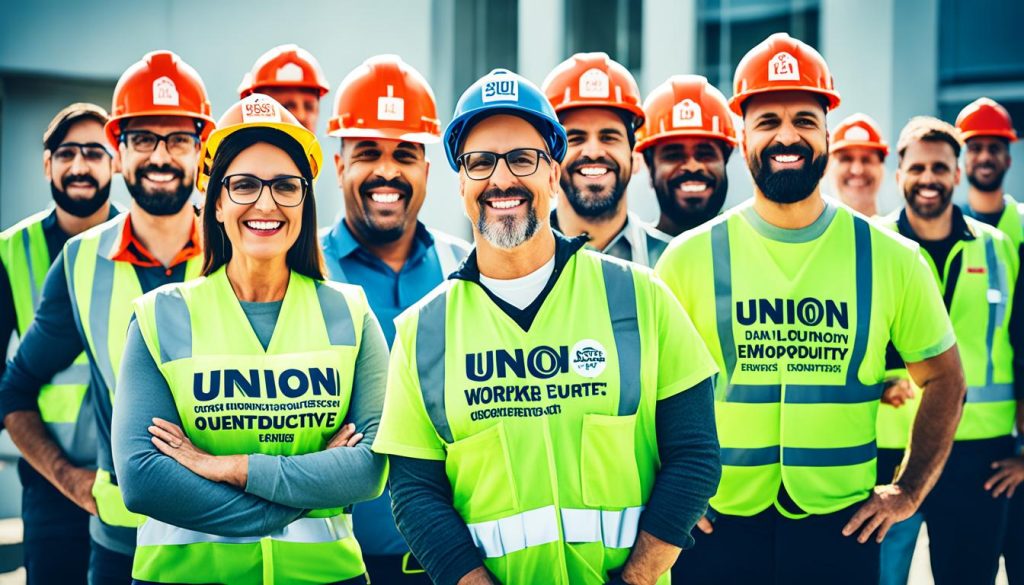
Overall, unions provide vital support in developing the workforce and ensuring its readiness for new industries. Through their initiatives, partnerships, and commitment to job quality, unions contribute to industry growth, worker empowerment, and the creation of lasting, durable jobs.
Union-Management Apprenticeship Programs
Union-sponsored and joint labor-management apprenticeship programs provide crucial pathways to good, middle-class jobs, offering comprehensive training while promoting diversity in the workforce. These programs, supported by unions and employers working together, yield numerous benefits for apprentices, industries, and society as a whole.
Studies have consistently shown that union-employer apprenticeship programs account for a significant majority of construction trade apprenticeships. These programs ensure that apprentices receive high-quality training and mentorship, fostering their development into skilled professionals. Graduates of union-sponsored apprenticeships demonstrate higher graduation rates compared to nonunion programs, attesting to the effectiveness of their training approaches.
One notable advantage of union-sponsored apprenticeships is the resulting higher wage rates for apprentices upon completion. By advocating for fair compensation, unions contribute to the establishment of industry standards that ensure apprentices are adequately rewarded for their dedication and hard work.
Moreover, labor-management partnerships play a pivotal role in promoting equality and diversity within apprenticeship programs. These partnerships provide opportunities for underrepresented groups, such as women and individuals from diverse racial and ethnic backgrounds, to access apprenticeships and pursue careers in traditionally male-dominated industries. Joint union-employer programs have proven particularly effective in increasing the representation of these groups, fostering greater inclusion and creating a more diverse workforce.
Key Benefits of Union-Management Apprenticeship Programs:
- Higher graduation rates compared to nonunion programs
- Increased wage rates for apprentices
- Expanded diversity and inclusion in the workforce
By offering comprehensive training, ensuring fair wages, and promoting diversity, union-sponsored and joint labor-management apprenticeship programs are instrumental in fostering the growth of skilled workers and creating sustainable, middle-class employment opportunities.
| Union-Sponsored Apprenticeship Programs | Nonunion Programs |
|---|---|
| Higher graduation rates | Lower graduation rates |
| Increased wage rates | Lower wage rates |
| Greater diversity and inclusion | Limited representation of underrepresented groups |
Unions and Workplace Safety
Ensuring workplace safety is a top priority for unions, who play a critical role in promoting compliance with Occupational Safety and Health Administration (OSHA) standards. Studies have consistently shown that unionized worksites experience lower rates of OSHA violations compared to nonunionized worksites.
One study conducted by the University of California, Berkeley found that unionized workplaces had 30% fewer OSHA violations per inspection than nonunionized workplaces. This significant difference can be attributed to the proactive safety measures and training programs implemented by unions to protect their members.
During the COVID-19 pandemic, unionized workplaces have demonstrated their commitment to workplace safety by reporting lower infection rates. A study conducted by the National Bureau of Economic Research found that union representation was associated with a 30% reduction in COVID-19 infection rates among workers.
Unionized workplaces were more likely to implement safety measures recommended by health authorities, such as mask mandates and physical distancing protocols. These measures not only protected workers from contracting and spreading COVID-19 but also contributed to lower infection rates within unionized workplaces.
Moreover, industries with high unionization rates, such as coal mining, have shown lower rates of traumatic injuries and fatalities. According to a study published in the American Journal of Industrial Medicine, unionized coal mines experienced significantly fewer severe injuries and fatalities compared to nonunion mines.
Overall, the involvement of unions in promoting workplace safety and OSHA compliance has proven to be instrumental in protecting workers’ health and well-being. Unionized workplaces consistently demonstrate lower rates of OSHA violations, decreased COVID-19 infection rates, and reduced incidents of traumatic injuries and fatalities, making them safer environments for employees.
Unionized Worksites and OSHA Violations
| Worksites | Unionized | Nonunionized |
|---|---|---|
| Number of OSHA Violations | Less than nonunionized | Higher than unionized |
| Percentage Reduction | 30% | N/A |
Union Contracts and Wage Standards
Unions play a pivotal role in establishing fair wage standards and protecting workers from wage theft and labor violations. Through the negotiation of union contracts, workers can secure contractually guaranteed wages, ensuring they receive fair compensation for their work.
One of the key benefits of unions is their ability to establish grievance and arbitration processes. These mechanisms provide workers with avenues to address and remedy wage violations, holding employers accountable for any wage theft or non-compliance with labor standards.
Studies have consistently shown that higher unionization rates are associated with fewer labor violations, including wage violations. Unions serve as a powerful force in reducing the incidence of wage theft and protecting workers’ rights.
Furthermore, unions contribute significantly to addressing the racial wage gap. Black workers, who are more likely to be represented by a union, experience larger wage increases through unionization. By advocating for equal pay and leveling the playing field, unions help shrink the racial wage gap and promote fairness in the workplace.
It’s important to note that unionization also benefits women. Unionized women typically earn higher hourly wages compared to their nonunionized counterparts, highlighting the positive impact of unions on gender pay equity.
| Union Contracts and Wage Standards | |
|---|---|
| Reducing Wage Theft | Union contracts provide contractually guaranteed wages, reducing the incidence of wage theft. |
| Remedy for Violations | Unions establish grievance and arbitration processes to combat and remedy wage violations. |
| Racial Wage Gap | Unionization contributes to shrinking the racial wage gap, benefiting Black workers. |
| Gender Pay Equity | Unionized women earn higher hourly wages compared to nonunionized women. |
Union Contributions to Workforce Development Partnerships
Unions play a crucial role in fostering workforce development partnerships by actively collaborating with employers, community colleges, and community-based organizations. Through their involvement, unions contribute valuable insights and resources that enhance the effectiveness of these partnerships. With their extensive experience and knowledge, unions play leadership roles in initiating collaborative efforts and ensure that workforce development efforts align with the needs of both workers and industries.
One way unions contribute to workforce development partnerships is by providing customized training and apprenticeship programs. These programs are designed to meet the specific needs of industries, ensuring that workers receive the necessary skills to thrive in their respective fields. By offering industry-specific training, unions help bridge the skills gap and ensure a well-prepared workforce.
Additionally, unions serve as reliable sources of industry information, providing valuable insights into labor market trends, job requirements, and industry forecasts. This information is crucial for employers, community colleges, and training organizations to develop programs that address current and future workforce needs. By sharing their industry knowledge, unions enable workforce development partnerships to make informed decisions and implement targeted initiatives.
Unions also play a vital role in facilitating funding for workforce partnership activities. Through their financial contributions, unions help support training programs, apprenticeships, and other initiatives aimed at improving job quality and enhancing worker skills. Their financial support ensures the sustainability and success of these partnerships, benefiting both workers and industries.
Furthermore, unions convene workers from both unionized and nonunionized backgrounds to promote training, development, and job quality. By bringing together workers in a collaborative environment, unions create opportunities for knowledge sharing and skill-building. These initiatives contribute to a stronger and more diverse workforce, resulting in improved job quality and enhanced industry performance.
| Ways Unions Contribute to Workforce Development Partnerships | Benefits |
|---|---|
| Providing customized training and apprenticeship programs | – Bridge the skills gap – Enhance industry-specific knowledge |
| Sharing industry information | – Inform decision-making – Address current and future workforce needs |
| Facilitating funding for workforce partnership activities | – Ensure sustainability of initiatives – Support training programs and apprenticeships |
| Convening workers to promote training, development, and job quality | – Foster knowledge sharing – Enhance workforce diversity |
Government Support for Union Involvement in Workforce Development
The government plays a crucial role in supporting union involvement in workforce development. Through policies, programs, and funding, the government creates an enabling environment where labor unions can actively participate in training programs and labor-management partnerships. By prioritizing workforce development initiatives that involve unions, the government helps build a strong and sustainable workforce aligned with economic growth and shared prosperity.
Government support for workforce development is essential in ensuring job quality, enhancing labor standards, and empowering workers. Through collaboration with unions, the government promotes fair pay, benefits, and working conditions. This support enables unions to advocate for worker rights, negotiate for better wages, and provide training programs that meet the needs of a changing economy.
“Government support is vital in fostering a conducive environment for union involvement in workforce development. By recognizing the value of unions in enhancing job quality and worker well-being, the government contributes to the growth and success of the workforce as a whole.”
One example of government support is the provision of funding and resources for union-led training programs. These programs not only equip workers with the necessary skills and knowledge but also foster labor-management partnerships that prioritize job quality. The government’s investment in training programs helps address skill gaps, facilitate industry-specific training, and enhance the competitiveness of the workforce.
Moreover, government support enables unions to play an active role in shaping policies that promote job quality and worker empowerment. By involving unions in decision-making processes, the government ensures that the voices of workers are heard and their interests are represented. This collaboration strengthens labor-management relations and fosters a more inclusive and equitable workforce development ecosystem.
Government Support for Union Involvement in Workforce Development: Key Initiatives
The government has implemented several initiatives to support union involvement in workforce development:
- Establishment of grant programs that specifically target union-led training and apprenticeship programs.
- Inclusion of labor unions in workforce development councils and task forces to provide input and guidance on policy matters.
- Allocation of resources for research and data collection to identify trends and gaps in workforce development, with a focus on job quality and labor standards.
- Incentives and tax credits for employers who actively collaborate with unions and prioritize job quality in their workforce development strategies.
These initiatives reflect the government’s commitment to creating a supportive environment for unions and ensuring that their contributions to workforce development are acknowledged and valued.
| Benefits of Government Support for Union Involvement in Workforce Development | Examples |
|---|---|
| Enhanced job quality and worker well-being | + Fair wages + Improved working conditions + Access to benefits |
| Strengthened labor-management partnerships | + Collective bargaining agreements + Joint training programs + Collaborative decision-making |
| Reduced skills gap and increased competitiveness | + Industry-specific training + Tailored apprenticeship programs + Enhanced skill development |
| Improved labor standards and worker protections | + Compliance with labor regulations + Mechanisms to address wage theft + Grievance and arbitration procedures |
The government’s support for union involvement in workforce development is crucial for building a strong, inclusive, and equitable labor market. By recognizing the value of unions and their role in advocating for job quality and worker empowerment, the government fosters an environment where workers can thrive and contribute to economic growth and shared prosperity.

Conclusion
Unions play a crucial role in workforce development, advocating for job quality, providing training opportunities, and fostering labor-management partnerships. By prioritizing worker empowerment and embracing unionization, employers can attract and retain skilled workers, leading to increased productivity and economic growth. The involvement of labor unions in workforce development ensures lasting, durable jobs with fair pay, benefits, and working conditions.
Through collective bargaining, unions negotiate for employee rights and job quality, creating a more equitable and inclusive work environment. They contribute to the growth of new industries by actively participating in industry-specific training programs and apprenticeships. By prioritizing workplace training and education, unions enhance the skills and knowledge of workers, aligning the workforce with the demands of a changing economy.
Labor unions’ commitment to labor-management relations strengthens partnerships and provides valuable industry information, leading to industry growth and development. Additionally, unions play a vital role in ensuring workplace safety and compliance with established regulations. Their involvement results in lower injury rates and provides workers with a platform to voice their concerns and seek resolution.
In order to build a strong and equitable workforce that meets the demands of the modern economy, government support for union involvement in workforce development is crucial. By investing in the training and development of workers, supporting labor standards, and prioritizing job quality, the government helps create an environment where unions can thrive and effectively contribute to the growth and success of the workforce. The collaboration between unions, employers, and the government is essential in building a sustainable and prosperous economy for all.
FAQ
What role do unions play in workforce development?
Unions advocate for better benefits, safety, and voice for workers. They contribute to the training and development of the workforce needed for new industries.
How does job quality impact the workforce?
Job quality, including fair pay, benefits, and working conditions, attracts and retains workers. It increases productivity, reduces turnover, and supports economic growth.
What challenges exist in job quality?
Offshoring, wage stagnation, and anti-union activity have reduced job quality, particularly in the construction and manufacturing industries.
How do unions contribute to workforce development?
Unions play leadership roles in apprenticeships, industry-specific training programs, and labor-management partnerships to enhance worker skills and industry growth.
What is the significance of union-management apprenticeship programs?
Union-sponsored programs provide training for good, middle-class jobs, expand workforce diversity, and result in higher wage rates and graduation rates.
How do unions promote workplace safety?
Union worksites have fewer OSHA violations, lower COVID-19 infection rates, and adopt safety measures. In industries like coal mining, they demonstrate fewer traumatic injuries and fatalities.
How do unions ensure fair wages and wage standards?
Unions negotiate contractually guaranteed wages, combat wage theft through grievance processes, and contribute to shrinking the racial wage gap.
How do unions contribute to workforce development partnerships?
Unions collaborate with employers, colleges, and organizations, providing training programs, industry information, and funding for workforce partnerships.
What is the government’s role in supporting union involvement in workforce development?
The government supports job quality, labor standards, and worker empowerment, creating an environment where unions thrive in training programs and labor-management partnerships.