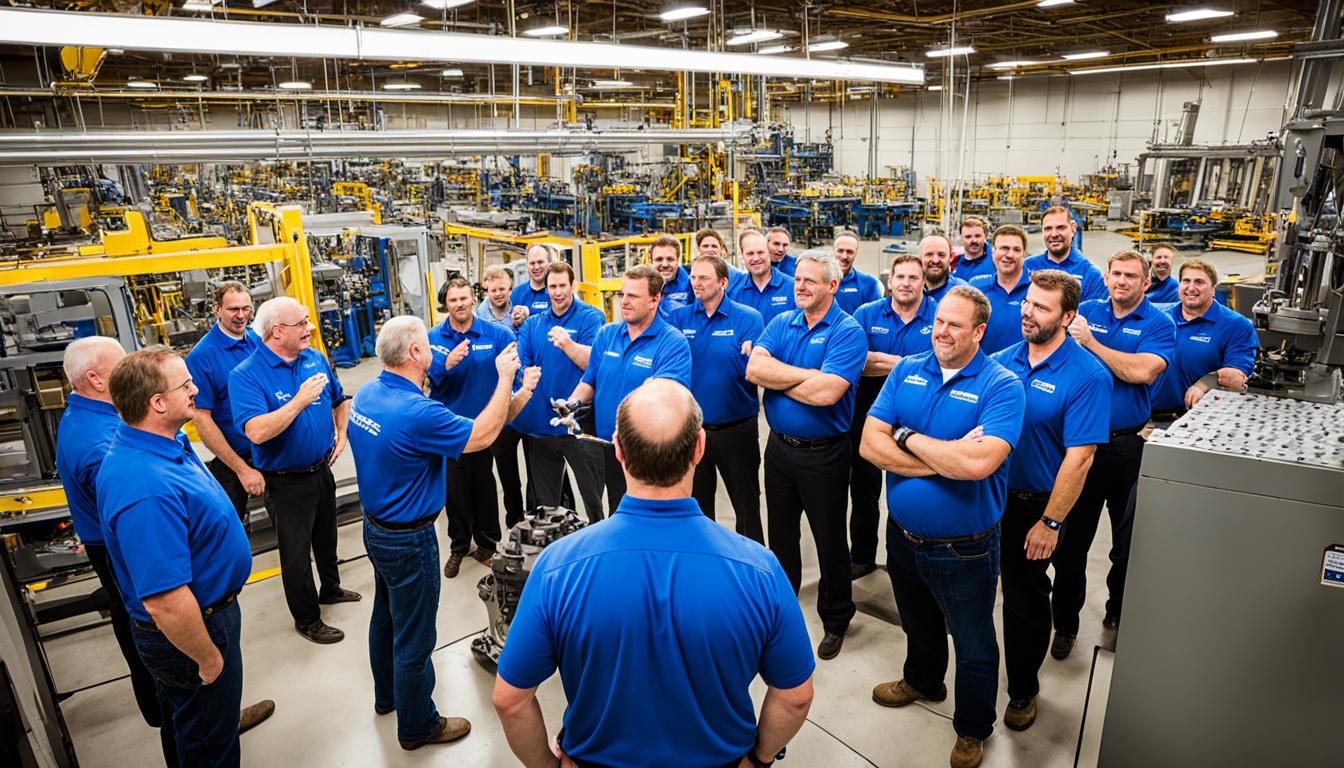
Did you know that leadership development is crucial for the long-term success of manufacturing companies? In a study conducted by XYZ Research, it was found that organizations with effective leadership development programs in place experienced a 47% increase in productivity and a 50% reduction in employee turnover within the first year.
Developing essential leadership skills at all levels within the organization is necessary for creating a work environment that elevates productivity, improves company culture, enhances corporate communication, and increases employee retention rates. It also helps nurture future leaders and improve overall leadership skills in the manufacturing industry.
Key Takeaways:
- Leadership development is crucial for the long-term success of manufacturing companies.
- Effective leadership development programs can lead to increased productivity and reduced employee turnover.
- Developing essential leadership skills improves company culture, communication, and employee retention rates.
The Benefits of Leadership Development in Manufacturing
Leadership development in manufacturing brings about a multitude of advantages for organizations in the industry. By implementing effective leadership strategies and providing leadership development workshops, companies can foster growth, productivity, and success.
One of the key benefits of leadership development is its ability to increase productivity. When leaders are equipped with the skills and knowledge to motivate and inspire their employees, teams become more engaged and driven to achieve their goals. This boost in productivity ultimately translates to improved efficiency and overall performance within the manufacturing organization.
Furthermore, leadership development plays a vital role in enhancing company culture. By reinforcing organizational values and promoting a positive work environment, leaders can create a culture that encourages collaboration, innovation, and employee satisfaction. A strong company culture not only attracts top talent but also contributes to higher employee retention rates, reducing turnover and the costs associated with it.
Effective communication is another area that greatly benefits from leadership development in manufacturing. Clear and consistent messaging from leaders helps align teams, ensuring everyone is working towards the same goals and objectives. By fostering effective communication, leaders can minimize misunderstandings, improve decision-making processes, and create a cohesive and united workforce.
Leadership development workshops provide individuals with the opportunity to develop and refine their leadership skills. These workshops typically cover various topics such as effective communication, decision-making, problem-solving, and team building. Through interactive learning experiences and practical exercises, participants can gain valuable insights and strategies that they can directly apply to their roles as leaders in the manufacturing industry.
Benefits of Leadership Development in Manufacturing:
- Increased productivity through motivation and inspiration
- Improved company culture by reinforcing organizational values
- Enhanced corporate communication with clear and consistent messaging
- Boosted employee retention rates by building trust and confidence
- Development of effective leadership strategies and skills through workshops
The Importance of Leadership Skills in Advanced Manufacturing
Leadership skills play a critical role in the advanced manufacturing industry, especially in the face of disruptions brought about by the COVID-19 pandemic. As technology continues to evolve and the skills gap widens, the ability to lead and inspire others becomes even more crucial. Advanced leadership development programs in manufacturing equip individuals with the necessary interpersonal skills, emotional intelligence, and adaptability required to thrive in this rapidly changing environment.
In advanced manufacturing, leaders must navigate complex challenges while fostering a culture of innovation and continuous improvement. They need to effectively communicate the vision, objectives, and expectations to their teams, ensuring alignment and commitment to shared goals. By developing strong leadership skills, individuals can excel in managing diverse teams, driving productivity, and fostering collaboration.
Advanced leadership development programs provide invaluable training and opportunities for continuous growth. By participating in these programs, manufacturing professionals can enhance their ability to make informed decisions, manage change, and inspire others. Through experiential learning, simulations, and case studies, participants can develop real-life problem-solving skills and gain insights from industry leaders.
“Effective leadership is vital in advanced manufacturing to navigate the complexities of emerging technologies and market demands. With the right leadership skills, individuals can drive innovation, harness the full potential of their teams, and adapt to a rapidly evolving industry.”
Furthermore, leadership development programs in manufacturing foster the development of critical skills such as strategic thinking, conflict resolution, and negotiation. These skills are essential for addressing complex challenges, managing cross-functional projects, and driving organizational success.
Benefits of Leadership Development in Advanced Manufacturing
Leadership development programs in advanced manufacturing offer a range of benefits, including:
- Enhanced communication and collaboration across teams
- Increased employee engagement and retention
- Improved problem-solving and decision-making abilities
- Strengthened leadership pipeline to prepare for future industry demands
- Adaptability to technological advancements and market changes
By investing in leadership development, manufacturing organizations can stay ahead of the curve and nurture a culture of excellence and continuous improvement.
Leadership development in advanced manufacturing is critical for driving organizational success in an ever-changing industry landscape. By equipping individuals with the necessary skills and competencies, manufacturing organizations can cultivate strong leaders who can effectively navigate challenges, inspire their teams, and shape the future of the industry.
Essential Leadership Skills for Manufacturing Leaders
In the manufacturing industry, effective leadership is essential for driving success and ensuring the smooth operation of teams and processes. Manufacturing leaders need to possess a diverse range of leadership skills to navigate the challenges of the industry and inspire their teams. Here are some essential leadership skills that manufacturing leaders should cultivate:
- Effective Communication: Communication is key in any leadership role. Manufacturing leaders must be able to clearly articulate their vision, provide feedback, and foster open and transparent communication within their teams. Strong communication skills help build trust and foster a positive work environment.
- Teamwork: Collaboration and teamwork are crucial for success in manufacturing. Leaders should be able to bring together individuals with different skills and abilities, delegate tasks effectively, and foster a collaborative and inclusive work culture.
- Critical Thinking: Manufacturing leaders need to be adept at critical thinking and problem-solving. They should have the ability to analyze complex situations, make informed decisions, and find creative solutions to challenges that arise in the manufacturing process.
- Time Management: Time management is essential in the fast-paced manufacturing industry. Leaders should be able to prioritize tasks, manage deadlines, and ensure optimal productivity within their teams.
- Organization: Effective leaders in manufacturing need to be organized and detail-oriented. They should have the ability to plan and coordinate resources, manage workflows, and ensure smooth operations.
- Adaptability: The manufacturing industry is constantly evolving, with new technologies and processes emerging. Leaders need to be adaptable and open to change, embracing new methodologies and fostering a culture of continuous improvement.
- Self-Awareness: Self-awareness is a vital leadership skill that helps leaders understand their strengths, weaknesses, and areas for growth. It allows them to lead authentically, leverage their strengths, and seek opportunities for development.
- Stress Management: Manufacturing leaders face high-pressure situations and must have the ability to manage stress effectively. Building resilience and adopting stress management techniques help leaders navigate challenging situations while maintaining productivity and well-being.
By cultivating these essential leadership skills, manufacturing leaders can effectively inspire and motivate their teams, make informed decisions, manage time, create stable and efficient manufacturing operations, and navigate the ever-changing landscape of the industry.
Developing Leadership Skills in Manufacturing
Developing leadership skills in the manufacturing industry is a continuous process that plays a vital role in driving success and growth. Through targeted leadership development programs and training, professionals can enhance their abilities, gain valuable insights from industry experts, and build a robust network of like-minded individuals.
One of the key areas of focus for leadership development in manufacturing is executive leadership. Executive leadership development programs specifically cater to senior leaders, providing them with the tools and knowledge necessary to navigate the challenges in the industry and drive organizational success.
These programs offer a combination of theoretical frameworks, practical applications, and real-world case studies that enable participants to develop critical skills such as strategic thinking, decision-making, change management, and effective communication. By honing these skills, leaders can lead their teams with vision, inspire innovation, and make informed decisions to drive their organizations forward.
Leadership development programs also emphasize the importance of self-awareness and emotional intelligence, which are essential qualities for effective leadership in the manufacturing industry. These programs help leaders understand their strengths, weaknesses, values, and motivations, enabling them to build stronger relationships, resolve conflicts, and lead with empathy and understanding.
Benefits of Developing Leadership Skills in Manufacturing:
- Enhanced problem-solving and critical thinking abilities
- Improved collaboration and teamwork
- Increased employee engagement and productivity
- Effective change management and adaptability
- Stronger relationships with stakeholders
- Enhanced decision-making capabilities
Testimonial
“Participating in an executive leadership development program revolutionized my approach to leadership in the manufacturing industry. The program provided me with invaluable knowledge, insights, and practical tools that I could immediately apply to my role. It helped me develop a strategic mindset, enhance my communication skills, and lead my team with confidence and vision. I highly recommend investing in leadership development programs for anyone aspiring to excel in manufacturing leadership.”
Leadership development in manufacturing is an ongoing journey that requires commitment, continuous learning, and a growth mindset. By investing in leadership development programs and empowering individuals to become effective leaders, manufacturing companies can drive innovation, foster a culture of excellence, and position themselves for long-term success in an ever-evolving industry.
| Key Benefits of Leadership Development in Manufacturing | Executive Leadership Development |
|---|---|
| Enhanced problem-solving and critical thinking abilities | Comprehensive training for senior leaders |
| Improved collaboration and teamwork | Strategic thinking and decision-making skills |
| Increased employee engagement and productivity | Effective change management |
| Effective change management and adaptability | Enhanced communication and leadership skills |
The Role of Vision and Passion in Production Leadership
Vision and passion are essential qualities for effective leaders in the manufacturing industry. When leaders have a clear and inspiring vision, it creates a sense of direction and purpose among their team members. Communicating this vision to the team helps align their efforts and motivates them to work towards common goals.
Furthermore, leaders who demonstrate passion and enthusiasm for their work create a positive and energized work environment. Their passion becomes contagious and inspires others to give their best efforts. It fosters a culture of dedication, commitment, and continuous improvement within the organization.
By combining vision and passion, manufacturing leaders can ignite a sense of purpose and drive in their teams. They inspire individuals to push beyond their limits and achieve new heights. This is particularly important in an industry that demands innovation, efficiency, and adaptability.
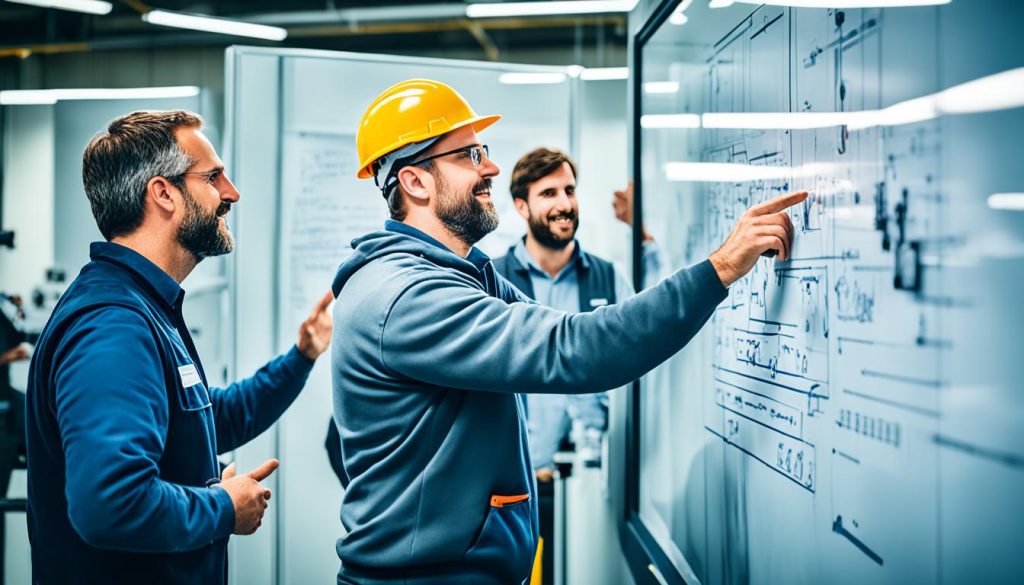
“Leadership is the capacity to translate vision into reality.” – Warren Bennis
The Power of Vision
A strong vision serves as a guiding light for leaders and their teams. It provides clarity, direction, and a sense of purpose, helping everyone stay focused on the long-term goals. A visionary leader can identify emerging trends, anticipate industry shifts, and create strategies to capitalize on opportunities.
The Impact of Passion
Passion fuels enthusiasm and dedication, creating a positive work environment where employees are motivated to excel. When leaders demonstrate passion for their work, it becomes infectious, inspiring others to go the extra mile. Passionate leaders also foster a culture of continuous learning, pushing their teams to embrace new challenges and innovate.
The Importance of Alignment
To effectively harness the power of vision and passion, manufacturing leaders need to ensure alignment within the organization. This requires clear communication of the vision, regular feedback to keep everyone on track, and the establishment of shared values and goals. When leaders successfully align their teams, they create a cohesive workforce that works towards a common purpose.
Leadership development programs, such as manufacturing leadership programs, can help individuals develop the necessary skills to inspire, motivate, and communicate their vision. These programs provide aspiring leaders with the tools and strategies to lead with purpose and passion.
In the next section, we will explore the importance of consistency and motivation in production leadership.
The Importance of Consistency and Motivation in Production Leadership
Consistency and motivation are key aspects of effective production leadership in the manufacturing industry. By being consistent in your actions and decisions, you build trust and respect among your team members. They know that they can rely on you to follow through on your commitments and make fair and consistent judgments.
Consistency also helps create a stable work environment where employees feel secure and confident in their roles. When they see that you consistently uphold company values and standards, they are more likely to align their behaviors and actions accordingly.
Motivation is another crucial factor in production leadership. As a leader, your role is to inspire and energize your team, driving them towards achieving their goals. By providing support, challenge, and recognition, you create a positive work environment that helps individuals perform at their best.
“Motivation is the art of getting people to do what you want them to do because they want to do it.”
Effective leaders in manufacturing understand the importance of recognizing and rewarding their team members’ efforts. They provide constructive feedback and acknowledge achievements to enhance motivation and encourage continuous improvement.
By consistently demonstrating your commitment to your team and motivating them to excel, you contribute to a positive work culture and drive overall success in the manufacturing industry.
Fostering Consistency and Motivation
To foster consistency and motivation in your production leadership role, consider the following strategies:
- Lead by example: Set high standards for yourself and demonstrate consistency and motivation in your own actions and behaviors.
- Communicate effectively: Clearly communicate your expectations, provide direction, and offer regular feedback to keep your team motivated and aligned.
- Empower your team: Delegate responsibilities and provide opportunities for growth and development. Empowered employees are more motivated and committed to their work.
- Recognize achievements: Celebrate the successes of your team members and acknowledge their contributions. Positive reinforcement boosts motivation and fosters a sense of belonging and appreciation.
- Provide ongoing support: Offer guidance, coaching, and resources to help your team overcome challenges and achieve their goals.
By implementing these strategies, you can create a culture of consistency and motivation that will drive both individual and organizational success in the manufacturing industry.
Decision-making and Results Orientation in Production Leadership
Effective production leaders possess strong decision-making skills and a results-oriented mindset. They understand that every decision they make has an impact on the success of their team and the overall production goals. By making timely, rational, and logical decisions, they create an environment of trust and confidence in their leadership capabilities.
These leaders consider advice and review facts before making important decisions. They seek input from team members, gather relevant data, and analyze the potential outcomes. By involving others in the decision-making process, they not only gain valuable perspectives but also foster a sense of ownership among their team members.
Additionally, effective production leaders focus on achieving results. They set clear goals and expectations for their team and work alongside them to accomplish these objectives. To demonstrate progress and create a sense of momentum, these leaders embrace short cycles and frequent deliveries. This approach instills a sense of achievement and motivates their teams to strive for continuous improvement.

| Key Elements of Decision-making and Results Orientation in Production Leadership |
|---|
| Making timely, rational, and logical decisions |
| Considering advice and reviewing facts |
| Fostering a sense of trust and confidence |
| Setting clear goals and expectations |
| Embracing short cycles and frequent deliveries |
H3: The Benefits of Decision-making and Results Orientation
By prioritizing decision-making and results orientation in production leadership, manufacturing companies can reap numerous benefits. These include:
- Enhanced productivity: Clear decision-making processes and a results-oriented approach streamline operations, leading to increased productivity.
- Improved efficiency: Effective leaders ensure that their decisions align with the company’s objectives, resulting in improved efficiency across the board.
- Greater accountability: A focus on results holds team members accountable for their performance and encourages them to take ownership of their responsibilities.
- Continuous improvement: By embracing short cycles and frequent deliveries, leaders foster a culture of continuous improvement, leading to innovation and growth.
- Enhanced teamwork and collaboration: Clear goals and a results-oriented mindset promote teamwork and collaboration, as team members work together towards a common objective.
By prioritizing decision-making and results orientation, production leaders can effectively steer their teams towards success in the manufacturing industry.
The Role of Self-Awareness and Delegation in Production Leadership
Self-awareness and delegation are two essential factors that significantly contribute to effective production leadership in the manufacturing industry. By understanding your own needs, habits, emotions, personality, and values, you can bring your best self to your role as a leader. This self-awareness allows you to make better decisions, inspire trust among your team members, and effectively manage stress and challenges that arise in the manufacturing environment.
In addition to self-awareness, delegation plays a vital role in production leadership. Delegating tasks and responsibilities empowers your team members, allowing them to develop their skills, increase their engagement and commitment, and take ownership of their work. By relying on the strengths and expertise of your team, you can focus on higher-level tasks, such as strategic planning and driving innovation, which are crucial for success in the manufacturing industry.
Delegation also fosters a culture of collaboration and teamwork, as it encourages open communication and knowledge sharing among team members. This not only enhances the efficiency and productivity of your team but also promotes a sense of unity and collective achievement. By delegating effectively, you create an environment where individuals feel valued and empowered, leading to higher job satisfaction and motivation.
Effective production leaders understand that they cannot accomplish everything on their own. By delegating tasks and responsibilities, they can leverage the skills and talents of their team members, driving innovation, and achieving exceptional results.
It is important to note that delegation should be accompanied by clear communication, establishing expectations, providing necessary resources, and offering support and guidance when needed. By effectively delegating, you not only strengthen your team but also foster their growth and development, creating a strong foundation for long-term success in the manufacturing industry.
The Benefits of Self-Awareness and Delegation in Production Leadership
The benefits of self-awareness and delegation in production leadership are significant. They include:
- Empowered and Engaged Teams: Delegation empowers team members, giving them a sense of ownership and accountability for their work. This leads to increased engagement and commitment to their tasks and the overall success of the team.
- Improved Decision-making: By being self-aware, leaders can make better decisions by understanding their own strengths, weaknesses, and biases. Delegation allows leaders to leverage the expertise of their team members, resulting in more informed and effective decision-making.
- Reduced Stress and Improved Well-being: Self-aware leaders can manage stress more effectively by recognizing their own triggers and implementing appropriate coping mechanisms. Delegation relieves leaders of excessive workloads, reducing stress levels and allowing for a healthier work-life balance.
- Cultivating a Learning Culture: Delegation encourages continuous learning and skill development within the team. By assigning new responsibilities and challenges, leaders create opportunities for growth and foster a culture of continuous improvement.
Overall, self-awareness and delegation are vital aspects of production leadership in the manufacturing industry. By prioritizing self-awareness and effectively delegating tasks, leaders can build empowered teams, drive innovation, and achieve exceptional results in an ever-evolving industry.
Conclusion
Leadership development plays a crucial role in the manufacturing industry, as it fosters the growth and success of companies in this ever-evolving landscape. Cultivating essential leadership skills, such as effective communication, teamwork, critical thinking, and adaptability, is fundamental in creating a positive and productive work environment.
Through leadership development programs and training opportunities, individuals in the manufacturing industry can enhance their abilities to inspire and motivate their teams. These programs provide valuable insights from industry experts and a platform to build a robust network of like-minded professionals, enabling leaders to navigate the challenges and changes in the manufacturing industry with confidence.
Executive leadership development programs take leadership skills to the next level, catering specifically to the needs of senior leaders in the manufacturing industry. These programs equip executives with the knowledge and strategies required to drive organizational success, adapt to technological advancements, and lead their teams towards innovative solutions.
FAQ
Why is leadership development important in manufacturing?
Leadership development is crucial for the long-term success of manufacturing companies. It helps create a work environment that elevates productivity, improves company culture, enhances corporate communication, and increases employee retention rates.
What are the benefits of leadership development in manufacturing?
Leadership development increases productivity by motivating and inspiring employees, improves company culture, enhances corporate communication, and boosts employee retention rates.
Why are leadership skills important in advanced manufacturing?
In the wake of disruptions caused by the COVID-19 pandemic, leadership skills are critical for navigating the skills gap and adapting to evolving technology in advanced manufacturing industries.
What are the essential leadership skills for manufacturing leaders?
Essential leadership skills for manufacturing leaders include effective communication, teamwork, critical thinking, time management, organization, adaptability, self-awareness, and stress management.
How can I develop leadership skills in manufacturing?
Leadership skills in manufacturing can be developed through targeted leadership development programs and training, which provide individuals with the opportunity to enhance their abilities, gain knowledge from industry experts, and build a strong network.
What is the role of vision and passion in production leadership?
Vision and passion are crucial for production leadership as they inspire and motivate others. Effective leaders communicate their vision, instill a sense of direction, and inspire others through their passion and enthusiasm for the industry.
Why is consistency and motivation important in production leadership?
Consistency in actions and decisions builds trust and respect among team members. Effective leaders motivate their teams by providing support, challenge, and recognition, creating a positive work environment that helps individuals perform at their best.
What is the role of decision-making and results orientation in production leadership?
Effective production leaders possess strong decision-making skills and a results-oriented mindset. They make rational decisions, consider advice, review facts, and focus on achieving results, instilling a sense of momentum and achievement in their teams.
How does self-awareness and delegation contribute to production leadership?
Self-awareness allows leaders to bring their best selves to their roles, inspire trust, make better decisions, and manage stress. Delegation empowers teams, increases employee engagement, and allows leaders to focus on higher-level tasks and strategic planning.
Why is leadership development in manufacturing essential for companies?
Leadership development in manufacturing is essential for the long-term success of companies in the industry. It helps create a positive and productive work environment, enhances leadership abilities, and enables individuals to navigate industry challenges.