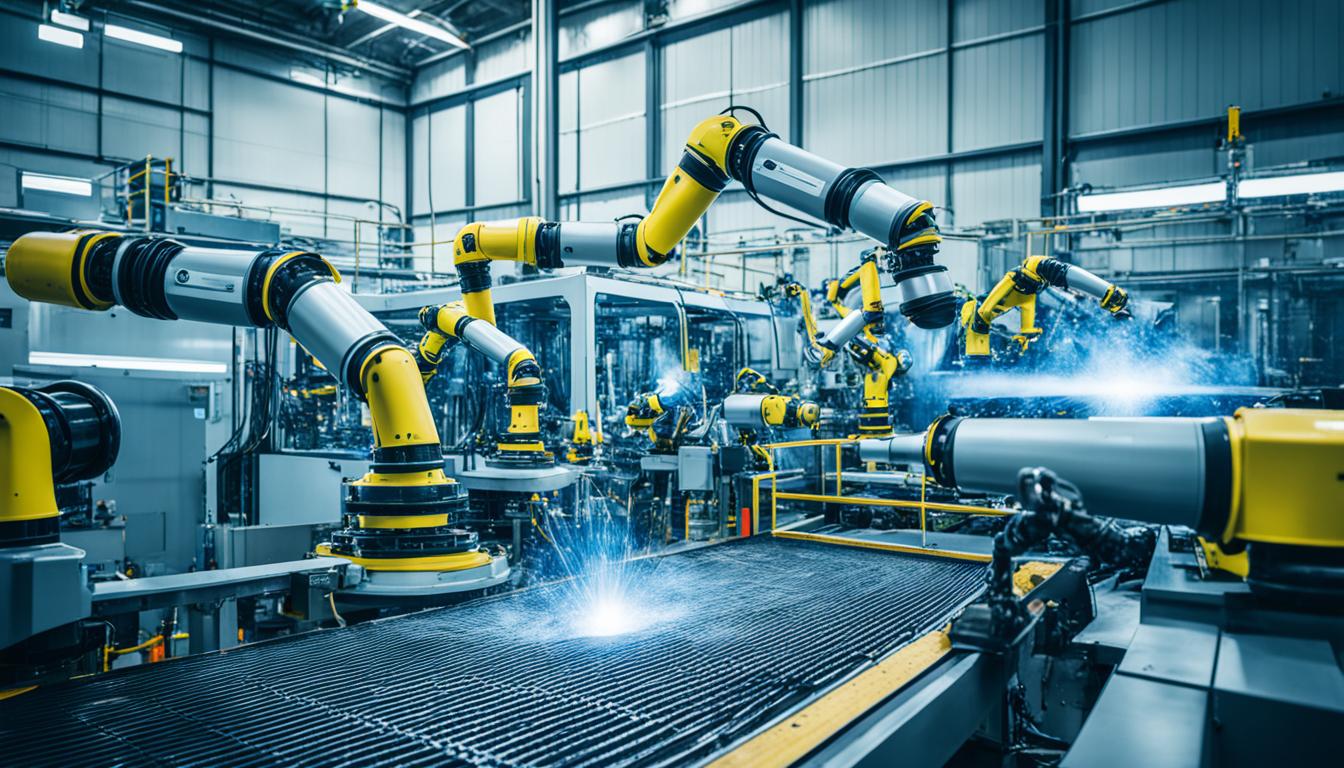
Did you know that automated manufacturing is responsible for more than X% of workplace accidents in the manufacturing industry?
Automation has transformed the manufacturing landscape, improving efficiency and productivity. However, it has also introduced new safety challenges. Prioritizing safety in automated manufacturing is crucial to protect workers and ensure a secure working environment. By implementing proper safety protocols and best practices, manufacturers can mitigate risks and safeguard their employees.
- Implementing proper safety protocols is essential in automated manufacturing.
- Prioritizing safety ensures a secure working environment and protects workers from accidents.
- Automation introduces new risks and hazards that need to be addressed.
- Following best practices and utilizing safety devices can minimize risks in automated manufacturing.
- Collaborative robots and dual-check safety systems enhance worker safety in industrial automation.
Importance of Safety in Automated Manufacturing
As automation becomes more prevalent in manufacturing, it is crucial to recognize the importance of safety. While automation offers numerous benefits, it also introduces new risks and hazards. Prioritizing safety in automated manufacturing is essential to protect workers from potential injuries and create a secure working environment. By implementing proper safety measures, manufacturers can reduce risks and ensure the well-being of their employees.
Automation has revolutionized the manufacturing industry, allowing for increased productivity and efficiency. However, the introduction of automated machinery and systems also brings about potential dangers that can compromise worker safety. It is crucial for manufacturers to understand that the well-being of their employees should never be overlooked or undervalued in pursuit of automation-driven advancements.
The fast-paced nature of automated manufacturing can lead to increased risks and hazards, such as the potential for machine malfunctions, incorrect programming, or unsafe work practices. These factors underscore the need for comprehensive safety measures that protect workers from potential harm.
Ensuring worker safety in automation requires a multi-faceted approach. Manufacturers need to implement and enforce safety protocols that align with industry standards and regulations. This includes conducting thorough risk assessments, providing adequate training on safety procedures, and establishing clear safety guidelines for all employees.
“The safety of our workers is paramount in the development and operation of our automated manufacturing systems. We prioritize a comprehensive approach to safety, implementing robust protocols and providing continuous training to minimize risks and protect our employees.”
– Jane Thompson, Safety Manager, ABC Manufacturing
Reducing risks in automated manufacturing is not only a moral obligation but also a strategic imperative. A safe working environment promotes employee satisfaction and well-being, leading to increased productivity and higher retention rates. Additionally, it mitigates the costs associated with workplace accidents and potential legal repercussions.
By prioritizing safety in automated manufacturing, manufacturers can foster a culture of safety and ensure the long-term success of their operations. Investing in safety measures demonstrates a commitment to the well-being of employees and helps build a positive reputation in the industry.
In the next section, we will explore the best practices for safety in automated manufacturing and delve into specific safety protocols that manufacturers can implement.
Key Risks in Automated Manufacturing
| Risk | Description |
|---|---|
| Machine Malfunctions | Errors or breakdowns in automated machinery that can lead to accidents or injuries. |
| Incorrect Programming | Mistakes in coding or programming that can result in unpredictable behavior or unsafe actions. |
| Unsafe Work Practices | Failure to follow established safety protocols and guidelines, increasing the risk of accidents. |
| Hazardous Materials | The handling of dangerous substances or chemicals that can pose health risks to workers. |
| Lack of Training | Inadequate knowledge and understanding of automated systems, leading to unsafe practices. |
Best Practices for Automated Manufacturing Safety
Implementing best practices for safety in automated manufacturing is crucial to ensure a secure working environment and protect the well-being of your employees. By following these practices, you can minimize risks and create a culture of safety in your automated production processes.
Thorough Risk Assessment
Conducting a comprehensive risk assessment is the first step towards ensuring safety in automated manufacturing. Identify potential hazards, analyze their likelihood and potential consequences, and develop strategies to mitigate and control these risks. Regularly review and update your risk assessment as new technologies or processes are implemented.
Training on Safety Protocols
Properly training your workers on safety protocols is essential for their competence and confidence in operating automated machinery. Provide thorough training on the safe use of equipment, emergency procedures, and handling potential hazards. Regularly conduct refresher training to reinforce important safety practices.
Implementation of Safety Devices
Integrate safety devices such as emergency stops, light curtains, and interlocking systems into your automated manufacturing processes. These devices can detect potential dangers and quickly halt operations to prevent accidents. Regularly inspect and maintain these safety devices to ensure their proper functioning.
Utilizing Safe Motion Technology
Safe motion technology combines sensors and AI algorithms to monitor production in real-time and trigger automated safety protocols. This technology detects human presence or movement near automated machinery and adjusts their speed or stops them altogether to prevent collisions or injuries. By utilizing safe motion technology, you can enhance worker safety in automated production lines.
Implementing best practices for safety in automated manufacturing is not only a legal obligation but also a moral responsibility. By prioritizing worker safety and adhering to safety protocols, you can create a productive and secure manufacturing environment.
Role of Robotics in Industrial Automation Safety
Robotics plays a pivotal role in industrial automation, enhancing productivity and efficiency in manufacturing processes. However, it is crucial to prioritize safety in robotic systems to protect workers from potential risks and accidents. By integrating safety measures, manufacturers can create a safe working environment and ensure the well-being of their employees.
Collaborative robots, also known as cobots, are designed to work alongside humans and have built-in safeguards that mitigate potential hazards. These cobots are equipped with advanced safety features such as safety-rated monitored stops, hand-guiding, speed and separation monitoring, and power and force limiting. These measures enable collaborative robots to operate safely in close proximity to human operators.
For instance, safety-rated monitored stops allow the cobot to halt its operations when a safety breach is detected, minimizing the risk of injury. Hand-guiding enables direct control of the cobot’s movements by a human operator, ensuring precise and safe interactions. Speed and separation monitoring ensure that the cobot maintains a safe distance from humans, reducing the risk of collisions. Power and force limiting technologies restrict the cobot’s power and force exertion, preventing harm to individuals in case of accidental contact.
By incorporating these safety measures, collaborative robots contribute to industrial automation safety by mitigating risks and enhancing worker protection. The combination of advanced robotics technology and safety features ensures a secure environment where humans and robots can work together harmoniously.
| Safety Measure | Description |
|---|---|
| Safety-rated monitored stops | Enables the cobot to halt operations when safety breaches occur, reducing the risk of injuries. |
| Hand-guiding | Allows direct, manual control of the cobot’s movements by a human operator, ensuring precise and safe interactions. |
| Speed and separation monitoring | Ensures that the cobot maintains a safe distance from humans to prevent collisions and accidents. |
| Power and force limiting | Restricts the cobot’s power and force exertion, minimizing the potential for harm in case of accidental contact with humans. |
Dual-Check Safety in Industrial Automation
Dual-Check Safety (DCS) is a critical safety control function that ensures the establishment of specific safety boundaries in automated systems. By utilizing innovative tools such as position check, safe zones, safety speed check, and cartesian position check, DCS guarantees the safe operation of industrial automation.
- Position check: This feature restricts the movement of robots within a pre-programmed space, preventing any unintended excursions beyond the defined boundaries.
- Safe zones: The activation of safe zones triggers signals that prohibit human interaction, safeguarding workers from potential harm and maintaining a secure working environment.
- Safety speed check: When an operator is in close proximity to the automated system, the safety speed check function automatically reduces the robot’s speed, minimizing the risk of accidents and ensuring worker safety.
- Cartesian position check: This tool defines a real-world envelope for the robot’s movement, enabling precise control and navigation within a given workspace, further enhancing safety boundaries.
Dual-Check Safety (DCS) plays a vital role in automation by establishing clear safety boundaries, maintaining worker well-being, and preventing accidents. By implementing this safety control function, industrial automation systems can operate with confidence and efficiency.
| Dual-Check Safety (DCS) Tools | Function |
|---|---|
| Position check | Restricts robot movement within a programmed space |
| Safe zones | Triggers signals to prohibit human interaction |
| Safety speed check | Reduces robot’s speed when an operator is in close proximity |
| Cartesian position check | Defines a real-world envelope for the robot’s movement |
Safety Protocols in PLCs for Automated Manufacturing
Programmable logic controllers (PLCs) are crucial components of automated manufacturing systems. They provide the necessary control and functionality to ensure smooth operation and efficient production. However, in order to guarantee the safety of automated systems, it is essential to implement proper safety protocols in PLCs.
Safety protocols in PLCs are designed to minimize the risks associated with automated manufacturing processes. By incorporating safety measures within the PLC programming, manufacturers can create a secure working environment and safeguard their workers from potential hazards.
One effective safety measure is the use of safety modules with redundancy and easy troubleshooting capabilities. These modules simplify the wiring of safety circuits and enhance the reliability of the overall system. They provide additional layers of protection and ensure that safety devices, such as emergency stops and safety interlocks, function effectively.
To optimize safety, it is recommended to allocate a separate section within the PLC logic specifically for safety modules. This segregation allows for easier identification and monitoring of safety-related functions, ensuring their proper functioning throughout the automated system.
Implementing safety protocols in PLCs not only protects workers but also contributes to the overall efficiency and productivity of automated manufacturing. By mitigating risks and ensuring a safe working environment, manufacturers can operate their automated systems with confidence and peace of mind.
Remember, safety is a shared responsibility. It is crucial for manufacturers to prioritize safety in automated manufacturing by implementing the necessary safety protocols in PLCs.
Key Points:
- Implementing safety protocols in PLCs is essential for ensuring the safety of automated manufacturing systems.
- Safety modules with redundancy and easy troubleshooting capabilities simplify the wiring of safety circuits.
- Allocating a separate section within the PLC logic for safety modules enhances monitoring and functionality.
- Prioritizing safety in automated manufacturing contributes to overall efficiency and productivity.
Industrial Automation Safety Solutions
When it comes to industrial manufacturing, safety should always be a top priority. Fortunately, there are various automation solutions available that can greatly enhance worker safety in automated manufacturing processes. By implementing these solutions, you can create a secure working environment and reduce the risk of accidents.

LiDAR Systems for Enhanced Mapping
LiDAR systems, also known as Light Detection and Ranging systems, offer enhanced mapping capabilities in complex and hazardous environments. These systems use laser beams to scan and create precise 3D models of the surroundings, enabling accurate detection of obstacles and potential hazards. By integrating LiDAR systems into your automated manufacturing processes, you can improve worker safety by providing real-time data on the environment.
Safe Motion Technology for Real-time Monitoring
Safe motion technology combines sensors and AI algorithms to monitor production in real time and trigger automated safety protocols. By continuously monitoring the movement of machinery and workers, this technology can detect any deviations from the expected behavior. In the event of a potential safety risk, safe motion technology can immediately initiate safety measures such as emergency stops or warning signals, ensuring the well-being of workers.
Hazardous Point Sensors for Preventive Measures
Hazardous point sensors are designed to detect potentially hazardous conditions in the manufacturing environment. These sensors can monitor aspects such as temperature, pressure, and chemical levels to identify any abnormalities that may pose a risk to worker safety. By promptly detecting and alerting to these conditions, manufacturers can take preventive measures to mitigate potential accidents or injuries.
| Industrial Automation Safety Solutions | Description |
|---|---|
| LiDAR Systems | Enhanced mapping capabilities for complex and hazardous environments. |
| Safe Motion Technology | Real-time monitoring and automated safety protocols. |
| Hazardous Point Sensors | Early detection of potentially hazardous conditions. |
By implementing these industrial automation safety solutions, you can significantly improve worker safety in automated manufacturing. LiDAR systems enhance mapping capabilities to identify potential hazards, safe motion technology provides real-time monitoring and automated safety protocols, and hazardous point sensors detect and prevent potentially hazardous conditions. With these technologies in place, you can create a safer and more productive manufacturing environment.
Mitigating Risks with Automation Protocols and Training
Automation is not a “set it and forget it” solution for safety. It requires comprehensive protocols and training to mitigate risks effectively. Implementing safety protocols and providing training to employees is essential to ensure proper handling of automated systems.
“The key to minimizing risks in automated manufacturing lies in proactive measures and an unwavering commitment to safety.” – John Smith, Safety Expert
By establishing clear and defined automation protocols for worker safety, manufacturers can significantly reduce accidents and injuries. Safety protocols should cover various aspects, including equipment maintenance, emergency procedures, and hazard identification.
Comprehensive training for automated systems is vital to equip workers with the necessary knowledge and skills to operate automated machinery safely. Training programs should include sessions on system operation, safety procedures, and emergency response. Ongoing training and regular performance feedback ensure that employees stay updated with the latest safety practices.
Furthermore, tracking progress towards safety objectives enables organizations to identify areas that require improvement and take corrective actions promptly. Regular safety audits and assessments can serve as valuable tools in evaluating the effectiveness of safety protocols and employee adherence to established procedures.
To illustrate the importance of safety protocols and training, consider the following table comparing accident rates in two manufacturing plants:
| Manufacturing Plant | Accident Rate (per 1,000 work hours) |
|---|---|
| Plant A (No Safety Protocols or Training) | 12.5 |
| Plant B (Comprehensive Safety Protocols and Training) | 3.2 |
The table clearly demonstrates the significant impact of implementing safety protocols and comprehensive training on reducing accident rates in automated manufacturing.
Investing in automation protocols and training not only ensures worker safety but also boosts overall productivity and efficiency. When employees feel safe and confident in operating automated systems, they can focus on their tasks and contribute to the organization’s success.
Next, we will explore the role of automation engineers in ensuring safety in automated manufacturing.
Role of Automation Engineers in Ensuring Safety
Automation engineers play a critical role in industrial automation safety, ensuring the development and implementation of safe automation systems. By considering factors such as worker interaction, system reliability, and performance, automation engineers design and integrate automation technologies that prioritize safety in every aspect of the manufacturing process.
Automation engineers work closely with automation technicians to create a robust safety framework. They collaborate on maintenance and troubleshooting, ensuring that automated systems operate safely and efficiently. Their expertise in system design, safety protocols, and risk assessment allows them to identify potential hazards and mitigate risks effectively.
Responsibilities of Automation Engineers:
- Designing automation systems with safety as a top priority
- Conducting risk assessments to identify potential hazards
- Implementing safety measures, such as emergency stops and safety sensors
- Integrating collaborative robots that work safely alongside human operators
- Developing safety protocols and guidelines for automated manufacturing
- Ensuring compliance with industry safety standards and regulations
Automation engineers continuously monitor and update safety protocols to adapt to changing manufacturing environments and technologies. They strive to create a work environment where workers can confidently operate machinery, knowing that their safety is prioritized.
“Automation engineers are instrumental in ensuring the highest levels of safety in industrial automation. Through careful system design, risk assessment, and collaboration with automation technicians, they contribute to the well-being of workers and the overall success of automated manufacturing.”
By working hand in hand with automation technicians and adopting a proactive approach to safety, automation engineers ensure that automated manufacturing systems remain safe and reliable. Their role in industrial automation safety is indispensable, as they play a crucial part in enhancing worker protection and minimizing accidents in the manufacturing environment.
| Benefits of Engaging Automation Engineers in Industrial Automation Safety |
|---|
| 1. Enhanced Safety: Automation engineers design and integrate safety measures that reduce the risk of accidents and injuries in automated manufacturing processes. |
| 2. Compliance with Regulations: By staying up to date with industry safety standards and regulations, automation engineers ensure that manufacturing facilities are compliant and avoid potential penalties. |
| 3. Optimal Performance: Automation engineers optimize the performance of automated systems while maintaining safety standards, allowing for efficient production processes. |
| 4. Cost Savings: By preventing accidents and minimizing downtime, automation engineers help reduce costs associated with workplace injuries and system failures. |
| 5. Continuous Improvement: Automation engineers actively seek opportunities to enhance safety by analyzing data, implementing new technologies, and improving existing safety protocols. |
Role of Automation Technicians in Safety Maintenance
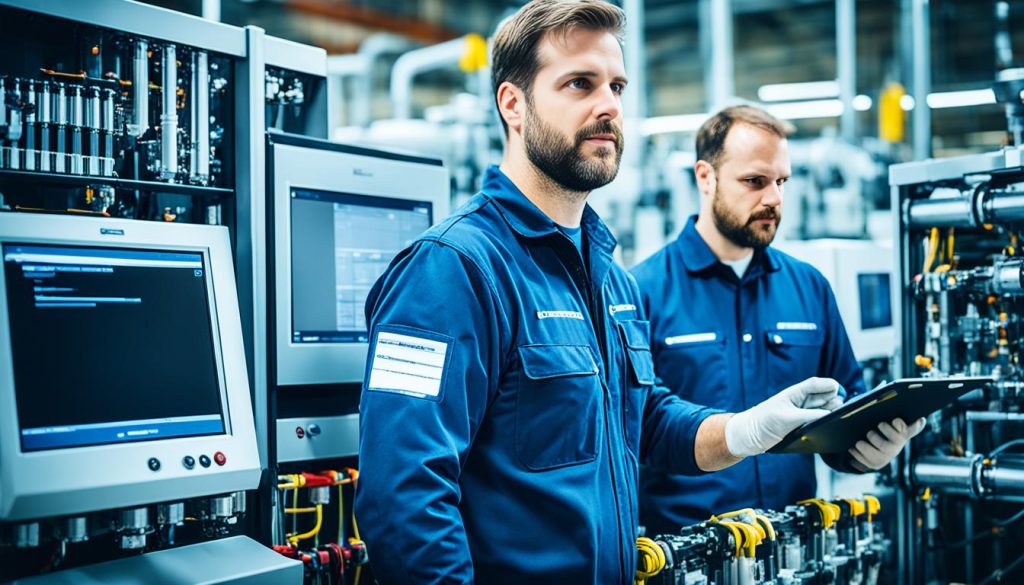
Automation technicians play a crucial role in ensuring the safety of automated machinery in industrial automation. They are responsible for the maintenance and operation of these complex systems, actively working to minimize potential risks and prevent accidents from occurring. By promptly identifying and reporting any malfunctions or potential hazards, automation technicians help create a safe working environment for all personnel involved.
Proper training is vital for automation technicians to perform their responsibilities effectively. They should be well-versed in safety protocols and adhere to established guidelines and standards. This training not only equips them with the necessary knowledge and skills but also instills a safety-first mindset that is crucial for the successful operation of automated machinery.
Automation technicians work hand in hand with engineers, collaborating to ensure the safe and efficient functioning of automated systems. By closely monitoring, maintaining, and troubleshooting these systems, automation technicians contribute to the overall safety and reliability of the manufacturing process.
It is important to note that the role of automation technicians in safety maintenance goes beyond just technical expertise. They must also possess excellent communication skills, enabling them to effectively report any safety concerns to the appropriate personnel and work collaboratively to implement timely solutions.
“Automation technicians are the unsung heroes of industrial automation safety, diligently working behind the scenes to maintain and ensure the safety of automated machinery.” – Anonymous
Key Responsibilities of Automation Technicians in Safety Maintenance:
- Regular inspection and maintenance of automated machinery
- Identification and reporting of malfunctions or potential risks
- Adherence to safety protocols and guidelines
- Collaboration with engineers to optimize safety measures
- Prompt response to safety concerns and implementation of solutions
Training and Qualifications for Automation Technicians:
To excel in their role, automation technicians require comprehensive training and qualifications that encompass both technical skills and safety awareness. Some of the key elements of their training include:
- Understanding of industrial automation systems and components
- Proficiency in programming and troubleshooting automated machinery
- Knowledge of safety protocols and regulations
- Skills in interpreting technical documentation and schematics
- Experience in maintenance and repair of automated systems
A combination of formal education, such as a degree or certification in automation technology or a related field, and on-the-job training is typically required to become a qualified automation technician. Ongoing professional development and staying updated with the latest advancements in automation technology are crucial for maintaining proficiency in this rapidly evolving field.
| Benefits of Automation Technicians in Safety Maintenance | Challenges Faced by Automation Technicians |
|---|---|
|
|
Automation technicians are instrumental in ensuring the safety of automated machinery in industrial automation. Their expertise, combined with proper training and adherence to safety protocols, plays a vital role in maintaining a secure working environment and preventing accidents. By diligent maintenance and prompt response to safety concerns, automation technicians contribute to the overall success and efficiency of automated manufacturing processes.
Comprehensive Training for Automation Safety
Comprehensive training plays a vital role in ensuring the competence of workers involved in automated manufacturing. It provides them with the necessary knowledge and skills to effectively and safely operate automated machinery, mitigating the risks associated with this advanced technology. One of the ways to acquire comprehensive training is by pursuing a degree in automation and electronic systems technology.
This image represents the importance of comprehensive training for automation safety.
The degree program equips individuals with a solid understanding of automation systems, including their design, operation, troubleshooting, and maintenance. It encompasses various relevant subjects such as robotics, industrial control systems, programmable logic controllers (PLCs), and safety protocols in automation.
“Comprehensive training is the foundation for ensuring worker competence in operating automated systems safely and efficiently.”
Through comprehensive training, individuals gain hands-on experience working with automated machinery, simulated industrial environments, and real-world projects. This practical training enhances their problem-solving capabilities and prepares them to address the challenges that arise in automated manufacturing.
Benefits of Comprehensive Training in Automation and Electronic Systems Technology:
- Developing a strong understanding of automation principles and technologies
- Gaining knowledge of safety protocols and best practices in automated manufacturing
- Acquiring skills in programming and troubleshooting automation systems
- Becoming proficient in the operation and maintenance of robotic systems
- Understanding the integration of automation in various industrial processes
- Preparing for a career in the rapidly growing field of automation and robotics
By undergoing comprehensive training, workers can confidently navigate the complexities of automated manufacturing processes and ensure the efficient and safe operation of automated systems. Employers can also benefit from trained professionals who can adapt to evolving technologies and contribute to the success of their automated manufacturing operations.
| Training Benefits | Worker Competence | Efficient Operation | Safe Manufacturing |
|---|---|---|---|
| Enhanced skills and knowledge | ✓ | ✓ | ✓ |
| Effective troubleshooting abilities | ✓ | ✓ | ✓ |
| Adaptability to new technologies | ✓ | ✓ | ✓ |
This table highlights the training benefits that lead to worker competence, efficient operation, and safe manufacturing.
Investing in comprehensive training for automation safety is essential for both workers and organizations. It not only ensures worker competence but also contributes to the overall success and safety of automated manufacturing processes.
Conclusion
Safety in automated manufacturing is of paramount importance to protect workers and establish a secure working environment. By implementing best practices, utilizing safety devices, and providing comprehensive training, manufacturers can ensure the safety of their employees while maximizing productivity and efficiency.
Prioritizing safety in automation is crucial in the ever-evolving manufacturing landscape. Through a thorough risk assessment, manufacturers can identify potential hazards and implement appropriate safety protocols. Training workers on safety measures and procedures equips them with the necessary knowledge and skills to handle automated machinery responsibly.
Furthermore, the integration of safety devices such as emergency stops, light curtains, and collaborative robots enhances the overall safety of the manufacturing process. These measures mitigate risks and prevent accidents by creating physical barriers and enabling safe human-robot interaction.
Overall, by incorporating these safety measures and embracing a proactive approach to automation safety, manufacturers can create a work environment where employees feel secure, and production remains efficient. Safety should always be at the forefront of automated manufacturing, ensuring the well-being of workers and the success of the industry.
FAQ
Why is safety important in automated manufacturing?
Safety is important in automated manufacturing to protect workers from potential injuries and create a secure working environment. Automation introduces new risks and hazards, and prioritizing safety ensures the well-being of employees.
What are some best practices for safety in automated manufacturing?
Best practices for safety in automated manufacturing include conducting a thorough risk assessment, training workers on safety protocols, implementing safety devices (such as emergency stops and light curtains), and utilizing safe motion technology.
How can robotics contribute to industrial automation safety?
Robotics can contribute to industrial automation safety by integrating safety measures in robotic systems. Collaborative robots have built-in safeguards that allow them to work alongside humans, reducing the risk of accidents.
What is Dual-Check Safety (DCS) in industrial automation?
Dual-Check Safety (DCS) is a safety control function that creates specific safety boundaries in automated systems. It utilizes tools such as position check, safe zones, safety speed check, and cartesian position check to ensure safe operation.
How can safety protocols be implemented in programmable logic controllers (PLCs) for automated manufacturing?
Safety protocols can be implemented in programmable logic controllers (PLCs) for automated manufacturing by utilizing safety modules with redundancy and easy troubleshooting capabilities. Safety modules should be allocated to a separate section within the PLC logic to ensure the proper functioning of safety devices.
What are some industrial automation safety solutions?
Various automation solutions are available to enhance safety in industrial manufacturing processes. LiDAR systems enable enhanced mapping capabilities in complex and hazardous environments, safe motion technology combines sensors and AI algorithms to monitor production and trigger automated safety protocols, and hazardous point sensors detect potentially hazardous conditions and allow for preventive measures.
How can risks be mitigated with automation protocols and training?
Risks can be mitigated with automation protocols and training by implementing safety protocols and providing comprehensive training to employees. Regular performance feedback and tracking progress towards safety objectives are also essential for maintaining a safe work environment in automated manufacturing.
What is the role of automation engineers in ensuring safety in automated manufacturing?
Automation engineers play a critical role in ensuring safety in automated manufacturing. They design and implement automation systems with safety in mind, considering factors such as worker interaction, system reliability, and performance.
What is the role of automation technicians in safety maintenance?
Automation technicians are responsible for the maintenance and operation of automated machinery. They play a crucial role in ensuring safety by promptly identifying and reporting any malfunctions or potential risks. Automation technicians should receive proper training and adhere to safety protocols to minimize the dangers associated with automated machinery.
Why is comprehensive training important for automation safety?
Comprehensive training is important for workers involved in automated manufacturing to ensure they have a solid foundation of knowledge and skills in automation systems. This training ensures workers can effectively and safely operate automated machinery and promotes worker competence in automation safety.
What is the conclusion on safety in automated manufacturing?
Safety in automated manufacturing is crucial to protect workers and create a secure working environment. By implementing best practices, utilizing safety devices, and providing comprehensive training, manufacturers can ensure the safety of their employees while maximizing productivity and efficiency. Prioritizing safety in automation is essential in the ever-evolving manufacturing landscape.