
Did you know that workplace incidents cost companies in the United States over $170 billion every year?*
Incident reporting and investigation play a crucial role in enhancing workplace safety. It is essential to investigate all incidents, including injuries and near misses, as recommended by OSHA. By identifying hazards and shortcomings in safety programs, incident investigations help prevent future incidents and create a safer working environment.
But incident investigations should not focus on assigning blame. Instead, they should prioritize finding root causes and implementing effective corrective actions. The collaboration between employers and workers is crucial in understanding the incident comprehensively and ensuring the successful implementation of preventive measures.
In this article, we will explore the importance of incident reporting, the fundamentals of incident investigations, and the benefits of implementing corrective actions. We will also discuss the role of incident management systems in streamlining the incident reporting and investigation process.
Discover how incident reporting and investigation can help your organization save lives, reduce costs, and maintain a strong safety culture.
Key Takeaways:
- Workplace incidents cost US companies over $170 billion annually.*
- Incident reporting and investigation enhance workplace safety.
- OSHA recommends investigating all incidents to identify hazards and improve safety programs.
- Incident investigations should focus on root causes rather than assigning blame.
- Collaboration between employers and workers is essential in the investigation process.
*Source: National Safety Council
Why is Incident Reporting Important?
Incident reporting is a critical aspect of maintaining workplace safety and preventing future incidents. By reporting incidents promptly and accurately, you contribute to a safer working environment for yourself and your colleagues. Let’s explore why incident reporting is essential:
- Identification of Potential Hazards: Incident reporting allows for the identification of potential hazards in the workplace. By reporting incidents, you help create a comprehensive understanding of the risks present, enabling the implementation of preventive measures to avoid similar incidents in the future.
- Analyzing Trends and Patterns: Incident reports provide valuable data for analyzing trends and patterns. By identifying recurring incidents or anomalies, organizations can pinpoint areas that require improvement and strengthen overall health and safety measures.
- Improving Health and Safety Measures: Incident reporting plays a vital role in improving health and safety measures in the workplace. Through the analysis of reported incidents, organizations can identify gaps in their existing safety programs and develop strategies to address them effectively.
- Compliance and Liability Protection: Incident reporting demonstrates an organization’s commitment to occupational safety. By adhering to incident reporting policies and procedures, companies can maintain compliance with legal requirements. Additionally, thorough incident reporting can protect organizations from non-compliance issues and potential liability claims.
Remember, it is crucial to report all incidents, regardless of their severity. Doing so ensures a comprehensive understanding of risks and prevention strategies, contributing to a safer work environment for everyone involved.
By embracing incident reporting as a standard practice, you become an active participant in maintaining workplace safety and fostering a culture of prevention. Incident reporting empowers you to make a difference and contribute to the overall well-being of yourself and your colleagues.
Next, we will delve into the basics of incident reporting, including the different forms, templates, policies, and procedures involved. This knowledge will further equip you to play an active role in incident reporting and ensure a safer working environment.
Basics of Incident Reporting
Incident reporting is an essential process in maintaining a safe working environment. By capturing and recording incidents such as injuries, property damage, or security incidents, organizations can effectively analyze their causes and prevent similar incidents from occurring in the future. Incident reporting forms the basis of an organization’s risk management strategy and helps identify areas for improvement in workplace safety.
To initiate the incident reporting process, individuals involved in the incident or a designated safety manager can complete an incident report form. This form serves as the initial documentation of the incident and provides critical information for further investigation and analysis. Additionally, follow-on forms such as investigation forms, corrective action forms, hazard reporting forms, and sign-off forms may be required to ensure a comprehensive response to the incident.
Throughout the incident reporting process, it is crucial to adhere to the organization’s incident reporting policy. This policy outlines the procedures, responsibilities, and expectations for reporting incidents. By following a standardized incident reporting policy, organizations can ensure consistency and accuracy in the reporting process, enabling effective analysis and mitigation of risks.
The incident management software can greatly facilitate incident reporting and streamline the overall process. By providing a centralized platform for capturing, managing, and analyzing incident data, incident management software enhances efficiency and accuracy. The software often includes incident reporting forms, automated notifications, customizable reporting templates, and data analysis tools, enabling organizations to identify trends, make informed decisions, and drive continuous improvement in workplace safety.
| Benefits of Incident Reporting | |
|---|---|
| 1 | Identification of potential hazards |
| 2 | Prevention of future incidents |
| 3 | Analysis of trends and patterns |
| 4 | Improvement of health and safety measures |
| 5 | Demonstration of commitment to occupational safety |
By establishing a robust incident reporting process and utilizing incident management software, organizations can foster a culture of safety, protect their employees, and ensure continuous improvement in their health and safety programs.
Managing Incident Reports
To effectively manage incident reports, it is essential to establish a systematic process. By implementing a comprehensive incident reporting system, you can streamline the reporting and investigation process, ensuring the prompt collection and documentation of incidents. This allows for a proactive approach in addressing identified issues and taking appropriate corrective actions to prevent future incidents.
One way to manage incident reports is by creating a database or spreadsheet where all incident reports can be stored in a centralized manner. This not only helps in organizing and retrieving information but also allows for easy analysis of trends and patterns.
“A well-managed incident reporting system provides a reliable source of data that can help identify potential risks and improve workplace safety measures.”
Additionally, it is crucial to establish a clear process for collecting incident reports. This involves educating and training all staff, including contractors and visitors, on incident reporting procedures to ensure that incidents are reported promptly and accurately.
Once incident reports have been collected, it is essential to analyze them for patterns or risks. Monitoring and reviewing incident reports regularly can help identify recurring issues and areas that require further investigation or action. This data-driven approach enables proactive decision-making to mitigate risks and contribute to the overall success of health and safety programs.
Benefits of Managing Incident Reports:
Effectively managing incident reports provides several benefits for organizations:
- Identification of potential risks and preventive measures
- Analyzing trends and patterns to improve safety measures
- Demonstrating a commitment to occupational safety
- Protecting organizations from non-compliance issues and liability claims
Implementing an incident reporting system and managing incident reports contribute to creating a culture of safety in the workplace and ensuring a safe and healthy working environment for all employees.
Key Elements of Managing Incident Reports:
Successfully managing incident reports entails:
- Establishing a centralized incident reporting system: This enables easy storage, retrieval, and analysis of incident reports.
- Implementing clear incident reporting procedures: Communicate the process and expectations to all staff, contractors, and visitors.
- Training on incident reporting: Educate employees on how to report incidents properly, ensuring accuracy and promptness.
- Monitoring and analyzing incident reports: Regularly review reports to identify patterns, risks, and areas for improvement.
- Taking appropriate action: Address identified issues by implementing corrective actions to prevent future incidents.
By incorporating these elements into your incident management process, you can effectively manage incident reports and drive continuous improvement in workplace safety.
Incident Investigation Process
An incident investigation is a structured process used to report, track, and determine the cause of incidents. It is crucial to conduct a thorough investigation to prevent similar incidents from occurring in the future. The incident investigation process involves several important steps, each contributing to a comprehensive analysis of the incident and the implementation of effective corrective actions.
1. Securing the Scene
The first step in the incident investigation process is to secure the scene. This ensures the preservation of evidence and the safety of those involved. By securing the scene, you prevent any interference or tampering that could compromise the investigation.
2. Planning the Investigation
Once the scene is secured, the next step is to plan the investigation. This involves determining who will be involved in the investigation, estimating the resources required, and establishing a timeline for completion. Clear objectives and a well-defined plan will guide the investigation process.
3. Collecting Relevant Information
Collecting relevant information is crucial to understanding the incident and its root causes. This includes gathering witness statements, reviewing documentation, examining physical evidence, and analyzing any available data. The information collected provides insights into what happened and helps identify contributing factors.
4. Analyzing Collected Data
Once all relevant information has been collected, it is time to analyze the data. This involves carefully reviewing the facts, identifying patterns or trends, and determining the root cause of the incident. It is important to focus on finding the underlying causes rather than assigning blame to individuals.
5. Implementing Corrective Actions
Based on the analysis of the incident, appropriate corrective actions should be implemented. This may involve making changes to processes, procedures, training programs, or equipment to prevent similar incidents from occurring in the future. The goal is to address the root causes and reduce the likelihood of recurrence.
6. Reviewing and Closing the Investigation
The final step in the incident investigation process is to review the investigation findings and close the investigation. This includes documenting the investigation results, sharing the findings with relevant stakeholders, and ensuring that all necessary actions have been taken. A comprehensive review and closure of the investigation help track progress and ensure that the incident is effectively resolved.
| Step | Description |
|---|---|
| 1. Securing the Scene | Ensure the scene is safe and evidence is preserved. |
| 2. Planning the Investigation | Create a clear plan and establish objectives and timelines. |
| 3. Collecting Relevant Information | Gather witness statements, review documentation, and examine physical evidence. |
| 4. Analyzing Collected Data | Review facts, identify patterns, and determine the root cause. |
| 5. Implementing Corrective Actions | Make changes to prevent similar incidents in the future. |
| 6. Reviewing and Closing the Investigation | Document the findings, share results, and ensure necessary actions are taken. |
Benefits of Incident Investigations
Conducting incident investigations is crucial for businesses as it offers numerous benefits. By thoroughly investigating incidents, organizations can identify the root causes and develop effective action plans to prevent similar incidents from occurring in the future.
“Incident investigations help in identifying the root causes of incidents and develop action plans to prevent their recurrence.”
One of the key advantages of incident investigations is the identification of gaps in existing risk control measures. By analyzing incidents, organizations can uncover weaknesses in their safety protocols and make necessary improvements to protect their employees and assets.
Furthermore, incident investigations play a pivotal role in highlighting compliance issues. By thoroughly investigating incidents, organizations can address any non-compliance or regulatory violations, thereby mitigating potential legal liabilities and insurance claims.
“Incident investigations help organizations address compliance issues, mitigating potential legal liabilities and insurance claims.”
In addition to addressing safety concerns and avoiding legal troubles, incident investigations foster a positive safety culture within the organization. Employees feel valued and protected when they see management taking proactive steps to investigate incidents and implement corrective actions.
An incident investigation process chart, showcasing the steps involved, can be seen below:
Incident Investigation Process
| Step | Description |
|---|---|
| 1 | Secure the incident scene |
| 2 | Define the investigation scope and team |
| 3 | Gather evidence and interview witnesses |
| 4 | Analyze collected data to determine root causes |
| 5 | Implement corrective actions based on analysis |
| 6 | Review and close the investigation |
Overall, incident investigations bring invaluable insights and improvements to an organization’s safety practices, ensuring a safer work environment for all.
Logistics of an Incident Investigation
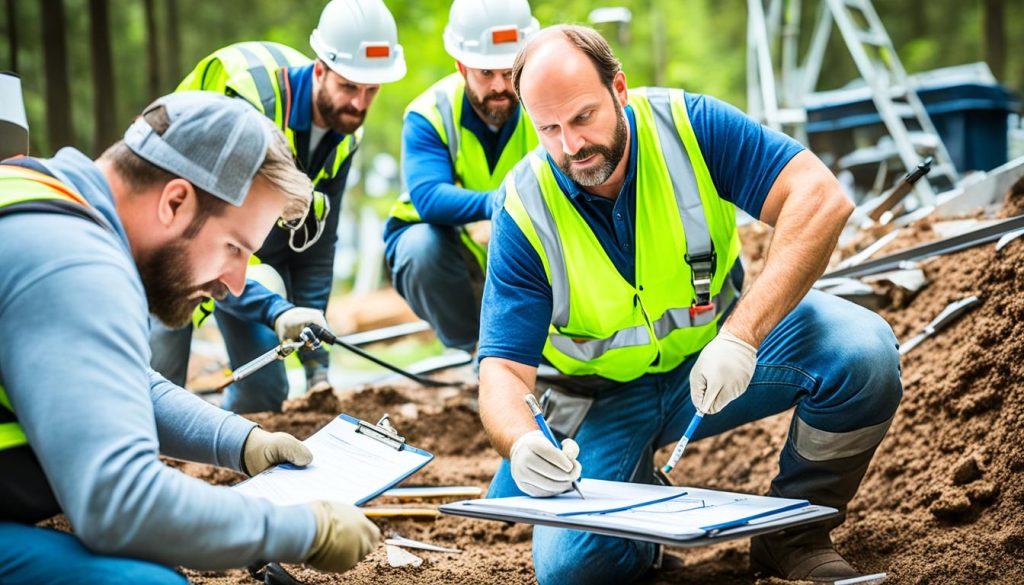
When an incident occurs, it is crucial to conduct an investigation promptly to gather relevant evidence and data. The investigation should take place at the location where the incident happened, ensuring a thorough and comprehensive examination. To carry out the investigation effectively, a team of trained individuals with knowledge of legal and organizational requirements, occupational health and safety basics, and work processes related to the incident should be assembled.
The team’s responsibilities include securing the incident scene, collecting physical evidence, and conducting interviews with the people involved and witnesses. By following these protocols, the investigation team can gather essential information and insights to determine the root causes of the incident and prevent similar occurrences in the future.
Ensuring logistics are properly managed during an incident investigation contributes to the overall success of the incident management system and the incident investigation process.
“The investigation of accidents and injuries is a crucial step in preventing workplace incidents and improving safety. By thoroughly examining the circumstances leading to an incident, organizations can identify hazards, implement corrective measures, and ultimately create a safer work environment for their employees.”
Steps of an Incident Investigation Process
The incident investigation process is a structured approach to understanding and addressing workplace incidents. By following a systematic process, you can identify the root causes of incidents, implement corrective actions, and prevent similar incidents from occurring in the future. Here are the six main steps of an incident investigation process:
Step 1: Secure the Scene
When an incident occurs, the first priority is to ensure the safety and well-being of everyone involved. Provide any necessary medical assistance or support, and take steps to preserve the scene of the incident. This may involve securing the area, documenting the condition of equipment or machinery, and collecting any physical evidence that may be relevant to the investigation.
Step 2: Plan the Investigation
Before proceeding with the investigation, it is important to plan out the process. Determine who will be involved in the investigation team, including any subject matter experts or witnesses who may provide valuable insights. Estimate the resources required, such as time, personnel, and equipment, to ensure a thorough and effective investigation.
Step 3: Collect Relevant Information
Gather all pertinent information related to the incident. This includes interviewing individuals involved in the incident, as well as any witnesses. Collect any documentation, such as incident reports, work procedures, or maintenance logs, that may contribute to the investigation. It is crucial to obtain accurate and detailed information to facilitate a comprehensive analysis.
Step 4: Analyze the Collected Data
Once all the relevant information has been collected, it is time to analyze the data to identify the root cause of the incident. Look for patterns, trends, or common factors that may have contributed to the incident. It is important to move beyond immediate causes and determine the underlying factors that ultimately led to the incident.
Step 5: Implement Corrective Actions
Based on the analysis of the incident, develop and implement appropriate corrective actions to prevent similar incidents from occurring in the future. These actions may include procedural changes, additional training, the use of personal protective equipment, or engineering controls. It is crucial to address the root causes rather than simply treating the symptoms of the incident.
Step 6: Review and Close the Investigation
Once the corrective actions have been implemented, review the investigation process to ensure that all necessary actions have been taken. Document the findings of the investigation, including the root cause analysis and the implemented corrective actions. This information can serve as a valuable resource for future incident prevention efforts. Close the investigation and communicate the outcomes to relevant stakeholders.
By following these six steps, organizations can effectively investigate incidents, improve workplace safety, and prevent future incidents from occurring. Applying incident management software can streamline the incident investigation process, enhance data collection and analysis, and ensure comprehensive documentation and tracking of all investigation activities.
Implementing Corrective Actions
Identifying the root cause of an incident is only the first step in the incident investigation process. To prevent similar incidents from occurring in the future, it is essential to implement appropriate corrective actions. These actions may involve implementing new safety measures, improving training programs, modifying procedures, or updating equipment. By addressing the underlying causes of incidents rather than focusing solely on immediate factors, organizations can create a safer working environment and minimize the risk of future incidents.
Examples of Corrective Actions- Implementing New Safety Measures: Assessing the incident investigation findings can help identify areas where additional safety measures are needed. This may involve installing safety barriers, providing personal protective equipment (PPE), or enhancing equipment maintenance procedures.
- Improving Training Programs: Inadequate training is often a contributing factor to workplace incidents. By reviewing incident investigation reports, organizations can identify gaps in training programs and develop targeted training sessions to address specific risks and preventive measures.
- Modifying Procedures: Incident investigations can reveal flaws or inefficiencies in existing procedures. By updating and refining procedures based on investigation findings, organizations can reduce the likelihood of incidents caused by procedural errors.
- Updating Equipment: Outdated or malfunctioning equipment can pose significant risks in the workplace. Incident investigations can identify equipment-related issues and justify the need for equipment updates or replacements to prevent future incidents.
It is important to note that implementing corrective actions should be a proactive and ongoing process. Regularly reviewing incident investigation reports, monitoring the effectiveness of implemented actions, and continuously striving for improvement are crucial to maintaining a safe working environment.
Corrective actions in incident management are like stitches in a wound—they help heal the present and prevent future harm.” – Safety Expert
By implementing effective corrective actions based on incident investigation findings, organizations demonstrate their commitment to improving safety and preventing incidents. This proactive approach not only protects employees but also enhances overall operational efficiency and mitigates potential legal and financial implications.
Examples of Implementing Corrective Actions
| Action | Description |
|---|---|
| Implementing New Safety Measures | Installing safety barriers, providing PPE, enhancing equipment maintenance procedures |
| Improving Training Programs | Reviewing and updating training programs to address specific risks and preventive measures |
| Modifying Procedures | Updating and refining procedures to reduce the likelihood of procedural errors |
| Updating Equipment | Replacing outdated or malfunctioning equipment to minimize equipment-related risks |
The Role of Incident Management Systems
Incident management systems play a crucial role in enhancing the incident reporting and investigation process. By providing organizations with a centralized platform, these systems streamline the workflow, making incident management more efficient and effective.
One key feature of incident management software is the ability to capture and record incidents in a standardized manner. Incident report forms are readily available, ensuring that all necessary information is properly documented. Automated notifications can be set up to alert the relevant personnel about new incidents, allowing for immediate action to be taken.
Data analysis tools are another integral part of incident management systems. These tools enable organizations to analyze incident trends and patterns, identify high-risk areas, and make data-driven decisions to prevent future incidents. By consolidating incident data, incident management software empowers organizations to develop proactive strategies and allocate resources effectively.
Customizable reporting templates are also a valuable feature of incident management systems. These templates allow organizations to generate consistent, professional incident reports that meet internal and regulatory requirements. Standardized reporting ensures accuracy and facilitates communication between stakeholders.
By leveraging incident management systems, organizations can improve efficiency, accuracy, and transparency in incident reporting and investigation. These systems provide a comprehensive solution that integrates incident capture, analysis, and reporting into a single platform. This centralized approach not only saves time but also minimizes the risk of errors or incomplete information.
Furthermore, incident management software facilitates continuous improvement by enabling organizations to track and monitor incident trends over time. This data-driven approach allows for the identification of recurring issues and the implementation of targeted preventive measures. By addressing root causes rather than symptoms, organizations can create safer work environments and reduce the likelihood of future incidents.
Benefits of Incident Management Systems:
- Streamline incident reporting and investigation processes
- Standardize incident documentation and reporting
- Automate notifications and alerts for timely action
- Enable data analysis for trend identification and risk mitigation
- Facilitate continuous improvement and proactive safety measures
Example of an Incident Management System:
| Feature | Description |
|---|---|
| Incident Reporting | Standardized incident report forms for capturing and recording incidents |
| Data Analysis | Tools for analyzing incident trends, identifying high-risk areas, and making data-driven decisions |
| Automated Notifications | Real-time alerts to notify relevant personnel about new incidents |
| Customizable Reporting Templates | Pre-built templates for generating consistent and professional incident reports |
By implementing an incident management system, organizations can optimize their incident reporting and investigation processes, leading to improved workplace safety and a proactive approach to risk management.
Ensuring Compliance and Continuous Improvement
For businesses, compliance with incident reporting and investigation regulations is essential. By following OSHA regulations and guidelines, you ensure that incidents are properly reported, investigated, and necessary corrective actions are taken. Ongoing review and analysis of incident reports help identify areas for improvement and support ongoing risk management. It is crucial for organizations to continuously evaluate and enhance their incident reporting and investigation processes to maintain a strong safety culture, enhance workplace safety, and protect the well-being of their employees.
Benefits of Ensuring Compliance
Implementing a robust incident reporting policy and adhering to regulatory requirements has numerous benefits:
- Protection against legal liabilities and fines
- Improved overall workplace safety and a reduced number of incidents
- Enhanced reputation and increased stakeholder confidence
- Increased employee trust and morale
- Better risk management through a deeper understanding of incident trends and patterns
Continuous Improvement in Incident Reporting and Investigation
Continuous improvement is essential in maintaining effective incident reporting and investigation processes. This involves:
- Regularly reviewing and analyzing incident reports to identify recurring issues or systemic problems
- Updating incident management software to streamline reporting and analysis
- Providing ongoing training and education to employees on incident reporting procedures
- Encouraging a culture of open reporting and proactive identification of hazards
- Implementing corrective actions based on investigation findings to prevent similar incidents
By continuously striving for improvement, organizations can proactively address safety concerns, minimize risks, and create a safer working environment for all.
| Compliance Benefits | Continuous Improvement |
|---|---|
| Protection against legal liabilities and fines | Regularly reviewing and analyzing incident reports to identify recurring issues or systemic problems |
| Improved overall workplace safety and a reduced number of incidents | Updating incident management software to streamline reporting and analysis |
| Enhanced reputation and increased stakeholder confidence | Providing ongoing training and education to employees on incident reporting procedures |
| Increased employee trust and morale | Encouraging a culture of open reporting and proactive identification of hazards |
| Better risk management through a deeper understanding of incident trends and patterns | Implementing corrective actions based on investigation findings to prevent similar incidents |
Conclusion
Incident reporting and investigation are integral to building a comprehensive risk management and workplace safety program. By understanding the significance of incident reporting and effectively conducting incident investigations, organizations demonstrate their commitment to ensuring a safe and healthy working environment.
Through regular incident reporting, employers can identify potential hazards and take preventive measures to avoid similar incidents in the future. Incident investigations allow for a deep dive into the root causes of incidents, enabling the implementation of effective corrective actions that mitigate risks and protect employees.
An essential aspect of incident management is the effective management of incident reports. By establishing a systematic process and incorporating incident management systems, organizations can streamline the reporting and investigation process, leading to more efficient outcomes.
By prioritizing incident reporting and investigation, businesses can continuously improve their safety measures and maintain a strong safety culture. Incorporating incident management systems further enhances the incident reporting and investigation process, ensuring a safer working environment for all.
FAQ
Why is incident reporting important?
Incident reporting is important for several reasons. It allows for the identification of potential hazards and the implementation of preventive measures. Reporting incidents helps analyze trends, discover anomalies, and improve overall health and safety measures. Furthermore, it demonstrates a commitment to occupational safety and protects organizations from non-compliance issues and liability claims.
What are the basics of incident reporting?
Incident reporting involves capturing and recording incidents such as injuries, property damage, or security incidents. It typically includes the completion of an incident report form and additional follow-on forms for investigation, corrective action, hazard reporting, and sign-off. Incident report forms can be completed by the individuals involved or by a safety manager. The purpose of incident reporting is to investigate incidents, analyze their causes, and prevent similar incidents from occurring in the future.
How do I manage incident reports?
To effectively manage incident reports, it is essential to establish a systematic process. This includes creating a database or spreadsheet to store incident reports, establishing a clear process for collection and documentation, training staff on incident reporting procedures, monitoring and analyzing incident reports for patterns or risks, and taking appropriate action. An incident reporting system can streamline the reporting process and ensure that all staff, including contractors and visitors, can report incidents promptly.
What is the incident investigation process?
An incident investigation is a structured process used to report, track, and determine the cause of incidents. The process involves conducting a formal investigation, documenting the investigation, tracking progress, and analyzing data to identify and control future incidents. The six main steps of an incident investigation process include securing the scene, planning the investigation, collecting relevant information, analyzing collected data to find the root cause, implementing corrective actions, and reviewing and closing the investigation.
What are the benefits of incident investigations?
Incident investigations help identify the root causes of incidents and develop action plans to prevent future incidents. They also identify gaps in existing risk control measures, highlight compliance issues, and demonstrate proactive efforts to address safety concerns. Additionally, incident investigations foster a positive safety culture, increasing employee morale and overall well-being.
What are the logistics of an incident investigation?
Incident investigations should be conducted as soon as possible after an incident occurs. The investigation is typically conducted at the location where the incident happened to gather relevant evidence and data. The investigation team should consist of trained individuals with knowledge of legal and organizational requirements, occupational health and safety basics, and work processes related to the incident. The team should secure the incident scene, collect physical evidence, and conduct interviews with people involved and witnesses.
What are the steps of the incident investigation process?
The incident investigation process consists of six main steps. Firstly, securing the scene by providing necessary help and preserving evidence. Secondly, planning the investigation by determining who will be involved and estimating resources required. Thirdly, collecting relevant information from people involved, witnesses, equipment, and documents. Fourthly, analyzing the collected data to identify the root cause of the incident. Fifthly, implementing corrective actions based on the analysis to prevent future incidents. Lastly, reviewing and closing the investigation, ensuring all necessary actions have been taken.
How do I implement corrective actions?
Identifying the root cause of an incident is only the first step. Implementing appropriate corrective actions is crucial to prevent similar incidents in the future. Corrective actions may involve implementing new safety measures, improving training programs, modifying procedures, or updating equipment. It is important to address the underlying causes of incidents rather than focusing solely on immediate factors.
What is the role of incident management systems?
Incident management systems greatly enhance the incident reporting and investigation process. These systems provide a centralized platform to capture, record, and manage incidents, streamlining the reporting workflow. Incident management software offers features such as incident report forms, automated notifications, data analysis tools, and customizable reporting templates. By utilizing an incident management system, organizations can improve efficiency, accuracy, and transparency in incident reporting and investigation.
How can I ensure compliance and continuous improvement?
Compliance with incident reporting and investigation regulations is essential for businesses. Following OSHA regulations and guidelines ensures that incidents are properly reported, investigated, and corrective actions are taken. Regular review and analysis of incident reports help identify areas for improvement and ongoing risk management. By continuously evaluating and improving incident reporting and investigation processes, organizations can maintain a strong safety culture, enhance workplace safety, and protect the well-being of their employees.