Did you know that lean manufacturing can reduce lead times by up to 90%?
Lean technology in manufacturing has revolutionized the way companies operate, maximizing productivity while minimizing waste. From giants like Toyota and Nike to smaller enterprises, lean manufacturing has proven its effectiveness across various industries. By implementing lean processes and embracing technology, businesses can achieve significant improvements in efficiency and product quality.
Key Takeaways
- Lean manufacturing focuses on minimizing waste and maximizing productivity.
- Benefits include reduced lead times, operating costs, and improved product quality.
- The principles of lean manufacturing include value, value stream, flow, pull, and perfection.
- Toyota Production System identified seven wastes to eliminate in lean production.
- Lean manufacturing tools and concepts like Heijunka, 5S, and Kanban aid in waste reduction.
Benefits of Lean Manufacturing
Lean manufacturing brings a plethora of benefits to companies, revolutionizing their manufacturing processes and driving efficiency and productivity. By implementing lean processes, organizations can unlock a range of advantages that positively impact the bottom line.
Reduced Lead Times
Lean manufacturing focuses on eliminating waste and inefficiencies in production, which leads to reduced lead times. By streamlining processes and eliminating unnecessary steps, companies can accelerate their manufacturing cycles and bring products to market faster. This not only improves customer satisfaction but also allows businesses to stay competitive in today’s fast-paced market.
Reduced Operating Costs
One of the key goals of lean manufacturing is to identify and eliminate waste. By implementing lean principles, such as Kaizen or continuous improvement, organizations are able to identify and eliminate non-value-added activities, unnecessary inventory, and other forms of waste. This leads to significant cost savings, as companies can optimize their resources and reduce unnecessary expenses. Lean manufacturing also promotes efficient use of labor, equipment, and materials, further driving down operating costs.
Improved Product Quality
In lean manufacturing, the focus is not only on reducing waste but also on delivering high-quality products. By continuously improving processes and implementing quality control measures, companies can significantly improve product quality. This leads to fewer defects, customer complaints, and product returns, enhancing the reputation and credibility of the organization.
Implementing lean manufacturing principles can result in a multitude of benefits, including reduced lead times, reduced operating costs, and improved product quality. By streamlining processes and eliminating waste, companies can achieve manufacturing efficiency and gain a competitive edge in the market.
Principles of Lean Manufacturing
When it comes to lean manufacturing, there are five key principles that drive the approach: value, the value stream, flow, pull, and perfection. Let’s dive deeper into each of these principles.
Value
In lean manufacturing, value is not determined by the company; rather, it is determined from the customer’s perspective. Value is based on what the customer is willing to pay for. By understanding and focusing on customer value, companies can prioritize their efforts and eliminate activities that do not add value.
The Value Stream
The value stream represents the end-to-end flow of materials and information required to deliver a product or service to the customer. It involves mapping and analyzing every step in the process to identify waste and opportunities for improvement. By optimizing the value stream, companies can streamline their operations and ensure that every step adds value to the final product or service.
Flow
Flow is all about creating a continuous and uninterrupted stream of production. Interruptions and delays are often sources of waste in manufacturing processes. By eliminating bottlenecks and optimizing the flow of materials and information, companies can improve production efficiency and reduce lead times.
Pull
The pull principle emphasizes starting new work only when there is a demand for it. This means that production is triggered by the needs of the customer rather than being driven by forecasts or speculative demand. By embracing pull-based production, companies can avoid overproduction, minimize inventory, and respond quickly to changes in customer demand.
Perfection
Perfection is a continuous pursuit of improvement and the elimination of waste. Lean manufacturing encourages organizations to embrace a culture of continuous process improvement, where every employee is empowered to identify and solve problems. By striving for perfection, companies can optimize their processes, reduce waste, and achieve higher levels of efficiency and customer satisfaction.
By applying these principles, companies can transform their manufacturing operations and achieve significant improvements in productivity, quality, and customer satisfaction.
| Principle | Description |
|---|---|
| Value | Determined by customer perspective, based on what they are willing to pay for. |
| The Value Stream | Mapping and analyzing the flow of materials and information to identify waste and opportunities for improvement. |
| Flow | Creating a continuous and uninterrupted stream of production. |
| Pull | Starting new work only when there is a demand for it. |
| Perfection | A continuous pursuit of improvement and the elimination of waste. |
Implementing these principles can help companies achieve lean manufacturing success, driving efficiency, reducing waste, and delivering products that meet or exceed customer expectations.
The 8 Wastes of Lean Production
When it comes to Lean Production, identifying and eliminating waste is crucial for optimizing efficiency and productivity. The Toyota Production System (TPS) recognized seven key areas of waste that hinder value creation and customer satisfaction:
- Unnecessary Transportation
- Excess Inventory
- Unnecessary Motion
- Waiting
- Overproduction
- Over-processing
- Defects
Streamlining these waste areas can lead to significant improvements in manufacturing processes and resource utilization. Additionally, the TPS also emphasizes the importance of eliminating the waste of unused talent and ingenuity, realizing that every employee has valuable contributions to make.
To provide a clearer picture, let’s take a closer look at each waste category:
- Unnecessary Transportation: Inefficient movement of materials or products, which can result in damage, delays, or increased costs.
- Excess Inventory: Storing more inventory than necessary leads to space constraints, increased carrying costs, and potential obsolescence.
- Unnecessary Motion: Excessive employee movements that do not contribute to value creation, causing fatigue, potential injuries, and inefficiencies.
- Waiting: Idle time in the production process, such as waiting for materials, equipment, or instructions, leads to delays and reduced throughput.
- Overproduction: Manufacturing products beyond the immediate demand, causing excess inventory, increased costs, and potential waste.
- Over-processing: Performing unnecessary steps or using excessive resources in the production process, resulting in increased costs and prolonged lead times.
- Defects: Producing products that do not meet quality standards, leading to rework, scrap, customer dissatisfaction, and potentially increased warranty costs.
- Waste of Unused Talent and Ingenuity: Failing to engage employees and utilize their expertise and creativity, missing out on valuable improvement opportunities and innovation.
By identifying and addressing these waste areas, organizations can unlock the full potential of Lean Production, improving operational efficiency, reducing costs, and enhancing overall quality.
Toyota Production System (TPS)
The Toyota Production System (TPS), developed by Shigeo Shingo and Taiichi Ohno, forms the foundation of Lean Production. It revolutionized the manufacturing industry, setting new standards for efficiency and waste elimination. Through the TPS, Toyota achieved significant improvements in production processes, quality control, and employee involvement.
The TPS is built on two key pillars: ‘Just-in-Time’ (JIT) production and ‘Jidoka’ (autonomation). JIT emphasizes producing only what is needed, when it is needed, reducing waste associated with overproduction and excess inventory. Jidoka focuses on building quality into the process, empowering workers to stop production if defects are detected, preventing the production of poor-quality products and ensuring continuous improvement.
Ultimately, the TPS paved the way for Lean Production, inspiring companies worldwide to adopt these principles and achieve exceptional results.

Lean Manufacturing Tools and Concepts
Lean manufacturing is all about eliminating waste and optimizing efficiency in your production processes. To achieve this, you can rely on a variety of tools and concepts that have proven to be effective in the industry. Let’s take a closer look at some of these lean manufacturing tools:
1. Heijunka
Heijunka, also known as production leveling or smoothing, helps you achieve a balanced production schedule. By spreading out production evenly, you can avoid bottlenecks and optimize resources, ultimately reducing waste and improving efficiency.
2. 5S
In order to create a clean and organized workspace, the 5S methodology can be invaluable. This method consists of five steps: Sort, Set in Order, Shine, Standardize, and Sustain. By implementing these practices, you can eliminate clutter, improve productivity, and enhance safety in your workplace.
3. Kanban
Kanban is a visual signal that helps you streamline processes and achieve just-in-time delivery. By using a Kanban system, you can efficiently manage inventory levels, reduce waste caused by overproduction or excess inventory, and ensure a smooth flow of materials throughout your production line.
4. Jidoka
Jidoka, which translates to “automation with a human touch,” is a method for detecting abnormalities in the production process. It empowers workers to stop the production line when they identify a problem, giving them the authority to address the issue and prevent defects from reaching the customer.
5. Andon
When something goes wrong on the production floor, it’s crucial to have a visual aid that alerts workers to the problem. That’s where the Andon system comes in. It provides a clear indication of any issues, allowing for quick response and resolution, ultimately minimizing downtime and waste.
6. Poka-yoke
To err is human, but with poka-yoke, you can minimize the risk of human error. Poka-yoke refers to mechanisms or techniques designed to prevent mistakes or defects from occurring. From foolproof design features to error-proofing devices, poka-yoke plays a vital role in ensuring quality and eliminating waste.
7. Cycle Time
Monitoring cycle time is essential for understanding the efficiency of your production processes. It measures the time required to produce a part or complete a process, allowing you to identify bottlenecks, streamline operations, and optimize your overall workflow.
These tools and concepts are just a snapshot of what lean manufacturing has to offer. By implementing them in your operations, you can drive continuous improvement, reduce waste, and achieve maximum efficiency in your manufacturing processes.
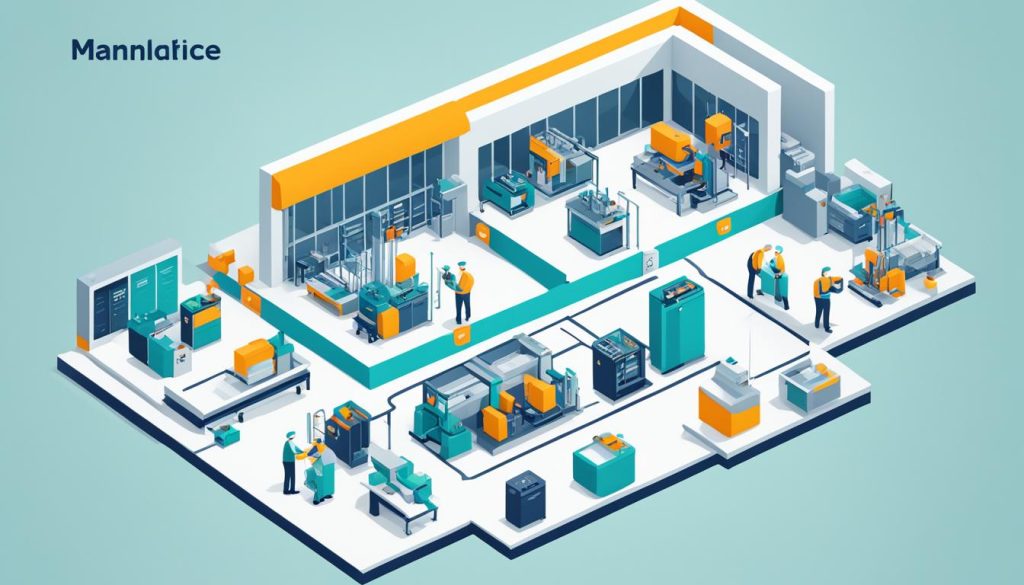
Now that you have a better understanding of these valuable tools and concepts, it’s time to explore their practical application in your manufacturing operations. Let’s delve deeper into Lean vs. Six Sigma in the next section, and see how these methodologies can work hand in hand to drive your business forward.
Lean vs. Six Sigma
When it comes to streamlining processes and boosting efficiency, two methodologies stand out: Lean and Six Sigma. While they share a common goal of eliminating waste and improving productivity, there are distinct differences between the two.
The Lean Way
Lean emphasizes on identifying and eliminating waste caused by unnecessary steps, processes, or features that customers don’t find valuable. It focuses on creating value for the customer while continuously improving and optimizing operations. Lean is all about doing more with less, stripping away the non-essential to streamline workflows and enhance productivity.
The Six Sigma Approach
Six Sigma is a data-driven methodology that targets reducing process variation and minimizing defects. It employs statistical analysis and quality control techniques to measure, analyze, and improve processes. By eliminating variations and deviations, Six Sigma aims for consistent, high-quality outputs. It’s like having a superhero cape for your operations, ensuring everything runs smoothly with minimal errors.
“Lean: Less waste, more value. Six Sigma: Minimum variation, maximum perfection.”
Lean Six Sigma: The Dynamic Duo
However, Lean and Six Sigma are not mutually exclusive. In fact, they often complement each other and can be combined into a powerful approach called Lean Six Sigma. This data-driven combo harnesses the strengths of both methodologies to deliver enhanced efficiency and quality.
By integrating Lean’s focus on waste elimination and Six Sigma’s problem-solving and statistical analysis capabilities, the Lean Six Sigma approach maximizes value creation while minimizing defects and variations.
| Lean | Six Sigma |
|---|---|
| Targets waste reduction | Focuses on minimizing process variations and defects |
| Streamlines workflows | Ensures consistent, high-quality outputs |
| Emphasizes continuous improvement | Applies robust statistical analysis |
Combining the power of Lean and Six Sigma can unlock a whole new level of operational excellence, fostering a culture of continuous improvement and quality-driven mindset.
So, whether you choose Lean or Six Sigma individually or leverage the dynamic duo of Lean Six Sigma, the ultimate goal remains the same: to boost efficiency, reduce waste, and deliver exceptional products and services that delight your customers.
History of Lean Manufacturing
Lean manufacturing, a widely adopted production method, originated from the Toyota Production System (TPS) in Japan. Developed by Shigeo Shingo and Taiichi Ohno of the Toyota Motor Corporation, the TPS revolutionized manufacturing by focusing on just-in-time production and automated quality control.
James Womack and Daniel Jones, American researchers, further defined the principles of lean manufacturing in their book “The Machine That Changed the World.” Since then, lean manufacturing has been implemented worldwide, transforming the way companies approach production.
Lean manufacturing’s roots in the Toyota Production System and its subsequent expansion have had a profound impact on manufacturing processes and efficiency. By eliminating waste and maximizing value, lean manufacturing continues to revolutionize the industry.
“Lean manufacturing has paved the way for more streamlined and efficient production processes, generating significant cost savings and improved product quality for companies worldwide.”
Evolution of Lean Manufacturing
Just-in-time manufacturing, introduced by the British Motor Corporation in Australia during the 1950s, had a significant impact on Toyota’s approach. This concept laid the foundation for lean manufacturing and its core principles. However, it wasn’t until the late 1970s that lean manufacturing gained international recognition with the publication of articles about the Toyota Production System.
James Womack and Daniel Jones further defined the principles of lean manufacturing in their influential book, “Lean Thinking.” This publication played a vital role in spreading the adoption and understanding of lean manufacturing techniques worldwide.
Since then, lean thinking has continued to evolve and be applied across a wide range of industries. Its emphasis on eliminating waste, optimizing processes, and improving efficiency has made it a cornerstone of modern manufacturing practices.
| Key aspects of Lean Manufacturing | Benefits |
|---|---|
| Minimizing waste | – Increased efficiency |
| Optimizing processes | – Cost savings |
| Improving product quality | – Enhanced customer satisfaction |
“Lean manufacturing is not just a tool for immediate results. It is a philosophy and a mindset that shapes the way we think about production and continuous improvement. Embracing lean thinking allows companies to evolve, adapt, and drive success in an ever-changing business landscape.”
Conclusion
Congratulations! You have reached the conclusion of our exploration of Lean Manufacturing. Throughout this article, we have discussed the numerous benefits that Lean technology brings to the manufacturing industry. By implementing Lean principles such as Heijunka, 5S, and Kanban, companies can streamline their production processes, increase efficiency, and ultimately achieve greater success.
Lean Manufacturing has a rich history that dates back to the Toyota Production System. This methodology has been widely adopted and has proven to be effective in reducing waste and improving product quality. By embracing Lean technology in manufacturing, companies can revolutionize their bottom line and drive continuous improvement.
So, where do we go from here? The future of Lean Manufacturing holds exciting possibilities. As technology continues to evolve, Lean processes can become even more efficient and effective. New tools and concepts will emerge, and companies will have the opportunity to further optimize their production systems.
In conclusion, Lean Manufacturing is a powerful strategy that allows companies to maximize their resources, minimize waste, and deliver high-quality products. By embracing Lean principles and continuously seeking improvement, you can propel your manufacturing operations to new heights. So, take the leap and join the Lean Manufacturing revolution today!
FAQ
What is lean manufacturing?
Lean manufacturing is a methodology that focuses on minimizing waste within manufacturing systems while maximizing productivity. It aims to reduce lead times, operating costs, and improve product quality.
What are the benefits of lean manufacturing?
The benefits of lean manufacturing include reduced lead times, reduced operating costs, and improved product quality. By implementing lean processes, companies can streamline their production, reduce waste, and increase manufacturing efficiency.
What are the principles of lean manufacturing?
The principles of lean manufacturing are value, the value stream, flow, pull, and perfection. Value is determined from the customer’s perspective. The value stream involves mapping and analyzing the flow of materials and information. Flow focuses on creating a constant stream of production. Pull is about starting new work only when there is demand for it. And perfection involves pursuing continuous process improvement.
What are the 8 wastes of lean production?
The 8 wastes of lean production are unnecessary transportation, excess inventory, unnecessary motion, waiting, overproduction, over-processing, defects, and the waste of unused talent and ingenuity.
What are some tools and concepts used in lean manufacturing?
Some tools and concepts used in lean manufacturing include Heijunka, 5S, Kanban, Jidoka, Andon, Poka-yoke, and cycle time. These tools help eliminate waste, streamline production processes, and improve efficiency.
What is the difference between lean and Six Sigma?
Lean focuses on eliminating waste caused by additional steps, processes, or features that customers don’t find valuable, while Six Sigma focuses on reducing process variation and minimizing defects. These approaches can be complementary and have been combined into Lean Six Sigma.
How did lean manufacturing originate?
Lean manufacturing originated from the Toyota Production System (TPS) in Japan. The system was developed by Shigeo Shingo and Taiichi Ohno of the Toyota Motor Corporation. The principles of lean manufacturing were further defined by American researchers James Womack and Daniel Jones.
How has lean manufacturing evolved?
Just-in-time manufacturing was introduced in Australia by the British Motor Corporation in the 1950s, which later influenced Toyota’s approach. The concept of lean manufacturing gained international recognition in the late 1970s when articles about the Toyota Production System were published. Lean manufacturing was further defined in books like “Lean Thinking” by James Womack and Daniel Jones.