
Did you know that implementing Manufacturing Execution Systems (MES) can lead to a 25% increase in production efficiency?
In today’s competitive manufacturing landscape, businesses are constantly seeking ways to optimize their processes, reduce costs, and improve overall productivity. MES software solutions offer a powerful toolset to achieve these goals, enabling real-time monitoring, control, and data analysis throughout the production cycle.
Whether you’re in the semiconductor, electronics, automotive, pharmaceutical, or any other industry, MES can provide significant benefits. From reduced waste and improved cost management to increased uptime and smoother workflows, MES empowers organizations to unlock the full potential of smart manufacturing.
Key Takeaways:
- MES systems can lead to up to a 25% increase in production efficiency.
- Real-time monitoring and control are key features of MES software.
- MES enables reduced waste and improved cost management.
- Increased uptime and smoother workflows are among the benefits of MES implementation.
- MES solutions are used across various industries to optimize manufacturing processes.
What Are Manufacturing Execution Systems?
Are you curious about Manufacturing Execution Systems (MES) and how they function in the manufacturing industry? Well, buckle up and get ready for a fascinating ride into the world of MES implementation, integration, and features.
MES acts as the missing link between enterprise resource planning (ERP) systems and process control systems. It plays a crucial role in tracking and documenting the transformation of raw materials into finished goods, all in real-time.
Picture this: MES operates at Level 3 in the manufacturing hierarchy, with ERP at Level 4 and process control at Levels 0, 1, and 2. Why is this important? Because it means MES covers a wide range of functional areas, ensuring comprehensive management and control throughout the manufacturing process.
Let’s dig deeper into these functional areas:
- Product Definitions Management: MES manages product production rules, bills of material, process set points, and recipe data. It’s like having a mastermind behind the scenes, orchestrating every aspect of the production process.
- Resources Management: MES handles the registration, exchange, and analysis of resource information for production orders. From machines to manpower, nothing goes unnoticed.
- Scheduling: MES determines the production schedule and work orders based on various factors such as order priorities and available resources. It’s like having a super-efficient personal assistant who knows exactly how to optimize your time.
- Dispatching: MES takes care of further distributing batches, runs, and work orders to different work centers. Think of it as a traffic controller guiding each task to its proper destination.
- Execution: MES performs checks on resources and informs other systems about production progress. It’s like having a master conductor bringing together a symphony of operations.
- Data Collection: MES collects, stores, and exchanges vital process data, equipment status, material lot information, and production logs. It’s an information hub that keeps everything in check.
- Performance Analysis: MES generates valuable insights about production status and indicators, giving you the power to make data-driven decisions. It’s like having a personal data analyst at your disposal.
- Track and Trace: MES ensures a complete history of lots, orders, or equipment, allowing for traceability and accountability. It’s like having a detective piecing together every detail of the manufacturing journey.
But wait, there’s more! MES doesn’t operate in isolation. It can be integrated with other systems such as laboratory information management systems (LIMS), warehouse management systems (WMS), and computerized maintenance management systems (CMMS). Picture MES as the social butterfly of the manufacturing world, effortlessly mingling with other systems to create a harmonious and efficient workflow.
Now, let’s dive into some real-world examples of how MES systems are making waves in different industries:
“In the automotive industry, MES systems coordinate complex assembly lines and focus on quality control and compliance with industry standards. In the pharmaceutical industry, MES systems ensure regulatory compliance, batch tracking, and product integrity.”
MES Functional Areas:
| Functional Areas | Description |
|---|---|
| Product Definitions Management | Management of product production rules, bills of material, process set points, and recipe data. |
| Resources Management | Registration, exchange, and analysis of resource information for production orders. |
| Scheduling | Determination of production schedule and work orders based on various factors. |
| Dispatching | Distribution of batches, runs, and work orders to different work centers. |
| Execution | Checks on resources and informing other systems about production progress. |
| Data Collection | Collection, storage, and exchange of process data, equipment status, material lot information, and production logs. |
| Performance Analysis | Generation of useful information about production status and indicators. |
| Track and Trace | Registration and retrieval of related information for maintaining a complete history. |
Now that you have a firm grasp of what Manufacturing Execution Systems (MES) are all about, it’s time to explore the multitude of benefits they bring to the table. So, hold on tight as we dive into the next section.
Benefits of Manufacturing Execution Systems
When it comes to optimizing your manufacturing processes, implementing a Manufacturing Execution System (MES) can bring a wide range of benefits to your organization. Let’s take a closer look at what MES has to offer:
- Reduced Waste, Re-work, and Scrap: MES optimization allows for more efficient production processes, minimizing waste and the need for re-work or scrap, which can lead to significant cost savings.
- Quicker Setup Times: MES technology streamlines the setup process, enabling faster changeovers and reducing downtime, resulting in increased overall productivity.
- Accurate Cost Information Capture: With MES, you can capture accurate cost data in real-time, giving you better visibility into your production costs and aiding in cost management decisions.
- Increased Uptime: MES systems help improve manufacturing operations’ traceability, making it easier to identify and address issues promptly, reducing unplanned downtime and improving overall equipment effectiveness (OEE).
- Paperless Workflow Activities: by implementing an MES solution, you can eliminate manual paperwork and transition to a more digital and automated workflow, improving efficiency and reducing errors.
- Makes Fault Finding Easier: MES technology provides detailed data and analytics, making it easier to identify and diagnose issues, allowing for prompt resolution and preventing potential bottlenecks.
- Inventory Optimization: MES industry expertise allows for accurate inventory tracking and management, ensuring optimal inventory levels, minimizing excess or shortage situations.
MES systems are widely used across various industries, including semiconductor, electronics, medical devices, automotive, aerospace, pharmaceuticals, metals, and plastics. By leveraging MES optimization and technology, organizations can unlock the full potential of their manufacturing operations, boost efficiency, reduce costs, and gain a competitive edge in the market.
Now that we’ve explored the benefits of Manufacturing Execution Systems, let’s dive deeper into the functional areas they cover in the next section.
MES Functional Areas
When it comes to Manufacturing Execution Systems (MES), understanding the various functional areas is essential for optimizing production processes. MES encompasses a wide range of functions, including:
- Product Definitions Management: This involves storing and exchanging critical master data, such as product production rules, bills of material, process set points, and recipe data. Proper management of product definitions ensures accurate and consistent production processes.
- Resources Management: Registration, exchange, and analysis of resource information for production orders fall under this category. Effective resource management enables optimal utilization of available resources, leading to improved efficiency.
- Scheduling: Scheduling plays a crucial role in determining the production schedule and work orders, taking into account factors like order priorities and resource availability. By optimizing scheduling, MES ensures efficient use of resources and timely completion of orders.
- Dispatching: The dispatching function involves the further distribution of batches, runs, and work orders to specific work centers. This step ensures smooth and coordinated operations across the manufacturing floor.
- Execution: MES systems perform checks on resources, monitor production progress, and inform other systems about the current state of production. By ensuring seamless execution, MES facilitates efficient and error-free production processes.
- Data Collection: Data collection is a critical aspect of MES, involving the collection, storage, and exchange of various process data, equipment status, material lot information, and production logs. Accurate data collection enables real-time monitoring and analysis of production performance.
- Performance Analysis: MES systems generate useful information about production status and indicators, allowing manufacturers to evaluate their performance. Performance analysis helps identify areas for improvement and make data-driven decisions.
- Track and Trace: Track and trace functionality enables the registration and retrieval of related information, maintaining a complete history of lots, orders, or equipment. This feature enhances quality control, ensures compliance, and provides valuable insights into the production process.
Understanding these functional areas is crucial for harnessing the full potential of MES. By leveraging MES functions, processes can be streamlined, workflows optimized, and overall manufacturing efficiency improved.
Relationship of MES with Other Systems
Manufacturing Execution Systems (MES) play a crucial role in the manufacturing hierarchy and interact with various other systems. These integrations enable seamless data exchange and connectivity, ensuring the smooth operation of production processes.
MES Integration: MES systems integrate with different levels of systems, including Level 3 (MES and other systems), Level 4 (enterprise systems), and Levels 0, 1, 2 (process control systems). This integration enables MES to exchange vital information with multiple systems, enhancing overall operational efficiency.
MES Relationships: MES establishes relationships with systems such as laboratory information management systems (LIMS), warehouse management systems (WMS), computerized maintenance management systems (CMMS), and product lifecycle management (PLM) systems. These relationships facilitate data sharing and collaboration, enabling streamlined workflows and synchronized processes.
MES Connectivity: MES systems also connect with enterprise systems like enterprise resource planning (ERP) systems, customer relationship management (CRM) systems, and human resource management (HRM) systems. This connectivity ensures seamless flow of information, enhancing coordination and decision-making across departments.
MES Middleware: Middleware enterprise application integration (EAI) systems are often used in conjunction with MES to facilitate efficient data exchange and synchronization between MES and other systems. These middleware solutions streamline communication and ensure accurate and timely data transfer.
In addition to these integrations, MES systems rely on common data definitions, such as B2MML (Business to Manufacturing Markup Language). These standardized definitions enable the smooth and efficient integration of MES systems with higher-level systems, ensuring consistency and compatibility.

As the image illustrates, MES integration and connectivity are essential for maximizing the benefits of MES systems and achieving operational excellence.
How Manufacturing Execution Systems Work
Manufacturing Execution Systems (MES) are the backbone of efficient production processes on the factory floor. Let’s take a closer look at how MES works by seamlessly collecting real-time data from various sources, ensuring smooth operations and increased productivity.
One of the key functions of MES is data collection. MES systems gather crucial information such as production rates, machine statuses, inventory levels, quality measurements, and more. With this real-time data, you gain valuable insights into the current state of your production.
The collected data is then integrated into the MES system, which generates production schedules based on received orders. This allows for optimal resource allocation and efficient production planning. Work orders are then assigned to operators or workstations, ensuring that tasks are executed in a timely manner.
To monitor the overall production process, MES continuously monitors machine and equipment status. By closely tracking these vital components, MES systems provide real-time feedback and leverage automation to streamline workflows. This not only saves time and reduces human error but also improves the overall efficiency of the manufacturing process.
Quality control is another critical aspect of MES. The system manages quality control procedures, flagging any deviations or issues in the production process. By promptly addressing these concerns, manufacturers can ensure that their products meet the highest quality standards.
MES systems also have in-depth capabilities for tracking material movement and inventory levels. By accurately monitoring the flow of materials, manufacturers can minimize waste, optimize inventory management, and ensure a smooth supply chain.
But that’s not all! MES systems go beyond data collection and analysis. They also offer integrated reporting features that generate insightful reports and visualizations. This helps you gain a comprehensive understanding of your production performance and make data-driven decisions for process improvement.
MES systems excel in machine integration, enabling seamless communication between different systems. By integrating with higher-level systems such as Enterprise Resource Planning (ERP), Product Lifecycle Management (PLM), and Supply Chain Management (SCM), MES ensures the smooth flow of data across your entire manufacturing ecosystem. This integration enhances overall efficiency, streamlines operations, and promotes better collaboration between departments.
With MES at the core of your manufacturing operations, you have a comprehensive system that optimizes data collection, production scheduling, machine integration, and quality control. By harnessing the power of MES, you can unlock the full potential of your production process and achieve greater levels of productivity and profitability.
Examples of MES Systems in Different Industries
Manufacturing Execution Systems (MES) are versatile tools with industry-specific features and applications. Let’s explore how MES systems are used in different industries:
Automotive Industry
In the automotive industry, MES systems are the driving force behind coordinated assembly lines. These systems streamline production processes, prioritize quality control, and ensure compliance with industry standards.
Pharmaceutical Industry
In the pharmaceutical industry, MES systems play a critical role in ensuring regulatory compliance. They enable batch tracking, maintain product integrity, and streamline processes to meet the stringent requirements of the industry.
Food and Beverage Industry
MES systems are essential for recipe management, formulation, and compliance with food safety regulations in the food and beverage industry. These systems optimize production processes and ensure consistent product quality.
Electronics Industry
The electronics industry relies heavily on MES systems for managing the complex production of electronic components. These systems streamline workflows, improve productivity, and enhance overall manufacturing efficiency.
Aerospace and Defense Industry
In the aerospace and defense industry, MES systems ensure compliance with regulatory requirements, manage complex assembly processes, and maintain strict quality control. These systems are integral to producing reliable and safe products.
Consumer Goods Industry
MES systems are instrumental in managing fast-moving consumer goods production in the consumer goods industry. They optimize production processes, reduce waste, and ensure the timely delivery of goods to meet market demands.
Each industry benefits from MES systems tailored to their specific needs, highlighting the adaptability and effectiveness of these powerful manufacturing tools.
Challenges of Implementing MES Systems
Implementing and operating Manufacturing Execution Systems (MES) can be a daunting task. The complex implementation process requires meticulous planning, intricate configuration, seamless integration, and extensive customization. It takes a well-coordinated effort to ensure a successful MES implementation.
One of the major challenges is data integration with other systems. Inaccurate or incomplete data integration can lead to erroneous information, hampering the effectiveness of the MES system. It requires careful mapping, data cleansing, and validation to ensure a smooth flow of information between different systems.
Another crucial challenge is change management. Implementing a new MES system often involves significant changes in business processes and workflows. This can create resistance among employees and stakeholders who may be resistant to change. Effective change management strategies, comprehensive training programs, and open communication channels are vital to ensure a smooth transition and acceptance of the new system.
Additionally, it’s important to address the potential integration challenges that may arise when connecting MES with existing systems. This includes integration with enterprise resource planning (ERP) systems, warehouse management systems (WMS), and other critical software tools. Coordinating these integrations effectively requires a deep understanding of each system’s capabilities and limitations, as well as expertise in data mapping and transformation.
In summary, the challenges of implementing MES systems encompass complex implementation processes, data integration difficulties, and change management resistance. Successfully navigating these challenges requires meticulous planning, effective change management strategies, and expertise in system integrations.
| MES Implementation Challenges | MES Integration Challenges | MES Change Management |
|---|---|---|
| Complex implementation process | Data integration with other systems | Resistance to changes in workflows |
| Configuration and customization requirements | Integration with ERP, WMS, and other systems | Employee and stakeholder resistance |
| Mapping and validation challenges | Effective change management strategies |
The Role of MES in Plant Floor Efficiency
Manufacturing Execution Systems (MES) are a game-changer when it comes to enhancing plant floor efficiency. With their ability to streamline workflows, automate tasks, and provide real-time feedback, MES systems revolutionize the way factories operate. So, how exactly do they contribute to increased efficiency? Let’s dive in!
Streamlined Workflows and Automated Tasks
MES systems optimize resource allocation and workload balancing, ensuring that every task is efficiently assigned and completed. By automating routine and repetitive tasks, operators can focus on higher-value activities, resulting in improved productivity and reduced human error. With MES automation, you’ll experience smoother operations and more efficient production processes.
Real-Time Feedback for Continuous Improvement
MES systems provide real-time feedback to operators and management, empowering them to make informed decisions on the fly. By monitoring machine and equipment performance, tracking production rates, and identifying areas for improvement, MES systems help optimize production processes and eliminate bottlenecks. With actionable insights at your fingertips, you can continuously improve efficiency and maximize productivity.
Data-Driven Decision-Making
MES systems enable data-driven decision-making by providing comprehensive and accurate production data for analysis. With real-time access to critical information, you can identify trends, spot inefficiencies, and make data-backed decisions to optimize your plant floor operations. From identifying machine downtime patterns to optimizing production schedules, MES systems empower you to take proactive steps towards increased efficiency.
Creating a Table to Summarize the Benefits
| Benefits of MES in Plant Floor Efficiency |
|---|
| Streamlined workflows and automated tasks |
| Real-time feedback for continuous improvement |
| Data-driven decision-making |
Now that you understand the crucial role of MES systems in enhancing plant floor efficiency, it’s time to harness their power and take your operations to the next level. Remember, MES is not just a tool; it’s a catalyst for operational effectiveness and profitability.
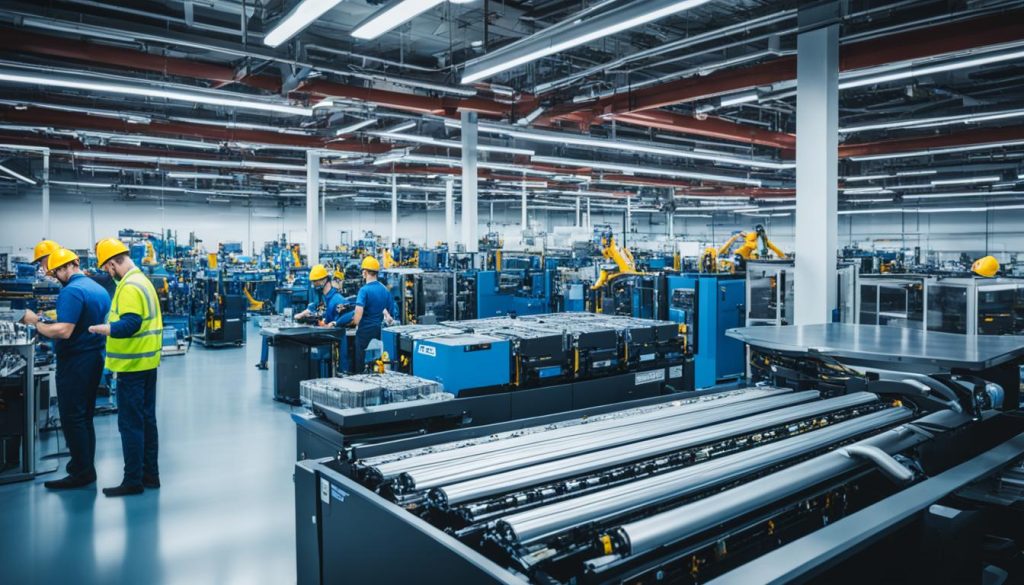
Caption: MES systems streamline workflows and provide real-time feedback to boost plant floor efficiency.
MES and Smart Manufacturing
In the realm of smart manufacturing, Manufacturing Execution Systems (MES) play a pivotal role. They provide the necessary framework for traceability and genealogy, enabling the tracking of material movement and processes throughout the entire manufacturing lifecycle.
With MES systems, compliance with industry regulations and standards becomes seamless. Quality control procedures are enforced, performance metrics are monitored, and real-time data is captured. This ensures adherence to compliance requirements and promotes product integrity.
Moreover, MES systems integrate with other systems to provide real-time visibility and control over production processes. This integration optimizes efficiency, enables accurate decision-making, and facilitates the operation of smart manufacturing environments.
“MES systems are the backbone of smart manufacturing, providing the necessary traceability, compliance, and operational insights to drive efficiency and success.”
In a smart manufacturing environment, MES systems enhance production traceability, allowing for a comprehensive understanding of material movement and process history. This supports quality control efforts and ensures the integrity of manufactured products.
Compliance with industry regulations and standards is a critical aspect of smart manufacturing. MES systems enforce quality control procedures, monitor key metrics, and generate real-time data reports for analysis. This ensures that manufacturing operations align with regulatory requirements and industry best practices.
By integrating with other systems such as enterprise resource planning (ERP) and product lifecycle management (PLM), MES systems provide real-time visibility into production processes. This enables efficient decision-making, streamlined operations, and improved overall productivity.
The Benefits of MES in Smart Manufacturing
- Enhanced traceability and genealogy of materials and processes
- Enforcement of quality control procedures and compliance with industry standards
- Real-time data capture and performance metric monitoring
- Integration with other systems for seamless workflow management
- Optimized production processes and increased operational efficiency
In summary, MES systems are at the forefront of smart manufacturing, facilitating traceability, compliance, and operational efficiency. By leveraging MES technology, manufacturers can achieve higher levels of productivity, quality, and overall success in the rapidly evolving world of manufacturing.
Conclusion
Congratulations! You’ve learned about the importance of Manufacturing Execution Systems (MES) in optimizing production processes and improving efficiency on the factory floor. With real-time monitoring, control, and data analysis, MES empowers organizations like yours to make informed decisions, reduce waste, and enhance product and process quality.
Whether you operate in the semiconductor, automotive, pharmaceutical, or consumer goods industries, MES systems offer a wide range of benefits. However, it’s important to note that implementing and operating an MES system can pose challenges. From complex implementation to data integration issues and change management, these hurdles are part of the journey.
Don’t let that discourage you! MES systems play a vital role in plant floor efficiency, helping you streamline workflows, automate tasks, and provide real-time feedback. By optimizing resource allocation, monitoring performance, and enabling data-driven decision-making, MES systems drive overall operational effectiveness. Embrace the power of MES and unlock the potential of smart manufacturing in your industry!
FAQ
What are Manufacturing Execution Systems (MES)?
Manufacturing Execution Systems (MES) are computerized systems used in manufacturing to track and optimize the production process. MES provides real-time monitoring and control of various elements including inputs, personnel, machines, and support services. It operates across multiple function areas such as product management, resource scheduling, order execution, production analysis, and materials track and trace.
What are the benefits of implementing Manufacturing Execution Systems?
Implementing Manufacturing Execution Systems (MES) offers a range of benefits. These include reduced waste, improved cost management, increased uptime, decreased downtime, accurate cost information capture, paperless workflow activities, improved traceability, decreased inventory levels, and optimized inventory management.
What are the functional areas covered by Manufacturing Execution Systems (MES)?
Manufacturing Execution Systems (MES) cover various functional areas including the management of product definitions, resources, scheduling, dispatching, execution, data collection, performance analysis, and track and trace.
How do Manufacturing Execution Systems (MES) integrate with other systems?
Manufacturing Execution Systems (MES) integrate with various other systems in the manufacturing hierarchy, including laboratory information management systems (LIMS), warehouse management systems (WMS), computerized maintenance management systems (CMMS), product lifecycle management (PLM) systems, enterprise resource planning (ERP) systems, customer relationship management (CRM) systems, human resource management (HRM) systems, and process development execution systems (PDES).
How do Manufacturing Execution Systems (MES) work?
Manufacturing Execution Systems (MES) work by collecting real-time data from various sources on the factory floor, integrating this data, generating production schedules, assigning work orders, monitoring machine and equipment status, managing quality control procedures, and tracking material movement and inventory levels. MES systems also analyze collected data, generate reports, and integrate with higher-level systems such as ERP, PLM, and SCM.
What are some examples of Manufacturing Execution Systems (MES) in different industries?
Manufacturing Execution Systems (MES) are used in various industries, each with industry-specific features and applications. Examples include MES systems in the automotive industry for coordinating assembly lines and ensuring quality control, MES systems in the pharmaceutical industry for regulatory compliance and batch tracking, and MES systems in the food and beverage industry for recipe formulation and food safety compliance.
What are the challenges of implementing Manufacturing Execution Systems (MES)?
Implementing and operating Manufacturing Execution Systems (MES) can present challenges, including the complex implementation process, data integration issues, and change management. However, proper planning, configuration, integration, customization, change management strategies, training, and communication can help overcome these challenges.
What is the role of Manufacturing Execution Systems (MES) in plant floor efficiency?
Manufacturing Execution Systems (MES) play a significant role in enhancing plant floor efficiency by streamlining workflows, automating tasks, optimizing resource allocation, workload balancing, and providing real-time feedback to operators and management. MES systems monitor machine and equipment performance, track production rates, and help identify areas for improvement. They also enable data-driven decision-making and provide comprehensive and accurate production data for analysis.
How do Manufacturing Execution Systems (MES) contribute to smart manufacturing?
Manufacturing Execution Systems (MES) play an essential role in the concept of smart manufacturing by enabling traceability and genealogy, facilitating compliance with industry regulations and standards, integrating with other systems, providing real-time visibility and control over production processes, and contributing to the efficient and compliant operation of smart manufacturing environments.
What are the concluding remarks on Manufacturing Execution Systems (MES)?
Manufacturing Execution Systems (MES) are crucial for optimizing production processes, reducing waste, improving efficiency, enhancing product and process quality, and enabling data-driven decision-making. Despite the implementation challenges, MES systems play a vital role in plant floor efficiency and contribute to the success of smart manufacturing initiatives.