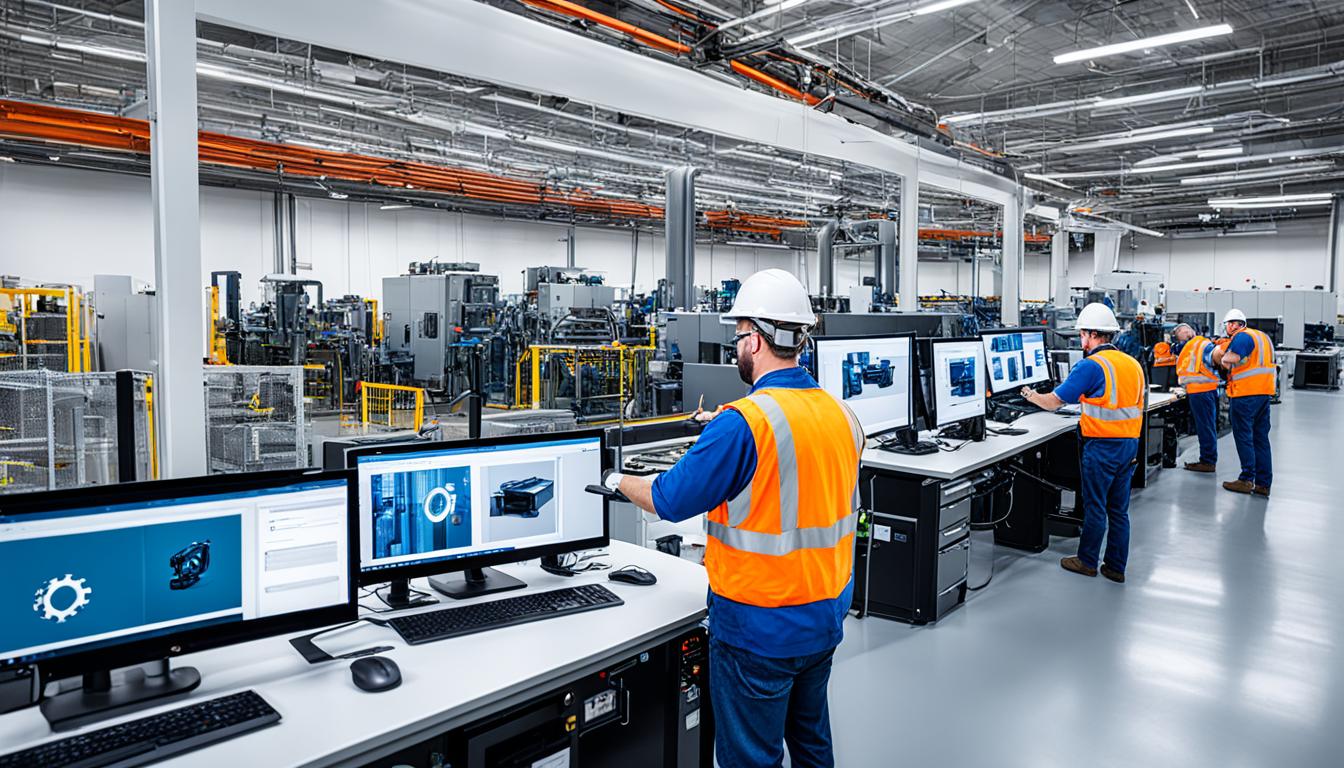
Did you know that the manufacturing sector is facing a labor shortage, with an estimated 2.1 million jobs expected to go unfulfilled by 2030? This alarming statistic highlights the urgent need for innovative solutions in the industry. One such solution gaining traction is remote work and flexible arrangements in manufacturing. By embracing these options, manufacturers can attract and retain talent, tap into a larger talent pool, and enhance productivity and employee satisfaction.
Key Takeaways:
- Remote work and flexible arrangements in manufacturing can help address the labor shortage in the industry.
- These options offer benefits such as attracting and retaining top talent and improving productivity.
- Remote work technology and digital tools play a crucial role in facilitating effective communication and collaboration among remote teams.
- Legal and compliance considerations should be taken into account when implementing remote work policies.
- The future of remote work in manufacturing is centered around flexibility and leveraging innovative technologies.
The Need for Flexibility in Manufacturing Jobs
The COVID-19 pandemic has brought to light the urgent need for flexibility in manufacturing jobs. In response to the industry losing approximately 1.4 million jobs during the pandemic, manufacturers are now recognizing the significance of adapting to remote work policies and implementing flexible work arrangements. These changes not only allow employees to achieve a better work-life balance but also accommodate other responsibilities and ultimately increase overall job satisfaction.
“The pandemic has accelerated the need for manufacturers to adopt flexible work arrangements and remote work policies. It is crucial for the industry to adapt and provide employees with more flexible options to attract and retain talent.”
By embracing remote work policies and strategies, manufacturers can tap into the benefits of offering their employees work-from-home opportunities. This enables employees to eliminate commuting time and expenses, giving them more time to focus on their work. Remote work in the manufacturing sector also presents opportunities for companies to access a wider talent pool and hire skilled professionals regardless of geographic location.
Implementing remote work policies and strategies requires thoughtful planning and consideration. Manufacturers must establish clear remote work guidelines, assess the feasibility of tasks being performed remotely, and ensure employees have the necessary technology and infrastructure to fulfill their roles effectively from home.
Benefits of Remote Work Policies in the Manufacturing Sector:
- Improved work-life balance, leading to higher job satisfaction
- Access to a larger talent pool, irrespective of location
- Reduced office space and overhead costs for employers
- Increase in employee productivity and focus
- Enhanced work flexibility, catering to individual needs
Adapting to remote work policies and incorporating flexible arrangements is crucial for the manufacturing sector to thrive in the current landscape. By prioritizing employee well-being and embracing remote work opportunities, manufacturers can attract and retain top talent, ultimately positioning themselves as industry leaders.
The Benefits of Remote Work in Manufacturing
Remote work in the manufacturing sector offers various benefits. It allows for flexible scheduling, where employees can choose their start and end times based on their needs. This flexibility can be particularly beneficial for working parents, as it enables them to drop off and pick up their children from daycare or school. Remote work also opens up opportunities for job sharing and non-traditional workweeks, such as three 12-hour days or four 10-hour days, providing employees with more time for personal commitments.
Flexible Scheduling for Work-Life Balance
One of the key advantages of remote work in manufacturing is the flexibility it offers in scheduling. Employees have the freedom to adjust their work hours based on personal commitments, allowing for a better work-life balance. This can be especially important for working parents who need flexibility to accommodate their family responsibilities.
Opportunities for Job Sharing
Remote work also opens up the possibility of job sharing in the manufacturing industry. Job sharing involves two or more employees sharing the responsibilities and workload of a single full-time position. This arrangement allows for greater coverage and flexibility, benefiting both the employees and the organization.
Non-Traditional Workweeks
In addition to flexible scheduling and job sharing, remote work in manufacturing can facilitate non-traditional workweeks. For example, employees may choose to work three 12-hour days instead of the typical five 8-hour days, or four 10-hour days. This arrangement provides employees with longer weekends or additional time off during the week, allowing them to pursue personal commitments or interests.
| Benefits of Remote Work in Manufacturing | Description |
|---|---|
| Flexible Scheduling | Employees can choose their start and end times based on their needs, enhancing work-life balance. |
| Job Sharing | Multiple employees can share the responsibilities of a single full-time position, increasing coverage and flexibility. |
| Non-Traditional Workweeks | Employees can opt for alternative workweek schedules, such as three 12-hour days or four 10-hour days, providing more free time. |
Overcoming Challenges in Implementing Remote Work
While remote work offers many advantages, it is not without its challenges, especially in the manufacturing industry. Implementing remote work requires careful consideration of the unique circumstances and requirements of the sector. Let’s explore some of the key challenges manufacturers may encounter and strategies to address them.
The Need for a Structured Work Environment
In a traditional manufacturing setting, workers are accustomed to a structured work environment with defined roles and clear expectations. Transitioning to remote work can disrupt this established framework, leading to potential confusion and decreased productivity.
One way to overcome this challenge is to establish clear guidelines and expectations for remote workers. This can include defining work hours, setting communication protocols, and providing specific instructions for task completion. By creating a structured remote work environment, manufacturers can maintain accountability and ensure that employees are productive and focused on their tasks.
Effective Communication and Collaboration
In a remote work setup, maintaining effective communication and collaboration among team members is crucial. Without regular face-to-face interactions, it can be challenging to foster teamwork, exchange information, and address issues efficiently.
To tackle this challenge, it is important to leverage technology tools that facilitate communication and collaboration. Video conferencing platforms, project management software, and instant messaging applications can help bridge the gap and ensure seamless collaboration. Regular team meetings, virtual check-ins, and dedicated communication channels can also enhance team cohesion and facilitate the exchange of ideas.
In the words of Richard Branson, “Communication is the most important skill any leader can possess.”
Tracking Productivity and Monitoring Performance
When employees are working remotely, it can be more challenging for managers to track productivity and monitor performance. Without physical presence, it becomes imperative to establish mechanisms to measure and evaluate remote workers’ output.
Implementing time-tracking tools, task management systems, and performance metrics can provide visibility into remote employees’ work and assess their productivity. Regular check-ins and progress updates can help managers identify any challenges or obstacles and ensure that remote workers meet their goals and deliver results.
Training and Support for Remote Workers
Transitioning to remote work requires a certain level of skill and adjustment. Manufacturers must provide adequate training and support to remote workers to ensure they have the necessary tools and knowledge to perform their tasks effectively.
Training programs can include instructions on remote work best practices, technology training, and cybersecurity awareness. Ongoing support through regular communication, mentoring, and feedback sessions is also essential for remote workers to feel supported and connected to the organization.
Creating a Flexible Manufacturing Environment
To thrive in today’s evolving manufacturing industry, creating a flexible manufacturing environment is essential. Manufacturers must invest in workforce development and talent attraction strategies to remain competitive and retain valuable employees.
Investing in Workforce Development
One key aspect of creating a flexible manufacturing environment is investing in workforce development. This involves providing opportunities for employee growth and skill enhancement. By offering training programs, workshops, and mentorship initiatives, manufacturers can empower their workforce to adapt to changing demands and technologies.
“Investing in our employees’ development not only benefits them individually but also strengthens our organization as a whole. It allows us to tap into the potential of our existing workforce and equip them with the skills needed for a dynamic manufacturing environment.”
– CEO of ABC Manufacturing
Implementing Non-Typical Work Schedules
To promote flexibility, manufacturers can consider implementing non-typical work schedules. This may include offering part-time jobs, compressed workweeks, or flexible start and end times. By providing employees with options to adjust their work schedules, manufacturers can accommodate different personal needs and attract a diverse talent pool.
Providing Flexible Work Arrangements
Flexible work arrangements, such as telecommuting or remote work, are becoming increasingly popular in the manufacturing industry. By leveraging technology and implementing remote work policies, manufacturers can offer employees the flexibility to work from home or other off-site locations. This not only enhances work-life balance but also allows manufacturers to tap into talent pools beyond their local area.
Retaining Valuable Employees
A flexible manufacturing environment is crucial for retaining talented employees. By providing flexibility and accommodating individual needs, manufacturers show their commitment to work-life balance and employee well-being. This not only fosters loyalty and commitment within the workforce but also attracts top talent, reducing turnover and ensuring a skilled and experienced workforce.
Creating a flexible manufacturing environment is a strategic move that differentiates manufacturers from competitors and harnesses the benefits of employee satisfaction and productivity. By continuously adapting and optimizing their workforce, manufacturers can position themselves as industry leaders in an ever-evolving manufacturing landscape.
The Growing Popularity of Flexible Work Arrangements
Amidst the COVID-19 pandemic, flexible work arrangements have gained immense popularity in various industries, including manufacturing. A recent survey conducted by the U.S. Chamber of Commerce shed light on the driving factors behind this shift. Early retirements, lack of childcare access, and increased personal savings were identified as key contributors to the labor shortage faced by the manufacturing sector. In response, employers are increasingly offering flexible work options to attract and retain top talent.
This trend of flexible work arrangements is expected to continue even after the pandemic subsides, as both employers and employees have experienced the benefits firsthand. Manufacturers recognize that accommodating the diverse needs of their workforce through flexibility not only improves employee satisfaction but also enhances productivity levels. By allowing employees to have control over their work schedules and environments, manufacturing companies can foster a healthier work-life balance and create a positive organizational culture.
Remote Work Trends in Manufacturing
One of the notable remote work trends in the manufacturing industry is the implementation of hybrid work models, whereby employees have the flexibility to work on-site or remotely. This model enables manufacturers to adapt to evolving circumstances while ensuring operational continuity.
“The adoption of flexible work arrangements has been a game-changer for our manufacturing company. It has allowed us to tap into a larger pool of talent, as geographical constraints no longer pose a barrier. We have seen a boost in employee morale and engagement, leading to increased productivity across the board.”
– [Real Manufacturing Company CEO]
Manufacturers are also exploring new technologies and digital tools to support remote work. Collaboration platforms, virtual meeting software, and cloud-based project management tools are among the investments being made to facilitate seamless communication and collaboration among remote teams. Leveraging these technologies ensures that employees can stay connected, share knowledge, and work together effectively, regardless of physical location.
The growing popularity of flexible work arrangements indicates a significant shift in the manufacturing industry’s approach to workforce management. As more manufacturers embrace remote work options and prioritize flexibility, it will shape the future of work in the manufacturing sector, fostering a more agile and resilient workforce.

Embracing Remote Work Technology
To facilitate remote work in the manufacturing industry, employers need to invest in remote work technology and digital tools. By leveraging technology, manufacturers can ensure effective communication and collaboration among remote teams, enhance productivity, and maintain connectivity between on-site and remote workers.
One of the essential tools for remote work in manufacturing is video conferencing platforms. These platforms enable seamless virtual meetings, allowing team members to connect face-to-face regardless of their physical location. Through video conferencing, employees can discuss projects, share updates, and collaborate in real-time, fostering a sense of engagement and teamwork.
Project management software is another crucial tool for remote work in the manufacturing industry. These platforms provide a centralized hub for organizing and tracking tasks, deadlines, and resources. With project management software, teams can efficiently manage workflows, allocate resources, and ensure project milestones are met, even when working remotely.
Collaboration tools play a vital role in remote work manufacturing, enabling teams to work together on documents, spreadsheets, and presentations. These tools allow multiple team members to edit and contribute to a file simultaneously, streamlining collaboration and eliminating version control issues. By utilizing collaboration tools, manufacturing teams can maintain seamless collaboration and productivity, regardless of their physical location.
“The implementation of remote work technology and digital tools has revolutionized the way manufacturers operate. These tools provide the necessary infrastructure for effective remote collaboration, ensuring that remote teams can work together seamlessly, just like they would in a traditional office setting.” – John Thompson, Manufacturing Technology Consultant
Moreover, remote work technology can strengthen the connection between on-site and remote workers. For example, digital messaging platforms facilitate instant communication, allowing team members to quickly exchange information, seek clarification, and address any concerns. Through these platforms, remote workers can stay connected with their on-site counterparts, fostering a cohesive and collaborative work environment.
By embracing remote work technology and equipping employees with the necessary digital tools, manufacturers can overcome the challenges associated with remote work. These tools empower remote teams to communicate effectively, collaborate seamlessly, and maintain high levels of productivity, ultimately driving success in the manufacturing industry.
Essential Remote Work Technology and Tools for Manufacturing
| Tool | Description |
|---|---|
| Video Conferencing Platforms | Facilitate virtual meetings and real-time communication among remote team members. |
| Project Management Software | Provide a centralized hub for organizing, tracking, and managing projects and tasks. |
| Collaboration Tools | Enable real-time collaboration on documents, spreadsheets, and presentations. |
| Digital Messaging Platforms | Facilitate instant communication between on-site and remote workers, promoting connectivity and collaboration. |
Addressing Legal and Compliance Considerations
When implementing remote work policies in the manufacturing industry, it is essential to address the legal and compliance considerations that arise. By ensuring compliance with labor laws and establishing robust policies, manufacturers can mitigate risks and protect their employees and intellectual property.
1. Compliance with Labor Laws:
Manufacturers must ensure that their remote work policies comply with relevant labor laws. This includes adhering to regulations regarding employee rights, working hours, overtime, and fair compensation. By consulting with legal professionals, manufacturers can navigate the complexities and nuances of labor laws to develop policies that are legally sound.
2. Data Security and Intellectual Property Protection:
Remote work introduces new challenges in terms of data security and protecting intellectual property. Manufacturers must implement measures to secure sensitive information and proprietary knowledge. This may include utilizing secure networks, encrypted communications, and strict access controls. By educating remote employees on data protection best practices and establishing clear guidelines, manufacturers can safeguard their valuable assets.
3. Policies and Guidelines:
Establishing clear policies and guidelines for remote work is crucial to ensure consistency and compliance across the organization. These policies should outline expectations for remote employees, including communication protocols, work hours, and performance evaluation criteria. Manufacturers should also address issues such as workspace safety and ergonomics to ensure the well-being of remote workers.
It is important for manufacturers to consult with legal professionals to navigate the legal landscape and develop comprehensive remote work policies that address compliance considerations.
Example Remote Work Policy Guidelines:
- Specify acceptable working hours and breaks to maintain productivity and accountability.
- Clarify the channels and tools for communication and collaboration between remote employees and on-site teams.
- Define expectations for reporting work progress, completing tasks, and meeting deadlines.
- Require remote employees to adhere to data security measures and protect sensitive information.
| Legal Considerations | Compliance Issues |
|---|---|
| Compliance with labor laws | Ensuring fair compensation and adherence to working hour regulations |
| Data security and intellectual property protection | Safeguarding sensitive information and proprietary knowledge |
| Policies and guidelines | Establishing clear expectations and protocols for remote work |

The Future of Remote Work in Manufacturing
Remote work and flexible arrangements in the manufacturing industry are revolutionizing the way we work. As the global pandemic continues to shape our professional landscape, employers in the manufacturing sector must adapt to the evolving workplace. By embracing remote work and implementing flexible work arrangements, manufacturers can position themselves for success in the future.
Incorporating remote work into the manufacturing industry offers numerous benefits. It allows manufacturers to attract and retain top talent from a larger talent pool, regardless of geographical constraints. By offering flexibility, manufacturers can optimize their workforce and tap into the potential of skilled workers who may not be able to commit to traditional in-person work arrangements.
Adopting remote work practices also enhances productivity and employee satisfaction. Studies have shown that remote workers tend to be more productive and experience a better work-life balance. The flexibility provided by remote work allows employees to tailor their work schedules to accommodate personal responsibilities, resulting in higher job satisfaction and commitment.
“Remote work and flexible arrangements in the manufacturing industry are here to stay.”
Embracing Technology for Remote Work
To successfully navigate the future of remote work in manufacturing, employers must leverage technology to facilitate seamless collaboration and communication. Video conferencing platforms, project management tools, and digital collaboration software play crucial roles in connecting remote teams and maintaining productivity.
Future Challenges and Opportunities
While remote work presents several advantages, there are challenges that manufacturers must address. Maintaining a structured work environment and effective communication among remote teams can be challenging. However, with the right strategies and tools in place, manufacturers can overcome these hurdles and reap the benefits of remote work.
In the future, we can expect to see continued advancements in remote work technology, creating more opportunities for collaboration and innovation. As manufacturers adapt to the evolving workplace, they will undoubtedly find new ways to leverage technology and embrace flexibility to drive productivity and competitive advantage.
Advantages of Remote Work in Manufacturing
| Advantages | Description |
|---|---|
| Expanded talent pool | Access to a diverse range of skilled workers beyond geographical limitations. |
| Increased productivity | Remote workers often exhibit higher productivity levels due to flexibility and reduced distractions. |
| Enhanced work-life balance | Remote work provides the flexibility to accommodate personal responsibilities, resulting in improved work-life balance. |
| Employee satisfaction | Offering remote work options boosts employee satisfaction and retention rates. |
| Cost savings | Remote work can reduce overhead costs associated with physical office spaces. |
Conclusion
Remote work and flexible arrangements have emerged as key solutions in the manufacturing industry, addressing the challenges of labor shortages and enhancing productivity. By embracing these practices, manufacturers can unlock a range of benefits. First and foremost, offering flexibility attracts a wider talent pool, allowing companies to tap into a diverse range of skills and expertise.
Moreover, flexible work arrangements provide employees with a better work-life balance, enabling them to manage personal responsibilities alongside their professional commitments. This increased flexibility fosters higher levels of job satisfaction and employee well-being, ultimately leading to improved productivity and retention.
As the manufacturing industry continues to evolve, it is crucial for companies to adapt and embrace remote work and flexible arrangements. By doing so, manufacturers can remain competitive, meet the evolving needs of their workforce, and position themselves as employers of choice. This shift towards remote work and flexible practices will play a pivotal role in shaping the future of the manufacturing industry, driving innovation, and optimizing workforce productivity.
FAQ
What are the benefits of remote work in the manufacturing industry?
Remote work in the manufacturing industry offers benefits such as flexible scheduling, increased work-life balance, and more time for personal commitments.
What challenges may manufacturers face when implementing remote work?
Some challenges include maintaining effective communication and collaboration among remote teams and monitoring employee performance.
How can manufacturers create a flexible manufacturing environment?
Manufacturers can create a flexible manufacturing environment by investing in workforce development, talent attraction strategies, and implementing non-typical work schedules.
What is the future of remote work in the manufacturing industry?
The future of remote work in the manufacturing industry is centered around flexibility and finding innovative ways to leverage remote work technology.
How can manufacturers address legal and compliance considerations when implementing remote work?
Manufacturers should ensure compliance with labor laws, protect sensitive data and intellectual property, and establish clear policies and guidelines for remote work.