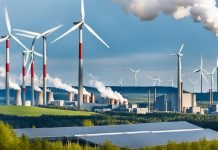
Did you know that the manufacturing industry is responsible for a staggering 25% of global greenhouse gas emissions? As the need for sustainable production methods becomes increasingly important, companies are adopting green manufacturing practices to reduce their environmental impact and improve eco-efficiency.
Key Takeaways:
- Lean and green manufacturing practices provide a competitive advantage in sustainability.
- Integrating eco-efficiency into lean operations improves competitiveness and reduces carbon emissions.
- Maintenance plays a crucial role in achieving lean and green manufacturing.
- Companies can enhance their financial performance and reduce their ecological footprint through lean and green initiatives.
- The integration of lean and green practices requires a strategic approach and collaboration with suppliers.
The Benefits of Lean and Green Manufacturing Practices
Lean and green manufacturing practices offer several benefits to companies. By adopting these practices, you can gain a competitive advantage in sustainability, improve resource efficiency, reduce waste, enhance energy efficiency, and minimize environmental impact. The integration of lean and green principles allows for more sustainable and environmentally responsible manufacturing operations.
- Resource Efficiency: Lean and green practices optimize production processes, leading to improved resource efficiency. By eliminating unnecessary steps and streamlining operations, companies can maximize the use of available resources and minimize waste.
- Waste Reduction: Lean manufacturing techniques focus on identifying and eliminating waste throughout the production process. By implementing lean and green initiatives, companies can significantly reduce waste, both in terms of time and materials, resulting in cost savings and improved environmental performance.
- Energy Efficiency: Lean and green manufacturing practices prioritize energy efficiency by optimizing equipment and processes. By minimizing energy consumption, companies can reduce their carbon footprint and lower operational costs.
- Environmental Impact Reduction: Adopting lean and green practices helps companies reduce their environmental impact. By optimizing production processes, companies can minimize the use of natural resources, reduce emissions, and contribute to a healthier environment.
“Lean and green manufacturing practices provide a pathway to achieving operational excellence while minimizing environmental harm. By integrating sustainable practices into your operations, you not only contribute to a greener future but also enhance your financial performance and improve product quality.”
By implementing lean and green manufacturing practices, companies can experience significant improvements in their financial performance, as well as enhanced brand reputation and customer satisfaction. The adoption of sustainable manufacturing practices aligns with evolving market expectations, positioning companies as leaders in environmental stewardship and attracting environmentally conscious consumers.
Furthermore, the integration of lean and green principles fosters a culture of continuous improvement, with employees actively engaged in identifying opportunities for efficiency gains and environmental stewardship. This collaborative approach drives innovation and enhances overall productivity and profitability.
Overall, the benefits of lean and green manufacturing practices extend beyond the manufacturing floor. By adopting these practices, companies can achieve a sustainable competitive advantage, reduce costs, improve product quality, and contribute to a greener future.
| Benefits of Lean and Green Manufacturing |
|---|
| Competitive advantage in sustainability |
| Improved resource efficiency |
| Waste reduction |
| Energy efficiency |
| Reduced environmental impact |
The Role of Maintenance in Lean and Green Manufacturing
Maintenance plays a crucial role in lean and green manufacturing. It ensures that equipment is in good condition, leading to improved energy efficiency and resource savings. By maintaining equipment properly, companies can minimize quality fluctuations in production, reduce energy consumption, and optimize resource utilization.
Proper maintenance practices contribute to sustainability in manufacturing operations by:
- Maximizing equipment lifespan and performance
- Minimizing downtime and production delays
- Reducing energy consumption and carbon emissions
- Optimizing resource utilization
| Maintenance Benefits | Key Outcomes |
|---|---|
| Improved Equipment Condition | Enhanced energy efficiency and reduced resource waste |
| Minimized Quality Fluctuations | Consistent product quality and reduced waste |
| Reduced Energy Consumption | Lower operational costs and decreased environmental impact |
| Optimized Resource Utilization | Increased resource savings and sustainability |
However, there is a lack of research and evidence on how maintenance practices can specifically contribute to sustainability in manufacturing operations. Further studies are needed to evaluate the impact of maintenance on energy efficiency, resource savings, and overall environmental sustainability.
Integrating Lean and Green Practices
Integrating lean and green practices is a strategic approach that aligns efficiency and sustainability goals. By identifying sources of waste and implementing lean techniques, companies can reduce waste and optimize energy consumption. Additionally, incorporating green design principles in product development minimizes environmental impact.
Continuous improvement plays a vital role in ensuring the successful integration of lean and green practices. Companies should encourage employee engagement to drive innovation and foster a culture of sustainability. Metrics and measurement are essential tools to track progress and identify areas for improvement.
Collaboration with suppliers is another crucial aspect of integrating lean and green practices. By working closely with partners, companies can align their efforts towards waste reduction, energy optimization, and environmental sustainability.
Furthermore, compliance with environmental regulations is vital to ensure the implementation of sustainable practices. Adhering to these regulations not only helps protect the environment but also enhances the company’s reputation.
“Integrating lean and green practices allows companies to align economic efficiency with environmental sustainability, creating a win-win situation for both the bottom line and the planet.”
The Benefits of Integrating Lean and Green Practices
The integration of lean and green practices offers several benefits for companies:
- Improved operational efficiency
- Reduced costs and waste
- Enhanced environmental performance
- Increased competitiveness
- Positive impact on brand image and reputation
By aligning efficiency and sustainability, companies can achieve a balance between economic growth and environmental stewardship.
Key Strategies for Integration
When integrating lean and green practices, companies should consider the following key strategies:
- Identify and prioritize areas of waste and inefficiency
- Implement lean techniques to reduce waste and optimize energy consumption
- Emphasize green design principles in product development
- Promote a culture of continuous improvement
- Encourage employee engagement and participation
- Track progress and measure performance using appropriate metrics
- Collaborate with suppliers to drive sustainability initiatives
- Comply with environmental regulations and standards
By following these strategies, companies can successfully integrate lean and green practices, leading to sustainable and environmentally responsible manufacturing operations.
| Benefits of Integrating Lean and Green Practices | Strategies for Integration |
|---|---|
| Improved operational efficiency | Identify and prioritize areas of waste and inefficiency |
| Reduced costs and waste | Implement lean techniques to reduce waste and optimize energy consumption |
| Enhanced environmental performance | Emphasize green design principles in product development |
| Increased competitiveness | Promote a culture of continuous improvement |
| Positive impact on brand image and reputation | Encourage employee engagement and participation |
| Track progress and measure performance using appropriate metrics | |
| Collaborate with suppliers to drive sustainability initiatives | |
| Comply with environmental regulations and standards |
Case Study: Applying Lean-Green Model in Manufacturing
A case study was conducted to demonstrate the application of a lean-green model in manufacturing. The study focused on reducing waste, energy consumption, and greenhouse gas (GHG) emissions. The implementation of the lean-green model involved using lean manufacturing techniques such as SMED (Single Minute Exchange of Die) and assessing carbon footprinting in machining centers.
The results showed significant improvements in eco-efficiency indicators, including waste reduction, energy consumption, and GHG emissions.

Lean-Green Model Implementation
The case study implemented the lean-green model in the manufacturing process to enhance sustainability and eco-efficiency. The key steps involved:
- Identifying and analyzing areas of waste generation and energy consumption
- Implementing lean techniques, such as SMED, to optimize production and reduce waste
- Assessing carbon footprinting in machining centers to identify sources of GHG emissions
- Integrating eco-friendly practices in the production process to minimize environmental impact
- Tracking and measuring eco-efficiency indicators to evaluate the success of the implementation
“The lean-green model implementation in our manufacturing process has resulted in significant improvements in waste reduction, energy consumption, and GHG emissions. By integrating lean practices and focusing on sustainability, we have been able to achieve eco-efficiency in our operations.” – John Richardson, Manufacturing Manager at ABC Industries
Eco-efficiency Indicators
The case study measured several eco-efficiency indicators to assess the effectiveness of the lean-green model implementation:
| Eco-efficiency Indicator | Baseline Measurement | Post-Implementation Measurement | Improvement |
|---|---|---|---|
| Waste Reduction | 20% reduction in waste | 40% reduction in waste | +20% improvement |
| Energy Consumption | 100 kWh | 75 kWh | -25 kWh improvement |
| GHG Emissions | 500 tons of CO2e | 350 tons of CO2e | -150 tons of CO2e improvement |
The implementation of the lean-green model resulted in a 20% improvement in waste reduction, a 25 kWh reduction in energy consumption, and a significant decrease of 150 tons of CO2e in GHG emissions. These improvements demonstrate the effectiveness of integrating lean practices with green initiatives to achieve sustainable and environmentally responsible manufacturing processes.
Achieving Eco-efficiency through Lean and Circular Economy
To achieve eco-efficiency, companies can combine lean manufacturing principles with circular economy concepts. By integrating these approaches, businesses can optimize resource efficiency, reduce waste, and establish circular flows that promote sustainable production.
Lean manufacturing techniques, such as Just-in-Time (JIT) production and Total Productive Maintenance (TPM), can be applied to minimize resource consumption and streamline processes. By eliminating non-value-added activities and optimizing the entire product lifecycle, companies can reduce their environmental impact and improve eco-efficiency.
Additionally, embracing circular economy principles can contribute to sustainable production. This involves designing products with a focus on reuse, recycling, and remanufacturing, thereby reducing the need for virgin resources and minimizing waste generation.
An effective way to evaluate and enhance eco-efficiency in lean and circular economy practices is through the use of self-assessment tools. One such tool is the Lean-Circular Maturity Model, which provides companies with a framework to assess their current practices and identify areas for improvement.
By adopting lean manufacturing principles and incorporating circular economy concepts, companies can achieve eco-efficiency and contribute to a more sustainable future. This approach promotes resource efficiency, waste reduction, and the establishment of circular flows, ultimately leading to more sustainable and environmentally friendly production processes.
The Importance of Lean-Green Integration for Sustainable Business Models
Lean-Green integration is crucial for the development of sustainable business models. By reducing waste, improving material efficiency, and minimizing operational costs, companies can achieve both efficiency and sustainability goals. The integration of lean and green principles helps companies become more resource-efficient, environmentally responsible, and socially accountable. This alignment contributes to long-term sustainability and a smaller ecological footprint.
By adopting lean and green practices, businesses can optimize their operations to minimize waste generation and maximize resource utilization. Implementing sustainable production methods not only reduces environmental impact but also leads to cost savings and improved efficiency. Waste reduction efforts contribute to lower material and disposal costs, while energy-efficient processes result in reduced operational costs. Furthermore, material efficiency optimizes the use of raw materials, minimizing resource consumption and waste generation.
One of the key benefits of lean-gre
en integration is the reduction of operational costs. By eliminating waste, streamlining processes, and improving overall efficiency, companies can save valuable resources and enhance their profitability. Lean practices such as value stream mapping and continuous improvement can identify areas of waste and inefficiency, leading to targeted improvements that drive cost reduction.
“Sustainable development is the pathway to the future we want for all. It offers a framework to generate economic growth, achieve social justice, exercise environmental stewardship, and strengthen governance.” – Ban Ki-moon
The integration of lean and green practices also fosters innovation and drives the development of sustainable products and services. By considering the environmental impact at every stage of the product life cycle, companies can design eco-friendly products and explore new market opportunities. Through collaboration with suppliers and stakeholders, organizations can establish transparent and sustainable supply chains, further enhancing their business models.
Benefits of Lean-Green Integration
The benefits of lean-green integration go beyond environmental sustainability. This approach enables companies to:
- Reduce waste and promote circularity
- Improve resource efficiency and material optimization
- Drive innovation and develop eco-friendly products
- Enhance operational efficiency and reduce costs
- Meet customer demands for sustainable practices
- Enhance brand reputation and attract socially conscious consumers
To illustrate the impact of lean-green integration, consider the following table showcasing key performance indicators:
| Key Performance Indicator | Before Lean-Green Integration | After Lean-Green Integration |
|---|---|---|
| Waste Generation (tons/year) | 500 | 250 |
| Energy Consumption (kWh/year) | 1,000,000 | 750,000 |
| Operational Costs ($) | 1,500,000 | 1,200,000 |

The table above demonstrates the tangible results of implementing lean-green integration. Waste generation and energy consumption are significantly reduced, leading to cost savings and a more sustainable production process. By aligning efficiency with environmental responsibility, companies can create sustainable business models that benefit both the bottom line and the planet.
Barriers and Challenges in Implementing Low Carbon Operations
The implementation of low carbon operations is not without its barriers and challenges, particularly in emerging economies. However, the outcomes of COP26 have underscored the urgency and importance of taking immediate action to achieve global net-zero emissions. Companies that strive for low carbon operations must address several key challenges in order to improve environmental performance and achieve their ESG targets. These challenges include:
- Limited access to clean and renewable energy sources
- Insufficient infrastructure for sustainable production
- High upfront costs of adopting low carbon technologies
- Lack of awareness and knowledge about sustainable practices
- Resistance to change from traditional and established norms
- Complex regulatory frameworks and compliance requirements
Overcoming these barriers requires a multi-faceted approach that involves collaboration among various stakeholders, including governments, businesses, and communities. It is essential for companies to integrate sustainable production and environmental compliance into their core operations to pave the way for a low carbon future.
Quote:
“The transition to low carbon operations is a global imperative. Companies must confront and overcome the barriers and challenges to achieve sustainable and environmentally responsible production.” – [Name]
Emerging Economies and Sustainable Production
Emerging economies play a crucial role in the global effort towards sustainable production. While they face unique challenges, they also possess significant opportunities for innovation and growth. By embracing low carbon operations, emerging economies can not only contribute to mitigating climate change but also enhance their economic competitiveness.
Environmental Compliance: Leading the Way
Environmental compliance is a vital aspect of implementing low carbon operations. Companies must navigate through complex regulatory frameworks and standards to ensure that their operations align with environmental requirements and guidelines. By proactively complying with environmental regulations, companies can not only minimize legal risks but also demonstrate their commitment to sustainability and responsible business practices.
Conclusion
The integration of lean and green manufacturing practices has proven to be a game-changer for companies aspiring to achieve sustainable production. By adopting a lean and green approach, companies can significantly improve their resource efficiency, reduce waste, and minimize their environmental impact. These practices offer multiple benefits, including enhanced competitiveness, cost reduction, and a contribution to a greener future.
The future of manufacturing lies in optimizing processes for sustainability and implementing eco-conscious production strategies. By aligning lean principles with green initiatives, companies can achieve not only operational efficiency but also environmental sustainability. This alignment allows for the development of sustainable business models that are resource-efficient, environmentally responsible, and socially accountable.
As the manufacturing industry continues to evolve, prioritizing eco-efficiency in lean operations will be paramount. By optimizing energy consumption, conserving resources, and reducing waste, companies can navigate the future of manufacturing with a strong commitment to sustainability. It is through this commitment that we can create a greener, more sustainable world for generations to come.
FAQ
What is sustainability and eco-efficiency in lean manufacturing?
Sustainability and eco-efficiency in lean manufacturing refer to the integration of environmental sustainability practices into lean manufacturing processes. It aims to optimize production processes for sustainability, reduce waste, and minimize the environmental impact of manufacturing operations.
What are the benefits of lean and green manufacturing practices?
Adopting lean and green manufacturing practices offers several benefits, including improved resource efficiency, waste reduction, energy efficiency, and reduced environmental impact. It also provides companies with a competitive advantage in sustainability and helps enhance financial performance, product quality, and ecological footprint reduction.
What role does maintenance play in lean and green manufacturing?
Maintenance plays a crucial role in lean and green manufacturing by ensuring equipment is in good condition, leading to improved energy efficiency and resource savings. Proper maintenance practices minimize quality fluctuations in production, reduce energy consumption, and optimize resource utilization.
How can companies integrate lean and green practices?
Integrating lean and green practices requires a strategic approach that aligns efficiency and sustainability goals. Companies need to identify sources of waste and implement lean techniques to reduce waste and optimize energy consumption. Green design principles should guide product development, and continuous improvement is crucial. Employee engagement, metrics and measurement, collaboration with suppliers, and compliance with environmental regulations are also essential.
Can you provide a case study on the application of a lean-green model in manufacturing?
Yes, a case study was conducted to demonstrate the application of a lean-green model in manufacturing. It focused on reducing waste, energy consumption, and greenhouse gas emissions. The implementation involved using lean manufacturing techniques such as SMED (Single Minute Exchange of Die) and assessing carbon footprinting in machining centers. The results showed significant improvements in eco-efficiency indicators, including waste reduction, energy consumption, and GHG emissions.
How can lean and circular economy concepts be integrated to achieve eco-efficiency?
To achieve eco-efficiency, companies can combine lean manufacturing principles with circular economy concepts. This integration focuses on resource efficiency, waste reduction, and the establishment of circular flows. By applying lean techniques and considering the entire lifecycle of products, companies can create more sustainable and environmentally friendly production processes. Self-assessment tools like the Lean-Circular Maturity Model can help companies enhance their lean and circular practices.
Why is the integration of lean and green manufacturing essential for sustainable business models?
The integration of lean and green manufacturing practices is essential for the development of sustainable business models. It reduces waste, improves material efficiency, minimizes operational costs, and helps companies achieve both efficiency and sustainability goals. By adopting a lean and green approach, companies become more resource-efficient, environmentally responsible, and socially accountable, leading to long-term sustainability and a smaller ecological footprint.
What are the barriers and challenges in implementing low carbon operations?
Implementing low carbon operations faces various barriers and challenges, especially in emerging economies. The outcomes of COP26 underline the importance of taking immediate action to achieve global net-zero emissions. Companies striving for low carbon operations need to address operational and systemic changes to improve environmental performance and meet their ESG targets. Compliance with environmental regulations and standards is crucial for maintaining a positive reputation and achieving sustainability goals.