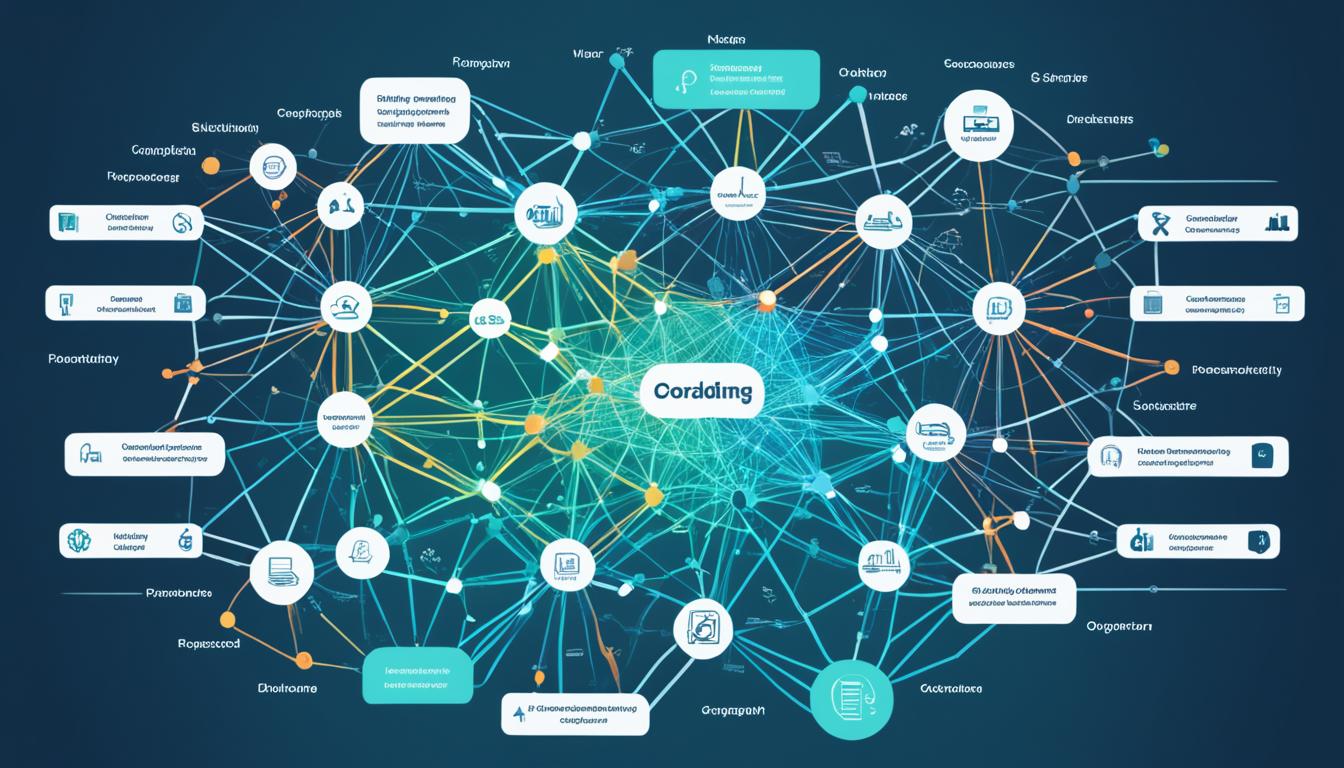
Did you know that supply chain management (SCM) software is projected to reach a market value of $23.3 billion by 2026? That’s a staggering figure, highlighting the growing importance of SCM software in today’s complex business landscape.
Supply chain management involves the intricate management of goods, data, and finances related to a product or service. From logistics management and inventory optimization to demand planning and order fulfillment, SCM software plays a crucial role in enhancing efficiency and streamlining operations.
Are you ready to dive into the world of SCM software and discover its transformative impact on businesses? Let’s explore the key aspects, innovations, and benefits that make SCM software a vital tool for success in the modern supply chain.
Key Takeaways:
- SCM software is projected to reach a market value of $23.3 billion by 2026.
- Supply chain management encompasses various critical functions, including logistics management, inventory optimization, and demand planning.
- SCM software enhances efficiency and streamlines operations, resulting in cost savings and improved customer experiences.
- Technological advancements, such as AI, machine learning, and blockchain, are shaping the future of SCM.
- Choosing the right SCM software requires considering factors such as business needs, features, and customer reviews.
The History of SCM
Ah, the fascinating journey of supply chain management! Let’s dive into the annals of time and explore the evolution of this intricate web that connects businesses worldwide. From ancient civilizations to the modern digital era, the history of SCM is a testament to human ingenuity and innovation.
Supply chains have existed since time immemorial, albeit in simpler forms. Ancient civilizations like the Egyptians and the Romans relied on intricate networks of trade routes to transport goods and share resources. Fast forward to the Industrial Revolution, and we see the birth of the modern supply chain.
Industrialization was the catalyst that revolutionized SCM, forever changing the way we produce and distribute goods. The visionary Henry Ford, with his groundbreaking mass production techniques and standardization of automobile parts, transformed the manufacturing landscape. The concept of the assembly line ushered in a new era of efficiency and scalability.
But it didn’t stop there. Technological advancements, such as the advent of the internet and automation, propelled SCM into new dimensions. The internet connected businesses globally, opening up endless possibilities for collaboration, information sharing, and supply chain integration. Automation streamlined processes, enhanced accuracy, and allowed for real-time monitoring, making SCM more agile and responsive to customer demands.
Just imagine: ancient merchants traversing dangerous routes, industrial pioneers revolutionizing production, and tech-savvy entrepreneurs harnessing the power of the internet. It’s a thrilling tale of adaptability and progress!
Today, SCM stands at the heart of every successful business operation. It’s no longer just about moving goods from point A to point B. It’s about orchestrating a symphony of logistics, inventory management, demand planning, and customer satisfaction. As industries grow more complex and customer-centric, SCM continues to evolve, requiring adaptive strategies to thrive in the dynamic marketplace.
Supply Chain Evolution
Throughout history, supply chains have adapted and evolved to meet the changing demands of society. Here’s a brief overview of key milestones in the development of SCM:
- In ancient times, supply chains were predominantly local, consisting of trade routes and barter systems.
- The Industrial Revolution fueled the growth of supply chains, thanks to advancements in transportation and manufacturing.
- The rise of globalization expanded supply chains across continents, connecting suppliers, manufacturers, and retailers worldwide.
- The digital age brought about the integration of information technology, automation, and smart systems, enabling unparalleled visibility and efficiency in SCM.
Technological Advancements in SCM
The history of SCM is intertwined with significant technological advancements that have shaped its evolution. Here are some key innovations:
- Internet: The internet revolutionized communication and collaboration in supply chains, enabling real-time information sharing and coordination across multiple stakeholders.
- Automation: Automation streamlined processes, improved accuracy, and reduced human errors, leading to greater efficiency in SCM operations.
- Big Data and Analytics: The ability to collect and analyze vast amounts of data empowered businesses with actionable insights for demand forecasting, inventory optimization, and supply chain planning.
- IoT: The Internet of Things connected physical objects, allowing for real-time tracking, remote monitoring, and predictive maintenance, enhancing supply chain visibility and efficiency.
What an extraordinary journey it has been! The history of SCM is a testament to the ingenuity of human beings and our relentless pursuit of efficiency and progress. As we step into the future, there’s no doubt that SCM will continue to evolve, driven by emerging technologies and the ever-changing needs of businesses and consumers.
SCM in the Era of Industry 4.0
Welcome to the era of Industry 4.0, where the fusion of advanced technologies and supply chain management (SCM) is revolutionizing the manufacturing landscape. In this fourth industrial revolution, SCM plays a central role in shaping efficient and intelligent supply chain operations. Technologies such as AI, machine learning, IoT, automation, and sensors are driving this transformation.
Imagine a supply chain that predicts maintenance requirements before issues arise, plans and executes operations seamlessly, and continuously identifies cost-saving opportunities. That’s the power of SCM in Industry 4.0.
With the help of AI and machine learning algorithms, SCM software can analyze vast amounts of data to make accurate predictions and optimize supply chain processes. Real-time monitoring of inventory levels, demand patterns, and market trends enables agile decision-making, fostering a competitive edge.
The Internet of Things (IoT) further enhances SCM by connecting physical devices and machinery, creating a network of data-sharing sensors. These sensors capture and transmit real-time information on production, inventory, and shipment statuses. Supply chain managers can leverage this data to identify bottlenecks, optimize routes, and ensure timely delivery.
Automation is another game-changing element in Industry 4.0. From automated warehouses to robotic process automation, businesses are streamlining operations and reducing reliance on manual labor. Automating repetitive tasks not only saves time but also minimizes errors and improves overall efficiency in the supply chain.
“Embracing Industry 4.0 and leveraging technology advancements can unlock unprecedented growth opportunities for your supply chain. Stay ahead of the curve, harness the power of AI, machine learning, IoT, automation, and sensors to transform your operations.”
SCM in Industry 4.0 is all about connectivity and intelligence. It envisions an interconnected ecosystem where suppliers, manufacturers, and customers collaborate seamlessly. By leveraging these advanced technologies, companies can achieve end-to-end supply chain visibility, enabling real-time decision-making and informed strategies.
Now, let’s take a closer look at how SCM in Industry 4.0 is reshaping the supply chain landscape:
Benefits of SCM in Industry 4.0
- Predictive maintenance: AI-powered algorithms anticipate maintenance requirements, reducing unplanned downtime and improving equipment reliability.
- Aligned planning and execution: Real-time data insights enable synchronized supply chain activities, enhancing coordination and efficiency.
- Cost savings: Optimized inventory management, demand forecasting, and route optimization lead to reduced costs and improved profitability.
- Improved supply chain efficiency: AI-driven analytics and automation streamline processes, eliminating bottlenecks and reducing lead times.
As we navigate the ever-evolving landscape of Industry 4.0, SCM continues to evolve, remaining at the forefront of technological advancements. The future of supply chain management lies in harnessing the potential of AI, machine learning, IoT, automation, and sensors to create responsive, efficient, and customer-centric supply chains.
Customer-Centric SCM
In today’s fast-paced and competitive business landscape, customer satisfaction and experience are more important than ever. To thrive in this environment, supply chain management (SCM) must prioritize meeting customer expectations in terms of order fulfillment, timely delivery, and product availability. Taking a customer-centric approach allows businesses to deliver exceptional experiences and foster customer loyalty.
Supply chain visibility plays a crucial role in achieving customer satisfaction. From the sourcing of raw materials to the delivery of the final product, having visibility across the entire supply chain ensures that customers receive the products they need when they need them. This visibility enables businesses to identify any bottlenecks or delays and take proactive measures to streamline the process.
Coordinating various departments and partners is essential to delivering an exceptional customer experience. When different functions, such as procurement, production, and logistics, work together seamlessly, it reduces inefficiencies and improves the overall experience for customers. Collaborative efforts ensure smooth order processing, accurate inventory management, and efficient transportation, leading to faster and more reliable delivery.
Benefits of a Customer-Centric SCM:
- Enhanced customer experience and satisfaction
- Improved order fulfillment and on-time delivery
- Optimized inventory management and availability
- Streamlined communication and coordination among departments
“Customer-centricity is the key to success in today’s SCM landscape. By placing the customer at the center of your supply chain operations, you can deliver exceptional experiences that differentiate your brand and build long-term customer loyalty.”
A customer-centric SCM strategy requires a deep understanding of customer needs and preferences. Data analysis and market research can provide valuable insights into customer demand patterns and help identify opportunities for improvement. By leveraging this information, businesses can tailor their supply chain processes to meet specific customer requirements and deliver personalized experiences.
Customer-Centric SCM and Order Fulfillment:
Efficient order fulfillment is a critical aspect of customer-centric SCM. It involves managing the entire order processing journey, from order placement to delivery. This includes inventory management, order prioritization, picking and packing, and transportation logistics.
SCM software plays a vital role in ensuring smooth order fulfillment. It provides real-time visibility into inventory levels, automates order processing workflows, and enables accurate tracking of shipments. By leveraging technology, businesses can streamline these processes, minimize errors, and provide customers with accurate and up-to-date information about their orders.
The Role of Supply Chain Visibility:
Supply chain visibility is the foundation of customer-centric SCM. It refers to the ability to track and monitor the movement of goods and information throughout the supply chain. With supply chain visibility, businesses can proactively identify potential disruptions, such as delays or stockouts, and take immediate action to mitigate their impact on customer satisfaction.
Implementing advanced technologies, such as IoT sensors and real-time tracking systems, enables businesses to achieve supply chain visibility. These technologies provide up-to-the-minute data on inventory levels, transportation status, and order fulfillment progress. By leveraging this data, businesses can make informed decisions, anticipate customer needs, and address any potential issues before they escalate.
Customer-Centric SCM vs. Traditional SCM
| Customer-Centric SCM | Traditional SCM |
|---|---|
| Focus on meeting customer expectations and delivering exceptional experiences | Primarily focused on internal efficiency and cost reduction |
| Highly responsive to changing customer demands and preferences | Reactive approach to customer needs |
| Collaboration and coordination across departments and partners | Siloed operations and limited collaboration |
| Real-time visibility into supply chain processes | Limited visibility and reactive problem-solving |
Agility in the Supply Chain
The marketplace is ever-changing, with diverse customer demands and unpredictable circumstances. To thrive in this environment, an agile supply chain is not just an advantage—it’s a necessity. Agility gives your business the ability to quickly adapt to market changes, providing customized products or services that cater to your customers’ unique needs. It also allows you to effectively manage supply chain sourcing, ensuring a steady flow of materials even in the face of geopolitical and economic challenges.
Geopolitical factors, such as trade disputes or regulatory changes, can have a significant impact on your supply chain. Economic factors, such as fluctuations in currency exchange rates or shifts in consumer spending, also play a crucial role. These factors can disrupt your sourcing activities, making it essential to have the ability to pivot and find alternative suppliers. An agile supply chain gives you the flexibility to navigate these challenges and maintain supply chain continuity.
The key to agility lies in adaptability and real-time reconfigurations. By continuously monitoring market trends and customer preferences, you can make swift adjustments to your supply chain strategy. This could involve modifying production processes, changing sourcing locations, or reevaluating inventory levels. Agility ensures that you stay ahead of the competition, meeting customer demands while optimizing your supply chain efficiency.
“Agility is not just about reacting quickly; it’s about being proactive and staying one step ahead. It’s about embracing change and using it to your advantage.”
Customization
One of the main advantages of an agile supply chain is the ability to offer customization. In today’s market, customers are increasingly seeking personalized products and experiences. By integrating customization into your supply chain, you can cater to these demands and gain a competitive edge. Customization allows you to deliver products that truly meet your customers’ unique specifications, resulting in increased customer satisfaction and loyalty.
Supply Chain Sourcing
Effective supply chain sourcing is a critical component of an agile supply chain. It involves finding the right suppliers, managing relationships, and optimizing the flow of materials. By carefully selecting your suppliers and fostering strong partnerships, you can ensure a reliable supply of high-quality materials. Furthermore, by having multiple sourcing options and backup plans in place, you can mitigate risks and minimize disruptions.
Geopolitical and Economic Impact
Geopolitical events, such as changes in trade policies or political instability, and economic fluctuations can significantly impact your supply chain. These factors introduce uncertainties that can disrupt sourcing activities, increase costs, and impact the overall efficiency of your supply chain. It is essential to closely monitor geopolitical and economic developments and proactively respond to changes to mitigate potential risks.

| Benefits of an Agile Supply Chain | Why It Matters |
|---|---|
| 1. Rapid response to market changes | An agile supply chain enables you to quickly adapt to evolving market trends, staying ahead of the competition. |
| 2. Customized products and services | By embracing agility, you can offer tailored solutions that meet your customers’ unique needs and preferences. |
| 3. Minimized supply chain disruptions | An agile supply chain allows you to navigate geopolitical and economic challenges, ensuring continuity and stability in your sourcing activities. |
| 4. Enhanced customer satisfaction | When you can quickly adjust to changing customer demands and offer personalized experiences, customer satisfaction and loyalty increase. |
The Role of Cloud in SCM
Cloud-based SCM software is revolutionizing the way businesses manage their supply chains. With its flexibility, cost-effectiveness, and scalability, cloud-based SCM solutions offer a plethora of advantages for modern enterprises.
Flexibility is key in today’s dynamic market conditions. Cloud-based SCM allows you the freedom to access your supply chain data from anywhere, at any time. Whether you’re on the go or working remotely, the cloud provides easy accessibility, enhancing collaboration and decision-making processes.
Scalability is another crucial factor. As your business grows, your supply chain management needs to adapt. Cloud-based SCM software offers the ability to scale your operations seamlessly, ensuring that your software can support your expanding business requirements without compromising performance or efficiency.
But what about cost-effectiveness? Cloud-based SCM solutions often come with subscription-based pricing models, eliminating the need for significant upfront investments. This approach is highly advantageous for businesses, as it reduces capital expenditure and spreads costs over time, making SCM software more accessible to companies of all sizes.
Furthermore, cloud-based SCM solutions provide better compatibility with emerging technologies. By leveraging the cloud, you can easily integrate your SCM software with other business systems, ensuring smooth data flows and cohesive operations.
Now, let’s take a closer look at the advantages of cloud-based SCM software:
- Flexibility: Access your supply chain data from anywhere, enhancing collaboration and decision-making.
- Cost-Effectiveness: Subscription-based pricing models make SCM software more accessible and reduce upfront investments.
- Scalability: Seamlessly scale your operations as your business grows, ensuring your software can handle increasing demands.
- Compatibility: Cloud-based SCM solutions offer better compatibility with emerging technologies and easier integration with other business systems.
With cloud-based SCM software, you gain the flexibility, cost-effectiveness, and scalability needed to optimize your supply chain operations and drive business growth.
| Advantages of Cloud-based SCM | Cloud-based SCM | Traditional On-Premise SCM |
|---|---|---|
| Flexibility | ✓ | ✗ |
| Cost-Effectiveness | ✓ | ✗ |
| Scalability | ✓ | ✗ |
| Compatibility | ✓ | ✗ |
Blockchain in SCM
Blockchain technology is revolutionizing supply chain management (SCM), providing enhanced traceability, trust, and supply chain visibility. By harnessing the power of blockchain, SCM software can ensure transparency and visibility throughout the supply network, fostering stronger relationships with suppliers and customers.
One of the key advantages of blockchain in SCM is improved traceability. The decentralized and immutable nature of blockchain allows for the secure tracking of every transaction and movement of goods within the supply chain. This enables companies to accurately trace the origin and journey of products, ensuring compliance with regulatory requirements and quality standards.
Furthermore, blockchain technology offers enhanced repudiation, eliminating the risk of fraudulent activities and counterfeit products. The transparent and tamper-proof nature of blockchain ensures that all parties involved in the supply chain can trust the authenticity and integrity of the information stored on the blockchain.
“Blockchain technology has the potential to transform supply chain management by improving traceability, eliminating fraud, and enhancing trust between businesses and consumers.”
Increased supply chain visibility
Supply chain visibility is crucial for businesses to make informed decisions and optimize their operations. Blockchain-enabled SCM provides real-time visibility into the flow of goods, from raw materials sourcing to the final delivery. This transparency fosters trust between companies and their partners, while also enabling efficient collaboration and problem-solving.
One industry that can benefit greatly from blockchain-enabled SCM is the food industry. With blockchain, food companies can ensure accurate forecasting, prevent foodborne illnesses by quickly identifying the source of contamination, and provide consumers with verifiable information about the origin and quality of the food they consume.
Additionally, blockchain technology can facilitate the sharing of data among supply chain partners securely, eliminating the need for intermediaries and reducing administrative costs. This streamlines processes and facilitates faster and more efficient transactions, ultimately improving the overall efficiency of the supply chain.
| Benefits of Blockchain in SCM | |
|---|---|
| Enhanced traceability | Accurately track and trace products throughout the supply chain |
| Improved trust | Eliminate the risk of fraud and counterfeit products |
| Increased supply chain visibility | Real-time visibility into the flow of goods and efficient collaboration |
The integration of blockchain technology into SCM software is transforming the way businesses manage their supply chains. By leveraging blockchain, companies can achieve greater transparency, trust, and efficiency, leading to improved customer satisfaction and operational excellence.
Top SCM Software Solutions
When it comes to supply chain management, having the right software tools can make all the difference. There are several top SCM software solutions available in the market that can optimize various aspects of your supply chain. These software providers offer a range of features and capabilities to streamline your operations, improve efficiency, and enhance collaboration.
Here are some highly regarded options to consider:
| Software | Features |
|---|---|
| Logiwa WMS | An advanced warehouse management system that provides real-time inventory visibility, order management, and more. |
| NetSuite | An integrated ERP system that offers end-to-end supply chain management capabilities, including order management, inventory optimization, and demand planning. |
| Precoro | A procurement software that streamlines the purchasing process, from supplier onboarding to purchase orders and invoice management. |
| Magaya Supply Chain | A comprehensive supply chain solution that offers inventory management, logistics automation, and document management. |
| SAP SCM | A robust supply chain management software suite that covers demand planning, inventory management, and transportation management. |
| FreightPOP | A transportation management system that simplifies freight management, carrier selection, and tracking. |
| Shippabo | A cloud-based platform that offers end-to-end visibility, collaboration, and optimization for domestic and international shipments. |
These top SCM software solutions can help you optimize your supply chain, enhance efficiency, and improve collaboration with suppliers and partners. Whether you need better order management, inventory optimization, or improved supplier onboarding, these software providers have you covered.
Remember, choosing the right SCM software is crucial for your business’s success. Evaluate your specific needs, compare features and pricing, and consider customer reviews to make an informed decision.
Factors to Consider in Choosing SCM Software
When it comes to choosing the right Supply Chain Management (SCM) software for your business, there are several crucial factors that you need to take into consideration. In this section, we’ll explore these factors in detail, helping you make an informed decision that aligns with your specific business needs and requirements.
Assess Your Business Needs
Before diving into the world of SCM software, it’s essential to assess your unique business needs and determine the specific SCM functions that are crucial for your operations. Take the time to evaluate your supply chain processes, identify pain points, and define your goals. This will allow you to narrow down the software options that offer the features you require.
Evaluate Available Features
The world of SCM software is vast, with various solutions offering different features and capabilities. It’s important to evaluate the features offered by different software options and consider how well they align with your business needs. Look for features such as inventory management, demand planning, real-time tracking, and collaboration tools. Prioritize the features that will bring the most value to your supply chain operations.
Compare Pricing
While cost shouldn’t be the sole determining factor, it’s crucial to consider the pricing of different SCM software options. Look for transparency in pricing models, and consider both upfront costs and any ongoing maintenance or subscription fees. Remember to balance the cost with the value and features offered by each software solution.
Check Customer Reviews
One of the best ways to gauge the performance and reliability of SCM software is by checking customer reviews and satisfaction ratings. Explore online platforms and forums where businesses share their experiences with different SCM software solutions. Pay attention to feedback related to ease of use, customer support, implementation process, and overall satisfaction. This will provide valuable insights into the software’s suitability for your company.
“Choosing the right SCM software is like finding the perfect dance partner for your supply chain operations. It should seamlessly sync with your business needs and help you smoothly navigate through the complex steps of supply chain management.”
By considering these factors in your decision-making process, you’ll be well-equipped to choose an SCM software solution that meets your business needs, offers the essential features, fits your budget, and has a track record of customer satisfaction. The right SCM software can revolutionize your supply chain operations, boost efficiency, and set your business up for success.
Benefits of SCM Software
Implementing supply chain management (SCM) software brings a myriad of benefits that can revolutionize your business operations. Let’s dive into the advantages of integrating SCM software into your supply chain management system.
Improved Operational Efficiency
SCM software streamlines and automates various supply chain processes, empowering your business to operate with optimal efficiency. With features like demand forecasting, inventory optimization, and order management, you can reduce manual errors, minimize lead times, and enhance overall productivity.
Cost Savings through Automation
By automating repetitive tasks and eliminating inefficiencies, SCM software can yield substantial cost savings for your business. Increased accuracy in demand planning and inventory management helps you avoid overstocking or stockouts, minimizing holding costs and ensuring better cash flow management.
Enhanced Communication and Collaboration
Efficient communication and collaboration are crucial for a well-functioning supply chain. SCM software provides a centralized platform where departments and suppliers can seamlessly exchange information, share updates, and align their efforts. This collaborative approach leads to improved decision-making, reduced lead times, and enhanced customer satisfaction.
“SCM software revolutionizes your supply chain by improving operational efficiency, enabling cost savings through automation, and enhancing communication and collaboration.”
The Future of SCM
The future of supply chain management (SCM) is an exciting and rapidly evolving landscape, driven by emerging technologies and innovative solutions. As businesses navigate the complexities of a global marketplace, it is crucial to stay ahead of the curve by embracing new tools and strategies that optimize supply chain operations.
One of the key drivers of the future of SCM is the integration of emerging technologies. Technologies such as artificial intelligence (AI), machine learning, the Internet of Things (IoT), blockchain, and automation are revolutionizing the way supply chains operate.
AI and machine learning enable predictive analytics, helping businesses forecast demand, optimize inventory levels, and anticipate potential disruptions in the supply chain. These technologies empower companies to make data-driven decisions and drive operational efficiency.
The IoT allows for real-time tracking of assets and shipments, enhancing visibility throughout the supply chain. By leveraging IoT sensors and devices, businesses can monitor inventory levels, track product quality, and ensure timely delivery.
“The future of SCM lies in leveraging emerging technologies such as AI, machine learning, IoT, blockchain, and automation.”
Blockchain technology, with its decentralized and transparent nature, provides enhanced traceability and trust. It enables secure and immutable records of transactions, making it invaluable for supply chain management. By leveraging blockchain, businesses can ensure end-to-end traceability, streamline supplier relationships, and enhance supply chain visibility.
Automation plays a crucial role in the future of SCM by eliminating manual and repetitive tasks. From robotic process automation in warehouses to autonomous vehicles in transportation, automation allows for faster and more accurate operations, reducing costs and increasing efficiency.
As SCM evolves, the focus will also shift towards creating supply chains that are more resilient, flexible, and customer-centric. Businesses will strive to develop agile supply chains that can quickly adapt to changing market dynamics and customer demands. This agility will be achieved through the integration of technologies and the implementation of innovative solutions.
In conclusion, the future of SCM is filled with exciting possibilities. By leveraging emerging technologies and embracing innovative solutions, businesses can transform their supply chains into strategic assets, driving growth, and competitive advantage.
Conclusion
After a thorough exploration of supply chain management (SCM) software, it is clear that this technology is essential for optimizing supply chain operations and achieving business success. With SCM software, you can efficiently manage inventory, collaborate with suppliers, and enhance customer experiences, giving your business a competitive edge in today’s dynamic marketplace.
The key takeaways from this discussion are that investing in the right SCM software can lead to increased efficiency, cost savings, and improved overall supply chain performance. By leveraging SCM software, you can streamline your operations, automate manual tasks, and make data-driven decisions in real-time.
SCM software also enables you to adapt to changing market conditions, respond to customer demands, and ensure supply chain continuity. The importance of SCM software in modern business cannot be understated, as it equips you with the necessary tools and capabilities to navigate the complexities of the global supply chain landscape.
Key Takeaways:
- SCM software plays a vital role in optimizing supply chain operations and ensuring business success.
- Investing in the right SCM software can lead to increased efficiency, cost savings, and a competitive advantage.
- SCM software enables you to manage inventory, coordinate suppliers, and enhance customer experiences.
- With SCM software, you can streamline operations, make data-driven decisions, and adapt to changing market conditions.
In conclusion, embracing SCM software is crucial for businesses aiming to stay ahead in the rapidly evolving world of supply chain management. By harnessing the power of technology, you can unlock new levels of efficiency, profitability, and customer satisfaction. So, don’t wait any longer – make SCM software an integral part of your business strategy and enjoy the benefits it brings!
FAQ
What is supply chain management software?
Supply chain management (SCM) software is a technology solution that helps businesses optimize their supply chain operations and improve efficiency. It encompasses various activities such as procurement, logistics, order management, and inventory management.
What is the history of supply chain management?
Supply chains have been in existence since ancient times and have evolved over the years. Industrialization, starting with Henry Ford’s standardization of automobile parts, transformed SCM and enabled mass production. Technological advancements have further revolutionized SCM, making it more complex and customer-centric.
How does SCM fit into Industry 4.0?
SCM plays a central role in Industry 4.0 as technologies like AI, machine learning, IoT, automation, and sensors transform how companies manufacture, maintain, and distribute products and services. These technologies enable predictive maintenance, aligned planning and execution, cost savings, and improved supply chain efficiency.
How does SCM prioritize customer satisfaction?
SCM must prioritize meeting customer expectations in terms of order fulfillment, timely delivery, and product availability. A customer-centric approach requires a holistic view of the supply chain, ensuring coordination among various departments and partners to deliver an exceptional customer experience.
Why is an agile supply chain important?
An agile supply chain allows businesses to quickly adapt to market changes, customize products or services, and manage supply chain sourcing effectively. Geopolitical and economic factors can significantly impact the supply chain, necessitating the ability to pivot and source materials from alternative suppliers.
What are the advantages of cloud-based SCM software?
Cloud-based SCM software offers advantages such as flexibility, cost-effectiveness, and scalability. The cloud allows for easy access to supply chain data from anywhere, enhancing collaboration and decision-making. Flexibility is crucial in responding to changing market conditions, while scalability ensures the software can accommodate business growth.
How does blockchain improve SCM?
Blockchain technology offers enhanced traceability, repudiation, and trust in the supply chain. By leveraging blockchain, SCM software can ensure transparency and visibility throughout the supply network, improving relationships with suppliers and customers.
What are some top SCM software solutions?
Some highly regarded SCM software solutions include Logiwa WMS, NetSuite, Precoro, Magaya Supply Chain, SAP SCM, FreightPOP, and Shippabo. These software options offer a range of features and capabilities to optimize various aspects of the supply chain.
What factors should I consider when choosing SCM software?
When choosing SCM software, consider your business needs and determine the specific SCM functions required. Evaluate the features offered by different software options and compare pricing. Additionally, check customer reviews and satisfaction ratings for insights into the software’s performance and reliability.
What are the benefits of SCM software?
SCM software offers benefits such as improved operational efficiency, cost savings through automation, and enhanced communication and collaboration between departments and suppliers. These software solutions streamline supply chain processes, optimize inventory management, and enable better planning and decision-making based on real-time data.
What does the future hold for SCM?
The future of SCM lies in leveraging emerging technologies such as AI, machine learning, IoT, blockchain, and automation. These technologies will continue to drive innovation in supply chain management, enabling predictive analytics, autonomous operations, and sustainable practices.