Did you know that inadequate machine guarding and equipment safety contribute to thousands of workplace injuries each year? Whether it’s a manufacturing facility, construction site, or agricultural operation, the failure to implement proper safety measures can have severe consequences for workers. From crushed fingers and amputations to burns and blindness, the impact of these hazards is staggering.
Key Takeaways:
- Machine guarding is essential for preventing injuries caused by moving machine parts.
- Compliance with OSHA regulations is crucial in implementing effective machine guarding practices.
- Safeguards, such as physical barriers and safety devices, play a vital role in protecting workers from hazardous machine parts.
- Personal protective equipment (PPE) is necessary to mitigate non-mechanical hazards.
- There are various methods of machine safeguarding, including guards, safeguarding devices, and secondary safeguarding methods.
Understanding Machine Guarding Hazards
Machine guarding hazards are a significant concern in various industries, and understanding them is crucial for ensuring workplace safety. Recognizing the potential risks associated with ineffective machine guarding is essential in preventing accidents and protecting workers. Compliance with OSHA standards plays a vital role in addressing these hazards and maintaining a safe working environment.
OSHA, the Occupational Safety and Health Administration, has specific standards for machine guarding in industries such as agriculture, general industry, maritime, and construction. These standards outline the requirements and guidelines that employers must follow to ensure the safety of their workers. By familiarizing yourself with the relevant OSHA standards, you can gain valuable insights into machine guarding hazards and develop effective strategies to mitigate them.
One critical aspect of understanding machine guarding hazards is hazard recognition. This involves identifying potential dangers associated with machinery, such as exposed moving parts, rotating equipment, or high-temperature surfaces. By recognizing these hazards, employers can take proactive measures to implement appropriate machine guarding systems and minimize the risk of accidents or injuries.
Ensuring compliance with OSHA standards and recognizing machine guarding hazards go hand in hand. By adhering to OSHA guidelines, employers can create a safer work environment, reducing the likelihood of machine-related incidents. Moreover, effective hazard recognition enables organizations to implement targeted safety measures, such as installing appropriate guards or implementing additional safety devices.
Implementing machine guarding precautions is not only a legal obligation but also a moral responsibility. By prioritizing the safety of workers, employers can prevent life-threatening incidents and protect their workforce from severe injuries. Understanding machine guarding hazards and following OSHA standards are crucial steps towards creating a workplace that values employee well-being and safety.
Importance of Safeguards
Safeguards are essential for ensuring workplace safety, particularly in preventing amputations and injuries caused by hazardous machine parts. They serve as physical barriers that shield workers from direct contact with dangerous components, reducing the risk of accidents and severe harm. In addition to safeguarding equipment, there are various safeguarding devices that can further enhance protection.
Safeguarding devices such as presence sensing, pullback systems, restraints, and safety controls play a crucial role in maintaining a safe work environment. These devices provide additional layers of defense by ensuring that machines operate safely and by automatically stopping or preventing contact with hazardous areas. By implementing such devices, injuries can be significantly reduced.
Moreover, safe work procedures are another key aspect of safeguarding. These procedures outline step-by-step guidelines for operating machinery and handling potential hazards while prioritizing employee safety. They ensure that workers have a clear understanding of the correct actions to take and minimize the risk of accidents or injuries.
Awareness barriers also contribute to creating a safer work environment. While they do not provide physical protection, awareness barriers remind workers to exercise caution when approaching machine danger areas. These reminders help maintain a high level of operator awareness and reinforce safe work practices.
In conclusion, safeguarding equipment and implementing safe work procedures are essential for preventing amputations and ensuring workplace safety. Safeguarding devices and awareness barriers complement these measures by providing additional layers of protection and reinforcing safe practices. By prioritizing safeguards and safe work procedures, organizations can significantly reduce the risk of accidents and injuries, safeguarding the well-being of their employees.
Types of Hazards and Personal Protective Equipment
In addition to mechanical hazards, machine operators and workers in the vicinity are also exposed to non-mechanical hazards. These hazards include flying splinters, chips, debris, splashes, sparks, and sprays, which can pose a risk to their safety. It is important to recognize the potential dangers associated with these non-mechanical hazards and take appropriate measures to mitigate the risks.
Alongside effective machine guarding, the use of Personal Protective Equipment (PPE) is essential in safeguarding machine operators and workers. PPE acts as an additional layer of protection, providing a barrier between the individual and the hazards present in the workplace. By wearing and properly using PPE, operators can reduce the likelihood of injuries and minimize the impact of non-mechanical hazards.
The Importance of Personal Protective Equipment (PPE)
PPE serves as a crucial defense against non-mechanical hazards in the workplace. It includes various equipment and accessories designed to protect different parts of the body, such as:
- Protective eyewear, including safety glasses or goggles, shields, and face masks.
- Hearing protection, such as earplugs or earmuffs, to prevent hearing damage caused by loud noises.
- Respiratory protection devices, including masks or respirators, to filter harmful particles or gases from the air.
- Hand, arm, and finger protection, such as gloves or cut-resistant sleeves, to shield against cuts, burns, or chemical exposure.
- Foot protection, including steel-toe boots or safety shoes, to prevent injuries from falling objects or sharp materials.
- Head protection, such as hard hats or helmets, to safeguard against falling objects or potential head injuries.
It is crucial for employers to provide suitable PPE to their employees and ensure its proper use. Additionally, employees should receive comprehensive training on PPE selection, fitting, maintenance, and disposal, as well as the importance of adhering to safe work practices.
Effective use of Personal Protective Equipment (PPE) is essential in mitigating the risks associated with non-mechanical hazards. By wearing the appropriate gear and following safe work practices, operators and workers can significantly reduce the likelihood of injuries caused by these hazards.
Implementing a comprehensive PPE program, combined with proper machine guarding, creates a safer working environment by addressing both mechanical and non-mechanical hazards. By taking these protective measures, organizations demonstrate their commitment to preserving the well-being of their employees and minimizing the risks associated with machine operations.
| Type of PPE | Body Part Protected | Potential Hazards Addressed |
|---|---|---|
| Protective Eyewear | Eyes and Face | Flying debris, chemical splashes, impacts |
| Hearing Protection | Ears | Excessive noise levels |
| Respiratory Protection Devices | Respiratory system | Harmful particles, gases, fumes, vapors |
| Hand, Arm, and Finger Protection | Hands, arms, and fingers | Cuts, burns, chemical exposure |
| Foot Protection | Feet | Falling objects, sharp materials |
| Head Protection | Head | Falling objects, head injuries |
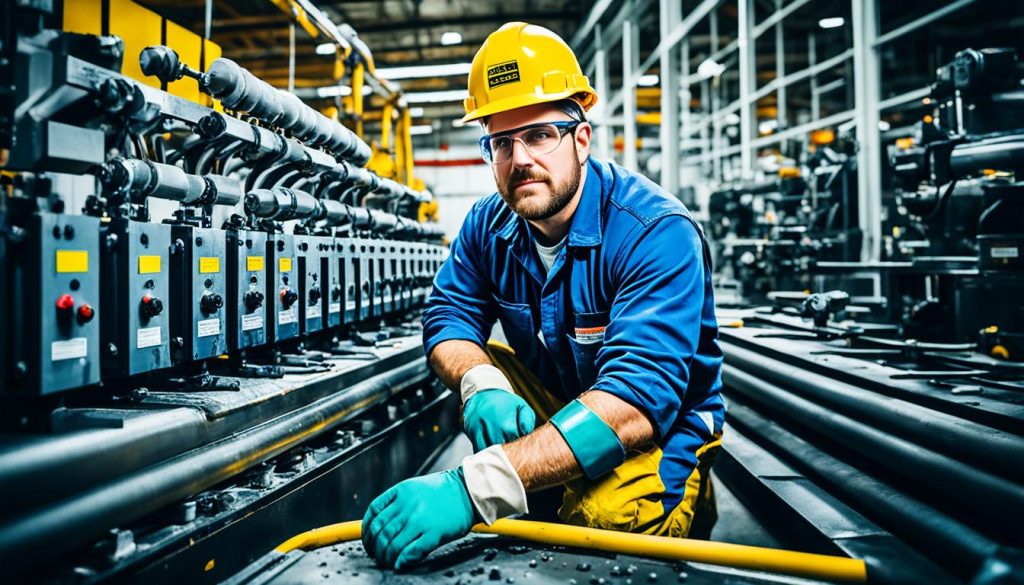
- Non-mechanical hazards, such as flying splinters, chips, debris, splashes, sparks, and sprays, pose risks to machine operators and workers.
- Personal Protective Equipment (PPE) acts as an extra layer of protection, mitigating the impact of non-mechanical hazards.
- PPE includes various equipment and accessories that safeguard different parts of the body.
- Employers should provide suitable PPE and ensure employees receive training on its use and maintenance.
- A comprehensive PPE program, combined with proper machine guarding, creates a safer working environment.
Methods of Safeguarding
To minimize risks associated with machine operation, various methods of safeguarding can be implemented. These methods include the use of guards, safeguarding devices, and secondary safeguarding techniques.
1. Guards
Guards are physical barriers that enclose dangerous machine parts, preventing employee contact and minimizing the risk of injuries. They can be fixed, interlocked, or adjustable, depending on the specific requirements of the machine.
2. Safeguarding Devices
Safeguarding devices provide additional protection by detecting and responding to potential hazards. These devices include:
- Presence Sensing Devices: These devices use optical, magnetic, or other technologies to detect the presence of a person within the hazardous area. When an individual is detected, the machine’s operation is automatically stopped or restricted.
- Pullback Devices: Pullback devices temporarily remove the operator’s hands from the point of operation during the machine’s cycle. This prevents the operator from reaching into the hazardous area.
- Restraint Devices: Restraint devices physically hold the operator’s hands away from the point of operation, preventing contact with hazardous machine parts.
- Safety Controls: Safety controls include emergency stop buttons, two-hand controls, and enabling devices. These controls ensure immediate shutdown or control of the machine when a hazardous situation is detected.
- Gates: Gates provide access to the hazardous area only when the machine is at a safe condition, further minimizing the risk of accidents.
3. Secondary Safeguarding Methods
In certain situations where primary safeguards cannot be installed, secondary safeguarding methods are employed to provide additional protection. These methods include:
- Detection Safeguarding Devices: Detection devices, such as light curtains or pressure mats, are used to detect the presence of an individual in the hazardous area and trigger an appropriate response.
- Safe Work Procedures: Safe work procedures outline the steps that employees should follow when working with machines to minimize the risk of accidents. These procedures may include lockout/tagout practices, regular maintenance, and training programs.

Safeguarding by Location and Distance
Safeguarding by location is a technique that involves strategically positioning machine parts to make them inaccessible to workers during normal machine operation. This approach eliminates the need for physical guards, providing a more efficient and streamlined solution for ensuring worker safety.
However, it is crucial to conduct a thorough hazard analysis to determine if safeguarding by location is appropriate for a particular machine or equipment. The hazard analysis assesses potential risks and evaluates whether this safeguarding technique adequately mitigates those risks.
To conduct a hazard analysis, start by understanding the machine operation and identifying all potential hazards associated with it. Evaluate the specific tasks performed by operators, the movements of machine parts, and any potential points of interaction between workers and the machine. This analysis helps identify which machine parts can be safely positioned to eliminate worker access during operation.
| Hazard Analysis Steps | Benefits |
|---|---|
| Identify all potential machine hazards | – Ensures comprehensive safety assessment – Allows for targeted safeguarding measures |
| Evaluate machine operations and tasks | – Provides insight into worker-machine interactions – Identifies potential points of contact |
| Analyze the feasibility of safeguarding by location | – Determines if machine parts can be positioned to eliminate access – Assesses effectiveness of alternative safeguarding methods |
By properly analyzing hazards associated with machine operation, organizations can make informed decisions regarding the suitability of safeguarding by location. Implementing this technique where appropriate can enhance operational efficiency, streamline workflows, and minimize the risk of accidents or injuries.
Awareness Barriers
Awareness barriers play a crucial role in promoting operator safety and mitigating machine hazards. While they do not provide physical protection, they serve as constant reminders to workers approaching machine danger areas. By increasing operator awareness, these barriers contribute significantly to maintaining a safe working environment.
Imagine a scenario where an operator is engrossed in their work, focused solely on completing the task at hand. In such situations, it is easy for them to become momentarily distracted and forget about the potential dangers posed by the machinery surrounding them. Awareness barriers act as visual cues, reminding operators to stay alert and cautious.
Moreover, awareness barriers also help in creating a safety-conscious culture within the workplace. When employees consistently encounter reminders of potential hazards, it reinforces the importance of following established safety protocols. This heightened awareness fosters a mindset of proactive risk avoidance and encourages individuals to remain vigilant at all times.
However, it is important to note that continuous exposure to machine hazards might necessitate additional protective measures beyond awareness barriers. While these barriers serve as a useful tool in promoting operator safety, they should be complemented by thorough hazard assessments, proper training, and the implementation of physical safeguards where necessary.
Additional Resources and Assistance
Implementing effective machine guarding and equipment safety practices requires access to additional resources and assistance. For organizations seeking guidance and support, industrial safety programs can be valuable partners in promoting a safe working environment. One such program is the EH&S Industrial Safety Program, which offers expert consultation and comprehensive resources.
Consulting Industrial Safety Programs
Consulting industrial safety programs, like the EH&S Industrial Safety Program, can provide organizations with expert guidance tailored to their specific needs. These programs have extensive knowledge and expertise in industrial safety, including machine guarding and equipment safety. By leveraging their experience, organizations can enhance their understanding of safety regulations and best practices.
“Industrial safety programs offer a wealth of knowledge and resources to support organizations in creating safe work environments. From conducting hazard assessments to implementing safeguarding techniques, these programs play a critical role in preventing workplace accidents and injuries.” – Expert from the EH&S Industrial Safety Program
Accessing Additional Resources
In addition to consultation services, industrial safety programs provide access to a range of resources that can assist organizations in implementing effective machine guarding and equipment safety practices. These resources may include:
- Guidance documents on machine guarding standards and regulations
- Training modules for employees on safety procedures and hazard recognition
- Checklists for conducting safety assessments and audits
- Case studies showcasing successful machine guarding implementations
By utilizing these resources, organizations can stay updated on the latest safety practices and ensure compliance with regulations.
Enhancing Workplace Safety
Accessing additional resources and assistance through industrial safety programs is key to enhancing workplace safety and preventing accidents. These programs offer valuable expertise, guidance, and resources that can assist organizations in implementing effective machine guarding and equipment safety measures.
| Benefits of Industrial Safety Programs | How Organizations Can Benefit |
|---|---|
| Expert consultation | Gain insights and advice from experienced professionals in industrial safety |
| Comprehensive resources | Access guidance documents, training modules, checklists, and case studies |
| Industry expertise | Benefit from the knowledge and experience of professionals specialized in industrial safety |
| Regulatory compliance | Stay up to date with safety regulations and ensure compliance |
| Safety program development | Develop customized safety programs tailored to the organization’s specific needs |
| Proactive hazard prevention | Identify and address potential hazards before accidents occur |
Conclusion
Prioritizing workplace safety is of utmost importance to ensure the well-being of employees and maintain a secure working environment. Compliance with OSHA regulations and the proper implementation of safeguarding methods play a vital role in preventing accidents and injuries caused by machine hazards. By understanding and addressing potential risks, organizations can take proactive measures to protect workers and promote industrial safety.
Machine guarding and equipment safety are essential components of workplace safety. By adhering to OSHA guidelines and regulations, organizations can create a culture of safety and minimize the likelihood of workplace accidents. Proper implementation of safeguarding techniques, such as the use of physical guards, safeguarding devices, and secondary safeguarding methods, can significantly reduce the risk of employee contact with hazardous machine parts.
Through a comprehensive hazard analysis, organizations can determine the most suitable safeguarding methods for their specific workplace and machinery. This analysis, coupled with proper training and awareness barriers, enhances operator safety and ensures a safer work environment. Additionally, organizations can seek assistance from industrial safety programs and consult professional resources to stay up-to-date with the latest industry practices and ensure compliance with regulations.
Ultimately, by prioritizing workplace safety, implementing effective machine hazard prevention measures, and complying with OSHA regulations, organizations can protect their most valuable asset—their employees. A safe working environment not only prevents injuries and accidents but also promotes productivity, employee morale, and overall business success.
FAQ
What is machine guarding?
Machine guarding refers to the practices and measures taken to protect workers from hazards associated with moving machine parts. It involves the use of physical barriers, safeguarding devices, and safe work procedures to prevent injuries caused by contact with machines.
Why is machine guarding important?
Machine guarding is crucial for ensuring workplace safety and preventing injuries. Hazards such as crushed fingers, amputations, burns, blindness, and other severe injuries can be avoided by implementing effective machine guarding measures. Compliance with OSHA regulations is essential in this regard.
What are machine guarding hazards?
Machine guarding hazards are the potential risks associated with ineffective machine guarding. They include the danger posed by moving machine parts that can cause injury, such as amputations. It is important to recognize and understand these hazards to protect workers and prevent accidents.
What are safeguarding devices?
Safeguarding devices are mechanisms used to enhance machine safety. They act as physical barriers to prevent contact with hazardous machine parts. Examples of safeguarding devices include presence sensing, pullback, restraint, and safety controls, which can further enhance protection.
How does personal protective equipment (PPE) help in machine safety?
Personal protective equipment (PPE) is essential in mitigating non-mechanical hazards associated with machines, such as flying debris, splashes, sparks, and sprays. PPE includes items such as gloves, safety glasses, and protective clothing. Properly wearing and using PPE adds an extra layer of protection.
What are the different methods of safeguarding machines?
There are several methods of safeguarding machines. Physical guards, safeguarding devices, and gates are examples of primary safeguards that provide physical barriers and protection. Secondary safeguarding methods, like detection devices and safe work procedures, are also utilized. Safeguarding by location is another technique that involves positioning machine parts to make them inaccessible during normal operation.
What is safeguarding by location and distance?
Safeguarding by location involves placing machine parts in such a way that they are not accessible to workers during normal machine operation. This eliminates the need for physical guards. However, a thorough hazard analysis is necessary to determine if this safeguarding technique is appropriate. Proper assessment and understanding of machine operations are key in determining the feasibility of safeguarding by location.
What are awareness barriers?
Awareness barriers serve as reminders to workers approaching machine danger areas. While they do not provide physical protection, they increase operator awareness and contribute to overall safety. However, continuous exposure to machine hazards might require additional protective measures beyond awareness barriers.
Are there additional resources available for machine guarding and equipment safety?
Yes, there are various resources available to support organizations in implementing effective machine guarding and equipment safety practices. Consultation with industrial safety programs, such as the EH&S Industrial Safety Program, can provide further guidance and assistance. Accessing these resources can help ensure compliance with regulations and enhance workplace safety.
Why is machine guarding and equipment safety important?
Prioritizing machine guarding and equipment safety is crucial for maintaining a safe working environment. Compliance with OSHA regulations and the proper implementation of safeguarding methods are vital in preventing workplace accidents and injuries. By understanding and addressing potential hazards, organizations can take proactive measures to protect workers and promote industrial safety.