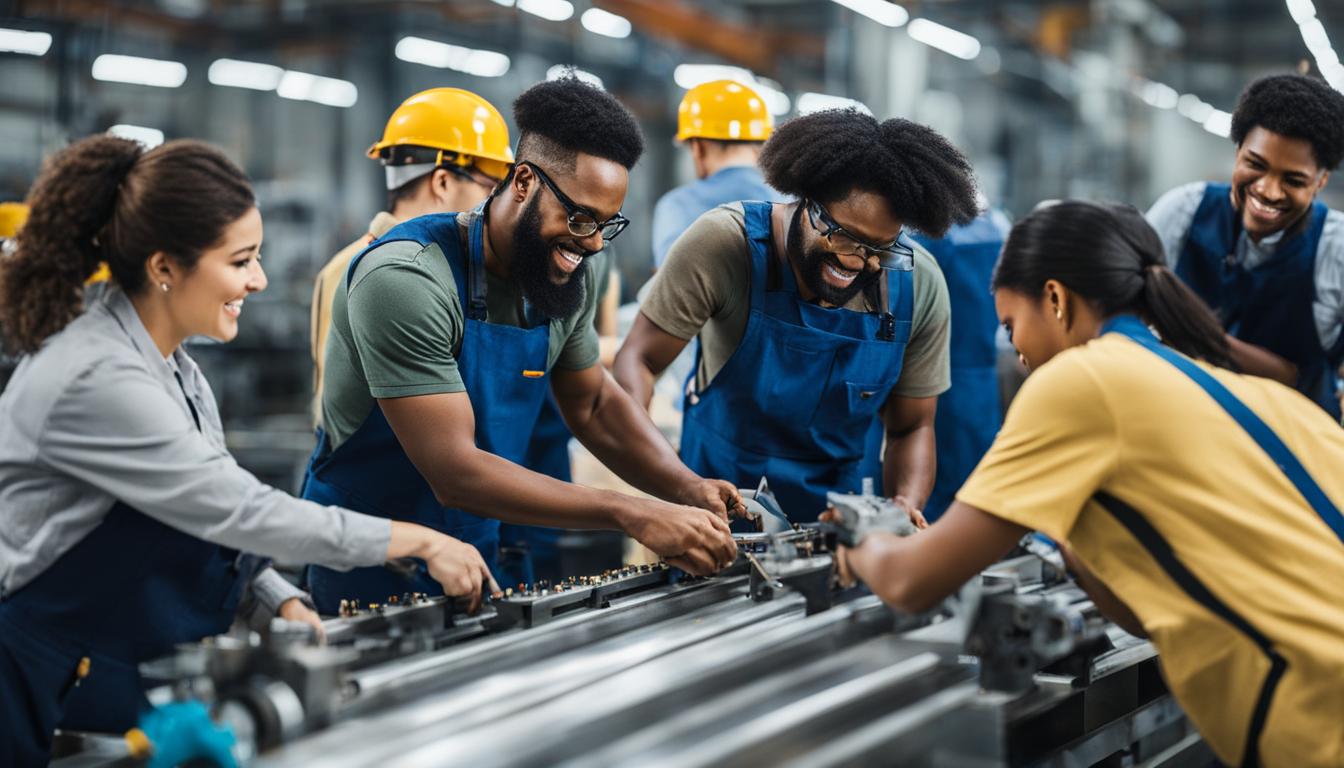
Did you know that by 2030, there could be over 2.1 million unfilled jobs in the US manufacturing industry? The widening skills gap is becoming a significant challenge, threatening the industry’s growth and innovation. The COVID-19 pandemic has further exacerbated this issue, with around 1.4 million manufacturing jobs lost and approximately 500,000 positions remaining unfilled. It is clear that strategies need to be implemented to attract and retain skilled talent in the manufacturing sector. One crucial strategy is embracing diversity and inclusion, which not only addresses the skills gap but also creates a thriving and innovative workforce.
Key Takeaways:
- Workplace diversity is essential to address the widening skills gap in the manufacturing industry.
- A diverse workforce brings improved decision-making, increased creativity and innovation, and better problem-solving abilities.
- Manufacturers need to guide their workforce through the digital transformation while focusing on developing a broad portfolio of skills.
- Diversity and inclusion in the manufacturing industry contribute to improved productivity, higher employee engagement, customer satisfaction, and enhanced innovation.
- Overcoming obstacles in implementing diversity and inclusion strategies requires standardizing the approach, developing a clear business case, and measuring performance.
The Importance of Manufacturing Industry Diversity
To address the skills gap and create a strong talent strategy, manufacturing industry diversity is crucial. A diverse workforce has numerous benefits, including improved decision-making, increased creativity and innovation, and better problem-solving abilities. Organizations in the manufacturing industry are prioritizing diversity, equity, and inclusion (DEI) as a part of their talent management strategies. This involves not only recruiting diverse talent but also creating an inclusive culture, dismantling oppressive systems, and providing growth opportunities for all employees. It is essential for manufacturers to prioritize DEI to attract and retain top talent and ensure long-term success.
Challenges in Finding Diverse Talent in Manufacturing
Finding diverse talent in the manufacturing industry can be challenging, especially in an increasingly digital environment. With the ongoing digital transformation in the industry, the skills required for “smart” factories are evolving. This widens the talent gap as it challenges existing roles and narrows the candidate pool to those with specific licenses and certifications. To overcome this challenge, manufacturers need to guide their workforce through this digital transformation and focus on developing a broad portfolio of skills that will remain relevant in changing job descriptions. In addition to digital skills, human capabilities such as conceptual thinking, decision-making, and social flexibility are also essential for success in the manufacturing industry.
Manufacturers often face difficulties in finding diverse talent due to several factors:
- The evolving nature of digital skills in manufacturing requires a workforce that is adaptable and constantly learning. This poses a challenge in finding candidates who possess the necessary skill set, as technology continues to advance rapidly.
- The emphasis on specific licenses and certifications limits the candidate pool, making it difficult to attract individuals from diverse backgrounds who may not have access to such qualifications.
- The perception of the manufacturing industry as being traditional and male-dominated can discourage individuals from underrepresented groups from pursuing careers in manufacturing.
- The lack of representation and inclusivity in the industry may create barriers for diverse talent to enter and thrive in manufacturing organizations.
Despite these challenges, it is crucial for manufacturers to implement workforce inclusion strategies and foster an inclusive workplace culture. This involves:
- Creating a diverse and inclusive talent pipeline by actively seeking out diverse candidates and providing equal opportunities for all.
- Implementing training and development programs that focus on both technical skills and soft skills to bridge the digital skills gap and foster inclusivity.
- Establishing mentorship and sponsorship programs to support the career growth and advancement of underrepresented individuals in the manufacturing industry.
- Promoting diversity and inclusion through employee resource groups, affinity networks, and inclusion councils.
By addressing the challenges in finding diverse talent and creating an inclusive workplace culture, manufacturers can unlock the full potential of their workforce, drive innovation, and build a sustainable future for the industry.
Case Study: XYZ Manufacturing’s Inclusive Hiring Practices
| Initiative | Description |
|---|---|
| Unconscious Bias Training | Implemented mandatory unconscious bias training for all hiring managers to minimize bias in the recruitment process. |
| Diverse Interview Panels | Ensured diverse representation in interview panels to encourage inclusive decision-making and reduce unconscious bias. |
| Partnerships with Minority-focused Organizations | Developed partnerships with organizations that focus on developing talent from underrepresented communities, expanding the candidate pool. |
| Employee Resource Groups | Established employee resource groups to provide a supportive network for employees from diverse backgrounds and promote inclusion. |
| Leadership Development Programs | Implemented leadership development programs with a focus on promoting diversity and inclusion at all levels of the organization. |
Note: The table above showcases a hypothetical case study and is purely for illustrative purposes. Actual data and initiatives may vary.
By implementing such inclusive hiring practices, XYZ Manufacturing has been able to attract and retain a diverse workforce, leading to improved innovation, employee engagement, and business performance.
Business Value of Diversity and Inclusion in Manufacturing
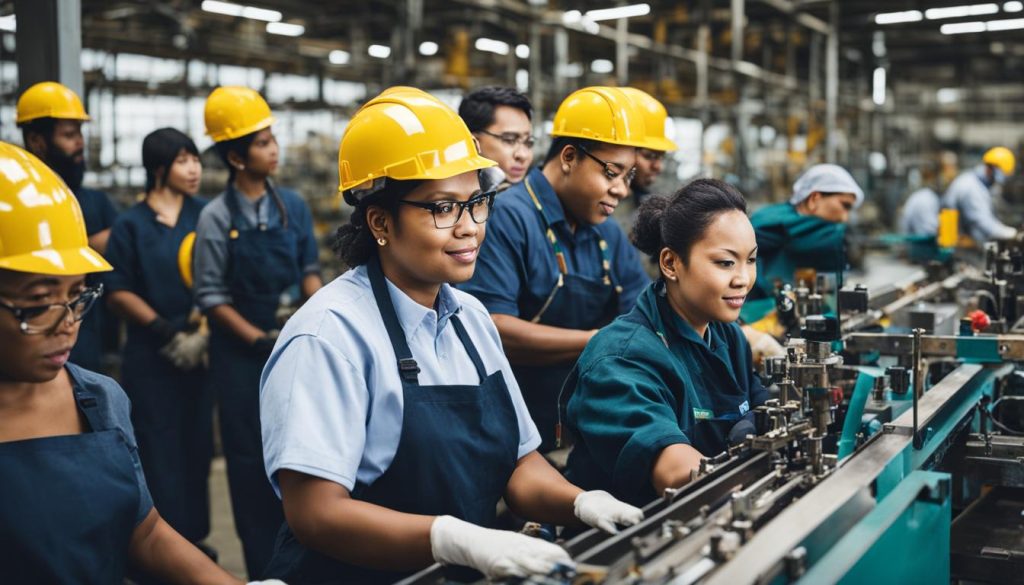
In the manufacturing industry, diversity and inclusion go beyond social or ethical obligations. They have a direct and significant impact on business performance. The benefits of having a diverse workforce and an inclusive culture are numerous and can drive success in multiple areas.
First and foremost, diversity leads to improved productivity. When individuals from different backgrounds and with diverse perspectives come together, they bring a wide range of ideas and approaches to problem-solving. This diversity of thought sparks creativity and innovation, resulting in more efficient processes, improved products, and enhanced operational performance.
Secondly, creating an inclusive culture in the manufacturing industry leads to higher employee engagement. When individuals feel valued and respected for their unique contributions and abilities, they are more likely to be motivated, committed, and invested in their work. This high level of engagement translates into increased productivity, higher-quality output, and better overall performance.
Furthermore, diversity and inclusion play a crucial role in enhancing customer satisfaction. In a diverse and inclusive organization, employees are better equipped to understand and meet the diverse needs and preferences of their customers. This understanding leads to the development of products and services that cater to a wider range of customers, resulting in increased customer satisfaction and loyalty.
Lastly, diversity and inclusion foster innovation. By creating a culture that embraces diverse perspectives and encourages open dialogue, organizations in the manufacturing industry can tap into a wealth of innovative ideas. When individuals from different backgrounds collaborate and share their unique insights, it sparks creativity and drives the development of groundbreaking solutions.
Overall, diversity and inclusion in the manufacturing industry have a direct impact on business performance. They lead to improved productivity, higher employee engagement, better customer satisfaction, and enhanced innovation. Embracing diversity and creating an inclusive culture is not only the right thing to do but also a strategic decision that can give manufacturers a competitive edge and drive long-term success.
| Benefits of Diversity and Inclusion in Manufacturing |
|---|
| Improved productivity |
| Higher employee engagement |
| Better customer satisfaction |
| Enhanced innovation |
Obstacles to Diversity and Inclusion Efforts in Manufacturing
Despite the recognition of the importance of diversity and inclusion in the manufacturing industry, organizations often face obstacles in implementing effective strategies. Competing priorities, such as revenue generation and cost control, can divert attention from diversity and inclusion efforts.
Many manufacturers approach diversity and inclusion in an ad hoc manner, rather than embedding it into their culture and workflow. This lack of integration hinders progress and stifles the potential benefits that a diverse and inclusive workforce can bring.
However, organizations that have standardized their approach, developed a clear business case, and measure their performance are better equipped to overcome these obstacles. By prioritizing diversity initiatives in manufacturing and creating an inclusive workplace culture, these organizations can achieve long-term success in promoting diversity and inclusion.
Standardizing the Approach
One of the key obstacles in promoting diversity and inclusion in manufacturing is the absence of a standardized approach. Many organizations lack a structured plan and a comprehensive understanding of the specific actions required to foster diversity and inclusion.
By establishing clear goals and objectives, developing measurable metrics, and implementing diversity training programs, manufacturers can ensure that diversity and inclusion initiatives are integrated into everyday operations. This shift toward standardization helps organizations create a more inclusive workplace and better track their progress over time.
Developing a Clear Business Case
To overcome obstacles to diversity and inclusion efforts, manufacturers need to develop a clear business case that highlights the tangible benefits of a diverse and inclusive workforce. This involves demonstrating how diversity can drive innovation, improve decision-making, and enhance overall business performance.
“Diversity is not only a moral imperative; it is a strategic advantage. Embracing diversity and inclusion allows organizations to tap into a wide range of perspectives, ideas, and experiences, unlocking the potential for creativity and innovation.” – Emily Johnson, Chief Diversity Officer at Leading Manufacturing Company.
By presenting a compelling case to decision-makers and stakeholders, manufacturers can gain the necessary support and resources to implement effective diversity initiatives in the manufacturing industry.
Measuring Performance
Measuring the impact of diversity and inclusion efforts is crucial for identifying areas of improvement and ensuring accountability. By establishing clear metrics and regularly tracking progress, organizations can identify gaps, celebrate successes, and make data-driven decisions to drive meaningful change.
Regular diversity and inclusion assessments, employee surveys, and review of workforce demographics can provide valuable insights into the effectiveness of diversity initiatives and help organizations adapt their strategies accordingly.
The Manufacturing Institute’s Diversity, Equity, and Inclusion Initiative
The Manufacturing Institute, as the workforce development and education partner of the National Association of Manufacturers, is at the forefront of promoting diversity, equity, and inclusion in the manufacturing industry. The institute recognizes the importance of addressing systemic barriers to create a more diverse and inclusive workforce, and it actively supports companies in their efforts to foster diversity and inclusion.
Through its initiatives, the institute amplifies best practices that attract and retain a talented and diverse workforce. By providing guidance and resources, it helps manufacturers implement effective workforce inclusion strategies. The institute also works diligently to change the perception of manufacturing and ensure equal opportunity for all individuals in the industry.
| Key Initiatives of The Manufacturing Institute |
|---|
| 1. Diversity and Inclusion Training Programs |
| 2. Workforce Development Partnerships |
| 3. Mentorship and Leadership Programs |
| 4. Industry-wide Collaboration for Diversity |
| 5. Research and Advocacy for Diversity and Inclusion |
The Manufacturing Institute’s commitment to diversity, equity, and inclusion in the manufacturing workforce sets an example for companies across the industry. By actively promoting diversity initiatives, the institute contributes to a more inclusive and prosperous manufacturing sector.
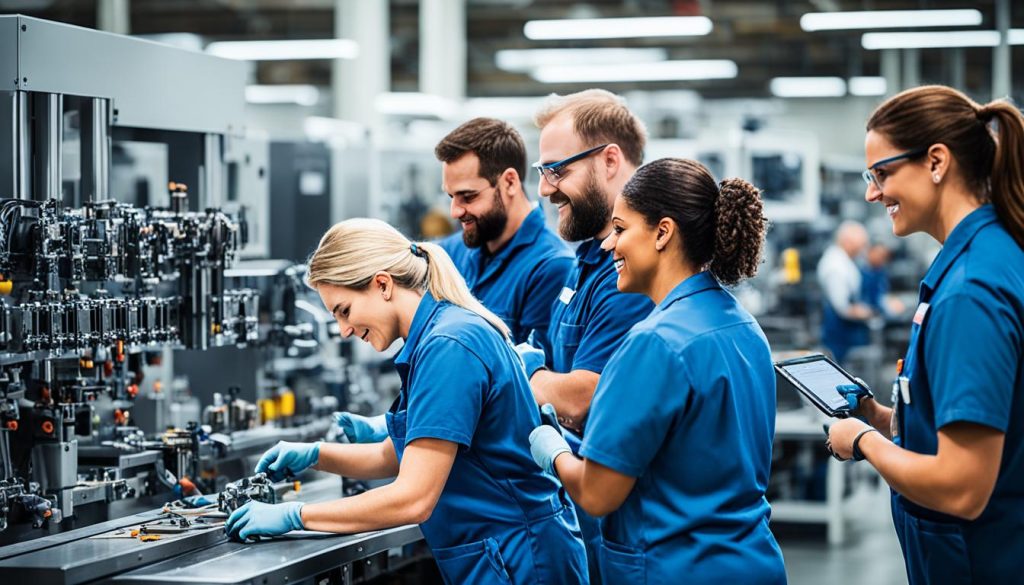
The image above represents the diverse workforce that the Manufacturing Institute strives to achieve in the manufacturing industry. It symbolizes the inclusion of individuals from different backgrounds, cultures, and experiences, all working together towards mutual success.
Commitment to Diversity and Inclusion in Manufacturing
Manufacturers across the country are recognizing the importance of diversity and inclusion in the manufacturing industry. Companies are making strong commitments to increase equity and parity for underrepresented communities, demonstrating their dedication to creating a more inclusive workforce.
Many manufacturing organizations are pledging to take specific actions to support diversity and inclusion goals. These actions range from implementing diversity training programs and unconscious bias workshops to creating affinity groups and mentorship programs for underrepresented employees.
By 2025, the manufacturing industry aspires to take 50,000 tangible actions to increase equity, create 300,000 pathways to job opportunities for black people and people of color, and reflect the diversity of the overall US workforce by 2030. These ambitious commitments will drive tangible change, promoting diversity initiatives in the manufacturing industry and fostering a more inclusive environment for all individuals.
Example of a Commitment to Diversity and Inclusion in Manufacturing
“We firmly believe that diversity and inclusion are critical to our business success. We are committed to fostering an inclusive workplace culture where everyone feels valued, respected, and empowered. To demonstrate our dedication, we pledge to:
- Implement diversity and inclusion training programs for all employees
- Establish mentorship programs to support the growth and advancement of underrepresented talent
- Create employee resource groups to provide a platform for diverse voices
- Diversify our talent pipeline through targeted recruitment efforts
These commitments will drive our organization forward, creating a more equitable and diverse manufacturing workforce.”
Manufacturing companies are taking these actions to ensure that diversity and inclusion are at the forefront of their business strategies. This commitment reflects not only their dedication to social responsibility but also the recognition that diverse and inclusive teams drive innovation, creativity, and ultimately, business success.
| Commitment | Metrics |
|---|---|
| Implement diversity training programs | 100% of employees to complete diversity training within one year |
| Create mentorship programs | Establish 50 mentorship pairings by the end of the year |
| Establish employee resource groups | Form at least three employee resource groups within six months |
| Diversify talent pipeline | Increase representation of underrepresented groups in candidate pool by 25% within two years |
This table provides an example of how a manufacturing company may outline their commitments to diversity and inclusion and the metrics they will use to measure progress. By setting specific goals and tracking their achievements, organizations can hold themselves accountable and drive meaningful change.
Benefits of Diversity and Inclusion in Manufacturing
Embracing diversity and inclusion in the manufacturing industry brings numerous benefits. A diverse workforce brings different perspectives and experiences, leading to more innovative solutions and improved problem-solving.
- Increased Innovation: Combining a variety of backgrounds, skills, and perspectives leads to a broader range of ideas and approaches. The diverse workforce in the manufacturing industry can bring new and creative solutions to challenges, fostering innovation throughout the organization.
- Enhanced Problem-Solving: When teams are composed of individuals with diverse backgrounds and experiences, they are more likely to identify unique solutions to complex problems. Diverse perspectives can help uncover blind spots and consider alternative viewpoints, resulting in more effective and comprehensive problem-solving.
“Diversity is not about how we differ. It is about embracing one another’s uniqueness.” – Ola Joseph
An inclusive workplace culture fosters fairness and equality, which in turn increases employee engagement, productivity, and satisfaction. When employees feel valued and included, they are more likely to be motivated and committed to their work.
- Higher Employee Engagement: Inclusive workplaces cultivate a sense of belonging, making employees feel valued and appreciated. This sense of belonging leads to higher levels of engagement, as employees are more invested in their work and the success of the organization.
- Increased Productivity: When individuals feel included and supported, they are more likely to contribute their full potential. Inclusive workplaces create an environment where employees can thrive, resulting in higher productivity levels across the organization.
- Enhanced Employee Satisfaction: Inclusive workplace cultures prioritize fairness and equality, promoting a positive work environment. Employees who feel respected and included are more likely to experience job satisfaction, leading to improved overall well-being and retention within the manufacturing industry.
By creating a more diverse and inclusive workforce, the manufacturing industry can enhance its performance, attract top talent, and achieve long-term success.
Future of Diversity and Inclusion in Manufacturing
The future of diversity and inclusion in the manufacturing industry relies on continued commitment and investment. By prioritizing workforce inclusion strategies, offering diversity training programs, and creating an inclusive culture, manufacturers can ensure the success and innovation of their workforce.
Workforce inclusion strategies play a crucial role in creating an equitable workplace where all employees feel valued and supported. These strategies include:
- Implementing diversity recruitment practices to attract a diverse pool of candidates
- Providing equal access to opportunities for career advancement and professional development
- Ensuring fair and unbiased performance evaluations and promotions
- Creating a safe and inclusive work environment that fosters collaboration and respect
In addition to workforce inclusion strategies, diversity training programs are essential for promoting understanding, empathy, and cultural competence among employees. These programs can help dismantle oppressive systems and foster an environment of respect and appreciation for different perspectives and backgrounds.
Embedding diversity and inclusion into the fabric of the organization is vital for long-term success. This requires leadership commitment, clear communication, and ongoing evaluation of diversity and inclusion efforts. Manufacturers should establish diversity and inclusion goals and regularly assess progress to drive continuous improvement.
By prioritizing workforce inclusion strategies, offering diversity training programs, and creating an inclusive culture, the manufacturing industry can create a more diverse and equitable workforce that drives innovation, productivity, and success.
Conclusion
Diversity and inclusion play a critical role in building a thriving and successful manufacturing workforce. The industry faces significant challenges, including a widening skills gap and the need for innovation. However, by prioritizing diversity and inclusion, manufacturers can attract and retain top talent, enhance business performance, and establish a culture of equality.
Investing in diversity initiatives is essential for manufacturers to create opportunities for individuals from all backgrounds to contribute and succeed in the manufacturing industry. By fostering inclusive workplace cultures, manufacturers can harness the power of diverse perspectives and experiences, leading to increased innovation and problem-solving capabilities.
Manufacturers must recognize the business value of diversity and inclusion, beyond meeting social or ethical obligations. Building diverse teams and creating a sense of belonging for all employees improves productivity, promotes employee engagement, and drives customer satisfaction. Embracing diversity and inclusion is not only the right thing to do, but it is also a strategic imperative for long-term success in the manufacturing sector.
FAQ
Why is diversity and inclusion important in the manufacturing industry?
Diversity and inclusion in the manufacturing industry are important for various reasons. They lead to improved decision-making, increased creativity and innovation, and better problem-solving. Additionally, an inclusive culture fosters fairness and equality, which increases employee engagement, productivity, and satisfaction.
What are the benefits of a diverse workforce in the manufacturing industry?
A diverse workforce brings different perspectives and experiences, leading to more innovative solutions and improved problem-solving. It enhances business performance, promotes creativity, and fosters a culture of equality and fairness.
What challenges are faced in finding diverse talent in manufacturing?
Finding diverse talent in manufacturing can be challenging, especially in an increasingly digital environment. The evolving skills required for “smart” factories narrow the candidate pool to those with specific licenses and certifications. Overcoming this challenge involves guiding the workforce through digital transformation and focusing on developing a broad portfolio of skills alongside human capabilities such as conceptual thinking and decision-making.
What is the business value of diversity and inclusion in the manufacturing industry?
Organizations with diverse workforces and inclusive cultures experience improved productivity, higher employee engagement, better customer satisfaction, and enhanced innovation. Prioritizing diversity and inclusion creates a competitive edge and contributes to long-term success in the manufacturing industry.
What obstacles do organizations face in implementing diversity and inclusion strategies in manufacturing?
Organizations often face obstacles in implementing effective diversity and inclusion strategies in manufacturing. Competing priorities such as revenue generation and cost control can divert attention from diversity and inclusion efforts. Many manufacturers approach diversity and inclusion in an ad hoc manner, rather than embedding it into their culture and workflow. Standardizing the approach, developing a clear business case, and measuring performance can help organizations overcome these obstacles.
What is The Manufacturing Institute’s role in promoting diversity, equity, and inclusion in the manufacturing workforce?
The Manufacturing Institute, as the workforce development and education partner of the National Association of Manufacturers, leads efforts to promote diversity, equity, and inclusion in the manufacturing workforce. They address systemic barriers, provide support to companies, and amplify best practices to attract and retain a talented and diverse workforce.
What commitments are manufacturers making to increase diversity and inclusion in the manufacturing industry?
Manufacturers across the country are making commitments to increase equity and parity for underrepresented communities. They aim to take specific actions to support diversity and inclusion goals, such as creating pathways to job opportunities and reflecting the diversity of the overall US workforce.
What are the benefits of creating an inclusive workplace culture in manufacturing?
An inclusive workplace culture fosters fairness and equality, leading to increased employee engagement, productivity, and satisfaction. It promotes diversity of thought and encourages collaboration, which drives innovation and problem-solving in the manufacturing industry.
What does the future hold for diversity and inclusion in the manufacturing industry?
The future of diversity and inclusion in the manufacturing industry relies on continued commitment and investment. Manufacturers need to prioritize workforce inclusion strategies, offer diversity training programs, and create an inclusive culture. By doing so, they can create a more equitable and diverse workforce that drives innovation, productivity, and success.
Why is establishing diversity and inclusion important for the success of manufacturers?
Establishing diversity and inclusion is important for the success of manufacturers because it attracts and retains top talent, enhances business performance, and creates a culture of equality. It fosters innovation, improves problem-solving capabilities, and drives overall success in the manufacturing industry.