
In the realm of modern manufacturing, the integration of Manufacturing Analytics has proven to be a transformative force. By adopting a data-driven decision-making process, your business can experience heightened production efficiency, turning volumes of data into valuable insights that streamline operations. In the era of Industry 4.0 or smart manufacturing, manufacturers are leveraging sophisticated analytics to drive efficiency, making informed choices that reduce downtime and maximize return on investment. Let’s delve into how manufacturing analytics can serve as the cornerstone for innovation and growth in your manufacturing processes.
Key Takeaways
- Analytics serve as a foundation for achieving seamless production efficiency and operational excellence.
- Incorporating Manufacturing Analytics is vital for the evolution into Industry 4.0.
- Real-time data collection and analysis ensure optimal factory operations and minimization of unscheduled downtime.
- Advanced data strategies are key to tracking supplier performance and enhancing smart manufacturing endeavors.
- A focus on key performance indicators via analytics fosters improved productivity and data-driven decision-making.
The Rise of Smart Manufacturing and Industry 4.0
As you navigate through the current industrial revolution, it’s essential to recognize the unparalleled impact of Industry 4.0—a term synonymous with the advancements in smart manufacturing. This era is characterized by the integration of technology that connects and automates production, fostering unprecedented levels of efficiency and capability. Understanding its components and how they interact is critical to leveraging the full potential of this transformative movement.
Understanding Industry 4.0 and Its Components
At the core of Industry 4.0 are digital technologies that connect physical systems to the digital world, blurring the lines between the tangible and virtual realms. Central components include the Industrial Internet of Things (IIoT), real-time data analysis, machine learning, and cloud computing—all serving as pillars that support a highly adaptable and efficient smart manufacturing environment.
Integrating Industrial IoT into Modern Manufacturing
Your modern factory may already be harnessing the power of industrial IoT—a network of intelligent devices communicating in real-time, optimizing production processes, and minimizing waste. IoT sensors collect vast amounts of data, laying the groundwork for advanced analysis and automatic adjustments on the shop floor.
Proactive Approach with Predictive Maintenance
Predictive maintenance is a shining example of industry innovation, where potential issues with machinery are anticipated and addressed before they escalate into costly downtime. By analyzing data from sensors in real-time, you are now empowered to take action before problems arise, ensuring smooth, uninterrupted operations, and extending the lifespan of your equipment.
| Industry 4.0 Component | Role in Smart Manufacturing | Benefits |
|---|---|---|
| IIoT | Connectivity and data exchange | Improved equipment monitoring and supply chain transparency |
| Machine Learning | Pattern identification and predictive analytics | Enhanced decision-making and reduced operational risks |
| Cloud Computing | Data storage and accessibility | Scalability and remote operations management |
| Predictive Maintenance | Condition monitoring and preemptive intervention | Significant reduction in unplanned downtime |
The journey towards fully realizing the vision of Industry 4.0 and smart manufacturing is ongoing, and the opportunities for growth and improvement are limitless. By embracing these components and innovating continuously, your manufacturing processes can achieve not only competitive advantage but also set new standards for operational excellence in the digital age.
Manufacturing Analytics Explained
In the age of data-driven decision making, Manufacturing Analytics stands as the backbone of modern industry, facilitating a more nuanced understanding of operational dynamics. The synergy between operational technology and informational technology data, collected through sensors, is analyzed through advanced machine learning algorithms to derive insights that transform mere production into predictive maintenance and optimization.
With Manufacturing Analytics at your fingertips, the array of operational and IT system data becomes a strategic asset. Notably, Key Performance Indicators (KPIs) become crystal clear, enabling proactive adjustments in factory efficiency, supply chain management, and even curtailing the scope and frequency of product recalls. Such precision in tracking and analyzing KPIs results from aggregating diverse sets of data points, ultimately refining the perfect order rates—a metric that defines customer satisfaction and operational success.
| KPI Monitored | Benefits of Analytics |
|---|---|
| Perfect Order Rates | Enhanced accuracy in order fulfillment and customer satisfaction. |
| Predictive Bottleneck Identification | Pre-emptive resolution of potential production delays. |
| Equipment Failure Predictions | Decreased machine downtime through predictive maintenance. |
| Product Recall Impact Reduction | Targeted recalls minimizing financial impact and safeguarding reputation. |
| Supply Chain Transparency | Real-time visibility into material and product movement. |
Thus, in employing Manufacturing Analytics, you are equipped to pivot swiftly and with precision to potential issues that may compromise production output or delivery schedules. The predictive capabilities alert you to issues before they become critical, safeguarding against unexpected halts in production that contribute to a loss in revenue or diminish customer trust.
It is crucial to emphasize that the maturation of Manufacturing Analytics into a comprehensive, responsive framework is no longer aspirational—it’s happening now. Manufacturers like you, who harness these technologies, are rewriting the narrative of their industries, pushing the boundaries of what’s possible in an ever-evolving landscape.
Transforming Data into Manufacturing Excellence
Unlocking the full potential of your manufacturing capabilities begins by turning vast amounts of operational data into actionable intelligence. This transition not only improves efficiency but fundamentally reshapes your approach to production, bringing you closer to achieving manufacturing excellence. As you delve into the world of real-time data analysis and predictive analytics, you will discover a new horizon where data becomes the key driver of your success.
Real-Time Data Analysis for Immediate Insights
At the heart of manufacturing excellence lies the ability to make informed decisions promptly. Real-time data analysis empowers you to gain immediate insights from the shop floor, ensuring that you can react swiftly to any production challenges. By leveraging real-time statistics, you can streamline processes and optimize performance, leading to significant cost savings and higher production quality.
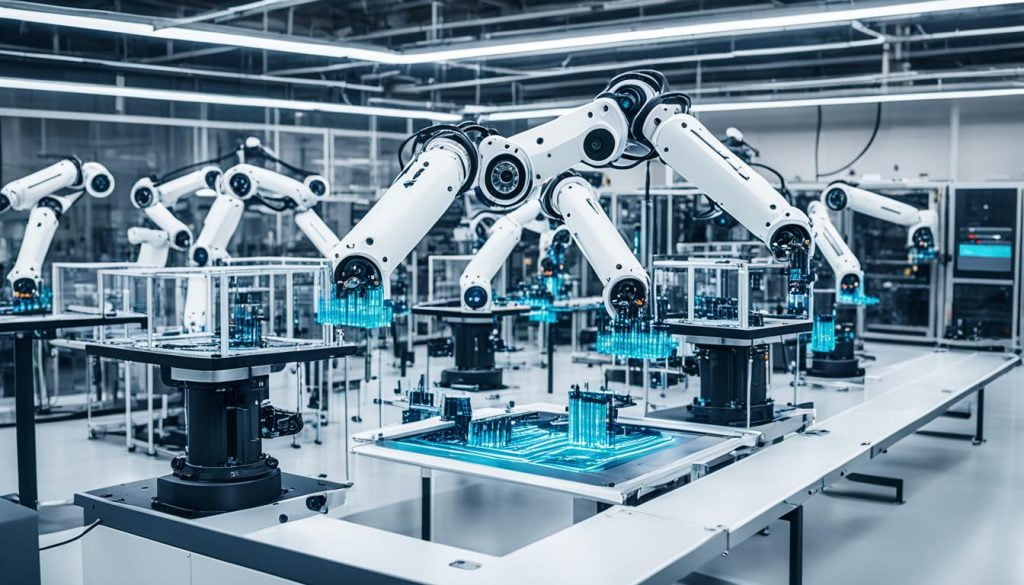
Imagine a scenario where your equipment sensors detect a slight deviation from the norm; real-time data analysis can immediately highlight this anomaly. You’re then positioned to take corrective actions before minor issues escalate into costly downtime, embodying a truly proactive manufacturing environment.
Machine Learning Algorithms: Predicting the Future of Production
Your journey towards manufacturing excellence involves not just monitoring the present, but anticipating the future. Pioneering machine learning algorithms analyze historical and live data to predict trends and outcomes with remarkable accuracy. This crystal ball into your manufacturing processes allows you to foresee disruptions and apply preemptive solutions, thereby maximizing your production efficiency and reliability.
The collaboration of machine learning algorithms and predictive analytics shapes the backbone of a resilient manufacturing strategy. As these advanced systems learn and adapt from every piece of data, they fine-tune your production mechanisms, often discovering efficiencies that may have otherwise gone unnoticed.
| Data Utilization Approach | Impact on Manufacturing |
|---|---|
| Analyzing equipment sensor data | Predictive maintenance reduces downtime |
| Monitoring production line metrics | Enhances throughput and product quality |
| Tracking supply chain movements | Ensures timely delivery of raw materials |
| Evaluating historical performance data | Informs strategic management decisions |
By embracing machine learning algorithms and their integration with real-time data analysis, you not only optimize current operations but also secure your place at the forefront of the next industrial revolution. This pursuit of manufacturing excellence through sophisticated data techniques undoubtedly positions you as a leader in the new era of smart manufacturing.
Boosting Production Efficiency with Advanced Analytics
The integration of advanced analytics in manufacturing is revolutionizing how businesses maximize production efficiency. By processing and analyzing vast data sets, factories are now equipped to improve their operations, ensuring that every aspect is optimized for peak performance. As you dive into the data, key performance indicators (KPIs) surface, offering measurable insights that are essential in driving industry success.
Key Performance Indicators Driving Industry Success
Analytics play a pivotal role in examining the vital signs of a manufacturing operation by scrutinizing several KPIs, such as perfect order rate, yield, overall equipment effectiveness (OEE), on-time delivery, throughput, cycle time, production volume, and capacity utilization. These indicators offer a clear view into the health and efficiency of your production process.
| KPI | Description | Relevance to Production Efficiency |
|---|---|---|
| Perfect Order Rate | Accuracy of order fulfillment | Reflects customer satisfaction and operational precision |
| Yield | Ratio of good units produced | Indicates production quality and resource utilization |
| OEE | Effective use of manufacturing equipment | Measures productivity and identifies inefficiencies |
| On-time Delivery | Punctuality of shipments | Linked to customer trust and supply chain efficacy |
| Throughput | Volume of production over time | Denotes capability to meet demand |
| Cycle Time | Duration from order to delivery | Assesses speed and agility of production processes |
| Production Volume | Total output quantity | Essential for market supply balance |
| Capacity Utilization | Extent of resource deployment | Optimizes use of production assets |
Streamlining Operations Through Data-Driven Strategies
To streamline operations, manufacturing analytics sift through complex data layers, transforming them into actionable insights. This process not only refines current practices but also anticipates future operational needs. By harnessing the predictive power of these analytics, your facility can circumvent potential setbacks, enhance process capabilities and, importantly, elevate the efficacy of production efficiency.
Data-driven strategies filter down to the production floor, allowing for granular improvements such as predictive maintenance schedules that drastically reduce unplanned downtime and sharpen the reliability of the machinery. In an industry where every second counts, the ability to predict and prevent mechanical failures or supply chain snags is invaluable. This proactive approach to maintenance and operations, informed by meticulous data analysis, is a key factor in the progression towards fully optimized smart manufacturing facilities.
Status quo is no longer an option in the fast-paced world of modern manufacturing. With advanced analytics, you are empowered to make swift, informed decisions that propel your operations forward. Embrace these sophisticated data strategies, and watch as they elevate your production to new heights of efficiency and profitability.
Supply Chain Optimization in the Data Era
As a pivotal element in the competitive landscape of manufacturing, supply chain optimization has undergone a revolutionary transformation driven by manufacturing analytics. In a data-centric world, your manufacturing operation’s backbone is the ability to gain visibility into every facet of the supply chain. This profound transparency is not just about monitoring; it is about wielding the power of data to drive strategic choices and actions.
With the advent of Industry 4.0, predictive maintenance emerges not only as a means to prevent equipment failure but also as an essential strategy for maintaining a seamless flow of operations and materials. The real-time insights gained from comprehensive manufacturing analytics empower your business to act on potential disruptions before they ripple through the supply chain.
The iterative cycle of monitoring, analyzing, forecasting, and acting is emblematic of agile supply chain management. Below is a detailed exploration of how advanced data analytics plays a foundational role in optimizing supply chain efficiency and management:
| Supply Chain Aspect | Role of Data Analytics | Outcome of Optimization |
|---|---|---|
| Demand Forecasting | Utilizes historical and real-time data for predicting future trends | Reduces understock and overstock situations, aligning production with market needs |
| Inventory Management | Analyzes stock levels against production rates for optimal inventory | Enhances working capital efficiency and minimizes carrying costs |
| Supplier Performance | Tracks supplier delivery times and quality against benchmarks | Identifies reliable suppliers and creates benchmarks for continuous improvement |
| Equipment Health | Sensor data predicts maintenance needs and potential breakdowns | Prevents costly downtime and prolongs equipment life |
The actionable insights gained from this analytics-powered approach lead to a strategic advantage in managing resources efficiently. Your ability to foresee and address supply chain disruptions ensures not only an optimized process but also a resilient one capable of adapting to the dynamic demands of the market. Such capability is increasingly disparate from the traditional, slower-to-adapt supply chain models of the past.
Manufacturing analytics fosters an environment where every decision is informed and every action is timely. As your plant transitions into this new age of smart manufacturing, remember that the data you harvest and analyze today formulates the strategic milestones of tomorrow’s supply chain success.
How Predictive Analytics Reinvents Maintenance Strategies
The advent of predictive analytics marks a significant leap forward in the realm of maintenance strategies. By deploying a comprehensive data-driven approach, manufacturing plants can establish a new era of efficiency and continuity in their operations. By predicting when machines will likely fail, the vendetta against unscheduled downtime is being actively contested, leading to a paradigm shift in how maintenance is executed.
Minimizing Unscheduled Downtime with Predictive Insights
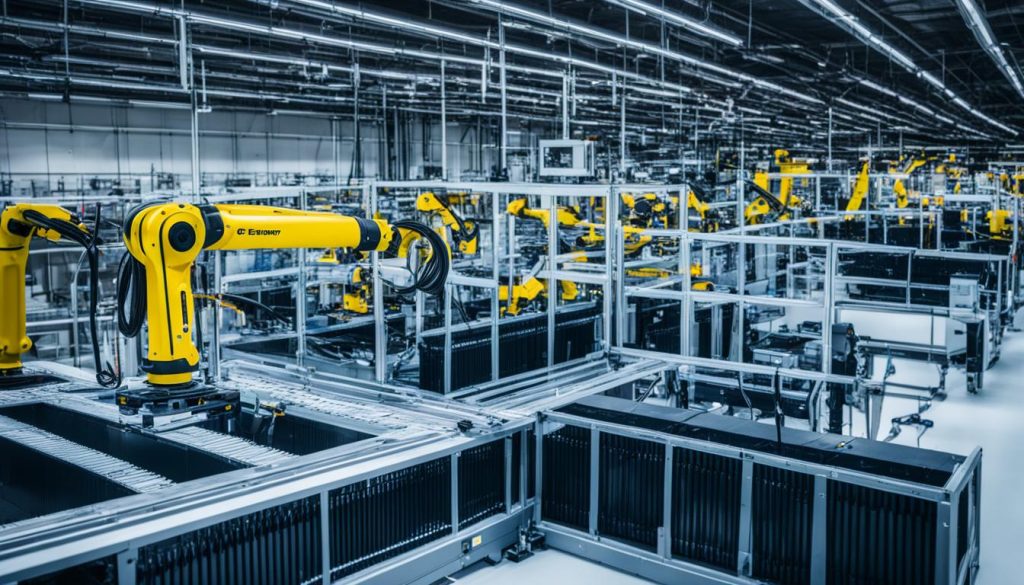
Your rigorous quest for operational excellence receives a powerful ally with predictive analytics. It’s not about responding to machine malfunctions as they happen, but anticipating them well in advance, which leads to a notable decrease in unscheduled downtime. This prescient attention affords you the luxury of scheduling repairs and maintenance, circumventing the costly effects of unexpected halts, and fostering a production environment that is as reliable as it is dynamic.
Extending Equipment Life and Enhancing Capacity Planning
The benefits of predictive analytics in your maintenance strategies extend well beyond preempting production pauses. Longevity of equipment life is substantially improved through data-centric predictive maintenance, ensuring that wear and tear is systematically addressed. Moreover, analytical foresight streamlines capacity planning, allowing you to optimize your production line schedules and maintain an edge in both throughput and market responsiveness.
| Parameter | Impact of Predictive Analytics |
|---|---|
| Maintenance Scheduling | Transforms from reactive to proactive, reducing interruptions and saving costs. |
| Production Line Continuity | Secures uninterrupted operation, streamlining workflow and productivity. |
| Equipment Health Monitoring | Identifies early warning signs of wear, enabling timely maintenance. |
| Resource Allocation | Intelligently channels resources towards imminent repair needs, ensuring better allocation of manpower and materials. |
| Life Cycle Management | Enhances predictive maintenance impact, potentially extending machine life and return on investment. |
Embracing predictive analytics propels your manufacturing capacity to not just survive but thrive in a milieu marked by its complexities. Operational foresight gained from such analytics becomes the cornerstone upon which you can build a robust, responsive, and efficient manufacturing ecosystem. The adoption of these evolved maintenance strategies, enriched by data and its sharp insights, is not an option but a necessity in the modern industrial landscape.
Keys to Achieving a Perfect Order Rate
In the pursuit of excellence within the manufacturing landscape, achieving a perfect order rate emerges as a paramount objective. This pinnacle of operational success reflects an error-free process — right from the assembly line to the customer’s doorstep. Attaining such a level of performance necessitates a seamless integration of precision analytics, which goes beyond mere number-crunching to interpreting and acting on data in a way that enhances the customer experience and promotes brand loyalty.
Delivering Flawless Orders with Precision Analytics
For manufacturers, the ability to deliver flawless orders is more than a value-add; it’s a competitive necessity. Precision analytics provides a granular view of your operations, enabling the identification of potential errors before they occur. It encompasses every detail, including ensuring that products are packaged correctly, quantities are verified, and documentation is accurate. By meticulously monitoring these factors, you can dramatically increase your perfect order rate, leading to higher levels of customer satisfaction and subsequent retention.
| Analytics Focus Area | Role in Perfect Order Rate | Impact on Customer Experience |
|---|---|---|
| Order Accuracy | Ensures every order is filled with the right products | Reduces returns and enhances customer trust |
| Packaging Compliance | Verifies products are packed as per standards and safeguards | Minimizes damage and loss during transit |
| Documentation Precision | Guarantees that shipping documents reflect the actual order | Streamlines billing and reduces disputes |
| Timely Delivery | Tracks and predicts the timing of orders reaching customers | Improves customer loyalty through reliability |
Impact of Analytics on Customer Satisfaction and Retention
At the heart of customer satisfaction lies the consistent delivery of promises—in this case, the promise of orders that are on time and error-free. Precision analytics aids in this delivery, providing insights that ensure operational efficiencies translate directly into customer value. As such, retention rates stand as a testament to how well a manufacturer utilizes analytics to maintain and elevate quality and service. The strength of customer relationships hinges on this critical ability to deliver what is ordered, as and when expected, fostering a bond of trust and satisfaction that keeps clients returning.
Driving Decision Making with Actionable Insights from Manufacturing Analytics
In today’s rapidly evolving manufacturing landscape, the ability to convert complex datasets into actionable insights stands as a critical component of strategic success. Manufacturing analytics has transitioned industries into a proactive stance, transcending the reactive methodologies of the past. As businesses navigate this shift, they uncover the profound impact that data-driven decision making has on operation optimization, cost reduction, and product innovation.
From Reactive to Proactive: Shaping the Future of Manufacturing
Manufacturers who pivot from a reactive to a proactive approach embrace the power of predictive analytics. This transformation not only mitigates risk but also enhances efficiency, creating a robust framework for sustained growth. By forecasting future trends and identifying potential issues before they escalate, forward-thinking companies can strategically invest resources, optimize production cycles, and excel in competitive markets.
Case Studies: Success Stories of Analytics in Manufacturing
Illustrative case studies delineate the triumphant implementation of manufacturing analytics across various sectors. These real-world examples reveal how manufacturers worldwide are harnessing data to refine processes, from monitoring real-time production to streamlining supply chain logistics and improving product quality.
| Industry | Challenge | Analytical Solution | Outcome |
|---|---|---|---|
| Automotive | Unscheduled downtime | Predictive maintenance models | Increased operational uptime, reduced costs |
| Pharmaceuticals | Quality control | Real-time anomaly detection | Higher product integrity, minimized recalls |
| Consumer Electronics | Supply chain inefficiency | Demand forecasting | Optimized inventory, improved market response |
| Food and Beverage | Regulatory compliance | Compliance tracking systems | Enhanced quality, compliance with regulations |
The data revolution in manufacturing is no mere trend; it’s a strategic imperative. Embracing manufacturing analytics is key to staying relevant and competitive. As the following case studies suggest, whether it’s through optimizing machine performance or by offering a clear view into every stage of the supply chain, manufacturers who adopt this approach stand on the leading edge of innovation. Data, thus, is not just an asset but the very foundation upon which future successes are built.
Conclusion
As we look forward to the future outlook for manufacturing analytics, we see a landscape ripe with possibilities. With advancements in data analytics, manufacturers like you are on the cusp of a revolution, poised to redefine efficiency, quality, and competitiveness across the industry. The trajectory of manufacturing is unmistakably veering towards a more connected, intelligent, and data-driven environment, where the amalgamation of real-time insights and predictive analytics is becoming the norm, rather than the exception.
The Future Outlook for Manufacturing Analytics
The promising horizon reflects not only the advancements but also the widespread adoption of smarter, more agile manufacturing practices powered by manufacturing analytics. You can anticipate a future where production systems are not just interconnected but also intuitively responsive to the nuances of operational efficiency. This is a future where data analytics acts as the linchpin that ensures every cog in the manufacturing machine is optimized for performance, heralding an era of unparalleled productivity and innovation.
Embracing the Full Potential of Data Analytics in Manufacturing
To fully capitalize on this potential, it’s imperative that you continue embracing the cutting-edge capabilities that data analytics platforms, such as Incorta, offer. Integration of these analytics tools will amplify your ability to adapt to the evolving manufacturing landscape, unlocking new realms of possibilities in the age of data. It’s an exciting time to be in manufacturing, and by harnessing the power of analytics, you’re well-equipped to lead the charge into a future defined by precision, agility, and foresightedness.
FAQ
What is Manufacturing Analytics?
Manufacturing Analytics refers to the technologies and practices that use data generated in a manufacturing environment to gain insights and drive production efficiency. This involves analyzing data from various sources to enhance decision-making and support smart manufacturing and Industry 4.0 initiatives.
How does Industry 4.0 relate to smart manufacturing?
Industry 4.0 represents the next phase of manufacturing, characterized by the integration of advanced technologies like artificial intelligence, the industrial Internet of Things (IoT), and cloud computing. It is synonymous with smart manufacturing, where these technologies enable highly automated and data-driven production processes.
What role does the Industrial IoT play in modern manufacturing?
The Industrial IoT involves connecting physical manufacturing equipment and devices to the internet, allowing for real-time data collection, monitoring, and analysis. This connectivity is essential for predictive maintenance, efficient resource management, and overall operational improvement in smart factories.
How does predictive maintenance enhance production efficiency?
Predictive maintenance uses real-time data analysis and machine learning algorithms to predict equipment failure before it occurs. This proactive maintenance approach reduces unscheduled downtime, extends the life of machinery, and optimizes production efficiency.
How is real-time data analysis implemented in manufacturing?
Real-time data analysis in manufacturing involves capturing and analyzing data from sensors and production equipment instantly as it is generated. This allows manufacturers to react quickly to any changes or issues on the production line, ensuring continuous optimization of processes.
How do machine learning algorithms impact the future of production?
Machine learning algorithms can predict outcomes and identify patterns in manufacturing data that would be impossible for humans to discern, leading to improvements in quality control, waste reduction, and future production planning, thus shaping a more efficient and innovative production landscape.
What are the Key Performance Indicators (KPIs) critical to manufacturing success?
Key KPIs in manufacturing include perfect order rate, overall equipment effectiveness (OEE), yield, on-time delivery, throughput, cycle time, production volume, and capacity utilization. These KPIs help in measuring and enhancing production efficiency and streamlining operations.
How are data-driven strategies streamlining operations?
Data-driven strategies in manufacturing involve collecting and analyzing operational data to identify inefficiencies and opportunities for process improvement, enabling manufacturers to streamline operations by optimizing resource allocation, production workflows, and supply chain management.
Why is supply chain optimization important in the data era?
In the data era, supply chain optimization is crucial for ensuring responsiveness and efficiency in manufacturing operations. By using manufacturing analytics for visibility and predictive maintenance, companies can anticipate and mitigate supply chain disruptions before they escalate, leading to stronger, more reliable supply chains.
What are the benefits of using predictive analytics in maintenance strategies?
Predictive analytics offers numerous benefits for maintenance strategies, including the ability to anticipate equipment failures, plan maintenance activities effectively, and optimize the allocation of maintenance resources, all of which contribute to reduced downtime and maintenance costs.
How does a perfect order rate enhance customer satisfaction?
Achieving a perfect order rate indicates that orders are delivered without errors—right product, quantity, and condition, on time, every time. This excellence in order fulfillment leads to higher customer satisfaction and retention by meeting or exceeding customer expectations consistently.
What role does actionable insights play in manufacturing?
Actionable insights derived from manufacturing analytics empower manufacturers to transition from a reactive to a proactive approach. These insights guide better decision-making, optimizing processes, increasing product quality, and contributing to more efficient and productive operations.
How have case studies demonstrated the success of analytics in manufacturing?
Case studies serve as empirical evidence showing how manufacturing analytics can transform operations by providing actionable insights. They showcase how companies have improved product quality, accelerated innovation, and boosted profitability through data-driven decision-making.
What is the future outlook for manufacturing analytics?
The future outlook for manufacturing analytics is promising as companies continue to invest in and adopt analytics platforms. These platforms provide the ability to analyze real-time production data, leading to enhanced operational efficiency, product quality, and competitive advantages in the rapidly evolving manufacturing sector.